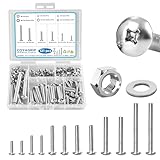
I remember staring at that ARP crank bolt package for what felt like an hour. Shiny, perfectly machined, promising the moon for my engine build. Everyone raves about ARP hardware, and yeah, it’s usually top-notch. But then the nagging thought crept in: can ARP crank bolt be pinned? Like, really, is it a thing people do? I’d seen some forum posts, a few whisperings, but nothing concrete. It felt like one of those things you’re supposed to just know, or maybe it’s a secret handshake in the performance engine world. I was deep into a build, and the idea of a crank bolt coming loose was a nightmare I wasn’t willing to entertain.
This isn’t about settling for less; it’s about understanding if a common modification is actually necessary or even beneficial for a high-performance application. Let’s cut through the noise and talk about what actually matters.
Why Pinning a Crank Bolt Isn’t Always the Answer
Look, nobody likes a surprise in the engine bay, especially when that surprise involves your crankshaft deciding it wants to do its own thing. The ARP crank bolt is undeniably a step up from most factory offerings.
It’s made from stronger material, has a more solid thread design, and usually comes with a beefier washer. Most of the time, if you torque it down correctly with the right assembly lube and use a good balancer, you’re golden. I’ve run ARP bolts in a couple of my own projects – a mildly built 350 small-block and a boosted Honda B-series – without any issues whatsoever.
The torque spec was followed to the letter, and the balancer was a snug fit. No signs of loosening after thousands of miles of spirited driving.
The whole idea of pinning a crank bolt, often by drilling through the bolt and crank snout and inserting a roll pin or cotter pin, comes from a place of wanting absolute security. It’s a belt-and-suspenders approach.
However, it’s not a standard procedure for most street or even many serious performance applications. The common advice you’ll find is that if the bolt is torqued correctly and the balancer is properly seated, it shouldn’t back out. The friction and the sheer clamping force are usually more than enough to keep it in place.
But then you hear stories, right? Stories of crank bolts backing out, ruining balancers, and worse.
This is where the paranoia starts, and people begin looking for a ‘bulletproof’ solution.
I once had a friend who swore by pinning. He was building a nitrous big-block Chevy and felt that the torque alone wasn’t enough insurance. He meticulously drilled his ARP bolt and crank snout, pounded in a hardened pin, and torqued everything to spec. A year later, after a few track days, he pulled the balancer to do some maintenance and found the pin had sheared off, and the bolt had backed out about two or three threads.
It didn’t cause catastrophic failure because he caught it, but it certainly made him rethink his ‘bulletproof’ method. It hammered home the point that sometimes, over-engineering can introduce its own failure points, especially if the execution isn’t perfect or the forces involved are greater than anticipated.
When Does the Pinning Question Actually Come Up?
So, when do you even start thinking about whether an ARP crank bolt can be pinned? It’s usually when you’re pushing an engine past its typical street-driven limits. We’re talking about high-RPM machines, engines with forced induction (superchargers or turbos) that put immense torsional and axial loads on the crankshaft snout, or drag racing applications where shock loads are a constant. In these scenarios, the forces trying to unscrew the crank bolt can become significant enough to overcome the friction and clamping force, especially if there’s any slight vibration or harmonic imbalance. Think of a high-revving V8 with a large, heavy crank pulley or a supercharger drive that puts an uneven pull on the snout. Those forces add up.
Another common trigger is when dealing with older engines or engines that have had their crank snout modified or show signs of wear. If the snout is nicked, rusted, or the threads are questionable, relying solely on the torque of the bolt becomes a riskier proposition. A worn snout might not allow the balancer to seat perfectly, creating a tiny bit of play that can lead to the bolt loosening over time. This is where the idea of adding a mechanical lock, like a pin, starts to sound appealing. It’s a way to add a secondary layer of security when the primary method (tightening the bolt) might be compromised.
I recall working on a project car, an old Datsun 240Z with an L24 engine. The owner had already installed an aftermarket crank pulley and was experiencing intermittent issues where the pulley would slip slightly. He’d re-torque it, and it would be fine for a while, then start slipping again.
We suspected the crank snout threads were getting stretched or worn. He asked if pinning the bolt would be a good idea. While it could theoretically hold the bolt in place, we realized it wouldn’t fix the underlying problem of the pulley not being securely gripped by the snout. Pinning the bolt without addressing the worn snout would just be masking a symptom and could potentially lead to damage if the bolt backed out further, stressing the pin. (See Also: Can I Buy A Full Auto Bolt Carrier )
We ended up having to machine a new balancer sleeve and repair the snout to get a proper, lasting fit, which was a much more involved but ultimately correct solution. It taught me that pinning is a fix for a loose bolt, not necessarily for a worn snout.
The Case for Not Pinning: What the Manufacturers Say (and Don’t Say)
This is where I tend to go against the grain a bit. Most reputable manufacturers of performance crankshafts and harmonic balancers, including ARP itself, do not include instructions or recommendations for pinning the crank bolt. Why? Because their products are designed to work correctly when installed according to their specifications.
ARP’s crank bolts are made from their proprietary ARP2000 material (or even stronger, depending on the application), designed to handle extreme clamping forces and prevent stretching or fatigue. Their recommended torque specifications are the result of extensive testing and engineering. Forcing an additional mechanical lock like a pin can, in some cases, actually introduce stresses that weren’t accounted for in the original design.
If the pin isn’t perfectly aligned, or if it’s too tight, it can create eccentric loads on the bolt or even the crankshaft snout itself.
Consider the harmonic balancer. It’s designed to precisely mate with the crank snout.
When you pin a bolt, you’re basically creating a fixed point. If the balancer has any slight rotational play under extreme load or vibration, that play is now being resisted by the pin. This can lead to the pin shearing, or worse, it can start to wallow out the hole in the crankshaft snout. A damaged crank snout is a much bigger, more expensive problem than a loose crank bolt.
I’ve seen engines where people tried to ‘fix’ a slight wobble by pinning the bolt, only to find out later that the snout was getting chewed up because the balancer wasn’t running true anymore, and the pin was just holding it in a slightly off-kilter position.
My own experience with this comes from a rather embarrassing situation. I was building a small-block Ford for a buddy’s Mustang. I was being extra cautious, and the bolt just felt like it wasn’t seating perfectly, even though the torque wrench clicked. I was convinced it was going to back out.
So, I called up a machinist I knew, an old-school guy who’d seen it all. I asked him about pinning. He let out this long sigh and said, ‘Kid, if you’re using good parts and you’re torquing it right, you don’t need to be playing doctor with your crankshaft.
You’re more likely to break it doing that than anything else. What you need is a good balancer installer tool, not a drill bit.’
He was right. I went and bought a proper balancer installer tool, which seated the balancer perfectly, and that bolt has never budged. It was a humbling reminder that sometimes, the right tool and following the instructions are the best ‘mods’ you can do.
How to Properly Install an Arp Crank Bolt (the Right Way)
Let’s talk about the actual process, because if you’re going to use an ARP crank bolt, you want to do it right. This is the foundation. First off, clean everything. I mean everything. Use a good brake cleaner or parts cleaner to degrease the crankshaft snout threads and the inside of the harmonic balancer. Any oil or grease on the threads or the mating surfaces will reduce the effective clamping force you get when you torque the bolt down. It’s like trying to tighten a nut on a greasy bolt – it feels tight, but it’s not holding as much as it should.
Next, the assembly lube. ARP usually provides a specific lube, or you can use a quality moly-based assembly lube. Apply a light, even coat to the bolt threads and the washer. Don’t go crazy with it, but make sure it’s there. This allows the bolt to stretch properly under torque, giving you the correct clamping force without over-stressing the bolt material. I made the mistake once of using standard motor oil because I ran out of assembly lube. Big mistake. The torque reading was off, and I ended up having to re-torque it a few hundred miles later. Lesson learned: use the recommended lube.
The torque sequence is absolutely vital. Get yourself a good quality torque wrench that’s been calibrated. ARP will provide specific torque values for their bolts, often in foot-pounds. (See Also: Are Mercruiser 5 7 Engines Four Bolt Mains )
Follow these numbers exactly. For most common V8 applications, you’re looking at figures in the ballpark of 150-200 ft-lbs, but always check the manufacturer’s recommendation for your specific bolt.
If you’re using an impact wrench, set it to a low setting and use it only to snug the bolt down before you go to the torque wrench. An impact wrench can easily over-torque and stretch or break the bolt, or even damage the threads.
When you hit the final torque spec, the bolt should feel solid. If it feels like it’s still stretching or spinning easily, stop. There might be an issue with the threads or the balancer seating.
Finally, and this is a big one: use a proper harmonic balancer installer tool. These tools thread into the crank snout and use a screw mechanism to press the balancer on evenly and squarely.
Trying to hammer it on, or even just using the crank bolt itself to pull it on, can damage the crankshaft snout, the balancer, or both, and it won’t seat the balancer perfectly. A perfectly seated balancer is key to preventing wobble and making sure the crank bolt works as intended. I’ve seen guys spend hours trying to get a balancer on with a hammer and wood block, only to end up with a cracked balancer or a damaged snout. The installer tool cost me about $50, and it saved me hours of frustration and potential costly repairs.
When Pinning Might Be a Last Resort (and How to Do It Safely)
Okay, so we’ve established that pinning isn’t usually necessary or recommended. But let’s say you’ve got a truly extreme application, or you’ve got a crank snout that’s seen better days and you absolutely need that extra layer of security. If you’re going to pin it, you need to do it with precision and understand the risks. This isn’t a casual Saturday afternoon job; it requires careful planning and execution. The goal is to create a mechanical lock that prevents rotation, not to create a stress riser that will break something else.
The most common method involves drilling a hole through the crank snout and the crank bolt simultaneously. You need to make sure the bolt is torqued to its final specification before you drill.
The hole should ideally be drilled slightly off-center in the snout, and then through the corresponding part of the bolt shank. You want the pin to be a snug fit.
Many people opt for a hardened roll pin or a hardened cotter pin of appropriate diameter. The hole size is important – too small, and the pin won’t provide enough holding power; too large, and you risk weakening the crank snout or the bolt significantly.
I’ve seen people use drill bits from 1/8” up to 3/16” depending on the bolt size.
A common mistake here is drilling the hole too deep or at an angle, which can compromise the bolt’s integrity or make it impossible to get the pin in. You also need to consider the clearance. Some crank noses have very little room to drill without hitting important areas. Before you drill, mock it up, measure, and plan your hole location meticulously.
A good way to do this is to start with a small pilot hole, then step up your drill bit sizes. Some guys will even use a small machine screw or a custom-made dowel pin. After drilling, you insert the pin, making sure it’s fully seated.
You should be able to tap it in firmly, but it shouldn’t require excessive force that could damage the surrounding metal. I’ve heard of some people using Loctite (the red, high-strength stuff) on the pin before inserting it, but that’s a bit of a debate on whether it helps or just makes future removal a nightmare.
One thing to be absolutely certain of is that the pin you choose is made of hardened steel. Soft metal will deform and won’t hold. I once had a buddy try to use a regular grade 8 bolt as a pin, cutting off the head and threads. (See Also: Can Am Merverick X3 Max Xrs Wheel Bolt Pattern )
It worked for a while, but under extreme vibration, the softer metal started to deform, and the bolt just spun in its hole. It was a good lesson that the pin material is just as important as the bolt itself. If you’re not confident in your ability to drill perfectly straight and accurately, or if you’re working on an engine where failure would be catastrophic, it’s probably best to leave the pinning to a professional machinist who has the jigs and experience to do it right.
Comparing Solutions: Pinning vs. Other Security Measures
When we talk about keeping a crank bolt secure, pinning is just one option, and often not the best one. Let’s look at a few common scenarios and what makes sense. The most basic and often sufficient method is simply following the manufacturer’s torque specifications religiously. For most street and mild performance builds, this is more than enough. It’s about making sure proper seating of the harmonic balancer and using a quality ARP bolt with the correct assembly lube.
Then you have thread-locking compounds. While some people swear by red Loctite on the crank bolt threads, I generally advise against it for this specific application. The high torque values required for a crank bolt mean that Loctite can make it incredibly difficult to achieve the proper torque without overstretching the bolt. Plus, if it ever needs to come loose, it can be a real fight. However, for the pin itself, if you decide to go that route, a small dab of red Loctite might help secure the pin in its hole, but it’s debatable whether it adds significant security or just makes removal a nightmare. The primary function of the pin is mechanical interference, not adhesive strength.
Locking tabs or plates are another method sometimes seen, especially on older race engines or applications where the bolt head or washer has a surface to attach to. These are metal tabs that bend over the edge of the bolt head or washer and are secured to the balancer or crank pulley. They provide a visual indicator that the bolt hasn’t rotated and offer a mechanical lock. This is generally a safer method than pinning, as it doesn’t involve drilling into the important crank snout itself. However, they still require proper installation and can sometimes break if the forces are extreme enough to cause the bolt to rotate.
Here’s a quick rundown of common methods and my take:
| Method | Pros | Cons | My Verdict |
|---|---|---|---|
| Standard Torque Spec + Lube | Simple, no modifications needed, relies on proven engineering. | Can fail if installation is incorrect or under extreme stress. | Best for 90% of applications. If it works, don’t fix it. |
| Pinning (Drilling Bolt & Snout) | Provides a mechanical lock against rotation. | Requires drilling into crank snout, potential for weakening, installation errors can cause damage. | Last resort for extreme builds or worn components, requires precision. Risky. |
| Threadlocker (Red Loctite) | Adds some security against backing out. | Can interfere with achieving correct torque, makes removal very difficult, potential to break bolt or damage threads. | Generally not recommended for the crank bolt itself. Use with extreme caution, if at all. |
| Locking Tabs/Plates | Mechanical lock without drilling crank snout, visual indicator. | Requires specific mounting points, can bend or break under extreme stress, can be fiddly to install. | A good compromise for certain race applications. Safer than pinning. |
Ultimately, for most people asking ‘can ARP crank bolt be pinned?’, the answer is likely no, it shouldn’t need to be. Focus on proper installation, quality parts, and the right tools. If you’re building an engine that’s going to see sustained abuse at high RPMs or extreme boost levels, then consulting with a professional engine builder who has experience with those specific stresses is your best bet. They can advise if pinning or another method is truly necessary for your setup.
Frequently Asked Questions About Crank Bolt Security
Why Do Crank Bolts Come Loose?
Crank bolts can come loose due to improper installation, insufficient torque, incorrect assembly lube, or the presence of contaminants like oil or grease on the threads or mating surfaces. In high-performance applications, extreme torsional loads, harmonic vibrations, or shock loads can also overcome the clamping force and cause the bolt to back out over time.
Is It Okay to Use Red Loctite on an Arp Crank Bolt?
Generally, it’s not recommended to use red Loctite on an ARP crank bolt. The high torque values required can be difficult to achieve accurately with Loctite present, potentially leading to under-torquing or over-stretching the bolt. It also makes future removal extremely challenging. Proper torque with the correct assembly lube is usually sufficient.
What Is the Best Way to Install a Harmonic Balancer?
The best way to install a harmonic balancer is by using a dedicated harmonic balancer installer tool. This tool threads into the crankshaft snout and uses a screw mechanism to press the balancer on evenly and squarely. Avoid hammering or using the crank bolt alone to pull the balancer, as this can damage the crankshaft snout or the balancer itself.
Can I Reuse an Arp Crank Bolt?
ARP bolts are designed for a specific stretch under torque. While they are very strong, it’s generally recommended to replace them if they have been torqued multiple times or if there is any suspicion of stretching or damage. For important applications, using a new bolt is the safest option to make sure you achieve the correct clamping force.
How Tight Should a Crank Bolt Be?
The tightness, or torque value, of a crank bolt is highly specific to the bolt manufacturer and the engine application. ARP provides recommended torque specifications for their bolts, which are typically in the range of 150-200 ft-lbs for many common V8 engines. Always consult the documentation that came with your specific ARP bolt or the engine manufacturer’s specifications.
Final Thoughts
So, can ARP crank bolt be pinned? The short, honest answer for most folks is: probably not. It’s a solution born out of extreme paranoia or fixing underlying issues that shouldn’t be there in the first place. If you’re building a street car, a weekend warrior, or even a moderately boosted engine, focus your energy on getting the installation right. Clean surfaces, the right lube, a calibrated torque wrench, and a proper balancer installer tool will get you 99% of the way there.
If you’re building a drag racing monster that sees extreme duty, and you’ve consulted with a reputable engine builder who specifically recommends pinning for your setup, then yes, it can be done. But approach it with extreme caution and precision. It’s not a casual fix; it’s a modification that can introduce its own set of problems if not executed perfectly. Don’t drill into your crankshaft snout unless you absolutely know what you’re doing and why.
My final take? Unless you’ve got a specific, documented reason and a professional’s guidance, don’t bother with pinning. It’s more likely to cause you trouble than prevent it. Stick to the fundamentals and build it right the first time.