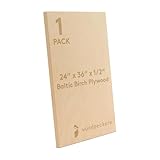
I remember staring at a pile of offcuts from a birch plywood cabinet build, wondering, ‘Can birch plywood be recycled?’ It felt like a shame to just toss it, all those perfectly good sheets. But then came the daunting thought: what does recycling even look like for something like plywood? It’s not as simple as tossing a plastic bottle into the blue bin.
Years ago, I learned the hard way that not everything labeled ‘eco-friendly’ or ‘recyclable’ actually is, at least not in practice for the average homeowner. Lots of promises, very little follow-through when you get down to the nitty-gritty. So, let’s cut through the noise and talk about what you can actually do with your leftover birch plywood.
What Happens to Plywood When It Goes to the Dump?
Let’s be blunt: most plywood, including birch, ends up in the landfill. It’s the cheapest and easiest option for manufacturers and, frankly, often for consumers too. When you think about what plywood is – layers of wood veneer glued together – it’s not exactly a single-material item that plastics recycling facilities or even most paper mills can handle. The glues, especially older formaldehyde-based ones, are a big part of the problem. They can leach into the ground if not handled properly, and they contaminate the wood fibers if you try to break them down for something like particleboard manufacturing.
I’ve seen construction sites where entire pallets of usable wood scraps get tossed because nobody wants to sort them. It’s a waste, plain and simple. The sheer volume of construction and demolition debris is staggering, and wood products, including plywood, make up a significant chunk of it. When it hits the landfill, it just sits there, taking up space and slowly decomposing, but not in a way that’s particularly helpful for the environment. The chemical components in the glues can also mean it takes a very, very long time to break down, potentially releasing harmful substances over decades. It’s a far cry from the renewable resource we like to think wood is when it’s buried under tons of garbage.
The challenge with recycling plywood isn’t just the material itself, but the process. To truly recycle it into new wood products, you need to separate the wood fibers from the glues and any coatings. This requires specialized facilities and technologies that aren’t widely available or economically viable for small-scale operations. So, while the idea of recycling plywood is sound, the reality is that it’s a complex logistical and chemical puzzle. For birch plywood specifically, the hardwood nature means it’s denser and often stronger than softwood plywood, which can sometimes make processing more challenging or require different machinery. It’s not impossible, but it’s certainly not a simple drop-off at your local recycling center situation.
The Real Deal: Can Birch Plywood Be Recycled?
So, to answer the core question: can birch plywood be recycled? The short answer is: yes, but with significant caveats and usually not through your curbside bin. It’s not like glass or aluminum where you can just toss it in the blue bin and expect it to magically become something new. Plywood recycling typically falls into a few categories, and most of them require deliberate effort and a bit of research on your part. The most common pathway is through industrial recycling processes that convert old plywood into composite wood products like particleboard, MDF (medium-density fiberboard), or even animal bedding. These processes often involve grinding the plywood down and then using new binders to create new materials.
I remember trying to recycle some leftover plywood from a workshop project. I called my local municipal recycling center, and the person on the phone sounded utterly confused. ‘Plywood? Like… wood?’ was the gist of it. Turns out, they only took clean, untreated dimensional lumber, not engineered wood products. This is a common roadblock. You can’t just dump it with your yard waste or your regular household recycling. It requires a more specialized approach, and often, that means finding a commercial recycler or a specific drop-off location that handles construction and demolition debris. Sometimes, local sawmills or wood product manufacturers might accept clean plywood scraps for their own processes, but you’d have to call around and ask.
The key factor is contamination. If your birch plywood is heavily painted, varnished, or coated with laminates, its recycling potential diminishes significantly. These finishes can be difficult to remove and can contaminate the wood fibers, making them unsuitable for many recycling streams. So, if you’re planning ahead and want to maximize the chances of your plywood being recycled, try to use natural finishes or none at all. Even then, you’re still looking at specialized recycling centers, not your average municipal facility. It’s a bit of a pain, and that’s why so much of it still ends up in the trash.
What to Look for in ‘recyclable’ Plywood
When you’re buying birch plywood, or any plywood for that matter, and you’re thinking about its end-of-life, there are a few things you can look for, though ‘recyclable’ labels aren’t as common as on other materials. The biggest indicator is the type of adhesive used. Modern plywood manufacturers are increasingly using low-VOC (volatile organic compound) adhesives or even formaldehyde-free binders. These are generally better for both your health and for potential recycling. If you can find documentation from the manufacturer about their adhesive systems, that’s a good sign. Sometimes, you’ll see certifications like CARB (California Air Resources Board) Phase II compliance, which indicates lower formaldehyde emissions, and while not directly a recycling certification, it points towards more responsible manufacturing. (See Also: Can A 4x8 Plywood Fit In A Honda Pilot )
Another factor is the finish. As I mentioned, heavy paints, varnishes, or melamine coatings make recycling much harder, if not impossible, for most facilities. Plywood that is sold unfinished, or with a natural oil or water-based finish, has a much better chance of being accepted by recyclers who process wood for composite materials. It’s less about the ‘birch’ part and more about what’s on it and in it. Think of it like trying to recycle a laminated countertop versus a raw piece of wood. One is a composite with plastics and glues that are hard to separate, the other is primarily wood.
Here’s a little table that might help you think about it. It’s not scientific gospel, but it’s based on what I’ve seen and learned:
| Plywood Type/Condition | Recycling Potential (Generally) | My Verdict |
|---|---|---|
| Unfinished, low-VOC adhesive | High | Your best bet. Easier to process. |
| Lightly finished (e.g., natural oil) | Medium | Depends on the facility’s capabilities. |
| Heavily painted or varnished | Low | Likely landfill. The coatings are the issue. |
| Melamine or plastic-coated | Very Low | Almost certainly landfill. Too much plastic. |
| Plywood with unknown glues | Uncertain | Assume low unless proven otherwise. |
The reality is, most consumers don’t have access to the industrial processes needed to break down plywood effectively. So, when I say ‘recyclable,’ I mean in the context of specialized facilities that can handle it. Don’t expect your local curbside pickup to take it. It’s a product where ‘reduce’ and ‘reuse’ are often much more practical first steps than ‘recycle’.
Common Mistakes When Trying to Recycle Plywood
The biggest mistake I see people make is assuming that because it’s wood, it can be treated like any other wood waste. This is where the common advice goes wrong. ‘Just take it to the wood recycler!’ someone might say, but they don’t specify which wood recycler, or what kind of wood they accept. I learned this the hard way when I tried to take a load of old cabinet doors, which were plywood with a laminate finish, to a place that only took clean, untreated dimensional lumber. They basically told me to take my garbage elsewhere.
Another common mistake is not checking with your local waste management facility before you haul your plywood scraps across town. What works in one municipality might be a complete no-go in another. Some areas have dedicated construction and demolition (C&D) waste recycling centers that can handle plywood, but you often have to pay a tipping fee, and they might have specific requirements about the condition of the wood. Others will simply send you to the landfill. It’s a gamble if you don’t do your homework.
People also tend to underestimate the impact of finishes and glues. They might think, ‘It’s just a thin coat of paint,’ or ‘It’s just a bit of glue.’
But for industrial recycling processes, those small amounts can be significant contaminants. If you’re looking to recycle, clean is king. So, if you have painted plywood, you might have to spend hours stripping it down, which, honestly, often isn’t worth the effort for the typical DIYer. It’s a prime example of where the ideal of recycling hits a brick wall of practical reality.
I’ve wasted more time trying to ‘do the right thing’ with materials that were more trouble than they were worth to recycle than I care to admit. Sometimes, the most ‘eco-friendly’ thing you can do is find a clever way to reuse it. (See Also: Can Bondo Be Applied To Plywood )
Real-World Uses for Birch Plywood Offcuts
Okay, so maybe recycling isn’t always the most straightforward path for birch plywood scraps. What else can you do? This is where the real-world, hands-on experience comes into play. I’ve got a whole bin of birch plywood offcuts in my workshop, and they get used constantly. The most obvious use is for smaller projects. Think about jigs for your table saw, custom drawer inserts, small shop storage solutions, or even decorative elements for other projects. A small piece can become a cutting board (if it’s food-grade and finished properly) or a sturdy base for a small sculpture.
I once built a custom shelf unit for my garage using a mix of new plywood and larger offcuts. The smaller pieces were perfect for the shelf dividers and the back panel. It saved me a good chunk of money, and it was satisfying to know I was giving those scraps a new life. Another great use is for practice pieces. If you’re trying out a new joinery technique or testing a finish, using a scrap of birch plywood is much better than ruining a full sheet. It’s also excellent for backing pieces, temporary supports, or even simple shop furniture like sawhorses or workbench tops. The density of birch plywood makes it surprisingly strong for its weight.
Here are a few specific ideas:
- Shop Jigs & Fixtures: Create custom sleds for your miter saw, router table fences, or drilling guides.
- Small Storage Boxes: Perfect for organizing hardware, small tools, or craft supplies.
- Practice Woodworking Techniques: Test out dovetails, mortise and tenon joints, or different finishing applications.
- Cabinetry Backing/Dividers: Use smaller pieces to add internal support or dividers in custom cabinets.
- Pet Projects: Build a simple cat scratching post or a small enclosure for a hamster.
- Art Canvases/Bases: For painters or mixed-media artists, it can serve as a sturdy substrate.
The key is to think creatively. Don’t look at a scrap as ‘waste’; look at it as a resource for your next small project. I’ve got pieces that have been sitting around for years, and eventually, they always find a purpose. It’s a far more satisfying outcome than just sending them to the landfill.
Practical Tips for Handling Plywood Waste
So, you’ve got birch plywood scraps, and you’re trying to be responsible. What are the practical steps? First, separate your wood waste. Keep clean, untreated plywood scraps separate from painted or finished pieces. This makes it easier to identify potential recycling or reuse options. If you have a lot of scrap, consider taking photos and posting them on local online marketplaces or ‘Buy Nothing’ groups. You’d be surprised how many people are looking for free materials for small projects.
For larger quantities or if you’re involved in a construction project, research C&D waste recyclers in your area before you start. Call them up, ask about their acceptance criteria for plywood, their fees, and their location. Don’t wait until you’re trying to clear out a job site. If your local municipality offers a special drop-off day for bulky waste or specific materials, check if plywood is included. Sometimes, these events can be a good opportunity to get rid of larger pieces without a direct fee, provided they meet the requirements.
If you’re building something yourself, try to design your project to minimize waste in the first place. Measure twice, cut once, and plan your cuts on the sheet to maximize the usable material. For example, when cutting multiple pieces of the same size, orient them so the grain aligns appropriately and you’re not creating excessive offcuts. Think about the dimensions of standard plywood sheets (usually 4×8 feet) and how your project pieces can fit onto them efficiently. It sounds obvious, but a little bit of planning upfront can save you a lot of material and, therefore, waste. It’s a principle that applies to almost every material, but it’s particularly relevant with sheet goods like plywood.
Frequently Asked Questions About Birch Plywood Recycling
Can You Put Birch Plywood in Your Home Recycling Bin?
No, absolutely not. Birch plywood is an engineered wood product with glues and often finishes that are not compatible with standard household recycling processes. It requires specialized industrial facilities to break down and reprocess, and it cannot be placed in your curbside recycling bin alongside paper, plastic, and glass. (See Also: Can Cat Plywood Be Used For Exterior Siding )
What Kind of Wood Can Be Recycled at a Typical Recycling Center?
Typically, recycling centers that accept wood will only take clean, untreated, dimensional lumber (like 2x4s, 4x4s, etc.) that is free from paint, stains, glues, and nails. This is usually for composting or mulching programs. Engineered wood products like plywood, MDF, or particleboard are generally not accepted.
Are There Specific Facilities That Recycle Plywood?
Yes, there are specialized facilities, often called construction and demolition (C&D) waste recyclers, that handle wood products including plywood. These facilities use industrial processes to grind down the wood and often repurpose it into new composite wood products, animal bedding, or biomass fuel. You’ll need to research these in your local area.
Is Birch Plywood Bad for the Environment?
Birch plywood itself can be a sustainable material if sourced responsibly and manufactured with eco-friendly glues. However, its environmental impact is significantly increased when it ends up in landfills due to the glues and finishes, and when it’s produced using toxic binders. The key is responsible sourcing, manufacturing, and end-of-life management.
What Are the Environmental Concerns with Plywood Glues?
Many traditional plywood glues, particularly those containing formaldehyde, can release VOCs into the air, which are harmful to human health and the environment. When plywood is landfilled, these chemicals can potentially leach into the soil and groundwater. Modern, low-VOC or formaldehyde-free adhesives significantly reduce these risks.
Conclusion
So, after all that, can birch plywood be recycled? Yes, technically, it can be. But the practical reality is that it’s not as simple as tossing it in your blue bin. It requires a conscious effort to find specialized recycling facilities or to get creative with reusing it yourself. For most of us, focusing on reducing waste through smart design and maximizing the reuse of offcuts is the more achievable and effective approach.
Don’t let the complexity of recycling discourage you from using a great material like birch plywood. Just be mindful of its end-of-life. When you’re done with a project, take a moment to assess your scraps. Can they be used in your next build? Can someone else use them? If recycling is your goal, do your homework beforehand to find out where they can actually go.
Ultimately, the best way to handle plywood waste is often to minimize its creation in the first place. Think about your cuts, plan your projects, and embrace the potential of those smaller pieces. Your workshop, your wallet, and the planet will thank you for it.