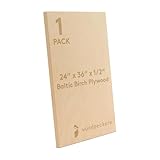
I remember staring at a stack of birch plywood, trying to convince myself it was the magic bullet for the kitchen cabinets I was building. Everyone was raving about its smooth surface and clean look. But let me tell you, my first attempt at cabinet doors with it was… humbling. It looked okay, sure, but the reality of using it for something that takes a beating like cabinet doors is a whole different story. So, can birch plywood be used for cabinet doors? The short answer is yes, but it’s a big fat ‘but’ with a whole lot of ‘ifs’ attached.
If you’re eyeing birch plywood for your next cabinet project, you need to know the gritty details before you drop your hard-earned cash. Forget the glossy magazine spreads; we’re talking about real-world application here.
So, Can Birch Plywood Be Used for Cabinet Doors? The Reality Check
Look, I’ve seen my fair share of woodworking fads come and go, and birch plywood being touted as the next big thing for cabinet doors is one of them. The truth is, while it can be used, it’s not always the slam dunk some folks make it out to be.
I’ve spent more time than I care to admit trying to make cheaper materials look like high-end stuff, and plywood often falls into that category. For cabinet doors, you’re looking for something that’s not only good-looking but also durable, stable, and easy to finish.
Birch plywood checks some of those boxes, but not all of them perfectly. The visual appeal is undeniable – that fine, uniform grain is often a big draw, and it takes paint or stain like a dream, provided you do your prep work right. But here’s the kicker: plywood is, at its core, layers of wood glued together.
While this gives it strength, the edges can be a pain. They’re not solid wood; they’re exposed plies that need a lot of attention if you want a clean, finished look without those tell-tale lines. I once tried to just slap some edge banding on a birch plywood door and call it a day. Big mistake.
It looked cheap, and the banding started to peel within months. You’ve got to really commit to a good edge treatment, or embrace the layered look, which isn’t for everyone.
The biggest selling point for birch plywood is often its price compared to solid hardwoods. You can get a sheet of good quality birch plywood for a fraction of what you’d pay for solid maple or cherry. This makes it an attractive option for budget-conscious DIYers or those looking to reface an entire kitchen without breaking the bank.
However, you need to be realistic about what you’re getting. It’s a composite material. It will behave differently than solid wood.
Expansion and contraction might be less of an issue due to the cross-graining of the plies, which is a plus for stability. But you’re also dealing with the potential for voids within the layers, especially in lower-grade plywood, and the surfaces can sometimes have inconsistencies that require extra sanding and filling. I’ve definitely encountered sheets where one side was near-perfect and the other looked like it had seen better days, making it a gamble on what you’re actually getting out of the store.
The question of whether can birch plywood be used for cabinet doors really comes down to expectations and how much effort you’re willing to put in. If you’re aiming for a painted finish, it’s a much more forgiving material than if you’re trying to achieve a natural wood look. For painted doors, the smooth, consistent surface of birch plywood is a huge advantage.
You can get a really clean, modern finish without the grain patterns of solid wood showing through. But if you want that rich, natural wood grain that you get from solid hardwoods, you might find birch plywood a bit… well, uniform.
It lacks the character and depth that many people associate with premium cabinet doors. So, while the answer is technically ‘yes,’ it’s a qualified ‘yes’ that depends heavily on your project’s goals and your tolerance for the inherent characteristics of plywood.
What to Actually Look for in Birch Plywood for Doors
Alright, so you’ve decided to go for it, or you’re still on the fence. If you’re going to use birch plywood for cabinet doors, you can’t just grab any old sheet from the lumberyard. There are grades, and they matter. For cabinet doors, you want the good stuff.
I’m talking about AC or AA grades, and preferably marine-grade if you can swing it, though that’s usually overkill and pricey. The ‘A’ rating means a sanded, paint-grade face, and a solid, smooth back.
The ‘C’ is still decent, but might have a few more imperfections. You want the best face you can get because that’s what everyone will see. Don’t skimp here. I learned this the hard way when I tried to save a few bucks on a lower grade for some test pieces, and the difference in surface quality was night and day.
The edges of good plywood are also smoother, with fewer voids, making them easier to work with. Look for sheets with tight, uniform plies and minimal gaps or knots.
When you’re selecting your sheets, physically inspect them. Hold them up to the light. Look for any signs of delamination, which is where the layers start to separate.
This is a death sentence for cabinet doors. Plywood is made by alternating the grain direction of the wood plies, which gives it strength.
But if that glue bond isn’t good, or if the wood itself is weak, those layers can start to peel apart, especially with the moisture and temperature fluctuations that kitchens often experience. I once bought a sheet that looked fine in the store, but by the time I got it home and started cutting, I discovered a nasty void right in the middle of a door panel. It meant I had to scrap that piece and start over, costing me time and money. (See Also: Are Plywood Blades Raised In The Middle )
Always check the edges for any signs of lifting or separation between the plies.
The thickness also matters. For cabinet doors, I generally recommend at least 1/2 inch (12mm) thickness, and 3/4 inch (18mm) is even better, especially for larger doors or shaker-style doors where you might be routing out panels. Thicker plywood is more rigid and less prone to warping.
Warping is the enemy of well-fitting cabinet doors. If a door warps even slightly, it won’t close properly, and it’ll look like it’s sagging. While birch plywood is generally more stable than some other wood products, no plywood is completely immune to warping, especially if it’s exposed to uneven moisture.
So, choosing a thicker grade, and ideally using a good quality, formaldehyde-free plywood (though this is more about indoor air quality, it can also indicate better manufacturing standards), will give you a much better chance of success.
Here’s a little table I put together based on my experience:
| Plywood Feature | Verdict for Cabinet Doors | My Experience |
|---|---|---|
| Grade (AC/AA) | Key | AC is workable, AA is better for a flawless paint finish. Don’t go below. |
| Thickness (1/2″ or 3/4″) | Highly Recommended | 1/2″ is minimum for smaller doors. 3/4″ is king for stability and larger doors. |
| Edge Quality | Important | Poor edges mean lots of filling and sanding, or a visibly layered look. Plan for extra work. |
| Moisture Resistance | Important | Kitchens are humid. Get the best glue bond you can find. Marine grade is pricey but superior. |
| Price Point | Variable | Budget-friendly compared to solid wood, but good quality plywood isn’t dirt cheap. |
Common Mistakes People Make (and I’ve Made)
One of the biggest blunders I see, and one I’ve committed, is treating plywood like solid wood when it comes to finishing. You can’t just slap stain on those edges and expect magic.
Those exposed plies are going to soak up stain differently, and you’ll end up with a blotchy, uneven mess. My first attempt looked like a zebra crossed with a Rorschach test. You have to properly prep those edges.
This means filling them with wood filler or epoxy putty, sanding them smooth, and then priming them before you even think about applying your final finish. Some people use edge banding, which can work if done perfectly, but it’s often a compromise.
Another method is to use a solid wood edge trim, effectively creating a frame around the plywood panel. This adds a step and complexity, but it gives you a much more durable and aesthetically pleasing result. Just remember, the goal is to hide or integrate those ply edges so they don’t scream ‘plywood’.
Another common pitfall is not accounting for the thickness difference when designing your cabinet boxes and doors. If you’re replacing solid wood doors with plywood doors of the same nominal thickness, they might not sit flush in the reveals or might interfere with hinges.
Plywood is often manufactured to slightly different tolerances than solid wood, and the edge treatment can add even more thickness. I learned this when I built my cabinet boxes assuming 3/4 inch doors would fit perfectly, only to find they were a hair too thick for the existing reveals. It meant I had to shave down the edges of every single door, which was a tedious and frustrating process.
Always measure precisely and account for your edge treatment method when planning your door dimensions. It’s far easier to trim a bit off the initial cut than to try and fix a door that’s already been finished or installed.
And then there’s the issue of routing. If you plan on doing any decorative routing, like for shaker-style panels or decorative edges, you need to be aware of how plywood behaves.
The outer plies can sometimes chip or splinter, especially with aggressive router bits or dull blades. This is where a good quality plywood with a smooth, tight face is really important. You also want to make sure you’re using sharp router bits and taking shallow passes. I remember trying to route a decorative profile on a piece of lower-grade plywood, and it just looked ragged.
The veneer chipped out, leaving little craters. It was a disaster. If you’re going for routed details, consider using a high-quality plywood with a good veneer, or even a MDF panel for the center if it’s a shaker style, as MDF routes much cleaner for panel inserts.
But if the entire door is routed plywood, then quality is most important.
Finally, people often underestimate the finishing work required. Plywood isn’t like a piece of solid cherry that you can just sand and oil.
Even with the smoothest A-grade birch, you’re still going to need thorough sanding with progressively finer grits to get it ready for paint or stain. If you’re painting, a good primer is a must.
I’ve tried skipping primer on plywood before, and the paint just didn’t adhere well, leading to peeling and a less durable finish. Multiple thin coats of paint, with light sanding in between, are key. For staining, as I mentioned, the edges are a nightmare. (See Also: Are Plywood Prices Coming Down )
Even the main faces can sometimes have subtle differences in how they take stain, so always do a test piece. My advice is to embrace the paint. Birch plywood shines brightest when it’s painted a solid color.
It gives you that clean, modern look without fighting the material’s inherent limitations.
Real-World Use: My Experience with Birch Plywood Cabinet Doors
I’ve used birch plywood for cabinet doors on a few projects now, both for myself and for friends who were on a tighter budget. The first time was a small bathroom vanity. The goal was a modern, clean look, and painting the doors was the plan.
I opted for 1/2 inch AC grade, and honestly, for that application, it worked out pretty well. I took my time with the edge filling, using a good quality wood filler that dried hard and sanded smoothly. I used a fine-grit sanding sponge to get into the routed edges of the shaker-style panels.
Then it was primer, two coats of a good quality semi-gloss enamel, and a light sanding between coats. The result was a smooth, durable finish that held up to splashes and general bathroom humidity. No warping, no peeling. It looked good, and the client was happy.
That project solidified my opinion that painted birch plywood doors can be a success.
The real test, however, came when I decided to tackle my own kitchen. I was on a shoestring budget and really wanted to update the look without a full renovation. I decided to use 3/4 inch birch plywood for the upper cabinet doors. I wanted them to feel substantial and I was aiming for a light grey paint finish.
This time, I went with AA grade for the faces, and I was meticulous about the edges. I used a two-part epoxy putty for the edges because I wanted something incredibly durable, and then sanded it flush. The routing for the shaker panels went surprisingly well because of the higher grade plywood and sharp bits. The whole process, from cutting to finishing, took me nearly three weekends, but the payoff was significant.
The doors feel solid, they look sleek and modern, and the finish is holding up to daily use. They don’t have the depth of grain you’d get from solid wood, but that’s not what I was going for. They look clean, functional, and a world away from the dated laminate doors I replaced.
However, I also experimented with staining birch plywood for a set of garage cabinets. This is where I learned that stained birch plywood doors are a whole different beast, and frankly, not one I’d recommend for most people. I tried a few different pre-stain conditioners and staining techniques, but the results were always a bit… meh.
The edges were a nightmare, as expected, and even the faces had a slightly artificial look to them. It was flat, uniform, and lacked the warmth and character of stained solid wood. It’s possible to get a decent result with a lot of trial and error, perhaps using a tinted lacquer or a gel stain, but for my money, if you want stained cabinet doors, invest in solid wood. It’s just a better material for that particular aesthetic.
So, when considering can birch plywood be used for cabinet doors, the intended finish is probably the most important factor.
The durability aspect is also worth noting. These kitchen doors have seen spills, grease splatters, and the general chaos of family cooking for over two years now.
So far, no issues with delamination, and the paint finish is intact. They’ve held up surprisingly well. I haven’t had any significant warping, which I attribute to the thicker 3/4 inch material and the stable nature of plywood construction. But I know of a friend who used thinner plywood for their pantry doors and had them start to sag within a year, especially the longer doors.
That’s a clear indication that material choice and thickness are directly tied to long-term performance. For high-use areas or larger doors, skimping on thickness or quality is a false economy.
Practical Tips for Working with Birch Plywood Doors
If you’re going to tackle cabinet doors with birch plywood, sharp tools are your best friend. I can’t stress this enough. Dull blades on your table saw or circular saw will cause tear-out on the veneer, making your edges look ragged and your surfaces susceptible to chipping. Invest in good quality blades with a high tooth count.
For routing, use sharp bits designed for plywood if possible. I also find that scoring the cut line with a utility knife before making the cut on a table saw can help create a cleaner edge, especially on the initial cut from the sheet.
It’s an extra step, but it saves a lot of frustration later when you’re trying to clean up splintered edges.
When it comes to sanding, start with a coarser grit (like 100 or 120) to smooth out any imperfections or filler on the edges, then move to finer grits (150, 180, 220). If you’re painting, you’ll want to sand up to at least 220. For staining, you might stop a bit earlier depending on the stain and desired look, but always do a test piece. A good random orbital sander will save you a ton of time and effort compared to sanding by hand. And always, always clean off the dust thoroughly between grits using a tack cloth or a damp microfiber towel. Dust is the enemy of a smooth finish. (See Also: Are Plywood Walls Ok For Garage Walls )
For joining plywood panels into shaker-style doors, I use a combination of glue and a biscuit joiner or pocket screws. Biscuits provide good alignment and a decent amount of strength, while pocket screws are faster and create a very strong bond, especially for larger doors. Make sure your pocket holes are countersunk properly so they don’t protrude. If you’re building a frame-and-panel door, make sure the panel sits loosely in the groove. Plywood will expand and contract slightly, and you don’t want it to bind or crack the frame. Leave a small gap – it’s better to have a slight gap that’s easily filled or painted over than to risk damage to the door.
Here’s a quick process for making a painted shaker-style birch plywood door:
- Cut to Size: Cut your birch plywood to the desired dimensions for your door frame and center panel. Make sure all cuts are square.
- Prepare Edges: For the center panel, if it has exposed edges, fill them with wood filler or epoxy putty and sand smooth. For the frame pieces, make sure a clean, square edge.
- Route Panel (Optional): If creating a shaker style, route a rabbet around the edges of the center panel for the frame to sit in, or route a decorative profile if desired.
- Assemble Frame: Glue and join the frame pieces using biscuits, dowels, or pocket screws. Clamp securely and let the glue cure.
- Insert Panel: Apply glue to the rabbet in the frame and carefully insert the center panel. Make sure it has a little room to move.
- Fill and Sand: Once the glue is dry, fill any gaps or imperfections, especially around the panel. Sand the entire door to at least 220 grit, paying attention to the edges and any routed areas.
- Prime: Apply 1-2 coats of a high-quality primer specifically designed for wood or cabinets. Sand lightly between coats.
- Paint: Apply 2-3 thin coats of your chosen cabinet paint (enamel is recommended for durability). Lightly sand between coats.
- Hardware: Attach hinges and knobs/pulls.
The Lsi Keywords and Why They Matter Here
When people are researching if can birch plywood be used for cabinet doors, they often stumble upon related terms that help refine their understanding. For instance, discussing the stability of plywood is key. This relates to how the material reacts to humidity and temperature changes, which is important for cabinet doors that are constantly exposed to the kitchen environment. Another important aspect is the finish.
People want to know if they can stain or paint plywood, and what kind of results they can expect. This leads to conversations about wood grain and surface preparation. The common advice often leans towards painting, as it hides the inherent characteristics of plywood more effectively than staining.
My own experiences reinforce this, especially when comparing painted bathroom vanity doors to stained garage cabinets. The latter was a much tougher sell visually. The goal here is to give a complete answer that addresses not just the possibility, but the practicalities and aesthetics involved in using birch plywood for this specific application, touching on durability and visual outcomes.
Can Birch Plywood Warp for Cabinet Doors?
Yes, birch plywood can warp, though it’s generally more stable than solid wood due to its cross-grained construction. Warping is more likely in thinner panels, longer doors, or when exposed to significant moisture fluctuations. Using thicker plywood (3/4 inch), quality construction with good glue bonds, and proper finishing techniques can significantly mitigate the risk of warping.
Is Birch Plywood Good for Painted Cabinet Doors?
Absolutely. Birch plywood is an excellent substrate for painted cabinet doors. Its smooth, uniform surface takes paint very well, requiring minimal filler and sanding compared to woods with pronounced grain patterns. This allows for a clean, modern finish that many homeowners desire.
What Is the Best Grade of Birch Plywood for Cabinet Doors?
For cabinet doors, you’ll want the highest grade you can reasonably afford, typically AC or AA. An ‘A’ rating signifies a smooth, sanded, paint-grade face. AA is the best, offering a nearly flawless surface. These grades minimize voids and make sure a consistent appearance, which is important for both painted and stained finishes, though particularly for painted doors where imperfections are more noticeable.
How Do You Finish the Edges of Birch Plywood Cabinet Doors?
Finishing the edges is important for a professional look. Common methods include using wood filler or epoxy putty and sanding smooth, applying edge banding (which requires careful application and can sometimes peel), or attaching a solid wood trim around the perimeter. For painted doors, filling and sanding thoroughly is key. For stained doors, hiding the ply edges is challenging and often requires a solid wood trim.
Can You Stain Birch Plywood for Cabinet Doors?
You can stain birch plywood, but it’s often challenging to achieve a natural, high-quality look. The layered edges are difficult to stain evenly, and the face veneers can accept stain inconsistently, sometimes leading to a blotchy or artificial appearance. If you’re aiming for a stained finish, solid wood is generally a superior choice. If you must use plywood, consider tinted lacquers or gel stains and always do extensive testing on scrap pieces first.
When to Just Use Solid Wood Instead
Honestly, there are times when you just have to bite the bullet and go with solid wood, and I’ve learned this through painful experience. If you’re dreaming of a rich, deeply grained stained finish that shows off the natural beauty of wood, don’t waste your time fighting plywood.
Solid hardwoods like maple, cherry, or oak will give you that depth, character, and warmth that plywood simply can’t replicate, no matter how much you sand and fill. The edges will be clean, the grain will flow beautifully, and the overall aesthetic will be more premium. Yes, it costs more upfront, and yes, it can be a bit less stable if not properly acclimated and finished, but the visual payoff is usually worth it for those natural wood looks. I learned this when trying to stain birch plywood for a friend’s rustic-themed kitchen; the result was… okay, but it never quite had that authentic, luxurious feel I was aiming for.
Solid wood would have nailed it.
Another scenario is when you need doors that are going to withstand significant abuse or moisture, and you want absolute peace of mind. While good quality plywood is durable, solid wood, when properly finished and maintained, can offer a different kind of longevity. Think about areas with extreme humidity or temperature swings, or doors that are subjected to a lot of direct impact.
While plywood’s layered structure provides some stability, solid wood offers a more homogenous and often more repairable surface. If you’re building custom cabinetry for a high-end restaurant kitchen or a particularly demanding commercial space, investing in solid wood might be the safer bet for guaranteed performance and longevity. For my own home, I lean towards solid wood for base cabinets where they might get kicked or bumped more often, and painted plywood for uppers where wear is less.
Finally, consider the overall design aesthetic you’re going for. If you’re aiming for a very traditional, classic look with intricate joinery and a visible wood grain, solid wood is almost always the better choice. Plywood can look a bit too modern or utilitarian for some styles.
While you can certainly achieve modern and minimalist designs with birch plywood, more ornate or traditional styles often benefit from the inherent qualities of solid wood. Think about the fine details – the way a solid wood edge can be shaped, the way the grain wraps around a miter joint. These are details that are harder to achieve or look less refined with plywood.
So, while the question of can birch plywood be used for cabinet doors has a ‘yes’ answer, it’s important to know when that ‘yes’ comes with compromises that might not align with your ultimate vision for the project.
Final Verdict
So, the verdict on whether can birch plywood be used for cabinet doors is a resounding ‘yes, but be smart about it.’ If you’re painting, and you take the time to properly prep those edges and make sure a smooth surface, you can get a fantastic, modern-looking result that’s also budget-friendly. I’ve seen it work, and I’ve done it myself with success on my own kitchen uppers. However, if your heart is set on that deep, rich stained wood grain, or if you’re looking for the absolute easiest route with minimal edge-treatment fuss, you’re probably better off saving up for solid hardwood.
The key takeaway is preparation. Don’t cut corners on filling, sanding, and priming if you’re painting. And if you’re contemplating a stained finish, do yourself a favor and practice extensively on scrap pieces first. Understanding the material’s limitations and strengths is half the battle. For many DIY projects, especially painted cabinets, birch plywood offers a practical and attractive solution when done right.
Ultimately, the decision rests on your project’s goals, your budget, and how much effort you’re willing to invest in the finishing. Take your time, do your homework, and you can make birch plywood work for your cabinet doors.