I remember the first time I tried to pack my art supplies for a trip. I had this sudden, overwhelming panic: can I bring paint brushes on a plane? My mind raced with images of TSA agents confiscating my beloved Kolinskys, deeming them some sort of airborne threat. It felt like a ridiculous question, but also, a genuinely important one for any artist who doesn’t want to be stuck without their tools.
Honestly, most of the advice out there is either too vague or too technical. It’s like they assume everyone knows the exact composition of their brush bristles and handle. I’ve wasted enough money on travel-sized sets that were basically glorified toothbrushes to know that when it comes to packing art gear, you need the real dirt.
What the Tsa Actually Cares About (spoiler: It’s Not Your Brushes)
Let’s cut to the chase: the Transportation Security Administration (TSA) and other international aviation security bodies are primarily concerned with things that could be used as weapons or pose a fire hazard. Think sharp objects, liquids over a certain volume, and explosive materials. When it comes to your paint brushes, the good news is they generally fall into none of these categories.
A standard paint brush, whether it’s a hog bristle for oils or a soft synthetic for watercolors, isn’t considered a prohibited item. The bristles themselves are harmless, and the handles, typically made of wood or plastic, are not a security risk. This applies to both carry-on and checked baggage. So, in most cases, the answer to ‘can i bring paint brushes on a plane’ is a resounding yes.
However, there are a couple of nuances worth mentioning, especially if you’re someone who uses very specialized or large brushes. Very large, stiff brushes with sharp metal ferrules (the part that holds the bristles to the handle) could, in theory, be seen as blunt instruments. I’ve never heard of anyone getting their normal art brushes confiscated for this reason, but if you’re packing a set of industrial-sized stiff-bristled brushes for some niche restoration project, you might get an odd look. It’s highly unlikely, but I’m telling you the absolute worst-case scenario, not just the easy answer.
The real concern for security is usually not the brushes themselves, but what you might be using them with. This is where liquids and gels come into play. If you’re carrying watercolors, gouache, acrylics, or oil paints, those are a different story. We’ll get into that later, but for the brushes alone, you’re generally in the clear. I once flew with a whole rolling case packed with brushes for a plein air workshop, and not a single one was questioned. They were more interested in my tubes of paint, which, as expected, had to adhere to the liquid rules.
Okay, so the brushes themselves are usually fine. But the real challenge when flying with art supplies isn’t the brushes; it’s the media. If you’re a watercolorist or gouache painter, you’re dealing with water-based paints, which are typically considered liquids. This means they fall under the TSA’s 3-1-1 rule for carry-on baggage: liquids, gels, aerosols, creams, and pastes must be in containers of 3.4 ounces (100 milliliters) or less, and all containers must fit in one quart-sized, clear, zip-top bag.
This is where things get tricky. Most small tubes of watercolor or gouache are under 3.4 oz, so you can pack them in your carry-on’s liquid bag. However, if you’re using larger tubes, pans, or even small bottles of mediums or inks, you need to be mindful of the volume. I learned this the hard way when I packed a favorite 4oz bottle of blending solution for my markers, thinking it would be fine. It got flagged immediately in my carry-on, and I had to choose between tossing it or checking my bag, which I couldn’t do as I was only taking a carry-on. I ended up having to buy a new bottle at my destination for a hefty markup.
For oil paints, the situation is a bit different. While they are not water-based, they often contain solvents or mediums that might be subject to restrictions, especially in larger quantities. Many artists opt to check their oil paints if they have significant amounts or specific solvents they can’t do without. For carry-on, it’s generally best to stick to small tubes of paint and avoid any separate bottles of turpentine, linseed oil, or other mediums unless they are travel-sized and comply with the liquid rules. Some artists even use solid oil pastels or oil sticks to avoid liquid issues altogether when flying.
Acrylics are also water-based, so they fall under the same liquid restrictions as watercolors and gouache for carry-on. If you have a large bottle of acrylic medium or a big tube of paint, it will likely need to go in your checked luggage. The key takeaway here is that the brushes are the easy part; it’s the paint that requires careful planning.
Paint Brush Materials: What’s Allowed?
The material your paint brushes are made of rarely matters for TSA. Whether it’s natural hair like sable or hog bristle, or synthetic fibers, they are not considered dangerous items. The handles are typically wood, plastic, or sometimes metal. Wood and plastic are absolutely fine. Metal handles, while very rare on typical art brushes, are also generally not an issue unless they are extremely long or pointed, which is uncommon for art tools. (See Also: Can Acrylic Paint Go In An Air Brush )
| Brush Component | TSA Concern Level | Notes |
|---|---|---|
| Bristles (Natural/Synthetic) | Low | Harmless. |
| Ferrule (Metal) | Low | Usually small and not pointed enough to be a weapon. |
| Handle (Wood/Plastic) | Low | Standard materials. |
| Handle (Metal) | Very Low | Only a concern if exceptionally long or sharp, which is rare for art brushes. |
The materials of your brushes are almost a non-issue. The real concern is always about potential weapons or flammable substances. Paint brushes, by their very nature, don’t fit those criteria. So, relax about the brush material itself and focus your energy on the paints and mediums you plan to bring.
Can I Bring Paint Brushes on a Plane: Carry-on vs. Checked Baggage
When you’re trying to figure out ‘can I bring paint brushes on a plane,’ the distinction between carry-on and checked baggage is important, though for the brushes themselves, it’s less so. As mentioned, brushes are generally permitted in both. However, the real difference comes into play with your paints, solvents, and mediums.
For carry-on, you are strictly limited by the 3-1-1 liquid rule. This means any paints, inks, mediums, or solvents that are liquid, gel, or aerosol must be 3.4 oz (100 ml) or less and fit into a single quart-sized bag. This is perfect for a few small tubes of watercolor, gouache, or acrylics, a small bottle of rubbing alcohol for certain techniques, or a travel-sized ink bottle. Your brushes will go right alongside these in your carry-on bag without any issue. I often pack my key brushes in a small pencil case within my carry-on, making them easily accessible.
Checked baggage offers more flexibility, but it also comes with its own set of regulations, particularly regarding flammable liquids and aerosols. While you can pack larger containers of paint (over 3.4 oz) in checked bags, you need to be cautious with solvents like turpentine or mineral spirits. Many airlines have restrictions on the quantity of flammable liquids you can pack, even in checked baggage. It’s always a good idea to check your specific airline’s policy on hazardous materials. For instance, some airlines might allow a small quantity of artist’s turpentine in a securely sealed container, while others may prohibit it entirely.
My personal preference is to always keep my most-used brushes and a limited palette of key paints in my carry-on. This way, if my checked bag gets delayed or lost, I can still do some sketching or painting. For larger projects or if I’m bringing a wider range of supplies, I’ll carefully pack the rest in checked luggage, making sure all liquids are sealed tightly and any potentially restricted items are confirmed as permissible by the airline. It’s a balancing act, but keeping the brushes accessible is always a priority for me.
My ‘oops!’ Moment: The Travel Art Supply Disaster
Here’s a story that still makes me cringe a little. I was heading to an art retreat in another country, and I’d decided to pack my entire set of oil paints, including a decent-sized bottle of odorless mineral spirits. I figured, ‘checked baggage, no problem!’ I meticulously wrapped each tube in plastic wrap, put them in a sturdy box, and nestled the bottle of spirits in the middle, surrounded by bubble wrap. I thought I was a packing genius.
Fast forward to baggage claim. My suitcase looked okay, but when I opened it back at the hotel, I was met with… disaster. The mineral spirits bottle, despite my best efforts, had leaked. Not a lot, thankfully, but enough to coat a good portion of my canvas panels and a couple of my less-than-pricy brushes with a thin, oily film. The smell was faint but persistent.
The worst part? My favorite synthetic blending brushes were slightly stiffened from the spirits. It wasn’t a complete loss, but it meant I had to spend the first evening cleaning my supplies instead of sketching. Lesson learned: even in checked bags, volatile liquids need extra, extra care, and sometimes, it’s just not worth the risk for certain items. For that trip, I ended up buying a small bottle of spirits locally, which cost me about $25 more than it would have at home, but it saved me a lot of hassle and potential damage to other items.
Common Mistakes and How to Avoid Them
People often overthink the ‘can i bring paint brushes on a plane’ question, focusing too much on the brushes themselves and not enough on the accompanying materials. Here are some common mistakes I see artists make, and how you can steer clear of them:
Mistake 1: Assuming all paints are treated the same. As we’ve discussed, water-based paints (watercolor, gouache, acrylics) and oil-based paints have different rules, especially regarding solvents and mediums. Always check the specific regulations for your paint type and any accompanying liquids. (See Also: Can Acrylic Paints Be Used In An Aqua Brush )
Mistake 2: Packing large bottles of mediums or solvents in carry-on. This is the most common reason for confiscation. Remember the 3.4 oz (100 ml) limit and the single quart-sized bag rule for carry-ons. If it’s larger, it needs to go in checked baggage, and even then, check airline restrictions on flammables.
Mistake 3: Not sealing containers properly. Even if an item is allowed, a leak can cause significant problems. Use plastic wrap, tape, or dedicated leak-proof caps for tubes and bottles. Double-bagging can also be a lifesaver, as my unfortunate experience proved.
Mistake 4: Forgetting about brush cleaners. Many brush cleaners are alcohol-based or contain solvents that are subject to liquid restrictions. Treat them the same way you would turpentine or mineral spirits.
Mistake 5: Not considering the brush type for travel. While all brushes are generally allowed, some are more travel-friendly. Look for retractable brushes, brushes with caps, or compact travel brush sets. They protect the bristles and are easier to pack.
My Take: Overrated Travel Brush Sets
Everyone raves about those all-in-one travel brush sets with the retractable caps or the ones that snap together. And sure, they look cool. But honestly? Most of them are a compromise too far. I bought one set for about $180 across four different sizes, hoping for convenience. What I got was stiff bristles that didn’t hold a point, handles that felt cheap and unbalanced, and ferrules that started to rust after a few uses. They were terrible for anything requiring detail.
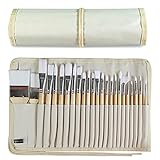
My contrarian opinion? Stick with your favorite brushes, even the expensive ones, and invest in good brush guards or a sturdy brush roll. For a few dollars, you can get silicone brush guards that protect the bristles beautifully, or a simple fabric roll that keeps them organized. It might take up slightly more space than a single retractable brush, but the painting experience is infinitely better. Don’t sacrifice your art quality for a gadget that promises convenience but delivers mediocrity. You can absolutely bring your good brushes; just protect them properly.
Practical Tips for Flying with Your Brushes
Packing art supplies, especially for international travel, can feel like a puzzle. But once you understand the basic rules and learn from others’ mistakes, it becomes much more manageable. Here are a few practical tips to make your journey smoother when you’re wondering ‘can i bring paint brushes on a plane’:
1. Invest in Brush Guards or Cases: As I mentioned, protecting your bristles is key. Silicone brush guards are inexpensive and work wonders. Alternatively, a good brush roll or a sturdy pencil case with individual slots for each brush can prevent them from getting bent or damaged. For very precious brushes, consider a hard-shell travel case designed for art supplies.
2. Decant Liquids into Travel-Sized Containers: If you absolutely need a specific medium or ink that comes in a larger bottle, transfer a small amount into TSA-approved 3.4 oz (100 ml) or smaller containers. Make sure these containers are clearly labeled.
3. Pack a Minimalist Palette for Carry-On: For your carry-on bag, focus on your key brushes and a small, hand-picked selection of paints. This might include a few tubes of watercolor, a small pan set, or a limited palette of acrylics. This makes sure you can sketch or paint even if your checked luggage is delayed. (See Also: A Brushes Digital Painting )
4. Use Ziploc Bags for Organization and Protection: Beyond the required liquid bag, use Ziploc bags to organize your supplies. Keep different types of brushes separate, put pencils and erasers in their own bags, and use them to contain any potential spills from paint tubes.
5. Know Your Airline’s Policy: This is important, especially for checked baggage. Some airlines have stricter rules than others regarding paints, solvents, and aerosols. A quick check of their website before you pack can save you a lot of headaches at the airport.
6. Consider Solid Media: If you’re really worried about liquid restrictions, consider switching to solid media for travel. Colored pencils, charcoal sticks, pastels, or solid watercolors require no liquids and are generally not an issue.
7. Label Everything Clearly: If you’re bringing anything that might look unusual or could be mistaken for something else, label it clearly. This can help security personnel understand what it is quickly.
Faq: Your Burning Questions Answered
Can I Bring My Oil Painting Brushes on a Plane?
Yes, you can generally bring your oil painting brushes on a plane in both carry-on and checked baggage. The brushes themselves are not considered a security risk. The main considerations for oil painters will be the paints and mediums, which may be subject to liquid and flammable material restrictions, especially in checked luggage.
Are Watercolor Brushes Allowed in Carry-on Luggage?
Absolutely. Watercolor brushes are perfectly fine in your carry-on luggage. The TSA’s primary concern with liquids in carry-on bags is the volume, not the brushes themselves. Just make sure any liquid paints or mediums accompanying your brushes comply with the 3.4 oz (100 ml) limit per container and fit within your single quart-sized zip-top bag.
What About Gouache or Acrylic Brushes?
Gouache and acrylic brushes are also permitted on planes without issue, similar to watercolor brushes. They are not restricted items. Again, the focus for carry-on regulations will be on the liquid nature of gouache and acrylic paints and mediums, which must adhere to the TSA’s 3-1-1 rule.
Can I Pack a Palette Knife with My Paint Brushes?
Palette knives can be a bit of a grey area. While most small, flexible palette knives are unlikely to cause issues, larger or more rigid ones with sharp edges might be flagged. It’s often safer to pack them in your checked baggage to avoid any potential questions or confiscation at the security checkpoint. If you’re concerned, check your airline’s specific guidelines or opt for a smaller, more rounded knife.
Do I Need to Declare My Paint Brushes at Security?
No, you do not typically need to declare your paint brushes at security. They are considered standard personal items. The only time you might encounter extra scrutiny is if you have an unusually large or unusually shaped brush that could be misinterpreted, but this is highly unlikely for standard art brushes.
Verdict
So, to settle the score: can I bring paint brushes on a plane? For the brushes themselves, the answer is a resounding yes, in both carry-on and checked bags. Don’t sweat the bristles or the handles. Your real planning needs to go into the paints, mediums, and solvents you intend to bring, especially concerning liquid volume limits in carry-ons and potential restrictions on flammables in checked luggage.
My biggest piece of advice is to pack smart and with purpose. If you’re only going for a weekend and want to sketch, a small set of brushes and a travel watercolor kit is perfect for your carry-on. If you’re a full-blown oil painter heading out for an extended trip, you’ll need to be more strategic, likely using checked baggage and thoroughly researching airline policies.
Ultimately, the goal is to get your art supplies to your destination intact and ready to use. A little bit of foresight and adherence to the rules will make your travel experience much smoother. Now go paint!