
My phone took a tumble. Not a catastrophic, screen-shattering fall, but enough to loosen a few things. I figured, easy fix, right? Just a quick trip to the Apple Store for a couple of tiny screws. Nope. Apparently, you can’t just walk in and ask for a Pentalobe screw like you’re grabbing a soda. It got me thinking, can I buy iPhone screws at all, and if so, where the heck do you even find them? Turns out, it’s not as straightforward as you’d hope, and ‘official’ isn’t always the only, or even the best, answer.
This whole ordeal got me digging. If you’ve ever cracked your iPhone or just need to replace a worn-out screw, you’re probably asking yourself, ‘can I buy iPhone screws?’ The short answer is yes, but the longer, more honest answer involves a bit of a scavenger hunt and knowing exactly what you’re looking for. It’s not like picking up a Phillips head from your local hardware store.
The world of iPhone repair parts is a maze. You’ve got official channels, third-party vendors, and a whole lot of online marketplaces. Understanding the differences, and more importantly, the quality you’re actually getting, is key. I’ve wasted more money than I care to admit on cheap, ill-fitting parts that made a repair job ten times harder.
Why You Might Actually Need to Buy iPhone Screws
Let’s be real, most people don’t wake up thinking, ‘I need to buy iPhone screws today.’ It usually happens after something goes wrong. Maybe your iPhone decided to take an unexpected dive onto a hard surface, and while the screen miraculously survived, a few of those minuscule screws that hold everything together decided to go rogue. Or perhaps you’ve been tempted by the DIY repair route, seeing videos online that make swapping a battery or a charging port look like a walk in the park. You get halfway through, and disaster strikes – a screw strips, or worse, vanishes into the ether of your carpet.
I remember the first time I attempted a battery replacement on an older iPhone. I was feeling pretty confident, armed with a cheap toolkit I’d bought online. I meticulously laid out all the screws, thinking I had it all under control.
Then, during reassembly, one tiny Pentalobe screw just… wouldn’t catch. It spun freely. Panic set in. I spent the next hour on my hands and knees, flashlight in hand, convinced it had fallen into some black hole.
Eventually, I found it, but the fear of needing a replacement screw stuck with me. It’s a common problem. These screws are tiny, often made of specialized materials, and easily lost or damaged. They aren’t your standard hardware store fare, which leads directly to the question: can I buy iPhone screws?
The reality is, Apple doesn’t sell individual screws to consumers. They operate on a repair-and-replace model. If a screw is damaged or missing, they’ll typically replace the entire component or the device itself, often at a cost that makes your eyes water. This is where the aftermarket comes in. For anyone attempting a repair outside of Apple’s official service, or for those who just need a single lost screw, the aftermarket is your only practical option. However, the quality can vary wildly, and that’s where the real challenge lies. Getting the right type, size, and quality is more important than you might think for the structural integrity and long-term health of your device.
These screws aren’t just holding things in place; they’re designed with specific tolerances. Using the wrong screw, even if it fits, can strip the threads in the internal frame, cause undue stress on components, or even prevent proper sealing if your phone has any water resistance. So, while you can buy them, understanding which ones to buy is most important. It’s not just about quantity; it’s about precision and material. A bad screw can turn a simple fix into a much more expensive problem, potentially damaging other parts of your phone.
Where the Heck Do You Find Them? Online Is King (mostly)
So, you’ve accepted that Apple isn’t going to sell you a single screw. Where do you turn?
The overwhelming answer is online. Think of the usual suspects: Amazon, eBay, and specialized electronics repair parts websites. These platforms are flooded with kits and individual replacement screws for virtually every iPhone model ever made.
It’s a blessing and a curse. You have access, but you also have an ocean of options, and wading through it can be a nightmare. I’ve learned the hard way that not all ‘compatible’ screws are created equal.
Some are slightly off in thread pitch or head size, leading to stripped screw holes or a loose connection. It’s infuriating when you’re trying to put something back together and the part you bought doesn’t quite fit.
When you’re searching, you’ll quickly encounter terms like ‘Pentalobe’, ‘Tri-point’, and ‘Phillips’. These refer to the head type of the screw. (See Also: How To Fix Eyeglasses Arm Without Screw )
iPhones use a combination. The external bottom screws are typically Pentalobe (five-pointed star), while internal screws can be Phillips (cross-head) or Tri-point (three-pointed Y-shape). Newer models, especially, are fond of the Tri-point screws. It’s absolutely vital to identify the exact screw type you need for your specific iPhone model and the specific location within the phone.
A misidentification can lead to using the wrong driver, damaging the screw head, or even damaging the internal components. I once bought a ‘universal’ iPhone screw kit that promised everything. Turns out, ‘universal’ meant ‘none of them fit perfectly’.
Lesson learned: specificity is key.
Another thing to look out for is material and coating. Many aftermarket screws are made of steel, which is fine. However, some cheaper ones might have less durable coatings, making them more prone to stripping.
Apple often uses screws with specific plating for corrosion resistance and to make sure proper electrical contact in certain areas. While you might not get the exact same OEM plating from a third-party vendor, opting for reputable sellers who specify the screw material and quality is a good idea. If you’re buying from Amazon or eBay, pay attention to seller ratings and customer reviews. Look for sellers who specialize in phone repair parts; they’re more likely to have sourced decent quality components.
Websites dedicated solely to repair parts, like iFixit, are often a safer bet, albeit sometimes pricier. They usually provide detailed descriptions and guarantees.
The cost is usually quite low per screw, often pennies on the dollar, but you usually have to buy them in small kits. A full set of replacement screws for an iPhone might cost anywhere from $5 to $20, depending on the kit’s completeness and the seller. Buying individual screws is rare, so you’ll likely end up with spares, which isn’t a bad thing. Just remember, the cheapest option isn’t always the best. A few extra dollars for a reputable brand or a well-reviewed seller can save you a lot of headaches and potential damage down the line. It’s a gamble, but a calculated one if you do your homework.
Understanding the Different iPhone Screw Types
This is where things get really granular, and frankly, a bit annoying. If you’re going to successfully buy iPhone screws and use them, you have to get familiar with the different types. Apple, in its infinite wisdom, has decided that standard screws are too mainstream. So, for years, they’ve been using proprietary or less common screw head types. The most common ones you’ll encounter are:
- Pentalobe (PL): These are the five-pointed star screws. You’ll primarily find them on the bottom edge of iPhones, near the charging port. They’re the first ones you usually remove when starting an iPhone repair. There are different sizes (PL1, PL2, PL3, PL4, PL5, PL6), and you need the exact one for your model.
- Phillips (PH): The classic cross-head screw. While Apple has moved away from them for external screws, they still pop up internally on many models, especially for securing brackets or certain components. They come in various sizes (PH000, PH00, PH0, PH1 are common in electronics).
- Tri-point (Y-type): These are also known as Y-type screws because their heads look like a capital ‘Y’ or a three-pointed star. These are increasingly common in newer iPhones (like the iPhone 7 and later) for internal components. They require a specific Tri-point screwdriver. Using a Phillips head on these is a recipe for disaster – you’ll strip the head instantly.
It’s not just the head type; the length and thread pitch also matter. A screw that’s too long can damage internal components, like the logic board or battery, by piercing through them or causing short circuits. A screw that’s too short won’t hold the component securely, leading to wobbly parts or loose connections. I once tried to use a slightly longer Phillips screw internally, and it caused my Face ID to stop working because it was pressing on a sensor flex cable. That was a fun troubleshooting session, realizing my ‘tiny’ mistake had significant consequences.
To make things even more complex, different iPhone models use different combinations and sizes of these screws. For example, the screws on an iPhone 13 Pro are different from those on an iPhone 8, even if they look similar. Even within a single iPhone model, screws in different locations can vary in length and type. This is why buying a complete repair kit that is specifically designed for your iPhone model is often the most practical approach, even if you only need one screw. These kits usually include all the different screw types and lengths needed for a full teardown and reassembly. If you’re only replacing one or two, you’ll have spares.
Your best bet for identifying the exact screws you need is to consult a reputable repair guide like those on iFixit. They provide detailed photos, diagrams, and often identify the specific screw types and sizes for each step of the repair. Alternatively, if you’ve managed to keep the original screws organized, you can try to match them visually and by size to images online. Don’t guess. Guessing with tiny screws is how you end up with a non-functional phone and a pile of frustration.
| Screw Type | Common Location | Required Tool | Verdict |
|---|---|---|---|
| Pentalobe (PL) | Bottom edge (external) | Pentalobe screwdriver | Key for external casing. Get the right size (PL1-PL6). |
| Phillips (PH) | Internal components, brackets | Phillips screwdriver (PH000, PH00, etc.) | Still used internally. Common sizes are small. |
| Tri-point (Y-type) | Internal components (newer models) | Tri-point screwdriver | Important for later models. Do NOT substitute. |
Common Mistakes When Buying iPhone Screws
Buying replacement iPhone screws isn’t rocket science, but it’s surprisingly easy to mess up. I’ve made enough mistakes for a small army of DIY repairers, so let me save you some trouble.
The most common blunder is buying the wrong type of screw. This sounds obvious, but when you’re looking at a sea of tiny metal bits online, it’s easy to grab a Phillips when you needed a Tri-point, or a PL4 when you needed a PL5. This happens because many generic kits will label screws broadly, or sellers might not be precise in their descriptions. You end up with a screw that looks right but won’t engage properly, or worse, you force it and strip the internal thread. (See Also: How Measure Metric Computer Screws )
That’s a one-way ticket to a more complex, expensive repair, or worse, permanent damage.
Another huge mistake is focusing solely on price. You see a massive kit of hundreds of screws for $5 and think, ‘Score!’ But these ultra-cheap kits are often made from shoddy materials. The metal might be too soft, leading to stripped heads the first time you try to tighten them. The threads might be poorly cut, making them difficult to screw in straight, which can damage the surrounding frame. I bought a cheap kit once, and the Pentalobe screws felt like they were made of butter. The driver just chewed them up. It’s like buying counterfeit medicine – it might look the part, but it’s dangerous.
Quantity over quality is another pitfall. Many kits come with an overwhelming number of screws, often with duplicates of common types and very few of the rarer ones. If you’re only replacing one specific screw, you might not need 500 screws. But if you do need that one specific, obscure screw, and the kit only has three of them, you’re still in a bind if one of those breaks. It’s better to buy from a reputable source that offers a kit specifically for your model, or at least clearly labels the quantity of each screw type.
Finally, people often neglect the importance of the driver bit. Even if you buy the right screws, if you use the wrong size or a worn-out screwdriver bit, you’ll strip the screw head. Many cheap kits come with flimsy, low-quality drivers.
Investing in a good quality screwdriver set specifically designed for electronics repair, with hardened steel bits that precisely match the screw heads, is a must. It’s worth the extra $10-$20.
Think of it as buying the right tool for the job. Trying to pry open a can of paint with a butter knife might technically work, but it’s a bad idea.
The same applies here. A good driver set makes sure you can properly seat and tighten the screws without damaging them or the internal workings of your phone. It’s a small investment that pays huge dividends in preventing frustration and further damage.
Can You Use Non-iPhone Specific Screws?
This is the age-old question for anyone trying to make a quick fix without the ‘official’ parts. The short, blunt answer is: generally, no, you really shouldn’t. While it might be tempting to think, ‘it’s just a screw, how different can it be?’, iPhone screws are engineered with a level of precision that standard hardware store screws simply don’t match. The differences might seem minor – a slightly different thread pitch, a fraction of a millimeter in diameter, or a different head recess depth – but they have significant implications for the delicate internal structure of your iPhone.
Let’s take the Pentalobe screws, for example. These are external, but they thread into the iPhone’s aluminum frame. If you use a screw with the wrong thread pitch, you risk cross-threading it, which means the screw won’t go in straight. This can strip the threads in the aluminum frame itself.
Once that aluminum thread is stripped, the screw won’t hold properly, and you’ve got a loose casing piece. In extreme cases, you might need to replace the entire frame, which is a major repair. I learned this the hard way when I tried to use a generic ‘small screw’ on the bottom of an old iPhone and it wouldn’t tighten.
It just kept spinning. Turns out, it was just off enough in thread pitch to ruin the existing threads in the chassis.
Internally, the risks are even higher. Tri-point screws, which are common in newer iPhones, require a very specific driver and have a unique head design. Trying to use a Phillips head, or even a Phillips screw of similar size, will almost certainly strip the head immediately.
Beyond the head type, the length of internal screws is critically important. iPhones have multiple layers of circuitry and delicate components packed incredibly tightly. A screw that is even a millimeter too long can pierce through a flex cable, damage a component on the logic board, or puncture the battery, posing a fire hazard. I’ve seen people post horror stories online about using the wrong length screw and frying their phone’s logic board. (See Also: How To Adjust Eyeglass Screw )
It’s not worth the risk.
Even if you managed to find a screw that looks like it fits and you can get it in without immediate damage, you’re still playing with fire. The tolerances in an iPhone are tight. Non-specific screws might not seat correctly, leading to pressure points on internal components, potentially causing long-term issues or outright failure.
Furthermore, many iPhones have seals for water resistance. Using screws that aren’t exactly as specified can compromise these seals, leaving your phone vulnerable to liquid damage even if it’s never been exposed to water before. So, while technically you might be able to force some generic screw in, it’s a profoundly bad idea if you want your iPhone to continue functioning correctly and safely.
Stick to parts specifically designed for your model.
Practical Tips for Your iPhone Screw Quest
Okay, so you’ve decided to go ahead and buy iPhone screws, and you’re not going to use a random screw from your junk drawer. Smart move. Here are a few practical tips to make your search smoother and less likely to end in frustration:
- Identify Your Exact iPhone Model: This is the absolute first step. Go to Settings > General > About. Note down the exact model name and number. Don’t guess. An iPhone 12 Pro is different from an iPhone 12.
- Consult Reliable Repair Guides: Websites like iFixit are your best friend. They have detailed teardown guides for almost every iPhone model, showing you exactly what type of screw is used where, along with the required tools. This is the most accurate way to know what you need.
- Buy Model-Specific Kits: Instead of searching for individual screws, look for ‘iPhone [Your Model] Screw Replacement Kit’. These kits are designed to contain all the necessary screws for a full teardown and reassembly. It’s often more cost-effective and less error-prone than buying random screws.
- Check Seller Reputation: On platforms like Amazon or eBay, always look at the seller’s ratings and read customer reviews. Prioritize sellers who specialize in electronics repair parts. Avoid generic listings with vague descriptions or suspiciously low prices.
- Verify Screw Types and Sizes: Even within kits, double-check the descriptions. Make sure they explicitly mention Pentalobe, Tri-point, or Phillips screws and the relevant sizes for your model. Reputable sellers will often list the screw dimensions or reference them against specific iPhone model parts.
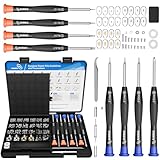
- Invest in a Good Toolkit: You can buy the best screws in the world, but if you use a worn-out or incorrect screwdriver, you’ll strip them. A quality electronics repair toolkit with hardened steel bits that precisely match the screw heads is a must. iFixit, ORIA, and Klein Tools make good ones.
- Keep Your Workspace Organized: When you get your new screws, and especially when you’re doing the repair, use a magnetic project mat or a compartmentalized tray. Label where each screw came from. This prevents mixing up screws and makes sure you put the right one back in the right place. A simple piece of paper with tape and a pen can work in a pinch.
- Don’t Be Afraid of Spares: Most kits come with more screws than you’ll need for a single repair. This is good! Screws get lost, they get stripped, or you might need them for a future repair. Having spares means you’re prepared.
Following these steps will significantly increase your chances of a successful repair. It’s about being diligent and treating your iPhone’s internal hardware with the respect it deserves. It’s not just about can I buy iPhone screws, but can I buy the right ones and use them correctly.
Frequently Asked Questions About iPhone Screws
Where Can I Buy iPhone Screws If I Lost One?
If you’ve lost an iPhone screw, your primary option is to buy them online from third-party retailers. Websites like Amazon, eBay, and specialized electronics repair part stores (such as iFixit) sell replacement screw kits for specific iPhone models. Apple does not sell individual replacement screws to consumers directly.
Are iPhone Screws Standard Size?
No, iPhone screws are not standard sizes. Apple uses several different types of screws, including Pentalobe, Phillips, and Tri-point, in various lengths and thread pitches, specific to each iPhone model and even different locations within the phone. Using a non-specific or incorrectly sized screw can cause damage.
Can I Use a Regular Screwdriver for iPhone Screws?
Generally, no. iPhones require specialized screwdriver bits, most commonly Pentalobe and Tri-point drivers, which are not found in standard household screwdriver sets. Using a regular screwdriver, especially a Phillips head on a Tri-point screw, will likely strip the screw head and could damage internal components.
How Much Do iPhone Replacement Screws Cost?
Replacement iPhone screw kits typically range from $5 to $20, depending on the completeness of the kit, the seller, and the specific iPhone model. Individual screws are rarely sold, so you’ll usually be buying a set that includes all the different types and sizes needed for a repair, giving you spares.
Is It Safe to Use Third-Party iPhone Screws?
Using third-party iPhone screws is generally safe if you purchase high-quality ones from reputable sellers and make sure they are specifically designed for your iPhone model. Poor quality or incorrectly sized screws can lead to stripped threads, damaged internal components, or compromised water resistance. Always prioritize quality and model specificity.
Conclusion
So, to circle back to the burning question: can I buy iPhone screws? The answer is a resounding yes, but it comes with a hefty dose of caution. You can’t just pop into an Apple Store and ask for one, and relying on generic, cheap parts is a gamble that often doesn’t pay off. The world of aftermarket iPhone screws is vast, and navigating it requires paying close attention to your exact iPhone model, the specific screw types, and the reputation of the seller.
My advice? If you’re attempting a repair, do your homework. Consult iFixit, identify the precise screws you need, and invest in a reputable, model-specific kit and the correct tools. It’s a small price to pay for peace of mind and to avoid turning a minor fix into a major headache. You’ll thank yourself when everything goes back together smoothly, and your phone is as sturdy as it was before.
If you’re not comfortable with the fiddly nature of phone repair, or if the thought of tiny screws and specialized tools sends shivers down your spine, then maybe it’s time to consider a professional repair service. Sometimes, the cost of a lost screw is the cost of your time and sanity, and that’s always worth considering.
![AXTH 25-in-1 Small Precision Screwdriver Set, Professional Magnetic Mini Repair Tool Kit for Phone, Computer, Watch, Laptop, Macbook, Ring Doorbell, Eyeglass, Electronic, [Bearing Steel] Screw Driver](https://m.media-amazon.com/images/I/518YlLmPTcL._SL160_.jpg)
