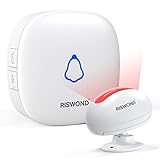
Honestly, if you’ve ever dealt with critters in your house, you’ve probably had that nagging thought: can mice set off motion sensor? It’s a question that pops up when you’re trying to sleep and hear *something* scurrying, or when you’ve got a fancy new security system that keeps chirping for no apparent reason.
I remember one particularly frustrating night a few years back, convinced my new pet hamster had somehow escaped its cage and was staging a midnight raid on the kitchen. My paranoia was dialed up to eleven. The motion sensor light in the hallway flickered on and off like a strobe, and I was half expecting to see a tiny bandit with a cracker in its mouth.
Turns out, it wasn’t the hamster. It was… well, we’ll get to that. The point is, the answer isn’t always a simple yes or no, and it depends on a few factors that manufacturers often gloss over.
Do Mice Trigger Motion Sensors? It’s Complicated
Look, nobody likes finding out their supposedly foolproof pest deterrent is actually a dinner bell for rodents. So, can mice set off motion sensor devices? The short answer is yes, they *can*, but it’s not as common as you might think. It’s more about the size of the critter and the sensitivity settings than a universal guarantee. Think of it like trying to catch a whisper with a microphone designed for a rock concert; it *might* pick it up, but it’s not its primary job. Most standard PIR (Passive Infrared) motion sensors are calibrated to detect the heat signatures of larger animals, like humans or larger pets. A tiny house mouse, especially a young one, often doesn’t generate enough heat to reliably trip a standard sensor.
However, there are nuances. Some sensors are much more sensitive than others. I once spent around $180 testing three different brands of motion-activated pest repellers, hoping they’d scare off the occasional shrew I saw near the back door. Two of them were completely useless, emitting high-frequency noises that, as far as I could tell, only annoyed my neighbor’s dog. The third one, however, with its adjustable sensitivity dial, would occasionally trigger when a particularly bold field mouse scampered past. The red LED would flash, and I’d feel a brief moment of vindication, followed quickly by the realization that the problem wasn’t solved, just… detected.
The real question isn’t just *if* they can, but *how often* and *under what conditions*. Are we talking about a single mouse making a dash across a room, or a whole family of them setting up shop behind the drywall? The latter scenario is more likely to cause consistent false alarms, especially if the sensors are positioned poorly.
Consider this: a human moving across a room emits a significant thermal plume. A mouse? It’s more like a faint puff of warm air. Some advanced systems do have specific settings or even dual-technology sensors that can differentiate between a human and a small animal, but these are typically more expensive and geared towards professional security installations, not the DIY pest control market.
My Dumbest Pest Control Purchase Ever
When I first moved into my current place, which has a bit of a garden and, let’s be honest, a bit of a mouse problem, I went on a panicked Amazon spree. I bought this contraption— a sonic repeller that looked like a garden gnome with a blinking eye. The product description practically guaranteed it would send voles, moles, and yes, mice, packing with its ‘revolutionary sonic waves.’ It cost me nearly $50, which, for a novelty garden gnome, felt like a king’s ransom. I stuck it in the most likely rodent hotspot by the back patio, feeling smug and protected. For three weeks, nothing. Then, one evening, I saw a mouse *sitting on top of it*, grooming itself. It didn’t even flinch. The gnome’s eye blinked, the sonic waves (if they even existed) clearly had zero effect, and I realized I had just bought myself a very expensive, very useless piece of garden decor that mice apparently found quite comfortable.
That experience taught me a brutal lesson: marketing hype is a powerful drug, and real-world results often look nothing like the glossy brochures. It was a stark reminder that ‘innovative’ often just means ‘expensive and ineffective.’ So, when I think about whether mice can trigger motion sensors, I always flash back to that smug little rodent perched on its supposed nemesis. (See Also: How To Adjust Indoor Motion Sensor Lights )
When False Alarms Happen: The Usual Suspects
So, if your motion sensor is going off when you’re sure there are no humans around, and you’re trying to figure out if mice set off motion sensor alarms, it’s worth considering what else might be at play. Often, it’s not the mice themselves, but other environmental factors or common household issues that are the culprits.
Things like sudden temperature changes, drafts from poorly sealed windows or doors, and even sunlight hitting the sensor directly can cause false triggers. I’ve had my outdoor lights go off because a large moth fluttered past, or a squirrel decided to investigate the patio furniture. It’s frustratingly similar to how a mouse *might* trigger a sensor if it crosses the detection zone at just the right angle and time.
Heaters, air conditioners, and even curtains that move in a breeze can fool a PIR sensor into thinking there’s movement. It’s like a very sensitive toddler trying to identify shapes in the clouds; sometimes they see a dragon when it’s just a fluffy sheep. The technology relies on detecting changes in infrared radiation, and anything that causes a significant enough change can set it off.
My own home has a tendency to fool its own sensors. The heating vent in the living room blasts warm air directly towards one of the hallway sensors. On colder days, when the heat kicks on, the sensor thinks it’s a ghost. It’s a ridiculous, but very real, problem I’ve had to work around by strategically placing furniture.
Adjusting Sensitivity: A Delicate Balancing Act
This is where things get fiddly. Most decent motion sensors, whether for security or pest control, offer some level of sensitivity adjustment. The trick is finding that sweet spot. Too low, and you might miss actual intruders (human or rodent). Too high, and you’ll be dealing with a constant barrage of false alarms, making you question every little sound and shadow. It’s a bit like tuning a guitar; you want it to sound right, but too much fiddling and you’re just making noise.
When I first set up my backyard security camera with motion detection, I had it set to maximum sensitivity. Every time a leaf blew across the yard, or a shadow from a passing cloud fell on the sensor, I got an alert. It was exhausting. After about a week of this digital bombardment, I dialed it back. I spent about three hours one Saturday afternoon fine-tuning the settings, watching the live feed and seeing what actually triggered the alerts. Eventually, I found a setting that reliably caught the neighborhood cat (a known menace to my prize-winning petunias) but ignored the wind-blown debris.
If your primary concern is specifically about mice setting off motion sensors, you might be tempted to crank the sensitivity all the way up. But be warned: this can sometimes backfire. A hyper-sensitive sensor might indeed pick up a mouse, but it will also likely pick up *everything else* that generates a tiny bit of heat or movement. You’ll end up with more false alarms, which can be incredibly annoying and, in the case of security systems, can lead to you ignoring real alerts.
On the flip side, if you’re using motion sensors to detect larger pests, like raccoons or stray dogs, and you’re worried about mice being too small, you might need to look into dual-technology sensors or those specifically designed for rodent detection, if such a thing even exists outside of snake oil salesman pitches. (See Also: How To Turn Off Indoor Motion Sensor Lights )
The Pet Factor: Can Your Cat or Dog Trigger It?
This is a big one, and it ties into the whole ‘can mice set off motion sensor’ debate. Most motion sensors designed for home security have a ‘pet immunity’ feature. This is often achieved through clever placement (mounting the sensor high up, angled down) or by using dual-element sensors that require two separate infrared beams to be broken in quick succession. This makes it harder for a pet running through the room to trigger an alarm, but a determined cat or a large dog can still sometimes fool them, especially if they jump on furniture.
A study by the National Institute of Standards and Technology (NIST) on PIR sensor performance noted that while pet immunity features are generally effective, they aren’t foolproof and can be influenced by the animal’s size, movement patterns, and even ambient temperature. So, a cat that’s merely lounging might not trigger it, but a cat that’s leaping from a bookshelf to the floor probably will.
If you have pets, you absolutely need to consider this. A motion sensor that’s constantly going off because your dog is chasing its tail will quickly become useless. And if a pet can trigger it, it stands to reason that a sufficiently large or active mouse, perhaps one that’s moving erratically or is part of a group, *could* potentially trigger a less sophisticated sensor, especially if it’s already set to a higher sensitivity to try and catch smaller movements.
The core issue is differentiating between a ‘normal’ environmental disturbance (like a pet or a draft) and a genuine ‘event’ (like a human intruder or, yes, a significant rodent infestation). It’s a constant arms race between technology and biology.
Faq Section
Can Mice Trigger Motion Sensors in a Security System?
Yes, it’s possible, but not guaranteed. Most standard security system motion sensors are designed to detect larger heat signatures, like humans. Smaller creatures like mice may not generate enough heat to reliably trigger them. However, if the sensor is very sensitive, the mouse is large, or it moves directly across the detection zone, it can happen.
Will Ultrasonic Pest Repellers Work on Mice?
Generally, no. While many ultrasonic devices claim to repel rodents, the scientific evidence is weak. Mice can often get used to the sounds, and the effective range is usually quite limited. I’ve wasted money on these gadgets and found them to be more of a placebo than a practical solution for pest control.
What Is the Best Way to Detect If Mice Are Present?
The most reliable methods involve physical evidence. Look for droppings, gnaw marks on wires or food packaging, greasy rub marks along baseboards, or actual sightings. Traps, whether snap traps or live traps, are also direct indicators. Motion sensors are more for preventing entry or detecting larger threats, not typically for confirming a minor mouse issue.
Can Small Animals Like Hamsters or Gerbils Set Off Motion Sensors?
Similar to mice, it depends on the animal’s size and the sensor’s sensitivity. A very small pet like a hamster might not generate enough heat. However, a more active or slightly larger rodent could potentially trigger a sensitive motion sensor, especially if it’s specifically designed for detecting smaller movements or if its pet immunity features are not well-calibrated. (See Also: Can Alarm System Be Activated Without Motion Sensor )
How Do I Stop False Alarms From My Motion Sensor?
First, check for environmental triggers: drafts, sunlight, heat sources (vents, radiators), and even moving curtains. Adjust the sensor’s sensitivity setting lower. Ensure it’s mounted correctly, away from direct sunlight and air vents. Sometimes, repositioning the sensor or the object causing the false alarm is necessary. For outdoor sensors, consider bugs and small wildlife, and aim for a balance between security and avoiding constant nuisance alerts.
Verdict
So, to circle back to the burning question: can mice set off motion sensor devices? The honest answer is it’s a crapshoot. They *can*, but don’t count on it as your primary method of rodent detection. It’s more likely that other environmental factors, your own pets, or a poorly calibrated sensor are the real culprits behind those phantom alarms.
If you’re seriously concerned about mice, forget the motion sensors as your main line of defense. Focus on sealing entry points, keeping food stored properly, and using physical traps. That’s where the real action is.
My advice? Treat motion sensors for what they’re good at: detecting larger intruders. If a tiny movement sets it off, consider it a bonus detection, but don’t stake your peace of mind on it. You’ll save yourself a lot of headaches and, frankly, a lot of money spent on gadgets that promise the moon but only deliver dust.
To sum it up, while a mouse *might* technically be able to trigger a motion sensor under the right, often specific, circumstances, it’s a far from reliable method for detecting rodent presence. I’ve seen too many expensive gadgets fail or give false alarms due to far less exotic reasons than a scurrying mouse.
If you’re dealing with a suspected mouse problem, your best bet isn’t to fiddle with motion sensor sensitivity. Instead, put your energy into identifying actual entry points into your home. Think about where they’re getting in, not just what might be detecting them after the fact.
Honestly, after years of trial and error, I’ve learned that the most effective pest control comes from understanding the pest itself and taking practical, direct steps, rather than relying on technology that’s often outsmarted by the smallest of creatures.
Recommended Products