
You know the feeling. You’re tightening that tiny screw on your favorite pair of glasses, maybe after a good clean, and suddenly… nothing. The screw just spins. You can’t get the screw back in glasses, and your specs are wobbling precariously. It’s infuriating. I’ve been there, fumbling with those minuscule pieces of metal, wondering if I should just toss the whole frame. It feels like a universal right of passage for anyone who wears glasses, and frankly, most of the advice out there is either too technical or just plain wrong.
The Tiny Screw That Holds Your World Together
It’s always the same story, isn’t it? You take your glasses off, maybe to clean the lenses with a bit more elbow grease than usual, or perhaps they slipped and took a tumble.
Then comes the moment of truth: putting them back together. And that’s when you realize you can’t get the screw back in glasses.
These aren’t your average screws; they’re practically microscopic, designed for delicate machinery, and they demand a bit of finesse. I once spent nearly an hour trying to re-insert a single screw on a pair of Ray-Bans that cost me a pretty penny.
I’d tried everything short of superglue, feeling my patience fray with every failed attempt. The little threads inside the hinge just wouldn’t catch.
It’s a common problem, and the frustration is real. You’re left with a lopsided, unusable pair of glasses, and the urge to just buy a new pair. But before you shell out another $150 or more, let’s talk about what’s actually going on and how to fix it without resorting to drastic measures.
Most people just grab another tiny screw, but if the original isn’t grabbing, the problem is usually deeper than just a missing fastener. It’s about the integrity of the threads, both on the screw and in the hinge itself. Sometimes, the screw head gets stripped, making it impossible to grip, or the threads in the frame have worn away.
It’s a common issue with frequent use, especially if you’re not gentle. My first thought was always that I’d somehow damaged the screw, so I’d rummage through old electronics for a replacement. That rarely worked, because the size and thread pitch are usually specific. It’s a classic case of thinking the symptom is the problem, rather than the underlying cause.
Why Your Tiny Screw Keeps Slipping
So, why does this happen? It’s usually one of a few things, and it’s rarely your fault for being clumsy. The most common culprit when you can’t get screw back in glasses is a damaged screw thread.
You might have overtightened it previously, stripping the delicate threads on the screw itself. Or, maybe the screw has been inserted at an angle a few too many times, causing wear and tear. Another big one is wear and tear in the hinge itself.
Those tiny holes in your glasses frames are threaded, and over time, they can get stripped out, especially with cheaper frames or if you’ve had to replace a screw before. Think of it like trying to screw something into a piece of wood that’s had the hole drilled too large; the threads just don’t have anything to grip onto. I’ve seen this happen on sunglasses that I’ve worn religiously for years. The constant opening and closing, the exposure to sweat and sun – it all takes a toll.
I remember a pair of Oakley frames where the hinge on one side became so loose, the screw would just spin. I took them to an optician, and they told me the threading was gone. They offered to replace the whole hinge assembly, which would have cost me about $80.
I decided against it, figuring at that point, the glasses were probably on their way out anyway. But for a favorite pair, that’s a tough pill to swallow. Sometimes, it’s not the threads on the frame or the screw that are the issue, but a foreign object. A tiny bit of dust, a microscopic piece of debris, or even a bit of dried-up skin oil can prevent the screw from seating properly. (See Also: How To Fix Eyeglasses Arm Without Screw )
It’s like trying to thread a needle with a frayed end – it just won’t go in straight.
The Right Tools for the Job (seriously, You Need Them)
Look, I get it. You’re staring at this tiny screw and you think, ‘I can do this with a regular screwdriver.’
Wrong. Absolutely wrong.
Trying to use a screwdriver that’s even slightly too big or too small is a recipe for disaster. You’ll either strip the screw head, making it impossible to grip, or you’ll damage the threads in the hinge. I learned this the hard way.
I tried to fix my dad’s old reading glasses with a small flathead from my toolbox. It was close, but not quite right. Within minutes, the tiny Phillips head screw was mangled, and I’d made the problem ten times worse.
My dad wasn’t pleased. The key here is a precision screwdriver set.
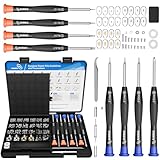
Not just any set, but one specifically designed for electronics or eyewear. These usually come with a variety of tiny Phillips, flathead, and sometimes Torx bits, made from hardened steel so they don’t bend or strip easily.
You can find decent sets for under $20 online or at any hardware store. They often come with a magnetic tip, which is an absolute godsend when you’re dealing with screws that want to play hide-and-seek. Beyond the screwdrivers, you might need a pair of fine-tipped tweezers. Sometimes, the screw just won’t cooperate, and you need something to delicately maneuver it into place.
And for cleaning out those tiny hinge holes? A can of compressed air is surprisingly effective. A tiny sewing needle or a toothpick can also work to gently dislodge any gunk.
Don’t underestimate the power of having the right gear. It’s not about being fancy; it’s about efficiency and preventing further damage. I’ve probably spent $100 over the years on various ‘eyewear repair kits’ that were mostly junk, but a good set of precision screwdrivers?
That’s been a solid investment. It’s the difference between wrestling with a problem for an hour and fixing it in five minutes.
Actual Fixes: What Really Works
Okay, you’ve got the right tools. Now what? If you can’t get screw back in glasses, here are the actual steps that have worked for me, ranging from simple to slightly more involved. (See Also: How Measure Metric Computer Screws )
First, clean everything. Use compressed air to blow out the hinge area. If there’s visible debris, a gentle poke with a toothpick or a sewing needle can help. Make sure the screw itself is clean too.
Next, try to re-insert the screw by hand as much as possible. This helps you feel if it’s going in straight. If it resists, don’t force it.
Back it out and try again. Sometimes, just a slight angle adjustment is all it takes. If the screw still won’t catch, it’s time to consider if the threads are damaged. This is where a good screw kit comes in.
Eyewear repair kits often come with a variety of screw sizes. Make sure you’re using the correct size. Too big and you’ll damage the frame; too small and it won’t hold.
You can often find specific ‘glasses screws’ online or at an optician’s. The key is matching the thread pitch and length. For stripped threads in the frame, this is trickier. Sometimes, a slightly larger screw (with the same thread type) can catch new material, but this is risky.
A better, though more permanent, solution is a tiny drop of Loctite Blue (medium strength) on the screw threads before inserting it. Let it cure for a few minutes.
This can help it grip. However, this is not reversible without heat, so use it as a last resort. I used this trick on a pair of metal-framed glasses, and they’ve held up for two years now.
Another method, especially for plastic frames, is a dab of specialized plastic cement, but again, this is less reversible. For frames where the hinge itself is the problem, some kits include replacement hinges.
This is more involved but can be a lifesaver. I had a pair of metal frames where the hinge arm broke off entirely. I managed to find a replacement hinge online that matched the part number, and after a bit of fiddling with my precision tools, I got it attached.
It wasn’t perfect, but it worked.
| Problem | Solution | Verdict |
|---|---|---|
| Stripped Screw Threads | Use correct size screw, make sure clean threads. Try a slightly larger screw if safe. | Often works for minor damage. |
| Stripped Frame Threads | Tiny drop of Loctite Blue (metal frames), specialized plastic cement (plastic frames). | Risky but effective. Reversibility is a concern. |
| Debris in Hinge | Compressed air, toothpick, or needle for gentle cleaning. | Simple and highly effective. |
| Worn-out Hinge Assembly | Replace hinge assembly if possible. | More complex, but can save the glasses. |
When to Call It Quits (or an Optician)
There comes a point with any pair of glasses where they’ve just had a good run. If you’ve tried everything and you can’t get screw back in glasses, it might be time to let them go or seek professional help. For really expensive or beloved frames, a good optician can work wonders.
They have access to specialized tools and replacement parts that the average person doesn’t. They can often replace stripped threads with a new insert or even a whole new hinge mechanism. This isn’t always cheap, mind you. (See Also: How To Adjust Eyeglass Screw )
I had one quote for a hinge replacement on a designer pair that was nearly $100. But if the glasses themselves were several hundred dollars, it’s sometimes worth it. If the frame is warped, heavily scratched, or the material itself is showing signs of fatigue (like cracking or becoming brittle), then it’s probably not worth the effort or expense to fix that one tiny screw.
You’re basically trying to patch up a sinking ship. Consider the overall condition of your eyewear. If you’re constantly having to fix them, it’s a sign they’re past their prime. Also, if the screw is lost and you have no idea what size it is, trying to find a replacement can be a real headache.
Generic glasses repair kits are hit-or-miss; you might get lucky, or you might end up with a handful of screws that don’t fit. This is where an optician’s expertise is invaluable. They can measure the existing screw hole and find a perfect match. My personal rule of thumb: if the fix requires more than 30 minutes and a couple of attempts, I start questioning if it’s worth my sanity.
Unless they’re heirloom glasses or cost more than my rent, it’s usually time to move on. But for those everyday pairs, a little know-how and the right tools can extend their life considerably.
People Also Ask
How Do You Fix Stripped Threads on Glasses?
For metal frames, a tiny drop of Loctite Blue (medium strength) on the screw threads before inserting can help it grip. For plastic frames, a specialized plastic cement might work, but this is less reversible. In severe cases, an optician may be able to install a threaded insert or replace the hinge assembly. You need to be very careful not to use too much adhesive, or you’ll permanently bond the hinge shut.
What Can I Use If I Lost My Glasses Screw?
You can try a universal glasses repair kit, but be aware that the sizes can vary. If possible, measure the hole or an intact screw from the other side of the glasses. An optician is your best bet for finding an exact replacement screw. Sometimes, a screw from an old, discarded electronic device might fit if it’s the right size and thread pitch.
How Do I Tighten Loose Glasses Screws Without a Screwdriver?
It’s very difficult and not recommended. If you absolutely cannot find a screwdriver, you might be able to very carefully use the edge of a fingernail file or a tiny coin edge on a flathead screw, but this risks stripping the screw head or damaging the frame. It’s far better to get a proper precision screwdriver set; they are inexpensive and readily available.
How Do You Put a Screw Back in a Hinge?
Align the screw with the hole and gently turn it clockwise. If it resists, back it out and try again, making sure it’s going in straight. For tiny glasses screws, use a magnetic tip precision screwdriver to help guide it. If the threads are stripped, you may need a new screw or a more advanced repair technique.
Final Thoughts
So, you’re facing that infuriating moment where you can’t get the screw back in glasses. Don’t panic, and definitely don’t reach for the superglue just yet. More often than not, it’s a fixable problem. Make sure you have the right tools – a precision screwdriver set is your best friend here. Clean out the hinge, try re-inserting carefully, and if that doesn’t work, consider the condition of the threads on both the screw and the frame.
If the threads are stripped, a slightly larger screw might work, but proceed with caution. For a more permanent fix on metal frames, a tiny amount of Loctite Blue can be a lifesaver, but remember that makes it much harder to take apart later. For plastic frames, specialized cement is an option, but again, consider the reversibility.
Ultimately, if your glasses are heavily worn or the damage is significant, it might be time to call it quits or visit an optician. But for most common issues, a bit of patience and the right approach can save your favorite pair from the junk drawer.
![AXTH 25-in-1 Small Precision Screwdriver Set, Professional Magnetic Mini Repair Tool Kit for Phone, Computer, Watch, Laptop, Macbook, Ring Doorbell, Eyeglass, Electronic, [Bearing Steel] Screw Driver](https://m.media-amazon.com/images/I/518YlLmPTcL._SL160_.jpg)
