
I remember the first time I stripped a tiny screw on an old smartphone I was trying to fix. Panic. Complete, utter panic. I’d already heard whispers about WD-40 being some kind of magic elixir for all things stuck, and in that moment of desperation, it seemed like the only option. So, can you use WD-40 to loosen screws in a phone? The short, blunt answer is: probably not a good idea, and here’s why.
My initial thought was that a little spray would magically dissolve whatever gunk was holding that microscopic screw in place. It felt like a classic move from the ‘fix-it-all’ arsenal. But this isn’t your grandpa’s rusty gate hinge we’re talking about here. Modern electronics are a whole different beast, and introducing the wrong chemicals can lead to more problems than you started with.
This isn’t just about getting a screw out; it’s about respecting the delicate components inside your pocket computer. Let’s get real about what happens when you consider reaching for that iconic blue and yellow can.
The Temptation of the Blue Can: Why Wd-40 Seems Like a Good Idea
Look, I get the appeal. WD-40 is practically synonymous with ‘unsticking things.’ It’s the go-to for squeaky hinges, rusted bolts on a bicycle, or that stubborn jar lid. Its penetrating oil properties are legendary. The idea is that it can seep into tight spaces, break down rust and corrosion, and lubricate the threads, making it easier for a screwdriver to do its job. When you’re staring down a tiny, impossibly tight screw on a device worth hundreds of dollars, and your usual tools aren’t cutting it, that familiar can starts to look like a savior. I’ve personally been there, screwdriver spinning uselessly, contemplating a spray that promises to make things ‘penetrate.’
The marketing behind WD-40 is pretty persuasive in its broad applicability. It’s marketed as a lubricant, a water displacer, a rust penetrant, and a cleaner. For many mechanical issues outside of delicate electronics, it’s a perfectly acceptable, even good, solution.
It’s relatively inexpensive and widely available. If you’ve ever salvaged an old piece of machinery or tackled a home repair that involved something truly seized, chances are WD-40 played a role.
The instinct to grab it when facing a mechanical hurdle, even a small one like a phone screw, is strong and understandable. You think, ‘If it works on cars, why not phones?’ It’s that broad stroke of usefulness that tricks you into believing it’s a universal fix.
This is why so many people ask, ‘can you use wd40 to loosen screws in phone?’ because the general knowledge about WD-40 is so pervasive.
However, the core issue is that a smartphone isn’t a rusty bolt. It’s a complex assembly of sensitive electronics, plastics, and adhesives. The very properties that make WD-40 effective on metal can be downright destructive to these components. Think about what’s inside a phone: circuit boards, delicate flex cables, batteries, screens, and often a lot of adhesive holding things together. WD-40 is a petroleum-based solvent and lubricant. While it doesn’t typically contain strong acids that will instantly eat through metal, its chemical makeup can react negatively with the materials found in phones. It’s a bit like using industrial degreaser on a silk scarf – it might clean it, but it’ll likely ruin it in the process.
What’s Actually Inside Wd-40 and Why It’s a Problem
Let’s break down what you’re actually spraying when you reach for that can. WD-40’s primary function relies on a blend of mineral spirits (a petroleum distillate), a light lubricating oil, and propellants. The mineral spirits are the ‘penetrating’ agents – they’re designed to dissolve grease, grime, and, yes, rust. The oil provides a light lubrication. The issue for electronics isn’t so much the lubricant itself, but the solvent component and the fact that it’s not designed for delicate materials.
Mineral spirits are basically a form of Stoddard solvent, a clear, colorless liquid that’s a mixture of various hydrocarbons. They are effective at breaking down oily residues and organic materials. On a metal screw, this is great. On the plastic casing of your phone, it can cause it to become brittle or discolored over time. On the adhesive holding your screen or battery in place, it can weaken it, leading to separation or failure. I learned this the hard way trying to clean some sticky residue off a vintage game console – the plastic housing turned hazy and almost chalky after I used a bit too much. Phones are often made of similar or even more sensitive plastics and coatings. (See Also: How To Fix Eyeglasses Arm Without Screw )
Furthermore, WD-40 is not a ‘dry’ lubricant. It leaves a residue. This residue can attract dust and grime, creating a mess inside your phone. More critically, this oily film can interfere with electrical conductivity.
Imagine getting that film on a tiny connector pin or a solder joint. It could prevent a good electrical connection, leading to intermittent faults or complete failure of a component.
This is particularly worrying for intricate parts like the ribbon cables that connect the screen, battery, or cameras to the motherboard. The common advice about using it on electronics is often rooted in older, less sensitive devices, or completely misguided. It’s a classic case of ‘if it worked for one thing, it must work for everything,’ which is a dangerous mindset in tech repair.
The other big concern is how WD-40 interacts with water displacement. While it’s known for pushing water away, the ‘WD’ stands for ‘Water Displacement.’ This property is useful for preventing rust on metal parts exposed to moisture. However, in a phone, you don’t want to introduce any liquid, even one that claims to displace water. If you accidentally get liquid inside a phone, the best course of action is immediate drying and, often, professional cleaning. Spraying WD-40 introduces a chemical cocktail that’s far more damaging than plain water in many scenarios. The lingering oils can trap moisture and create conductive pathways where there shouldn’t be any. It’s the opposite of what you want for sensitive electronics.
When Gently Persuading a Screw Goes Wrong: Common Mistakes
The biggest mistake people make when considering WD-40 for phone screws is assuming it’s just another lubricant. It’s not. It’s a solvent-based product with specific properties that are beneficial for metal-on-metal applications but detrimental to the plastics, adhesives, and delicate electronics found in a smartphone. I’ve seen forum posts and heard stories where people tried it, thinking they were being clever. Some claimed it worked, but often these were on older devices with simpler construction, or they got lucky and the WD-40 didn’t reach important components. The people who end up with fried phones or damaged parts are usually the ones who don’t post about it.
A common misconception is that you can just spray a tiny bit. Even a small amount can spread. The propellants in WD-40 are volatile and can help the liquid spread further and faster than you intend. A tiny spray can quickly become a puddle that seeps into crevices you didn’t even know existed.
Then there’s the ‘letting it sit’ approach. While this might help loosen a rusty bolt, in a phone, it gives the solvents more time to degrade plastics, weaken adhesives, or seep into areas where it’s impossible to clean out later. I recall a friend who tried to clean some battery corrosion on an old digital camera with a contact cleaner that was supposed to be electronics safe, but they used too much. The plastic around the contacts turned cloudy and weak, and the camera never worked right after that.
That experience made me super cautious about what I spray on anything with a circuit board.
Another mistake is not having the right tools in the first place. If a screw is too tight, is it because it’s cross-threaded, or because it’s seized with corrosion?
If it’s the latter, a specialized penetrating oil for electronics might be considered (though still risky), but if it’s just overtightened or the screwdriver is slipping, WD-40 won’t magically fix your screwdriver technique. You need the right size and type of screwdriver, and a steady hand. (See Also: How Measure Metric Computer Screws )
Often, the ‘stubborn screw’ issue is a symptom of using the wrong tool or applying too much force with the wrong angle. The advice to just spray something is a shortcut that bypasses the proper diagnostic and mechanical approach. This is why, when asked if can you use wd40 to loosen screws in phone, the answer often leads down a rabbit hole of ‘don’ts’.
What to Use Instead: The Right Tools for the Job
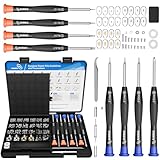
So, if WD-40 is out, what’s the real solution for stubborn screws in a phone? It comes down to precision tools and patience. First, make sure you have the correct screwdriver bit. Phones use incredibly small and specialized screws (like Torx, Pentalobe, or JIS). Using the wrong bit will strip the screw head, making it exponentially harder to remove. I invested in a decent electronics repair toolkit for about $30 a few years ago, and it has paid for itself countless times. It came with a variety of micro-bits, spudgers, and anti-static tweezers. That’s the first step: a quality toolkit.
If a screw is genuinely stuck (not stripped), the best approach is gentle, persistent pressure with the correct driver. Sometimes, a tiny drop of isopropyl alcohol (99% pure) applied very carefully with a fine-tipped applicator directly to the screw threads can help break down minor gunk or residue without damaging surrounding components. This is a much safer option than WD-40.
You only want a tiny amount, so it doesn’t spread. Let it sit for a minute or two.
The alcohol evaporates quickly and leaves no oily residue. I’ve used this trick on recalcitrant laptop screws with success. You can also try gently tapping the screwdriver handle with another tool to help shock the threads loose, but again, extreme caution is needed.
For screws that are corroded or truly seized, especially on older devices, you might consider a specialized electronics-safe penetrating oil. Companies like iFixit offer products designed specifically for electronics repair. These are formulated to be less aggressive on plastics and adhesives and to evaporate more cleanly. However, even these should be used sparingly and with extreme caution. The general rule of thumb for phone repair is: less is more, and when in doubt, don’t. If a screw is so stuck that you’re contemplating WD-40, it might be time to step away and consider if the repair is worth the risk or if professional help is needed. Here’s a quick rundown of alternatives:
| Method/Product | Pros | Cons | Verdict |
|---|---|---|---|
| WD-40 | Ubiquitous, cheap, penetrates well on metal. | Damages plastics and adhesives, leaves oily residue, conductive. | Big NO for phones. |
| Isopropyl Alcohol (99%) | Evaporates quickly, safer for electronics, dissolves some grime. | Can still damage some plastics with prolonged exposure, not a strong lubricant. | Use with extreme caution, sparingly, directly on threads. |
| Electronics-Specific Penetrating Oil | Formulated for sensitive components, less residue. | Still a chemical, can be expensive, use requires care. | Considerable option for truly seized screws, but still risky. |
| Manual Force + Right Tool | Safest, most controlled method. | Requires the correct tools and patience, may not work for seized screws. | Always the first step. |
A Personal Tale of Almost Ruining a Device
I once had a vintage handheld gaming console – think early 2000s, not a smartphone, but the principles are similar. I was trying to replace a cracked screen, and one of the tiny screws just wouldn’t budge. It was a Phillips head, but the slot was so worn that my normal driver just spun. My mind immediately went to WD-40. I even had a can sitting right there on my workbench. I was picturing myself spraying it, the screw loosening with a satisfying ‘pop,’ and me quickly wiping away any excess.
Thankfully, before I committed the act, I paused. I started thinking about the plastic casing, the sensitive ribbon cables for the buttons and screen, and the battery contacts. I pictured the oily spray seeping into every nook and cranny. What if it got on the screen’s adhesive? What if it seeped into the controller membrane and made the buttons sticky? What if it corroded the battery terminals? It was a cascade of ‘what ifs’ that suddenly made that can of WD-40 look less like a solution and more like a weapon of mass destruction for my device.
Instead, I opted for a different approach. I grabbed a different, slightly smaller Phillips head bit from my toolkit, applied firm downward pressure, and tried to turn the screw very slowly.
When that didn’t work, I tried a tiny dab of 99% isopropyl alcohol on the very tip of the screwdriver, letting it wick into the screw head. I let it sit for a minute, then tried again with firm pressure. It was a slow, painstaking process, maybe five minutes of gentle wiggling and turning. (See Also: How To Adjust Eyeglass Screw )
Finally, with a tiny click, the screw loosened. The relief was immense. That experience solidified my belief that while WD-40 is great for a lot of things, its place is definitely not inside a smartphone or any other piece of sensitive electronics.
It’s a potent reminder that sometimes, the ‘quick fix’ is the slowest and most damaging path.
Faq: Common Questions About Wd-40 and Phones
Can Wd-40 Damage Phone Plastics?
Yes, WD-40 contains solvents like mineral spirits that can degrade, discolor, or weaken certain types of plastics commonly used in phone casings and internal components. Prolonged exposure can make them brittle.
Will Wd-40 Corrode Phone Components?
While WD-40 is designed to prevent rust on metal, its oily residue can attract moisture and dust, potentially leading to corrosion on sensitive electronic contacts and circuit boards over time. It’s not formulated for the delicate materials inside a phone.
Is It Okay to Use Wd-40 on Charging Ports?
Absolutely not. Spraying WD-40 into a charging port will introduce a conductive, oily substance that can interfere with the electrical contacts, potentially short-circuiting the port or the device. It can also attract debris, making the connection worse.
Can I Use Wd-40 to Clean a Sticky Button on a Phone?
It’s highly inadvisable. The solvents and oils in WD-40 can damage the rubber membranes or plastic mechanisms of phone buttons, and the residue can make them even stickier or cause them to fail entirely. Use electronics-specific contact cleaner if absolutely necessary, and with extreme care.
What If I Accidentally Sprayed Wd-40 in My Phone?
Immediately turn off the phone and disconnect the battery if possible. Do not try to turn it on. Try to absorb as much of the liquid as you can with absorbent cloths. Then, place the phone in a container with silica gel packets or uncooked rice for at least 48-72 hours to help draw out moisture and residue. You may need professional cleaning to remove internal residue.
Conclusion
So, to circle back to the main question: can you use WD-40 to loosen screws in phone devices? The overwhelming consensus from anyone who actually understands electronics repair, and my own hard-won experience, is a resounding ‘no.’ The risks of damaging sensitive internal components, plastics, and adhesives far outweigh any perceived benefit of loosening a single screw.
Stick to the right tools for the job – precision screwdrivers, perhaps a bit of isopropyl alcohol applied with a very fine applicator for stubborn grime, and plenty of patience. If a screw is that seized, it might indicate a deeper problem or require specialized techniques that don’t involve petroleum-based solvents. Don’t risk frying your expensive device for a shortcut that’s not even a shortcut, just a faster way to break things.
If you find yourself really struggling with a phone repair, especially with those tiny, fiddly screws, it’s often best to consult a professional or at least purchase a proper electronics repair kit designed for the task. Your phone, and your wallet, will thank you for avoiding the temptation of the blue and yellow can.
![AXTH 25-in-1 Small Precision Screwdriver Set, Professional Magnetic Mini Repair Tool Kit for Phone, Computer, Watch, Laptop, Macbook, Ring Doorbell, Eyeglass, Electronic, [Bearing Steel] Screw Driver](https://m.media-amazon.com/images/I/518YlLmPTcL._SL160_.jpg)
