
I remember the sheer panic. My favorite pair of aviators, the ones that cost more than my rent that month, suddenly had a wobbly arm. A loose screw, probably from me fiddling with them incessantly. My first thought was, “This is it. They’re ruined.” Then came the bigger question, the one that probably brought you here: can you buy screws for glasses? I’d never even considered it. It felt like trying to buy a single Lego brick for a massive set. Turns out, you absolutely can, and it’s not nearly as complicated as I imagined. But buying them isn’t always as simple as grabbing a pack off a shelf.
You can’t just walk into any old hardware store and expect them to have tiny, specialized screws for your spectacles. It’s a different beast entirely from the chunky lag bolts I usually deal with. I learned that the hard way, staring blankly at a wall of screws meant for wood, metal, or concrete – none of which would fit my delicate frames.
Finding the Right Glasses Screws: It’s Not Rocket Science, but It’s Close
Look, when your glasses go kaput, especially a hinge screw, it feels like a minor emergency. You need them to see, and suddenly that loose arm is a constant, annoying reminder of your impending doom (or at least a trip to the optometrist). So, can you buy screws for glasses? The answer is a resounding yes, but the trick is knowing where and what to look for. It’s not like buying a pack of drywall screws; these things are minuscule, precision-engineered little bits of metal.
My first impulse was to hit up the local hardware store. Big mistake. They have screws for everything from building a deck to fixing a leaky faucet, but tiny spectacle screws? Not a chance. The smallest they had were probably meant for assembling IKEA furniture, and even those were giants compared to what I needed. I spent about twenty minutes staring at bins of screws, feeling utterly defeated, before realizing I was in the wrong universe.
The real place to start is where you bought the glasses, or a place that specializes in eyewear. Opticians and optometrists’ offices are your best bet. They have tiny kits with a variety of screws, and often, they’ll just fix it for you on the spot, sometimes for free or a nominal charge. This is usually the quickest and easiest solution, especially if you don’t want to fiddle with fiddly bits yourself. They have the right tools and the know-how. I’ve walked into my local eyewear shop with a wobbly frame, and they’ve had it sorted in under five minutes while I browsed their sunglasses. That’s convenience I can get behind.
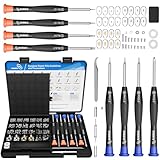
If you’re feeling adventurous, or your local optician is out of stock (which rarely happens, but hey, it’s possible), you can buy glasses repair kits online. These kits are fantastic because they usually contain a selection of common screw sizes and types, along with tiny screwdrivers and sometimes even nose pad replacements. I bought one of these kits a few years back for about $15, and it’s saved me countless trips and a good chunk of change. It’s a little investment that pays off quickly, especially if you’re prone to losing or breaking things, or if you have multiple pairs of glasses.
The biggest hurdle is size. Glasses screws are tiny. We’re talking fractions of a millimeter in diameter and length. They’re often made of stainless steel or other corrosion-resistant materials to avoid irritating your skin or rusting. Getting the size wrong means the screw either won’t fit, or it’ll be too loose and fall out again. I once tried to jam a screw that was a millimeter too long into a hinge, and I ended up stripping the screw hole. Never again. Precision is key here.
What to Look for When Buying Glasses Screws
So, you’ve decided you’re going to tackle this yourself, or you want to be prepared. What exactly should you be looking for when you’re trying to buy screws for glasses? It’s more than just grabbing the smallest metal thing you can find. You need to think about size, material, and head type. Get these wrong, and you’re back to square one, or worse, you might damage your frames. (See Also: How To Fix Eyeglasses Arm Without Screw )
First off, size. This is the absolute most important factor. Most spectacle screws are measured by their diameter and length. Common diameters are around 1.0mm, 1.2mm, and 1.4mm.
The length can vary, but typically falls between 3mm and 7mm. If you can, take your old screw (or the piece it came out of) to an optician or a good jeweler. They have tiny measuring tools and can tell you precisely what you need. If you can’t do that, you can often find specialized kits online that include a variety of common sizes.
I bought a kit that came with a little chart and a magnifier, which was super helpful for figuring out which tiny screw was which. It felt like a science experiment, but it worked.
Material matters too. You want something that won’t corrode or cause an allergic reaction. Most glasses screws are made from stainless steel. This is good because it’s durable, rust-resistant, and generally hypoallergenic. Some lower-quality ones might be made of brass or other alloys, but stick with stainless steel if you can. I once had a cheap pair of sunglasses where the screws started turning green after a few months. Looked terrible and probably wasn’t great for my skin. Stick to reputable brands or kits that specify stainless steel.
Then there’s the head type. The most common type for glasses is a Phillips head, but they are miniature versions. You’ll also see flathead (slotted) screws, and sometimes even Torx heads on higher-end or specialized frames. The screwdriver you use needs to match the screw head. Most glasses repair kits come with a selection of tiny screwdrivers, which is why they’re so handy. If you’re buying individual screws, make sure you have the right tool. Trying to use the wrong screwdriver on a tiny screw head is a recipe for stripping it. Trust me, I’ve learned this lesson by stripping out more than one tiny screw head trying to force it.
Here’s a little table I put together from my own experience, just to give you a rough idea. It’s not exhaustive, but it covers the basics:
| Feature | What to Look For | Why It Matters | My Verdict |
|---|---|---|---|
| Diameter | 1.0mm – 1.4mm | Too large won’t fit; too small will be loose and fall out. Precision is key. | Important. Get this right or don’t bother. |
| Length | 3mm – 7mm (approx.) | Too long can poke through; too short won’t hold. | Important. Needs to sit flush. |
| Material | Stainless Steel (preferred) | Durability, rust resistance, hypoallergenic. Avoid cheap alloys. | Highly Recommended. Your skin and your glasses will thank you. |
| Head Type | Phillips, Flathead (most common) | Must match your screwdriver. Stripping is easy if mismatched. | Match Your Tool. Key for assembly. |
The absolute best advice I can give is to get a complete repair kit. You’ll spend maybe $10-$20, and it’ll have everything you need for multiple fixes. It’s way cheaper than paying an optician for every little loose screw, and you’ll have the peace of mind knowing you can fix your glasses on the go. I keep one in my travel bag and another in my desk drawer. It’s a small thing, but it’s made a big difference. (See Also: How Measure Metric Computer Screws )
Common Mistakes When Fixing Glasses Screws
Alright, let’s talk about what can go wrong when you’re trying to fix your own glasses. Because, let’s be honest, we’ve all been there – trying to do a simple repair and somehow making it worse. It’s like trying to fix a leaky faucet and ending up flooding the bathroom. Fixing those tiny glasses screws is no different. It requires a bit of finesse, and a lot of people, myself included initially, make some pretty basic errors.
The most common mistake is using the wrong size screw. I touched on this before, but it bears repeating because it’s that important. You might think, “Oh, it looks about right,” and cram it in. But these screws are so small that even a millimeter difference can be the difference between a secure hinge and a stripped screw hole. I once grabbed what I thought was the right size from a generic kit, and when I tried to screw it in, it just spun freely. Turns out, the thread pitch was slightly off, and I ended up damaging the threads in the frame itself. Now that hinge is perpetually loose, and I can’t even get the old screw out easily.
Another big one is using the wrong screwdriver. These tiny screws have very specific heads – usually a miniature Phillips or a flathead. If you use a screwdriver that’s too big, you’ll chew up the screw head, making it impossible to tighten or loosen later. If it’s too small or the wrong type, you risk slipping and scratching your frame or even the lenses. I have a set of precision screwdrivers specifically for electronics and eyewear, and I can’t stress enough how much of a difference it makes. Trying to use a regular household screwdriver on these is like trying to eat soup with a fork.
People also tend to overtighten. You get that screw in, and you feel a little resistance, so you give it another turn. BAD IDEA. These frames, especially plastic ones or those with delicate metal hinges, are not built to withstand a lot of torque.
Overtightening can crack the plastic around the screw hole, bend the hinge, or even strip the threads again. You only need to tighten it until it feels snug and the arm moves smoothly without being floppy. It should feel secure, not like you’re trying to torque down a lug nut on a car wheel.
I learned this the hard way with a pair of acetate frames; I cracked the plastic right around the hinge. Had to superglue that sucker, which never looks great.
My contrarian opinion? Don’t bother with those cheap, multi-tool “glasses repair kits” that have a thousand pieces and a flimsy plastic case. Sure, they seem like a good deal, but the screwdrivers are often made of soft metal that rounds off after a couple of uses, and the screws are of questionable quality. I bought one of those about five years ago, and the screwdrivers were useless within a month. I ended up buying a decent set of precision screwdrivers and a small assortment of good-quality screws separately. It cost a bit more upfront, but it’s been infinitely more reliable. Sometimes, paying a little more for quality tools and parts just makes sense. (See Also: How To Adjust Eyeglass Screw )
Finally, people often forget to put everything back in the right order. If your hinge has multiple tiny pieces, like a tiny washer or a nut, make sure you reassemble them in the correct sequence. I once had a hinge that kept loosening, and it turned out I’d put a tiny metal washer on the outside instead of the inside. It seems trivial, but these small parts are there for a reason. It’s always best to take a clear picture with your phone before you start disassembling anything, just so you have a reference.
DIY Glasses Repair: A Step-by-Step Guide
Okay, you’ve got your glasses repair kit, or at least the correct size screws and a suitable screwdriver. You’re ready to tackle that wobbly arm. Here’s how to do it without messing things up. It’s not complicated, but paying attention to the details is key. Remember, these are precision instruments you wear on your face, so gentle is the word.
- Assess the Damage: First, figure out exactly what’s loose. Is it the screw itself, or has the threaded hole in the frame become stripped? If the screw just fell out, you’re in luck. If the hole is stripped, you might need a slightly larger screw (if possible) or professional help. For this guide, we’ll assume the screw hole is intact.
- Gather Your Tools: You’ll need your replacement screw (make sure it’s the right size!), your precision screwdriver that matches the screw head, and possibly a pair of fine-tipped tweezers. A soft cloth is also handy for cleaning.
- Remove the Old Screw (if present): Gently insert the correct screwdriver into the screw head. Turn it counter-clockwise to loosen. Go slowly. If it’s very tight, a tiny drop of penetrating oil (like a jewelry-grade one, NOT WD-40) might help, but be careful not to get it on the lenses. If the screw won’t budge or spins freely, the hole might be stripped. Stop here and consider professional repair.
- Clean the Area: Once the old screw is out (or if you’re replacing a lost screw), take your soft cloth and gently wipe down the hinge area and the screw hole. Remove any dust or debris.
- Insert the New Screw: Carefully pick up the new screw with your tweezers or by hand. Align it with the screw hole. Gently insert the tip of the screwdriver into the screw head.
- Tighten Carefully: Slowly turn the screwdriver clockwise. You’re looking for resistance, but not a lot. Tighten until the screw feels snug and the arm of your glasses moves smoothly, without wobbling. DO NOT OVERTIGHTEN. Seriously. You should be able to move the arm freely, but it shouldn’t feel loose.
- Test the Arm: Gently open and close the glasses arm a few times. Does it feel secure? Does it move smoothly? If it’s too stiff, you might have overtightened slightly. If it’s still wobbly, you might need to tighten a tiny bit more, or the screw might still be the wrong size.
- Inspect: Look closely. Is the screw head flush? Is there any gap? Is the arm aligned correctly? Make any final tiny adjustments needed.
If you’re replacing a screw that fell out, and you have the original one, try to get an identical replacement. If you lost the original screw and have to buy a new one, a repair kit with a variety of sizes is your best bet. I keep a small magnifier handy for this exact purpose – it’s amazing what you can’t see with the naked eye. My optometrist actually gave me a tiny sample screw once when I complained about a loose arm, saying, “Keep this. You’ll need it.” He was right.
Where to Buy Glasses Screws and Repair Kits
So, you’ve decided you want to buy screws for glasses, or at least be prepared for the next time one goes missing. Where do you actually go? It’s not as straightforward as popping into your local hardware store for, say, nails. The world of tiny eyewear components is a bit more specialized. But don’t worry, it’s not exactly a secret society either.
Your first and best bet is your local optometrist or optician. Seriously. Most optical shops have a small selection of common glasses screws and often a full repair kit. They deal with this all day, every day. If you walk in with a wobbly arm and a friendly smile, they’ll often fix it for you on the spot, sometimes for free, or for a very small fee (like $5-$10). They have the specialized tools and the right sizes. This is especially true if you bought your glasses from them. It’s part of their customer service. I’ve done this multiple times and they’ve never charged me a dime, just a quick tighten or a replacement screw.
Final Thoughts
Online retailers are your next major source. Amazon, eBay, and specialized online eyewear accessory stores are packed with options. You can buy individual screws, but honestly, unless you know exactly what you need, it’s a gamble. The smart move is to buy a complete glasses repair kit. These kits typically cost between $10 and $30 and include a variety of screw sizes, nose pads, and key tools like miniature Phillips and flathead screwdrivers. I’ve bought a few of these over the years, and they’re incredibly convenient. My current favorite kit cost about $18 and has lasted me for years, handling several repairs across different pairs of glasses.
When buying online, pay attention to the reviews and the product description. Look for kits that specify they are for eyeglasses or sunglasses. Check the screw sizes included (e.g., 1.0mm, 1.2mm diameter). Some kits even come with a little measuring ruler or a magnified viewer to help you identify the correct screw. I once bought a cheap kit that promised “universal screws,” and none of them actually fit properly. Lesson learned: read the details and the feedback from other buyers.
![AXTH 25-in-1 Small Precision Screwdriver Set, Professional Magnetic Mini Repair Tool Kit for Phone, Computer, Watch, Laptop, Macbook, Ring Doorbell, Eyeglass, Electronic, [Bearing Steel] Screw Driver](https://m.media-amazon.com/images/I/518YlLmPTcL._SL160_.jpg)
