
I remember the first time I tried to change a watch strap on a fancy timepiece. I’d seen plenty of tutorials, but this one… this one was different. Tiny, almost invisible screws that looked like they were made of spun sugar. Made me wonder, do all Movado watches have screws? It’s a question that pops up, and honestly, the answer isn’t as straightforward as you might think. Lots of folks assume all high-end watches are built the same way, but that’s just not the case. It’s like assuming every power tool is made with the same steel – nope, some are junk, some are gold.
Movado, as a brand, has a history and a style all its own. They’re known for their sleek designs, often minimalist, and their iconic Museum dial. But when it comes to the nuts and bolts – or rather, the screws – of their construction, things get a little nuanced. You can’t just slap a generic answer on it and call it a day. It depends on the specific model, its age, and even its intended purpose. So, let’s get down to brass tacks about whether all Movado watches have screws.
The Tiny Fasteners: Are Movado Watches Built with Screws?
Let’s cut to the chase: do all Movado watches have screws? No, not all of them. And honestly, that’s a good thing. Think about it like this: if you’re building a birdhouse, you might use beefy deck screws.
If you’re assembling a microchip, you’re using incredibly fine, specialized fasteners. Watches are no different, and Movado, with its wide range of styles from simple everyday wear to more complex chronographs, employs different methods of construction. The idea that every single watch, regardless of its design or function, must have visible screws on the case back or bezel is a myth.
Many designs prioritize a clean, unadulterated look, and that means opting for snap-on case backs or internal seals that don’t require external screws.
For instance, some of their most popular Museum Classic models, the ones with that signature minimalist dial, often feature case backs that are pressed or snapped into place. This gives them that smooth, uncluttered aesthetic that Movado is famous for. If you look at many of their quartz-powered, entry-level pieces, you’ll often find this snap-on construction.
It’s cost-effective and achieves the desired visual simplicity. However, this doesn’t mean screws are entirely absent from their lineup. Higher-end models, particularly those with automatic movements or specific complications like chronographs, are far more likely to use screw-down case backs.
These screws aren’t just for show; they provide a more secure and solid seal against water and dust, which is important for the longevity of intricate mechanical movements. I learned this the hard way when a water-resistant watch I owned, which had a snap-on back, decided to take a swim with me and ended up fogging up internally. That was a $200 mistake that taught me the value of a good screw-down case back.
The type of screws used can also vary wildly. You’ll see standard slotted or Phillips head screws on some models, but on finer Swiss watches, you’re more likely to encounter specialized types like Torx or even proprietary screw heads that require specific tools. This is partly for security – it makes it harder for an untrained person to open the watch – and partly for precision engineering. So, while not all Movado watches have screws, the ones that do often employ them for functional reasons, especially in models where durability and water resistance are most important.
When Screws Matter: Water Resistance and Movement Access
So, why would a watchmaker like Movado choose to use screws on some models and not others? It boils down to two main things: water resistance and access to the movement. If a watch is designed to be significantly water-resistant – think 50 meters, 100 meters, or more – a screw-down case back is often the best way to achieve that.
Imagine a gasket trying to seal a tiny gap between two pieces of metal that are just pressed together. It’s possible, but it’s not as reliable as having screws that compress the gasket evenly around the entire circumference of the case. Each screw acts like a tiny clamp, making sure a tight, consistent seal. This is why dive watches, or watches intended for more active pursuits, almost universally feature screw-down case backs. (See Also: Can I Use Loctite Heavy Duty Threadlocker For Laptop Screws )
It’s a functional necessity, not just a design choice.
On the flip side, watches designed purely for aesthetic appeal or casual wear, where water resistance isn’t a primary concern (maybe just splash resistance at best), can often get away with a snap-on or friction-fit case back. These are generally easier and cheaper to manufacture. A simple quartz movement doesn’t need the same level of protection as a delicate automatic movement, which has many more moving parts susceptible to dust and moisture. For these simpler watches, the focus is on a clean look and ease of servicing for routine battery changes, which might not even require case removal if the crown has a simple pull-out mechanism.
However, there’s a contrarian view here. Some argue that a well-designed snap-on case back, especially on higher-end quartz watches or those with clever sealing mechanisms, can be just as effective as a screw-down for moderate water resistance. They say the reliance on screws can sometimes be a crutch, an older method that isn’t always necessary with modern materials and engineering. I’ve seen some very solid snap-on case backs on watches that have survived more than their fair share of abuse.
But, for the peace of mind and the sheer ability to swim or shower without a second thought, a screw-down case back on a watch advertised for water resistance is still my preference. It’s the extra layer of security that makes you feel confident.
| Watch Type | Likely Case Back | Reason | Opinion/Verdict |
|---|---|---|---|
| Entry-level Quartz (e.g., some Museum Classic models) | Snap-on / Friction-fit | Cost-effective, achieves minimalist look, easier battery changes. | Good for casual wear, but check water resistance ratings carefully. Not ideal for swimmers. |
| Mid-range Automatic / Chronograph | Screw-down | Provides superior water and dust resistance, secures movement. | Key for watches with mechanical movements and higher WR ratings. Offers peace of mind. |
| Dress Watches (often manual wind or simple quartz) | Snap-on or Screw-down | Depends on brand’s design philosophy and desired WR. Some focus on aesthetics, others on longevity. | A screw-down is generally preferable for long-term protection, even if water resistance isn’t the main selling point. |
The Art of the Case Back: Design vs. Engineering
Movado has built a reputation on its distinctive design language, and this heavily influences how their watches are constructed, particularly the case back. The iconic Museum dial, with its single dot at 12 o’clock, represents a philosophy of understated elegance. This minimalism often extends to the entire watch case. For many of their core collections, the goal is a sleek, smooth profile. A case back covered in tiny screws can disrupt this aesthetic. Therefore, designers often opt for solutions that maintain that smooth, unbroken surface.
This is where engineering has to play ball with design. Achieving a good water seal on a snap-on back requires precision.
The case and case back must be machined to incredibly tight tolerances, and a high-quality gasket must be used. When this is done correctly, you get a watch that looks fantastic and is perfectly functional for everyday life. However, the reality is that not all manufacturers, or even all models within a single brand, adhere to the same level of precision. A cheap, poorly fitted snap-on back can be a recipe for disaster if it gets wet.
I’ve seen it happen – a beautiful watch rendered useless by a little too much moisture getting past a shoddy seal. It was a harsh lesson about not judging a watch solely by its looks; the internal engineering is just as vital.
On the other hand, when screws are used, they are often integrated thoughtfully. On higher-end automatic or chronograph models, the screws are usually discreet, often countersunk, and sometimes use specialized heads like Torx or Pentalobe. This not only adds to the perceived quality but also makes the watch more resistant to tampering by amateurs. It’s a signal that this watch is built to last and is meant to be opened only by trained professionals. The number of screws can also be an indicator. While some very solid tool watches might have eight or ten screws for maximum security, many elegant mechanical watches might only have four or six, strategically placed to make sure a good seal without overwhelming the design.
Ultimately, the decision to use screws or not is a balancing act between the brand’s design philosophy, the functional requirements of the watch (especially water resistance and movement type), and the manufacturing costs. Movado, being a brand with a strong design heritage, will often prioritize the clean aesthetic. But when the engineering demands it, they will incorporate screws, often in a way that complements the overall high-quality feel of the timepiece. (See Also: Can I Use Any Screw For My Laptop )
Common Misconceptions and What to Look For
One of the biggest misconceptions is that the presence or absence of visible screws on a watch’s case back directly correlates to its quality or price. People often see screws and think, ‘Ah, this must be a serious watch, built tough.’ Or they see a smooth, screw-less back and think, ‘That’s just a cheap fashion watch.’ This simply isn’t true. As we’ve discussed, some of the most elegant and expensive watches use snap-on backs for design purity, while some very solid, mid-range tool watches rely on screw-down backs for their functionality. It’s the execution and the purpose of the watch that matters, not just the presence of a few small fasteners.
So, what should you actually look for when considering a Movado, or any watch for that matter? First, understand the intended use. Is it a daily wearer for the office? A swimming companion? A dress watch for special occasions? For anything that might involve exposure to water, even just handwashing or unexpected rain, a screw-down case back is a significant plus, especially if the watch is rated for 50 meters or more. You can usually tell a screw-down case back by the notches or indentations around its perimeter, designed to be gripped by a special tool. A snap-on case back typically has a small lip or notch where a watchmaker would insert a thin blade to pry it open.
Second, don’t be afraid to check the specifications. Movado, like any reputable brand, will list the water resistance rating for each model. A 30-meter rating is generally considered splash-resistant only – don’t swim with it.
50 meters is better, allowing for brief submersion, but 100 meters or more is where you start getting into true water-resistant territory for recreational swimming. If a watch has a high water resistance rating but a snap-on case back, it might be worth doing a bit more research into the brand’s specific sealing technology. I once bought a watch online that claimed 100m water resistance with a snap-on back. Seemed fishy, and sure enough, it fogged up within a week of gentle use.
That taught me to be skeptical of claims that seem to contradict common watchmaking practices.
Finally, consider the movement. Mechanical watches, especially automatics, are more sensitive to dust and moisture than quartz movements. While a well-sealed quartz watch can be very durable, the intricate nature of an automatic movement makes a secure case back even more important. So, if you’re looking at an automatic Movado, especially one of their Swiss-made mechanicals, pay close attention to the case back design and the water resistance rating. It’s not just about the screws; it’s about the whole package.
Movado Models: A Quick Look at Screw Usage
When we talk about whether all Movado watches have screws, it’s helpful to look at some of their popular lines. Movado’s extensive catalog means there’s no single answer, but there are general trends. The most recognizable are their Museum watches. The classic Museum Classic models, often featuring quartz movements and a focus on that iconic dial, frequently sport a snap-on case back. This is to maintain the ultra-clean, minimalist aesthetic. For example, the Movado 0607559, a popular quartz model, typically has a pressed-on case back. This allows for a sleek profile and makes battery changes relatively straightforward for a watchmaker, without needing specialized tools beyond a case knife.
However, Movado also produces watches with automatic movements and more complex features. Their chronographs, for instance, or models from their higher-end collections like the Heritage or some of the 1881 Automatic lines, are far more likely to feature screw-down case backs. Take the Movado Heritage Automatic (e.g., models like the 3650011 or 3650012). These often have screw-down case backs, sometimes with exhibition windows to show off the automatic movement inside. These screws are key for achieving the higher water resistance ratings often found on these more solid timepieces. The screw-down mechanism, with its multiple notches, makes sure a secure fit and a reliable seal, protecting the delicate mechanics from water ingress and dust.
It’s also worth noting that vintage Movado watches might have different construction methods compared to modern ones. Early timepieces, even those with mechanical movements, might have used different sealing technologies. For instance, a vintage chronometer might have a screw-down back for security, while a simpler manual-wind watch from the same era could have had a snap-on back. The evolution of watchmaking materials and techniques means that older watches, while beautiful, might not hold up to modern water resistance standards regardless of their case back type.
I once inherited a beautiful vintage Movado from the 1960s that looked like it should be water-resistant, but it had a simple snap-on back and a very basic seal. A few drops of water during a surprise downpour nearly ruined it. (See Also: Does Lowes Sell Glasses Screws )
It was a stark reminder that older doesn’t always mean more solid in terms of water protection.
So, the answer to “do all Movado watches have screws” is a definitive no. The presence of screws is model-dependent, largely driven by the movement type, the desired water resistance, and the overall design philosophy of that specific watch line. For minimalist quartz models, expect a snap-on back. For mechanicals and chronographs with higher water resistance goals, look for the tell-tale signs of a screw-down case back.
Do Movado Watches Use Standard Screws?
No, not always. While some entry-level Movado watches might use standard slotted or Phillips head screws on their case backs (if they have them at all), higher-end or more complex models often use specialized screw heads like Torx or proprietary designs. These are used for security and to make sure precise assembly and sealing. The type of screw is often dictated by the engineering requirements and the overall quality of the watch.
Are All Movado Watches Water-Resistant?
No, definitely not. Water resistance varies significantly across Movado’s collection. Many of their sleek, minimalist designs, particularly quartz models, are only splash-resistant (rated at 30 meters). Higher-end automatic and chronograph models are typically designed with greater water resistance (50 meters, 100 meters, or more), often using screw-down case backs to achieve this. Always check the specific water resistance rating of any Movado watch before exposing it to water.
What Is the Difference Between a Snap-on and a Screw-Down Case Back?
A snap-on case back is pressed or snapped into place, often creating a seal with a gasket. They are common on simpler watches for aesthetic reasons and easier battery changes. A screw-down case back has threads and is secured by screws that compress a gasket against the watch case. This provides a much more secure and water-tight seal, making it key for watches designed for significant water exposure. You can usually identify a screw-down back by the notches around its perimeter.
Can a Watch with a Snap-on Case Back Be Water-Resistant?
Yes, it can be, but it depends heavily on the quality of manufacturing and the gasket used. High-end watches with exceptionally precise machining and superior gaskets can achieve moderate water resistance with a snap-on back. However, for significant water resistance (like swimming), a screw-down case back is generally considered more reliable and is the standard for most dive or sport watches. It’s always best to err on the side of caution and check the specific rating.
Conclusion
So, to finally put the question to bed: do all Movado watches have screws? No, they absolutely do not. It’s a mix, and frankly, it makes sense. Some models prioritize that super-clean, unbroken look with a snap-on back, while others, especially the mechanical ones built for tougher conditions, rely on screw-down backs for security and water resistance. It’s less about whether screws are present and more about why they are or aren’t, and how well the chosen method seals the watch.
My advice? Don’t get hung up on the screws themselves. Instead, focus on the watch’s specifications, its intended purpose, and the overall reputation of the specific model line you’re interested in. If you’re buying a Movado to wear daily and occasionally get it a bit wet, check that water resistance. If it’s a mechanical piece you plan on wearing for adventures, a screw-down back is a good sign. It’s about understanding what you’re buying and what it’s designed to do.
At the end of the day, Movado makes a wide range of watches, and they use different construction methods to achieve different goals. Whether your Movado has screws or not, just make sure it’s the right watch for your wrist and your lifestyle. Happy watch hunting!
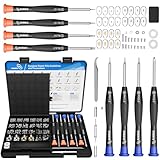
![AXTH 25-in-1 Small Precision Screwdriver Set, Professional Magnetic Mini Repair Tool Kit for Phone, Computer, Watch, Laptop, Macbook, Ring Doorbell, Eyeglass, Electronic, [Bearing Steel] Screw Driver](https://m.media-amazon.com/images/I/518YlLmPTcL._SL160_.jpg)
