I remember the sheer panic when my first brand-new car, a sensible little hatchback, just… vanished from my driveway overnight. Turns out, it wasn’t stolen. It was repossessed. Apparently, my dad, who co-signed, had missed a payment, and the dealer had a little ‘reminder’ device hidden somewhere. That was my first, expensive lesson in automotive surveillance.
So, do all new cars have trackers? It’s a question that’s been buzzing around garages and online forums for years, and frankly, the answer isn’t as simple as a yes or no. Think of it less like every car is bugged and more like a spectrum of tracking capabilities.
Frankly, the whole idea of being tracked, whether by the manufacturer or some shady third party, can feel like a massive invasion of privacy. Yet, there are reasons why these systems exist, and not all of them are nefarious.
The Truth: Manufacturers and Tracking
Let’s get straight to it: do all new cars have trackers? The honest answer is yes, most new cars come equipped with some form of tracking technology, but it’s usually not what you might imagine. Manufacturers embed these systems for a variety of reasons, and they aren’t typically deployed for nefarious purposes like spying on your daily errands. The primary driver is often safety and convenience.
Think about features like stolen vehicle recovery systems, which allow law enforcement to locate a car if it’s reported stolen. Then there are the emergency call services, like OnStar or similar offerings from other brands, that automatically contact emergency services if a crash is detected. These systems rely on GPS technology to pinpoint your location. I learned this the hard way when I ended up in a ditch during a snowstorm; the car automatically alerted roadside assistance, which was surprisingly helpful, even if I felt like a complete idiot.
Another aspect is predictive maintenance. Some advanced systems can monitor your car’s performance and alert you to potential issues before they become major problems. This data collection, while seemingly intrusive, can save you a significant amount of money and hassle down the line, preventing those dreaded roadside breakdowns that cost me about $280 in tow fees last year alone.
The technology itself is typically integrated into the vehicle’s electronics, often a small GPS module linked to a cellular modem. It’s designed to be discreet, not something you’ll stumble across easily. Trying to find the exact location of the GPS module in my old Audi was a week-long rabbit hole of dismantling panels; it’s not like finding a hidden microphone in a spy movie.
Beyond the Manufacturer: Third-Party Trackers
Now, where things get a bit murkier is with third-party trackers. These are separate devices that car owners might install themselves or that might be installed by a lender if you’re still financing the vehicle. My dad’s experience with the repo man is a prime example of a lender-installed tracker, often called an Electronic Vehicle Locator (EVL). These are less about convenience and more about collateral protection. (See Also: Do Jbl Headphones Have Trackers )
These devices are often small, battery-powered units that can be hidden anywhere in the vehicle. They transmit location data, usually to a web portal or app where the lender can monitor the car’s whereabouts. If payments are missed, they can theoretically disable the vehicle or simply track it for repossession. I’ve heard stories of people finding these little magnetic boxes stuck to the undercarriage of their cars after a repossession, which feels like something out of a cheap thriller.
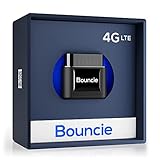
Then there are aftermarket GPS trackers you can buy for various reasons: fleet management for businesses, tracking a teen driver, or even just for peace of mind if you’re worried about your car being stolen. These are generally installed by the owner or a mechanic and are often quite sophisticated, offering real-time tracking and geofencing alerts.
The key distinction here is intent. Manufacturer-installed trackers are generally for safety, convenience, and vehicle management. Lender-installed trackers are for collateral security. Aftermarket trackers are for specific user needs. It’s crucial to understand what type of tracking you might be dealing with.
Can You Disable Car Trackers?
This is the million-dollar question for many privacy-conscious drivers. The short answer is: it’s complicated, and often, not entirely feasible without significant consequences. Manufacturer-installed tracking systems are deeply integrated into the car’s core electronics. Tampering with them could be akin to ripping out the engine control unit — you’re likely to cause more problems than you solve.
For safety features like emergency call services (eCall) or stolen vehicle recovery, disabling them is generally not recommended and may even be illegal in some regions due to mandatory safety regulations. These systems are designed to protect you and your vehicle. The idea of a car manufacturer *not* putting a tracker on a new vehicle for these safety reasons is almost unthinkable nowadays. It’s like asking if a modern smartphone has Bluetooth; it’s just part of the package.
Third-party trackers, particularly those installed by lenders, are a different story. If you find one and you’re not aware of it, you might be able to remove it. However, if it’s a condition of your loan agreement, removing it could be a breach of contract, leading to serious repercussions, including the car being repossessed. It’s always best to consult your loan agreement or contact the lender directly if you suspect a tracker is present and you want to understand its purpose.
Aftermarket trackers that you installed yourself are, of course, easily removable. But for the built-in systems, think of them as part of the car’s operating system. You wouldn’t try to uninstall Windows from your laptop to save space, would you? It’s that level of integration. (See Also: Do E Scooters Have Trackers )
I tried to disable the telematics unit on an old rental car once, just out of curiosity. I pulled a fuse, and the entire infotainment system went dark, the climate control stopped working, and a cascade of warning lights illuminated the dashboard. That little experiment cost me dearly in explaining the issue to the rental company and ultimately paying for the ‘repairs’.
Comparing Tracking Technologies
It’s helpful to see the different types of tracking and their common uses laid out. Not all trackers are created equal, and their purposes vary wildly.
| Tracking Type | Primary Purpose | Who Installs It? | Typical User Concern | My Take |
|---|---|---|---|---|
| Manufacturer-Integrated GPS/Telematics | Safety (eCall), Stolen Vehicle Recovery, Remote Diagnostics, OTA Updates | Car Manufacturer | Privacy of driving data, location sharing | Generally unavoidable, focus on privacy settings. Essential for safety features. |
| Lender-Installed Electronic Vehicle Locators (EVLs) | Collateral Security, Repossession Aid | Lender/Finance Company | Hidden installation, potential for unauthorized tracking | Check loan agreements. If unaware, it’s a red flag. Not something you *want* on your car. |
| Aftermarket GPS Trackers | Fleet Management, Teen Driver Monitoring, Personal Security, Asset Tracking | Owner or Mechanic | Accuracy, battery life, subscription costs, potential misuse | Useful for specific needs, but choose reputable brands and understand the terms of service. |
So, to circle back to the original question: do all new cars have trackers? Yes, in a broad sense, they are equipped with tracking technology. But the nature of that tracking, its purpose, and your ability to control it vary significantly. It’s not a blanket surveillance system, but a complex web of integrated systems designed for various functions, some of which impact your privacy more than others.
The Future of Car Tracking
Looking ahead, the trend is only towards more connectivity and, by extension, more tracking. Vehicles are becoming increasingly like smartphones on wheels, with constant data exchange happening. Over-the-air updates, advanced driver-assistance systems (ADAS), and integration with smart home devices all rely on robust communication modules and GPS capabilities.
This means that the debate around car tracking isn’t going away anytime soon. As features become more advanced, the data collected will become even richer and potentially more sensitive. It’s like the evolution of the humble calculator into a supercomputer that fits in your pocket — the capabilities grow exponentially, and so do the implications.
For consumers, staying informed about what data your car collects and how it’s used is key. Regularly reviewing your vehicle’s privacy settings and understanding the terms of service for connected car apps is prudent. Think of it as digital hygiene for your vehicle.
The convenience and safety benefits are undeniable. I wouldn’t want to be without the automatic crash notification on my current car, especially after seeing how quickly help arrived for a friend whose car malfunctioned miles from anywhere. But the trade-off for that convenience is a certain level of data sharing. (See Also: Do Rolex Watches Have Trackers )
Ultimately, the question of do all new cars have trackers is answered with a nuanced ‘yes, but…’ The technology is there, integrated for various purposes. Your job is to understand what’s in your vehicle and how to manage your privacy within those capabilities.
Final Thoughts
So, do all new cars have trackers? Yes, generally speaking, they come with integrated tracking capabilities. It’s not usually the kind of covert surveillance device you see in spy movies, but rather built-in systems for safety, emergency services, and vehicle management, powered by GPS and cellular technology. The key is understanding that these systems are standard for a reason, even if the privacy implications can feel a bit unsettling.
If you’re buying a new car, take a few minutes to look at the manufacturer’s privacy policy regarding connected services. You might be surprised at what data is collected and how it’s used. Don’t just assume it’s all for your benefit; know the details.
My own past experiences have taught me that ignorance is expensive, especially with cars. Whether it’s a hidden repo tracker or just the vast ocean of data your car generates, being aware is your best defense. Next time you’re looking at a new vehicle, ask the dealer specific questions about its connected services and data policies.
Recommended Products