
My favorite pair of reading glasses, the ones that actually make my world look sharp and not like I’m staring through a watercolor painting, decided to give up the ghost last Tuesday. The tiny screw holding the arm on just… vanished. Poof. Gone. It sent me into a mild panic, because you know how it is – once you find glasses you love, everything else feels like a compromise. It got me thinking: do glasses stores have extra screws for situations like this? It’s a question that’s probably crossed a lot of our minds when a tiny piece of metal goes AWOL, and frankly, the answer isn’t always as straightforward as you’d hope.
The Tiny Screw: A Spectacle Saga
Let’s be honest, those little screws are the unsung heroes of our eyewear. They’re minuscule, they’re fiddly, and they seem to have a magnetic attraction to the drain or the darkest corners of the carpet. When one goes missing, it’s not just an inconvenience; it’s a full-blown crisis for anyone who relies on their glasses. I remember a few years back, I was at a busy outdoor market, enjoying a sunny afternoon, when one of my sunglasses decided it had had enough of being attached.
The arm flapped loose, and I watched in slow motion as the screw pinged off into the dust. I was miles from anywhere, and the thought, ‘do glasses stores have extra screws?’
flashed through my mind, but I was too far away to even consider it. I ended up trying to jam a bit of toothpick in there, which, spoiler alert, did not work.
It was a sticky, wobbly mess for the rest of the day. This is precisely why understanding how eyewear repair works, and what options you have when these tiny components fail, is actually pretty darn important. We spend good money on these things, and a lost screw shouldn’t mean buying a whole new pair if it can be avoided.
It’s the small stuff that can cause the biggest headaches, and for glasses wearers, those screws are the ultimate small stuff.
My Accidental Eyewear Tinkering Education
After that market incident, I decided I wasn’t going to be caught out again. I started paying more attention to how my glasses were put together.
I’d always treated them like magic boxes – you wear them, and they help you see. I never really considered the engineering involved.
Turns out, it’s pretty clever stuff. The frames are usually made of plastic or metal, and the arms (or temples, as the pros call them) attach via a tiny hinge system, secured by one of these elusive screws.
Sometimes, it’s not even a screw but a tiny rivet or a hinge pin, but the principle is the same: a small fastener holding two pieces together. My initial thought was, surely, any optician would have a little bin of these things lying around, right?
Well, yes and no. I’ve learned that while many do, it’s not always a simple ‘here you go.’ The type of screw, the frame material, and the store’s policy all come into play. I once went into a large chain store after losing a screw from a pair of fairly expensive prescription glasses. The associate looked at me, looked at my glasses, and said, ‘Oh, that’s a proprietary screw for that specific model. (See Also: How To Fix Eyeglasses Arm Without Screw )
We don’t carry spares for individual components like that. You’d need to send them back to the manufacturer for repair, or buy a new pair.’ I was floored.
A new pair? For a screw smaller than a grain of rice? That felt like highway robbery. It taught me a valuable lesson: not all glasses are created equal when it comes to repairability, and not all stores are equipped or willing to do simple fixes on the spot, especially if the glasses weren’t purchased there.
This experience, more than any other, cemented my belief that you need to be proactive about eyewear maintenance and repair options. It’s not just about whether glasses stores have extra screws; it’s about understanding the mechanics and the business practices behind your eyewear.
The Truth About Those Tiny Screws
So, the big question: do glasses stores have extra screws? The short answer is: some do, some don’t, and it often depends on the store and the type of glasses.
Most independent opticians, the kind of places where you might get a really personal service, are usually pretty good about having a small selection of common screws. They’re accustomed to making minor adjustments and repairs. I’ve walked into my local, family-run optician with a loose screw, and they’ve happily tightened it or replaced it in under two minutes, often for free.
It’s part of their service. They have little repair kits, almost like a jeweler’s toolkit, with a variety of tiny screws, nuts, and even little eyeglass screwdrivers. These places often see themselves as more than just retailers; they’re also part of your vision care team. The larger chain stores, however, can be a different story.
Their business model is often more about selling new pairs. While they might have a technician who can do adjustments, they might be less inclined to provide free, minor repairs, especially if the glasses weren’t bought from them.
They might charge a small fee, or, as I experienced, tell you it’s a proprietary part that can’t be easily replaced without a specialized repair. This isn’t necessarily malicious; it’s often about liability, cost of inventory, and workflow.
They might have a policy against repairing glasses not sold in their store to avoid any potential damage claims or to push their own product lines. It’s a bit of a bummer when you’re in a pinch, but it’s good to know what to expect before you walk in with a wobbly arm.
When a Simple Screw Isn’t So Simple
Sometimes, the problem isn’t just a lost screw. The hinge itself might be stripped, or the frame might be cracked around the screw hole. (See Also: How Measure Metric Computer Screws )
This is where things get trickier, and even places that do have extra screws might not be able to help. For metal frames, a stripped screw hole can sometimes be repaired with a tiny tap and die set, but that’s beyond the scope of most opticians’ quick fixes.
For plastic frames, the material can become brittle with age and UV exposure, making it prone to cracking. If the plastic around the screw hole is damaged, a simple screw replacement won’t do much good.
In these cases, you might be looking at specialized repair services, adhesives (which rarely hold up well long-term on moving parts), or, unfortunately, a new pair of glasses. I once tried to fix a cracked plastic frame with super glue. It held for about a week before the constant flexing at the hinge broke the bond. It was a messy, temporary fix that ultimately made the situation worse.
It’s also worth noting that some high-end or designer frames might use unique hinge mechanisms or specialized screws that are difficult to source. These often require sending the glasses back to the manufacturer for repair, which can be time-consuming and expensive.
So, while the question of whether glasses stores have extra screws is valid, it’s only part of the puzzle. The condition of the surrounding frame is just as important.
DIY vs. The Pros: What’s Your Best Bet?
Given the variability in what glasses stores offer, what’s the best approach when you’re faced with a loose screw or a wobbly arm? Honestly, for minor issues, your first stop should probably be an independent optician.
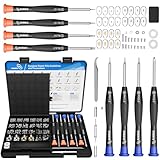
They are often the most helpful and least expensive option for a quick fix. They usually have the tools and the common parts readily available. If you’re in a bind and can’t get to an optician, a good quality eyeglass repair kit from a pharmacy or online retailer is a worthwhile investment.
I keep one in my car and one in my desk drawer. These kits typically come with a selection of tiny screws, nuts, washers, and a small multi-head screwdriver. They’re surprisingly effective for most common issues. I used one of these kits to fix a pair of sunglasses that had lost their screw while on vacation.
It took me about ten minutes, fumbling around on a hotel room desk, but I got them wearable again. The screws are generic, and they fit perfectly. If you’re looking at a more complex repair, like a cracked frame or a damaged hinge, trying to DIY it can be risky. You might end up causing more damage, making it unrepairable by a professional.
In those situations, it’s usually better to consult with an optician or a specialized eyewear repair service. I’ve seen people try to solder metal frames or use epoxy on plastic, and it rarely ends well. It’s like trying to fix a delicate watch with a hammer – you might get it done, but you’ll probably break something else in the process. (See Also: How To Adjust Eyeglass Screw )
When in doubt, it’s always best to let the professionals handle the heavy lifting, or at least the intricate fiddling.
My Eyeglass Repair Kit Arsenal
I’ve amassed a small collection of tools and supplies over the years, and I can tell you from experience that having the right bits and pieces makes all the difference. Here’s a breakdown of what I keep on hand, and why it’s saved me time and money:
| Item | Why It’s Key | Verdict |
|---|---|---|
| Eyeglass Repair Kit (with assorted screws, nuts, washers) | This is your first line of defense. It covers about 80% of common screw-related problems. The assortment of sizes is key. | Must-Have. Don’t skimp on quality here; cheap kits have brittle tools. |
| Small, Precision Screwdriver Set (jeweler’s type) | Sometimes the included screwdriver in a kit is flimsy. Having a dedicated, sturdy set gives you better control and use. Look for Phillips head and flathead options in various micro sizes. | Highly Recommended. Improves accuracy and reduces frustration. |
| Magnifying Glass or Headband Magnifier | These screws are TINY. Trying to see and manipulate them with the naked eye is a recipe for disaster. A good magnifier is a big deal. | Key for Success. You can’t fix what you can’t see. |
| Tweezers (Fine-tipped) | For picking up dropped screws (if you’re lucky) or precisely placing them. Fine-tipped ones are best for surgical precision. | Very Useful. Makes handling small parts much easier. |
| Clear Nail Polish or Small Amount of Plumber’s Tape | A tiny dab on the threads of a screw can help prevent it from loosening again over time. Use sparingly! Too much can make it impossible to tighten or loosen later. | Situational Fix. Good for preventing recurrence, but be careful. |
The most frustrating part of dealing with these tiny components is that they seem designed to disappear. I’ve spent more time than I care to admit crawling around on my hands and knees, peering under furniture, hunting for a screw that’s probably lodged itself into another dimension. Investing in a decent repair kit means you can often tackle the problem yourself without a frantic trip to the optician, or worse, having to buy new glasses. It’s about preparedness, plain and simple. And trust me, when you’re in that situation, feeling prepared is a huge relief.
People Also Ask (paa) – Weaving in the Answers
Can I Get a Screw for My Glasses at Any Optician?
While many opticians will have a selection of common screws for minor repairs, it’s not guaranteed. Independent opticians are generally more likely to offer this as a courtesy service than large chain stores. It’s always a good idea to call ahead and ask if they can help with a lost screw, especially if your glasses weren’t purchased from them. They might have the specific type you need, or they might not.
How Much Does It Cost to Replace a Screw in Glasses?
For a simple screw replacement at an independent optician, it’s often free or costs a very small amount, perhaps $5-$10 if they have to charge anything at all for their time. Larger chains might charge more, or they might refuse to do the repair if the glasses weren’t bought there. Buying a complete eyeglass repair kit yourself is a one-time cost, typically ranging from $10-$20, which then allows you to perform multiple repairs. DIY is usually the cheapest route if you have a kit.
What If the Screw Hole in My Glasses Is Stripped?
A stripped screw hole is more problematic than a missing screw. For plastic frames, the material might be too worn or cracked to hold a new screw securely. For metal frames, a specialized tool might be needed to re-thread the hole, which most opticians won’t have. In these cases, you might need to consider a more involved repair service, adhesives (use with caution, as they can be messy and temporary), or unfortunately, new glasses. It’s best to get a professional opinion from an optician.
Can I Use Super Glue to Fix My Glasses?
Super glue can be a temporary fix for certain breaks, like a small crack in the frame that isn’t under constant stress. However, using it for a stripped screw hole or a hinge is generally not recommended. Super glue can become brittle, it doesn’t flex well with the frame, and it can make future repairs more difficult or impossible. It’s a risky DIY solution that often fails quickly, especially on moving parts like hinges.
What Should I Do If I Lose a Screw From My Glasses at Home?
If you lose a screw at home, first try to stay calm and systematically search the area where it might have fallen. Use a flashlight to look in dark corners and under furniture. If you can’t find the original, your best bet is to use a good quality eyeglass repair kit. These kits contain various sizes of screws that can often serve as a replacement. If your glasses are prescription, try to note the model and brand to help you find the closest matching screw if possible, although generic ones from a kit usually suffice for basic functionality.
Final Verdict
So, to circle back to the initial question: do glasses stores have extra screws? Yes, some do, and some don’t. It’s a bit of a lottery, and your best bet for a quick, often free, fix is usually an independent optician. For anything more complex, or if you just want to be prepared for the inevitable screw-loss event, investing in a good eyeglass repair kit is money well spent. It’s a small item that can save you a big headache and a lot of money in the long run. Don’t let a tiny piece of metal dictate your day – be ready for it.
![AXTH 25-in-1 Small Precision Screwdriver Set, Professional Magnetic Mini Repair Tool Kit for Phone, Computer, Watch, Laptop, Macbook, Ring Doorbell, Eyeglass, Electronic, [Bearing Steel] Screw Driver](https://m.media-amazon.com/images/I/518YlLmPTcL._SL160_.jpg)
