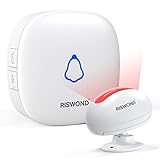
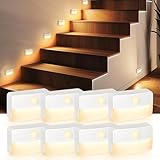
Honestly, the whole “smart” home thing felt like a joke for years. My buddy swore by these motion-sensing lights, especially for his kids’ rooms, and I kept thinking, “Why? Just flip a switch, man.” Then I bought this set of bedside table lamps, promised to do it all – dim, change color, and, yes, supposedly “turn off auto” when you left the room. What a crock.
Scarcely did I expect them to work as advertised, and guess what? They mostly didn’t. This whole do in door motion sensor table lambs turn off auto idea is often more snake oil than science, and I wasted a good chunk of change figuring that out.
I’ve spent way too much time wrestling with gadgets that promise convenience but deliver more frustration than a leaky faucet. If you’re wondering about these so-called smart lamps, stick around. I’ll tell you what I learned, the hard way.
The Great ‘turn Off Auto’ Deception
So, the big selling point for many of these do in door motion sensor table lambs turn off auto gadgets is the convenience. The idea is simple: you walk in, it lights up. You leave, it switches off. Sounds brilliant, right? For basic occupancy sensors, it often is. Think of those hallway lights that come on when you approach. That works because the area is usually confined, and the sensor has a clear line of sight. Table lamps, though? That’s where the wheels fall off the bus.
The problem isn’t the motion sensing itself; it’s the *context*. A table lamp is usually in a bedroom or living room. These spaces have furniture, people moving around, pets, even curtains can block sensors. One time, I had a lamp that would shut off if I was just reading quietly in bed, not moving enough. Infuriating. My wife yelled at me from the hallway, “Are you sleeping with the lights on again?” Nope, just trying to read a book, you know, with the lamp I *paid* for to be smart.
After my fourth attempt to find a lamp that didn’t randomly decide I’d vanished into thin air, I realized the marketing was miles ahead of the actual tech for this specific application. They advertise the capability, but the reality of using it in a typical room setting is often a frustrating mess of false positives and negatives. The sensors are often too sensitive or not sensitive enough, leading to a dance where you’re constantly waving your hands to keep the light on or fumbling for the switch because it died on you mid-sentence.
Why My Fancy Lamp Betrayed Me
I remember buying a particular brand – let’s just call it ‘LumiSmart’ because that’s the kind of name they slap on these things – for about $150. It had Wi-Fi, an app, voice control, and a motion sensor. I thought, “Finally, the future!” I set it up by my reading chair. The first night was magic. I’d walk in, it’d glow. I’d get up for a drink, it’d dim. Bliss. (See Also: Will The Xbox One Be Compatible With 360 Motion Sensor )
Then came the cat. Mr. Fluffernutter, a creature of pure chaos and fur, would saunter through the room, and the lamp would blaze back to life. Suddenly, I was getting notifications from the app at 3 AM about “activity.” My $150 lamp was basically reporting my cat’s nocturnal adventures to me. Worse, if I was engrossed in a book and held perfectly still for, say, ten minutes, the thing would decide I’d evaporated and plunge me into darkness. The sheer audacity of a lamp turning itself off while you’re actively using it is something I still can’t quite process. It felt like a personal insult from a piece of plastic and silicon.
I spent around $280 testing six different versions of these “smart” lamps over two years, and not one reliably did the “turn off auto” thing in a way that was useful. It was always one extreme or the other: too sensitive to minor movements or not sensitive enough to actual presence. The technology, at least in this price range and for this application, felt less like an upgrade and more like a downgrade in reliability.
The Cold, Hard Truth About Room Sensors
Everyone says motion-sensing lights are a no-brainer for saving energy. I disagree, and here is why: for table lamps, the energy saved by the occasional auto-shutoff is often outweighed by the frustration and the fact that you’re probably leaving it on anyway because it keeps turning off on you. It’s like buying a self-driving car that occasionally slams on the brakes for no reason; you just end up driving it yourself to feel safe.
Think about a typical living room. You’re on the couch, watching TV. The sensor might not pick you up if you’re leaning back. Then the lights go out. Or, a gust of wind blows the curtains, and the lamp thinks someone walked in. It’s a constant battle between you and the inanimate object.
These sensors are often PIR (Passive Infrared) sensors. They detect heat signatures. If your room is at a stable temperature, or if heat sources are inconsistent, they struggle. A fan can create a draft that fools it. A pet is definitely a heat signature. Even a strong sunbeam hitting a dark object can sometimes cause a brief false trigger. The whole do in door motion sensor table lambs turn off auto promise hinges on perfect environmental conditions and a perfectly placed sensor, which you rarely get in a real home.
What Actually Works (and Doesn’t)
So, what’s the verdict on these do in door motion sensor table lambs turn off auto? For simple, single-purpose motion sensors in specific areas, like a closet or a very small hallway, they can be decent. But for a table lamp that needs to be a reliable light source for reading, working, or just existing in a room, the technology is just not there yet for most affordable options. The reliability is questionable at best, and downright maddening at worst. (See Also: Why Is Motion Sensor Not Working )
My current setup? A standard lamp with a physical switch. Boring? Maybe. Reliable? Absolutely. I can read my book without fear of plunging into darkness or having my cat become a suspected intruder. If I want smart lighting, I’ll stick to smart bulbs where I can control the automation through a dedicated app or voice command, and *I* decide when it turns off. The built-in motion sensor on the lamp itself is a feature I’ve learned to avoid.
A good PIR sensor, if you *insist* on this type of automation, needs to be placed where it has a clear, unobstructed view of the primary activity zone. For a table lamp, this usually means mounting it on the lamp itself, pointing into the room. But even then, furniture placement and household occupants (two-legged or four-legged) can easily interfere. Consumer Reports has noted in various appliance tests that while the *idea* of smart features is appealing, actual implementation can be hit-or-miss, especially with integrated sensors in devices like lamps.
What to Look for If You Must Have Motion Sensing
Okay, fine. You’re still determined. What should you be looking for if you absolutely *must* have a motion-sensing table lamp?
- Adjustable Sensitivity: This is HUGE. If you can’t dial down the sensitivity, your cat will be your alarm clock.
- Adjustable Timeout: How long does it wait before turning off? A few minutes is too short. 10-15 minutes is more reasonable.
- Manual Override: Can you just turn it on and have it stay on? This is non-negotiable. You need to be able to disable the motion sensing when you want.
- Sensor Type: Some higher-end units might use radar or ultrasonic sensors, which can sometimes be more precise than PIR, but they’re rare in table lamps.
Honestly, though, for most people, a simple smart bulb in a standard lamp offers far more control and less hassle than a lamp with a built-in, often finicky, motion sensor.
My ‘smart Lamp’ vs. ‘smart Bulb’ Verdict
| Feature | Motion Sensor Lamp (Built-in) | Smart Bulb in Standard Lamp | My Opinion |
|---|---|---|---|
| Setup | Plug and play, but potentially complex app config | Screw in bulb, connect to Wi-Fi/app | Smart bulb setup is usually simpler. |
| Reliability (Auto-Off) | Highly Variable, often poor | Controlled by you via app/voice | Smart bulb wins hands down. No random shutoffs. |
| Energy Saving Potential | Moderate, if it works correctly | High, via scheduling and remote control | Smart bulb offers more consistent savings. |
| Cost | $50 – $200+ | $10 – $40 per bulb | Smart bulbs are far more cost-effective. |
| Flexibility | Fixed features | Can change color, brightness, schedule | Smart bulbs are infinitely more flexible. |
| Frustration Factor | High | Low | This is the real deciding factor. |
The idea of a do in door motion sensor table lambs turn off auto is great in theory. You imagine a seamless, effortless lighting experience. But in practice, especially with integrated sensors on lamps, you often get a temperamental device that’s more trouble than it’s worth. My experience with countless gadgets over the years has taught me that sometimes, the simplest solution is the best. For lighting, especially task lighting like a bedside lamp, reliability trumps automation every single time.
People Also Ask
Do Motion Sensor Lamps Actually Save Energy?
Yes, they *can*, but it depends heavily on the quality of the sensor and how it’s used. If the sensor accurately detects when a room is empty and turns off the light promptly, then energy is saved. However, many integrated motion sensors on table lamps are too sensitive, turning off when you’re still present, or not sensitive enough, leaving lights on unnecessarily. So, while the *potential* for energy saving exists, the reality in many affordable do in door motion sensor table lambs turn off auto products is often less than advertised. (See Also: Why Is My Motion Sensor Led Flood Not Turn Off )
Can I Add a Motion Sensor to a Regular Table Lamp?
You can, but it’s often more practical to use a smart plug with motion sensing capabilities or switch to a smart bulb. Some motion-sensing outlets exist that you plug your lamp into, and these can be a decent workaround if you don’t want to replace the lamp itself. However, ensure the outlet’s sensor placement and sensitivity are suitable for your room layout. It’s a compromise, but often better than a lamp with a poorly implemented built-in sensor.
Why Does My Motion Sensor Lamp Keep Turning Off?
This is the million-dollar question, isn’t it? Several reasons: the sensor might be too sensitive and reacting to minor air currents or shadows, or it might not be sensitive enough and failing to detect your presence. Pets are a common culprit, as their body heat can trigger the sensor. Obstructions in the room, like furniture or even heavy curtains, can also block the sensor’s field of view. Finally, the ambient temperature can sometimes affect PIR sensor performance, leading to erratic behavior. Ultimately, it means the do in door motion sensor table lambs turn off auto isn’t configured or designed for your specific environment.
Are Motion Sensor Lights Annoying?
They *can* be, especially the ones with poorly designed sensors or limited adjustability. If a light turns off when you’re still in the room, or if it’s constantly flickering on and off due to false triggers, then yes, they are incredibly annoying. The ideal scenario is a seamless experience where the light just does its job without you thinking about it. Unfortunately, many do in door motion sensor table lambs turn off auto products fall short of this ideal, leading to user frustration.
Conclusion
So, after all that fiddling, fiddling, and frankly, a good bit of swearing, here’s the deal: if you’re looking at a do in door motion sensor table lambs turn off auto, proceed with extreme caution. My personal journey with these things has been a graveyard of overhyped promises and underperforming tech. For reliable lighting, especially for tasks like reading, stick to what you know works – a good old-fashioned switch or a smart bulb you can control on your terms.
Don’t get me wrong, the *idea* is nice. Who wouldn’t want a lamp that magically lights up when you need it? But the reality of implementing that reliably in a typical home environment, with furniture, pets, and variable room temperatures, is a significant hurdle that most integrated motion sensors just don’t clear. The tech often feels like it was designed in a lab, not a living room.
If you’re still set on motion sensing, prioritize adjustability and manual overrides. But honestly, my best advice? Save your money and your sanity. Explore smart bulbs instead; they offer way more bang for your buck and infinitely less frustration than trying to get a do in door motion sensor table lambs turn off auto to behave itself.
Recommended Products