
I remember staring at a pile of tiny screws after a botched iPhone 5c repair. My stomach dropped. Had I mixed them up? The last thing anyone needs is to widen a stripped screw hole or, worse, cross-thread a delicate component. So, the question that haunts every DIY phone fixer: does iPhone 5c use same screws as iPhone 5? It seems like a simple yes or no, but with Apple, nothing is ever quite that straightforward. Let’s get to the bottom of it so you don’t end up with a pocket full of hardware and a phone that won’t power on.
This isn’t just about saving a few bucks on a replacement screw kit; it’s about the integrity of your device. Getting this wrong can turn a quick fix into a much bigger, more expensive headache. My own past blunders have taught me the hard way that sometimes the cheapest option ends up costing you the most in the long run.
The Devil’s in the Details: Screw Size and Type
When you’re elbow-deep in an iPhone repair, especially one of the older models like the 5c or 5, the sheer number of minuscule screws can be overwhelming. They all look alike, shimmering under your desk lamp, but trust me, they’re not. The question of whether the iPhone 5c uses the same screws as the iPhone 5 is a common one, and the answer isn’t a simple universal ‘yes’. While many internal components and their fasteners are shared between Apple’s devices from the same generation, there are subtle differences that can cause major problems if you’re not careful.
Let’s talk about the iPhone 5 first. It introduced a pretty standard internal screw layout for its time. You’ve got your Pentalobe screws on the outside, sure, but inside, it’s a mix of Phillips head screws, often in varying lengths.
The iPhone 5c, released shortly after, was designed to be a more budget-friendly option. To achieve this, Apple reused a lot of the internal components and assembly methods from the iPhone 5. This is where the confusion often starts. Many of the screws are indeed identical.
However, there can be slight variations, particularly if you’re looking at the absolute earliest versus latest production runs of either device, or if you’re comparing specific internal brackets or flex cable shields. For instance, a screw holding a small metal shield over a connector might be a millimeter shorter or have a slightly different thread pitch.
My first major repair was an iPhone 4S screen replacement, and I vividly remember the terror of seeing those tiny screws fall out. I took photos, I tried to organize them on a magnetic mat, but in the end, I definitely put one or two back in the wrong spot. The phone worked, but it made a weird clicking sound when I pressed on the top corner.
It turned out I’d used a slightly longer screw, and it was pressing against the display connector underneath. It was a stark lesson: even a tiny difference matters.
For the iPhone 5 and 5c, the majority of internal Phillips head screws are indeed the same size and thread pitch. This means that for many common repairs, like swapping out a battery or replacing a speaker module, you might get away with it. But relying on this assumption is a gamble. The difference between a successful repair and a bricked phone often comes down to using the correct screw in the correct hole.
Apple’s design philosophy, even back then, was about precision. Every screw has a purpose and a specific place.
The key takeaway here is that while there’s a high degree of overlap, assuming they are identical for every single screw location is where you invite trouble. The iPhone 5c shares many internal parts with the iPhone 5, including a significant number of its fasteners. This is a common cost-saving measure in manufacturing. However, manufacturing isn’t always perfectly uniform, and slight revisions can occur. The real danger lies in the length and the head type. If a screw is too long, it can pierce internal components or even the casing. If it’s too short, it might not provide enough grip, leading to loose connections or parts that rattle.
The Fine Print: What Apple Actually Said (or Didn’t)
Apple, as you might expect, isn’t exactly handing out detailed screw manifests for their older devices to the public. Their service manuals are proprietary, and while they do exist and can be found online through various repair communities, they are often dense and assume a certain level of technical knowledge. The official stance from Apple is always to take it to an authorized service provider. For the average user trying to fix their own device, detailed specifications on every screw aren’t readily available in a user-friendly format. This is where the community of independent repair technicians and enthusiasts becomes invaluable. They meticulously document these things, creating their own guides and charts.
Looking at teardowns and repair guides for both the iPhone 5 and iPhone 5c, it’s clear that the internal screw layouts are extremely similar. For example, the screws holding the display assembly to the logic board, the screws securing the battery connector shield, and many of the screws holding down internal brackets are often identical between the two models.
These are typically small Phillips head screws, often in the 1.0mm, 1.5mm, or 2.0mm range for length, with a specific thread pitch. The challenge is that even within the same model, there can be minor variations in screw lengths. (See Also: How To Fix Eyeglasses Arm Without Screw )
A screw at the top of the logic board might be slightly longer than one at the bottom. This is why proper organization during a teardown is a must. I learned this the hard way when I tried to reassemble a Mac Mini and ended up with a small pile of screws I couldn’t place, eventually forcing me to disassemble it again.
So, while Apple doesn’t explicitly publish a chart saying ‘iPhone 5 screw X = iPhone 5c screw Y’, the consensus from people who actually do this for a living, and for whom precision is everything, is that there’s a very high probability that many of the internal Phillips screws are interchangeable. However, and this is a big ‘however,’ not all of them are guaranteed to be. There might be a specific bracket or shield where Apple decided to use a slightly different screw for cost or manufacturing efficiency on the 5c. The most common lengths you’ll encounter inside both are typically 1.2mm, 1.5mm, and 2.0mm Phillips head screws. It’s the subtle differences, often just half a millimeter in length, that can cause problems. This is why generic screw kits for ‘iPhone 5/5c/5s’ often contain a mix, assuming interchangeability, but it’s always best to use the original screws or a kit specifically designed for the exact model if you want zero risk.
The official documentation that Apple provides for authorized service centers is the most accurate source, but accessing and interpreting it is beyond the scope of most DIY repairs. For us mere mortals, we rely on the collective wisdom of the internet’s repair gurus. Their consensus is strong: many are the same, but don’t bet your phone’s life on it without verifying each screw. It’s a gamble that often doesn’t pay off.
The Practicality of Repair: What Actually Happens
When you’re faced with a cracked screen or a dead battery on an iPhone 5c, the first thing you might think is, “Can I just use my old iPhone 5 parts?” It’s a logical question, especially if you have a donor phone lying around. The truth is, for many components, the answer is a resounding yes. The battery, the display assembly (though be mindful of connector differences on very early 5 vs later 5c), the speakers, the vibrator motor – these are often interchangeable. But when it comes to the tiny screws that hold everything together, the situation gets a bit more nuanced.
I once tried to repair a friend’s iPhone 5c with a screen I thought I’d salvaged from a 5. It seemed to fit perfectly, and the connector clicked into place. But when I went to reassemble, I ran into issues with the screws.
Some wouldn’t go in all the way, others seemed to strip the threads in the housing. This is a classic sign of using the wrong screw. The threads might be slightly different, or the length is just off. In that instance, I had to order a specific screw set for the 5c, which was a frustrating delay and an added cost.
It taught me that while parts might seem compatible, the devil is in the minuscule details, and screws are often the most overlooked details.
The most common scenario for DIY repairs involves replacing the screen or the battery. For these, the screws you’ll encounter are typically Phillips head screws of varying lengths.
The Pentalobe screws on the bottom are identical on both models. Inside, you’ll find numerous small Phillips screws.
Most of these will indeed be the same size and thread pitch between the iPhone 5 and 5c. This is because Apple aimed to simplify manufacturing and component sourcing. However, there are always exceptions.
A particular shield, a small bracket, or a specific flex cable might be secured by a screw that differs in length by just a millimeter or two. If you force a screw that’s too long, you risk damaging the logic board, a connector, or even piercing the battery. If you use one that’s too short, the component might not be securely fastened, leading to intermittent issues or, at worst, a short circuit if a loose shield touches a live contact.
When you’re buying a replacement screw kit online, you’ll often see them advertised for ‘iPhone 5/5c/5s’. This implies a high degree of interchangeability. However, dedicated repair guides and experienced technicians will often advise you to use the original screws from the exact model you’re working on, or to meticulously label each screw as you remove it. This is because, while many screws are the same, relying on that assumption for every single one is a gamble. The most common lengths encountered inside are 1.2mm, 1.5mm, and 2.0mm Phillips screws. The important difference usually lies in the length, not the head type or thread. A screw that is just 1mm too long can cause significant internal damage.
The Common Mistakes and How to Avoid Them
The biggest mistake people make when attempting to repair an iPhone 5 or 5c, particularly regarding screws, is a lack of organization. You’ve got these tiny little metal friends, and they all look so similar, right? Wrong. They are not all friends, and they are definitely not all the same. I once spent an entire Saturday trying to figure out why my iPad Mini wouldn’t turn on after a battery swap. I’d been careless with the screws, and I ended up forcing a slightly longer one into a spot where it wasn’t supposed to go. It wasn’t immediately obvious, but it had apparently put pressure on a flex cable connector, preventing it from seating properly. Lesson learned: organize religiously. (See Also: How Measure Metric Computer Screws )
When you’re taking apart an iPhone 5 or 5c, get yourself a magnetic project mat with a grid. Or, if you’re old school, get a few small bowls and label them with the screw location (e.g., ‘Bottom Pentalobe’, ‘Display Bracket Top Left’, ‘Speaker Assembly’). Take high-resolution photos as you go. Seriously, zoom in and document every step. When you reassemble, refer back to your photos and your labeled screws. This might sound like overkill, but it will save you hours of frustration and potentially expensive mistakes.
Another common error is assuming that because a screw fits into a hole, it’s the correct screw. A screw can thread into a hole that’s not designed for it, especially if the threads are slightly damaged or if it’s a self-tapping screw being used in a pilot hole. If a screw feels too tight going in, or if it spins with very little resistance and doesn’t seem to be tightening anything, stop.
You are likely using the wrong screw. Forcing it can strip the threads in the aluminum housing or on the screw itself, making it impossible to remove later or to secure the component properly. The iPhone 5 and 5c have specific screw lengths for different components.
Using a 1.5mm screw where a 1.2mm screw should go, or vice-versa, can cause issues ranging from a wobbly part to internal damage. My first attempt at a phone repair involved a Samsung Galaxy S3, and I used a screw that was too long. It ended up creating a tiny bump on the back of the phone that was incredibly annoying. It was a constant, physical reminder of my haste.
The core mistake is rushing. Phone repair, especially with modern devices, requires patience and meticulous attention to detail. Don’t get caught up in the ‘Does iPhone 5c use same screws as iPhone 5?’ question by just guessing. Treat each screw location as unique. If you’re unsure, and you don’t have a reliable guide for that specific model and screw location, err on the side of caution. Buying a complete screw kit for the specific model you are repairing is a small investment that can save you a world of pain. These kits often come with diagrams or are labeled, which is a huge help.
The Screw Breakdown: What to Expect Inside
Let’s get a bit more granular about what you’ll find inside these phones. When you open up an iPhone 5 or 5c, you’re going to encounter two main types of screws: the external Pentalobe screws that seal the bottom of the phone, and a variety of internal Phillips head screws. The Pentalobe screws on the bottom are identical on both the iPhone 5 and 5c. These are usually P2 size (0.8mm tip). So, if you’re just dealing with the bottom screws, you’re in luck – they are the same.
The complexity arises with the internal Phillips head screws. These are where the subtle differences can appear.
Generally, you’ll be dealing with screws that are very small, typically in the range of 1.2mm, 1.5mm, and sometimes 2.0mm in length. The Phillips head is usually small, often requiring a #000 or #00 screwdriver bit.
For example, the screws that hold down the metal shields covering the display connector, the battery connector, and other sensitive areas are often identical between the 5 and 5c. These are typically 1.5mm Phillips screws.
The screws holding the speaker module or the Taptic Engine (though the 5c doesn’t have a Taptic Engine in the same way as later iPhones, it has a vibrator motor) are also often interchangeable.
However, there are specific locations where variations have been noted. For instance, some repair guides suggest that certain screws on the logic board itself, or those securing specific internal brackets, might have slight length differences. A screw that is 1.5mm long on the iPhone 5 might be 1.2mm on the 5c, or vice-versa, in a particular spot. This is where the danger lies.
Imagine you’re reassembling and you have two screws that look identical, but one is 1.2mm and the other is 1.5mm. If you put the longer one into a shallow hole, you risk damaging whatever is underneath. I once had a customer bring me an iPhone 6 that had a visible bulge on the back.
They’d tried to replace the screen themselves and had used a screw that was too long. It had actually punctured the battery, which is incredibly dangerous. That’s why paying attention to screw length is most important, even if it feels like nitpicking. (See Also: How To Adjust Eyeglass Screw )
Here’s a simplified breakdown of what you’re likely to find, keeping in mind these are general observations and not absolute guarantees for every single screw:
| Screw Type | Location (Typical) | iPhone 5 | iPhone 5c | Verdict for Interchangeability |
|---|---|---|---|---|
| Pentalobe | Bottom exterior | P2 (0.8mm tip) | P2 (0.8mm tip) | Yes (Identical) |
| Phillips | Display connector shield | 1.5mm | 1.5mm | Likely (High) |
| Phillips | Battery connector shield | 1.5mm | 1.5mm | Likely (High) |
| Phillips | Logic board brackets | Varied (1.2mm, 1.5mm) | Varied (1.2mm, 1.5mm) | Possible, but check carefully. Some might differ. |
| Phillips | Speaker/Vibrator module | 1.5mm | 1.5mm | Likely (High) |
The key takeaway is that while many internal Phillips screws are the same, relying on this across the board is risky. Always verify.
The Ultimate Guide to Screw Management (if You Must Diy)
Look, I’m not going to tell you that you can’t fix your iPhone 5c yourself. But I will tell you that if you’re going to do it, you need to be prepared. The question of ‘does iPhone 5c use same screws as iPhone 5’ is just the tip of the iceberg. The real challenge is managing those screws like a pro. My first real DIY phone repair was an iPhone 4. I thought I was so smart, laying out all the screws in neat little rows on my desk. By the time I got to reassembling, I had a small, confusing pile and absolutely no idea where they belonged. The phone ended up with a permanently slightly-off-center screen. Embarrassing.
Here’s my tried-and-true, blunt-force method for screw management that actually works:
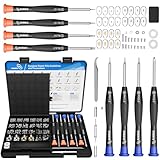
- Invest in the Right Tools: You need a good quality screwdriver set. Not the dollar-store kind. Look for a set with multiple small Phillips bits (PH000, PH00) and ideally, a Pentalobe bit for the bottom. A magnetic mat with printed diagrams or a screw organizer tray is your best friend. Some kits even come with a magnetic mat specifically for the iPhone 5/5c, showing where each screw goes.
- Document Everything: Before you even think about touching a screw, take clear, high-resolution photos of your phone from every angle. As you disassemble, take photos before you remove each component and its screws. Note the location, the component it’s attached to, and the type of screw.
- The Bowl Method (My Preferred Technique): Get several small, identical bowls or containers. As you remove screws from a specific area, place them only in the corresponding bowl. For example, one bowl for the bottom Pentalobe screws, one for the display bracket screws, one for the battery bracket screws, and so on. If a component has multiple screws of different lengths, use multiple bowls for that component.
- Label, Label, Label: If you’re not using bowls or a magnetic mat with clear markings, use masking tape and a fine-tip marker. Label each bowl or baggie with the corresponding screw location from your photos or a reliable repair guide.
- Test Fit Before Tightening: When reassembling, pick up the correct screw for the location. Gently thread it in by hand as far as it will go. If it resists significantly or feels like it’s grinding, STOP. It’s the wrong screw or the hole is damaged. Don’t force it. Back it out and try again.
- Never Use a Longer Screw Than Necessary: This is where a lot of damage happens. If you have a choice between a 1.2mm and a 1.5mm screw for a specific location, and you’re unsure, use the 1.2mm. It’s better to have a slightly less secure screw than to puncture a vital component.
Following these steps will drastically reduce your chances of a screw-related disaster. It takes discipline, but it’s the difference between a successful repair and a phone that ends up in the junk drawer.
Faq: Your Burning Questions Answered
Are the Screws on the Bottom of the iPhone 5 and 5c the Same?
Yes, the two Pentalobe screws on the bottom of both the iPhone 5 and iPhone 5c are identical. They are both P2 size, which means they have a 0.8mm tip. You don’t need to worry about mixing these up if you’re working with both models.
Can I Use iPhone 5 Screws to Fix an iPhone 5c?
For many internal Phillips head screws, yes, you likely can use iPhone 5 screws to fix an iPhone 5c, and vice versa. However, it’s not a universal guarantee for every single screw. There can be slight differences in length for specific brackets or shields. It’s always best to meticulously organize your screws during disassembly or use a high-quality, model-specific screw kit to be absolutely safe.
What Happens If I Use the Wrong Size Screw in My iPhone?
Using the wrong size screw can lead to several problems. If a screw is too long, it can damage internal components like the logic board, flex cables, or even puncture the battery, which is a fire hazard. If a screw is too short, it might not secure a component properly, leading to loose connections, intermittent issues, or rattling. In some cases, forcing the wrong screw can strip the threads in the housing, making future repairs much more difficult.
Where Can I Find Reliable Screw Information for iPhone Repairs?
Reliable information for iPhone screw locations and types can often be found on reputable DIY repair websites that offer detailed, step-by-step guides with accompanying photos or diagrams. iFixit is a well-known resource for this. Additionally, many third-party replacement screw kits for specific iPhone models are sold with diagrams or labels indicating where each screw should go.
Conclusion
So, to directly answer whether the iPhone 5c uses the same screws as the iPhone 5: the answer is a qualified yes. Many of the internal Phillips head screws are interchangeable, as are the external Pentalobe screws. However, Apple’s manufacturing isn’t so rigid that every single screw is identical across both models. There are subtle length differences in some locations that can cause significant problems if you’re not careful.
My advice? Don’t just assume. If you’re doing a repair, treat every screw as unique. Invest in a good screw organizer, take photos, and if you’re buying a replacement kit, get one specifically labeled for the iPhone 5c if that’s what you’re working on. The few extra dollars or minutes spent on organization will save you far more in potential headaches and costly mistakes.
Ultimately, the question ‘does iPhone 5c use same screws as iPhone 5’ is less about a universal truth and more about practicing meticulous repair habits. Get organized, be patient, and your phone will thank you for it.
![AXTH 25-in-1 Small Precision Screwdriver Set, Professional Magnetic Mini Repair Tool Kit for Phone, Computer, Watch, Laptop, Macbook, Ring Doorbell, Eyeglass, Electronic, [Bearing Steel] Screw Driver](https://m.media-amazon.com/images/I/518YlLmPTcL._SL160_.jpg)
