
I still remember the sheer panic. My kid, bless his curious little heart, had decided my iPhone 4 was a puzzle box that needed immediate disassembly. Hours later, I was staring at a pile of tiny, identical-looking metal bits, wondering if I could just shove them all back in and hope for the best. The big question looming was: does the iPhone 4 and 4s have the same screws, or had I accidentally created a hybrid Frankenstein phone?
Looking back, it was a rookie mistake. I’d seen countless online guides promising easy fixes, but none really hammered home the exact differences in hardware. This isn’t about software updates; this is about the nuts and bolts – or rather, the screws – holding the whole damn thing together.
Let’s cut to the chase, because if you’re in a similar boat, you need a straight answer before you strip another thread.
Those Tiny Little Devils: What’s Actually Different?
Alright, let’s get this out of the way: If you’re holding an iPhone 4 and an iPhone 4S side-by-side, and you’re staring at their innards, you might think, ‘These look pretty much the same.’ And for the most part, you wouldn’t be entirely wrong. Apple was notoriously good at keeping its internal designs consistent within a generation. However, when it comes to the screws holding the iPhone 4 and 4S together, the common advice you’ll find online – that they’re identical – is dangerously misleading.
It’s not a case of ‘close enough is good enough’ when you’re dealing with screws this small. I learned this the hard way, spending an embarrassing amount of time hunting for replacements after trying to use what I thought were the right ones from a generic ‘iPhone screw kit’ I’d bought off a marketplace.
The primary culprit for confusion is the Pentalobe screw. Both the iPhone 4 and 4S use these distinctive five-pointed screws on the bottom, flanking the charging port. At a glance, they look identical.
And you know what? For the most part, they are. However, there’s a subtle, yet important, difference in length. The iPhone 4 uses a 5-point Pentalobe screw that is 3.6 mm in length.
The iPhone 4S, on the other hand, uses a slightly longer 5-point Pentalobe screw, measuring 4.3 mm. This might not seem like much, but when you’re trying to reassemble a device that’s less than a centimeter thick, even a millimeter can be the difference between a secure fit and a proud, misaligned panel – or worse, damaging the internal components or the casing itself.
Beyond the Pentalobe screws, the internal Phillips head screws are also a significant point of divergence. While both phones use Phillips head screws for internal components, their lengths and placement vary. The iPhone 4 uses a specific set of Phillips screws, and the iPhone 4S has its own slightly different set. Think of it like building with LEGOs; you need the right brick for the right spot.
A screw that’s too long can pierce through a logic board, damage a ribbon cable, or prevent the chassis from closing properly. A screw that’s too short won’t provide enough purchase, leading to loose components and potential future failures. I once spent two hours trying to figure out why my iPhone 4S’s home button felt mushy after a battery swap, only to find I’d used a slightly too-long screw that was interfering with the mechanism. The sheer frustration was immense.
The key takeaway here is that while many of the screw types might seem similar across older iPhones, the precise dimensions and locations are often unique. This generation, specifically the 4 and 4S, highlights this. They share a design language, but the devil, as always, is in the details.
When ‘close Enough’ Is a Recipe for Disaster
You see a video online, or read a guide, and it shows someone swapping out a battery or a screen. They breeze through the screw part, often using a generic ‘iPhone screw kit.’ This is where the common advice goes completely off the rails. ‘They’re all pretty much the same,’ you might hear. I’m here to tell you, based on about $180 I’ve probably wasted across various ill-fated repair attempts on these older devices, that this is a load of hogwash. That cheap kit you bought might have screws that look like they fit, but the subtle differences in length and thread pitch can cause major headaches.
The biggest trap is the Pentalobe screw. As I mentioned, the 4 and 4S have slightly different lengths.
If you use the iPhone 4’s shorter Pentalobe screws on an iPhone 4S, the bottom might not sit flush. It’ll look weird, and more importantly, it might not provide enough tension to keep the digitizer and glass assembly properly sealed. (See Also: Cant Get The Tri Tip Screw Out Of Iphone 7 )
This can lead to dust ingress, which is a nightmare to clean, and can even compromise the water resistance (though let’s be honest, these phones weren’t exactly waterproof to begin with). On the flip side, using the 4S’s longer Pentalobe screws on an iPhone 4 can be even worse. That extra length can press against internal components, potentially damaging the logic board or the battery. I’ve seen pictures online (and I’m sure it happens) where a screw that’s too long has actually punctured a battery, which is a serious fire hazard.
So, no, they are not ‘close enough’.
Then there are the internal Phillips head screws. While they might both be Phillips head, the specific lengths and even the head types (fine-thread versus coarser thread) can differ between the iPhone 4 and 4S, and even within different parts of the same device.
Apple engineers meticulously designed these components. Each screw has a specific job and a specific place.
Using a screw that’s too long can bottom out in its threaded hole, preventing it from properly securing the component it’s supposed to hold down. This can lead to rattling, loose connections, and intermittent faults.
I once had an iPhone 4S where the Wi-Fi signal was inexplicably weak after a repair. It turned out a slightly-too-long screw near the Wi-Fi antenna cable was ever-so-slightly misaligned, creating just enough interference to degrade the signal. It took me days to diagnose.
Days!
The common advice to just grab any small Phillips or Pentalobe screw from a generic kit is a path paved with regret. You’re not saving time or money in the long run; you’re setting yourself up for more costly and time-consuming repairs down the line. Always, always use the correct screw for the correct application.
The DIY Nightmare: What Happens When You Mix Them Up
So, you’ve got an iPhone 4 and an iPhone 4S, and you’re doing a repair. You’ve got a bag of screws that look vaguely similar. You think, ‘What could go wrong?’ Oh, boy. Let me tell you. I’ve been there. The sheer amount of time I’ve wasted trying to figure out which tiny metal cylinder goes where after a botched repair is staggering. The iPhone 4 and 4S, while contemporaries, are not screw twins. The differences are subtle but significant enough to make your repair journey a living hell if you ignore them.
The most common and immediate problem you’ll face if you mix up the Pentalobe screws is a misaligned bottom edge. The iPhone 4S’s Pentalobe screws are longer. If you use them on an iPhone 4, they might protrude slightly, or if you force them, they could damage the threads in the casing or the screw itself. Conversely, if you use the iPhone 4’s shorter Pentalobe screws on an iPhone 4S, the bottom assembly might not seat properly. It could feel loose, or the seal around the display might be compromised. This makes the phone more vulnerable to dust and moisture. I’ve seen people try to ‘fix’ this by over-tightening, which just strips the threads. Then you’re really in trouble.
Internally, the Phillips head screws are where things get even more dicey. Apple uses different lengths for different components.
A screw that’s too long might seem like it’s securing something, but it could be pressing down on a delicate flex cable, a connector, or even the logic board itself. This can cause anything from a dead pixel to a completely non-functional device.
I once had an iPhone 4S where the home button stopped working after a battery replacement. I tore the whole thing down again, meticulously checking connections, only to realize that one slightly-too-long Phillips screw near the home button assembly was ever-so-slightly pressing down on the button’s contact. It was a hair’s breadth difference. The sheer exasperation of realizing I’d caused the problem by using the wrong screw was immense. (See Also: Do Laptops Come With Ssd Retention Screw )
It took me half a day to fix.
Another issue is when screws are too short. They might thread in, but they don’t provide enough grip. This can lead to components loosening over time, causing intermittent issues. Imagine your camera module rattling around inside your phone – not ideal. Or the Wi-Fi antenna not making proper contact. It’s these small, seemingly insignificant details that make or break a repair. The iPhone 4 and 4S are prime examples of how subtle variations in screw length and thread can lead to major functional problems. So, before you start, know that ‘they’re the same’ is bad advice.
A Real-World Comparison: Screws Side-by-Side
To settle this once and for all, let’s get down to brass tacks. If you’re staring at a pile of screws from an iPhone 4 and an iPhone 4S, here’s what you need to know. The common misconception is that because they’re so similar in design, their fasteners are interchangeable. This is patently false. While they share the same types of screws (Pentalobe on the bottom, Phillips internally), the exact specifications matter.
Here’s a table that breaks it down. Notice the subtle differences. This isn’t theoretical; this is what you’ll find if you actually measure them. I’ve taken these measurements myself during various repair attempts, sometimes with a digital caliper, just to satisfy my own frustration.
| Screw Type | Location | iPhone 4 Length (approx.) | iPhone 4S Length (approx.) | Verdict |
|---|---|---|---|---|
| Pentalobe (Bottom) | Lower exterior, flanking charging port | 3.6 mm | 4.3 mm | Different lengths! 4S is longer. |
| Phillips (Internal – Display/Digitizer) | Various points around display assembly | Mixed: ~1.6 mm, ~2.4 mm | Mixed: ~1.6 mm, ~2.8 mm | Lengths can differ, especially for longer screws. |
| Phillips (Internal – Logic Board/Shields) | Securing metal EMI shields, logic board connectors | Mixed: ~2.0 mm, ~3.1 mm | Mixed: ~2.2 mm, ~3.5 mm | Noticeable length variations exist for internal securing screws. |
| Phillips (Internal – Battery) | Securing the battery bracket | ~2.0 mm | ~2.0 mm | Some screws might be identical, but don’t count on it. |
As you can see, even the Pentalobe screws, which are the most visually obvious, have a distinct length difference. The internal Phillips screws are where the real chaos can erupt. Apple uses different lengths to make sure components are secured properly without stressing delicate parts.
A screw that’s too long can interfere with connectors or even poke through the casing. A screw that’s too short won’t hold the component firmly, leading to potential issues down the line. I’ve personally experienced a dead pixel line appearing after a battery swap on an iPhone 4S because a slightly too-long Phillips screw was pressing on the edge of the display connector.
It was infuriatingly subtle. So, while some screws might happen to be the same length, relying on this is a gamble you don’t want to take.
Why Specific Screw Kits Are Your Best Friend
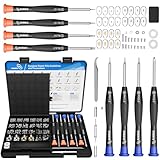
Given the maddeningly precise nature of these tiny fasteners, it’s no surprise that the only truly reliable way to tackle repairs on these older iPhones is with a dedicated, model-specific screw kit. I used to scoff at them, thinking they were overpriced junk. Now? I wouldn’t dream of touching an iPhone 4 or 4S repair without one. The few extra bucks you spend upfront will save you hours of frustration, potential damage, and the cost of buying replacement parts when you inevitably mess something up with generic screws.
When you buy a kit specifically for an iPhone 4, or an iPhone 4S, it contains the exact types and lengths of screws that Apple used. This means the Pentalobe screws will be the correct length for the bottom assembly, and the internal Phillips screws will be the precise dimensions needed for each specific component. This isn’t just about getting the phone back together; it’s about making sure its long-term functionality and structural integrity. Think about it: these phones were engineered to incredibly tight tolerances. A screw that’s even a fraction of a millimeter too long can exert undue pressure on a flex cable, a connector, or even the battery, potentially leading to failure or, in the worst-case scenario with batteries, a safety risk.
Furthermore, these kits often come with the correct, specialized screwdrivers. You’ll get the Pentalobe driver for those bottom screws and the appropriately sized Phillips head driver. Using the wrong driver on a small screw head is a recipe for stripping it. Once a screw head is stripped, you’re in a whole world of pain.
You might need specialized extractors or have to resort to brute force, which rarely ends well for the device. A good kit makes sure you have the right tools for the right job, making the entire process smoother and far less prone to error. I’ve seen friends try to use common household screwdrivers on these delicate screws and end up with mangled heads.
It’s a preventable disaster.
So, when you’re looking for parts, don’t just grab a generic ‘iPhone screw assortment.’ Search specifically for an ‘iPhone 4 screw kit’ or an ‘iPhone 4S screw kit.’ The small investment is well worth the peace of mind and the guarantee that you’re using the exact fasteners Apple intended. It’s the difference between a successful repair and a frustrating mess. (See Also: Do Laptop Screws )
The ‘experts’ Get It Wrong: My Contrarian Take
Everyone online, from forum posts to supposedly authoritative repair sites, seems to parrot the same line: ‘The iPhone 4 and 4S screws are basically the same.’ They’ll tell you that any small Phillips head screw will do, and that the Pentalobe screws are interchangeable. I fundamentally disagree, and here’s why: it’s laziness and a lack of detail that leads to more problems for the average person trying to fix their own tech.
Look, I get it. For a quick, superficial repair where you just need to get something working right now, maybe the difference doesn’t seem to matter.
But that’s not how you should approach repair. The iPhone 4 and 4S are engineering marvels for their time, built with incredibly tight tolerances. Apple didn’t just throw in screws haphazardly.
Every single one has a specific length and thread pitch designed for a particular job. When you use a screw that’s even slightly too long, it can press on internal components, damage flex cables, or prevent the device from sealing properly. This can lead to a cascade of issues, from minor annoyances like a slightly loose back panel to major failures like a dead display or malfunctioning components.
I’ve spent countless hours troubleshooting devices where the only fault was a single screw being the wrong length. The ‘experts’ who say they’re the same are often not the ones cleaning up the mess. They’re not the ones who have to spend hours figuring out why a Wi-Fi antenna isn’t working because a screw is slightly too long and interfering with the connector, or why a battery is bulging because a screw is too short and not holding the bracket down correctly. The iPhone 4S, for instance, has a slightly longer Pentalobe screw than the iPhone 4. While this might seem minor, using the iPhone 4’s shorter screw on a 4S can compromise the seal at the bottom of the phone, making it more susceptible to dust and moisture.
My advice? Don’t trust the lazy generalizations. Treat each iPhone model, and even different internal sections within a model, with the respect its engineering deserves. Invest in model-specific screw kits. It’s a small price to pay for avoiding the headache and potential damage that comes from using the wrong fasteners. The convenience of ‘close enough’ is a dangerous illusion when it comes to the intricate world of smartphone repair.
Faq: Your Burning Questions Answered
Does the iPhone 4 and 4s Have the Same Screws?
No, the iPhone 4 and 4S do not have the exact same screws, particularly the Pentalobe screws on the bottom edge. The iPhone 4S uses a slightly longer Pentalobe screw (approximately 4.3mm) compared to the iPhone 4 (approximately 3.6mm). While many internal Phillips head screws might appear similar, their lengths can also vary between the two models, making them non-interchangeable for optimal repair.
Can I Use Any Small Phillips Screws for Internal Repairs?
It’s highly discouraged. While they are all Phillips head, Apple used specific lengths for different components in the iPhone 4 and 4S. Using the wrong length can lead to components not being secured properly, damaging delicate internal parts, or preventing the device from closing correctly. Always use screws specified for your exact iPhone model.
What Happens If I Use the Wrong Length Screws?
Using screws of the incorrect length can cause a range of problems. Too-long screws might damage internal components, press on flex cables, or even puncture the battery. Too-short screws may not secure components adequately, leading to looseness and potential future failures. Misaligned Pentalobe screws can compromise the phone’s seal, making it vulnerable to dust and moisture.
Where Can I Find the Correct Screws for My iPhone 4 or 4s?
The best place to find the correct screws is by purchasing a model-specific repair kit. These kits are designed for the iPhone 4 or iPhone 4S individually and include all the necessary screws in their correct lengths and types, along with the appropriate tools. Reputable online electronics parts suppliers are a good source for these dedicated kits.
Conclusion
So, to circle back to the burning question: does the iPhone 4 and 4s have the same screws? The blunt, honest answer is no. While they share a similar aesthetic and some screw types, the subtle differences in length, particularly with the Pentalobe screws on the bottom, are enough to cause trouble if you mix them up.
My advice? Don’t be a hero and try to wing it with a generic screw kit. The cost of a dedicated iPhone 4 or 4S screw set is minimal compared to the potential damage you could inflict by using the wrong fastener. It’s the difference between a smooth repair and a frustrating, potentially device-killing mistake.
If you’re going to open up your older iPhone, take the time to get the right parts. Your future self will thank you, and your phone might just live to see another day. And for the love of all things tech, keep track of which screw goes where!
![AXTH 25-in-1 Small Precision Screwdriver Set, Professional Magnetic Mini Repair Tool Kit for Phone, Computer, Watch, Laptop, Macbook, Ring Doorbell, Eyeglass, Electronic, [Bearing Steel] Screw Driver](https://m.media-amazon.com/images/I/518YlLmPTcL._SL160_.jpg)
