
I’ve lost count of the times I’ve fumbled with a tiny screw driver, trying to get the right angle on a micro screw that’s smaller than my pinky fingernail. It usually ends with me squinting, sweating, and praying I don’t strip the head. Seriously, how do they even make these things?
The intricate world of smartphone repair and assembly relies on parts so small they seem like magic. But there’s no magic, just incredibly precise engineering. If you’ve ever wondered how are micro screws for mobile phones machined, strap in. It’s a fascinating, albeit often frustrating, glimpse into the unseen backbone of the tech we use daily.
The Unseen Art of Micro Screw Machining
When you crack open a phone, or even just try to replace a battery yourself, you’re immediately confronted by them: those impossibly small screws. They hold everything together, from the screen to the motherboard. I remember my first attempt at replacing a cracked iPhone screen. I laid out all the little bags of screws, meticulously labeled, and still managed to mix up two that looked identical. One wrong screw in the wrong hole and poof, you’ve got a new problem. The sheer precision required to make them is mind-boggling, and it all starts with how are micro screws for mobile phones machined.
The process is far from simple. It’s a multi-stage journey of metal transformation, starting with raw materials and ending with threads so fine they’re barely visible. Think of it as sculpting, but on a scale that makes a grain of sand look like a boulder. The stakes are incredibly high because even the slightest imperfection can render a screw useless, or worse, damage the delicate components it’s meant to secure.
These aren’t your grandpa’s hardware store screws; these are engineered to nanometer-level tolerances. The materials themselves are carefully selected.
Typically, you’re looking at stainless steel alloys, chosen for their strength, corrosion resistance, and ability to hold a sharp edge during the machining process. Titanium and even some exotic alloys might make an appearance in high-end or specialized devices, but for the vast majority of smartphones, it’s high-grade stainless steel that gets the job done.
The selection of the right alloy is the first step in making sure the screws can withstand the rigorous machining and the stresses of their operational life inside a device that’s constantly in your pocket or hand.
From Wire to Thread: The Cold Heading Process
So, how does a piece of metal wire turn into a miniature marvel of engineering? The primary method used for mass-producing these tiny titans is called cold heading, or sometimes cold forming. This isn’t like drilling or milling in the traditional sense. Instead, it’s a high-speed, high-pressure process where a piece of wire is fed into a machine, cut to a specific length, and then basically smashed into shape. Imagine a super-powerful, super-precise hammer hitting a blob of metal repeatedly to mold it into a screw blank. This blank will have the basic shape of the screw head and the start of the shank, but no threads yet.
The beauty of cold heading is its efficiency and its ability to create incredibly strong parts. Because the metal is deformed without heating it (hence ‘cold’), its grain structure becomes more refined and elongated along the flow of the material.
This makes the resulting screw stronger and more resistant to fatigue. It’s a bit counterintuitive, as you’d think heat would be needed for shaping, but for these specific applications, the cold process offers superior mechanical properties. (See Also: How To Fix Eyeglasses Arm Without Screw )
The machines involved are complex pieces of machinery called multi-station cold formers. They can perform multiple operations in sequence: cutting the wire, indenting the head shape, and extruding the shank, all in fractions of a second.
It’s a continuous process, meaning wire is fed in, and finished screw blanks come out at an astonishing rate. This is how manufacturers can churn out millions of these minuscule components without breaking the bank. The precision of the dies and punches in these machines is most important; even a microscopic deviation can result in a flawed part that won’t pass quality control.
What to Look for in Micro Screws
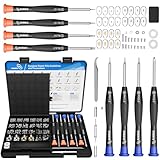
When you’re dealing with micro screws, especially for repairs, not all are created equal. The most obvious thing is the head type. For phones, you’ll see a lot of Phillips (cross-head), Pentalobe (the distinctive star-like shape on iPhones), and sometimes Torx (a six-pointed star). Each has its own pros and cons, but the key is making sure you have the exact driver bit for the job. A poor fit leads to stripping, which is the bane of DIY phone repair. I once tried to use a slightly-too-big Phillips bit on what I thought was a Phillips screw, and the head just rounded off into a useless nub. Lesson learned: get the specific driver.
Beyond the head type, material and thread pitch are important. Most phone screws are stainless steel, but the quality can vary. Cheaper screws might be made from lower-grade steel that’s more prone to corrosion or even breaking. The thread pitch – the distance between the threads – is also incredibly precise. A screw with the wrong thread pitch won’t engage properly, or worse, could damage the threaded insert it’s supposed to screw into. When buying replacement screws, look for reputable suppliers who clearly specify the material, head type, and dimensions. Sometimes, kits will even come with the correct drivers, which is a huge bonus.
Common Mistakes When Buying and Using Micro Screws
The biggest mistake I see, and have made myself, is thinking all screws of a similar ‘type’ are interchangeable. They’re not. The length, diameter, and thread pitch are all specific. Manufacturers design these screws for very particular purposes. For instance, a screw that holds a metal bracket might be slightly longer or have a coarser thread than one that secures a delicate flex cable. Putting the wrong one in can cause all sorts of grief, from preventing assembly to actually damaging internal components. I’ve seen forum posts from people who’ve accidentally used a slightly longer screw and it poked through the other side of the circuit board. Ouch.
Another common pitfall is buying cheap, generic screw kits. While they might seem like a bargain, the quality control on these can be abysmal. You might get screws with burrs on the threads, heads that aren’t perfectly formed, or metal that’s too soft.
This makes them difficult to drive and increases the risk of stripping. It’s almost always worth spending a bit more for a kit from a trusted brand, especially if you’re doing a repair that requires significant disassembly.
The frustration and potential for further damage from cheap screws far outweigh any initial cost savings. Always check reviews if you’re buying from an unknown source. Are people complaining about the fit?
Do the drivers feel cheap? These are red flags. (See Also: How Measure Metric Computer Screws )
Thread Rolling: The Final Touch of Precision
After the cold heading process creates the screw blank, it’s time to add the threads. This is typically done through a process called thread rolling. Unlike thread cutting, which removes material to create grooves, thread rolling is a ‘chipless’ process. The screw blank is placed between two hardened dies (or between a die and a roller) that have the negative impression of the threads. These dies are then pressed against the blank or rolled over it at high speed. The metal of the shank is displaced and forced into the shape of the threads.
This method is incredibly advantageous for micro screws. Firstly, it preserves the metal’s grain structure, reinforcing the threads and making them stronger and more durable than cut threads.
Secondly, it produces a smoother, more consistent thread profile, which is absolutely vital for micro screws that need to engage perfectly with their corresponding tapped holes or nuts. Think of it like pressing a pattern into soft clay versus carving it out. The pressed pattern is often cleaner and more defined. The precision required here is immense.
The dies must be manufactured to incredibly tight tolerances, often with diamond-like hardness, to withstand the immense pressures involved and to impart the exact thread form needed. For smartphone screws, this might mean threads as fine as M0.8 or even smaller, requiring a level of accuracy that’s hard to fathom.
The machines that perform thread rolling are also highly specialized. They need to be able to hold the tiny blanks securely and apply the correct pressure and speed to form perfect threads without deforming the screw head or shank. Some machines use cylindrical dies that rotate around the workpiece, while others use flat dies that reciprocate. The choice depends on the screw type and production volume. It’s this meticulous, high-pressure forming of metal that gives micro screws their characteristic strength and precision, making them suitable for the demanding environment of a smartphone.
Quality Control: Catching the Flaws Before They Cause Trouble
You can’t just churn out millions of micro screws and hope for the best. Quality control is absolutely most important at every stage of the machining process, from the initial wire drawing to the final thread rolling. Automated inspection systems are used extensively. These systems use high-resolution cameras and sophisticated image processing software to check for a multitude of defects in real-time.
What are they looking for? Everything. They inspect the head dimensions, the thread profile (is it complete? are there any burrs or inconsistencies?), the shank diameter, the overall length, and even the surface finish. Any screw that deviates even slightly from the specified tolerances is automatically rejected. Some advanced systems can even detect microscopic cracks or material flaws that might not be visible to the naked eye. In addition to automated checks, there’s often a layer of manual inspection, particularly for sampling. Technicians will use precision measuring tools like optical comparators or even scanning electron microscopes for extremely important applications to verify the accuracy of the machined features.
Given the scale of production, these inspections need to be incredibly fast. A typical modern production line can produce thousands of screws per minute, so the inspection equipment must keep pace. Think about it: if you’re making 10,000 screws an hour, and even 0.1% are defective, that’s still 10 bad screws an hour that need to be caught. The cost of a single failed screw inside a multi-thousand-dollar phone is astronomical, not just in terms of repair, but in reputation. This rigorous quality assurance is why most of the screws you encounter in your phone are, thankfully, reliable.
The Role of Precision Machining in Modern Devices
It’s easy to overlook the humble screw, but its role in modern technology, especially in mobile phones, is immense. The miniaturization of electronics wouldn’t be possible without components like these. How are micro screws for mobile phones machined is a question that leads us to a world of extreme precision, advanced metallurgy, and high-speed automated manufacturing. The fact that we can create objects with threads so fine they can only be seen with magnification, and do it millions of times over with consistent quality, is a testament to human ingenuity. (See Also: How To Adjust Eyeglass Screw )
This precision isn’t just about holding things together. It’s about making sure reliable conductivity in electrical connections (some screws secure contacts), providing precise alignment for components, and maintaining the structural integrity of devices that are subjected to daily wear and tear. When I think about the engineering involved, it makes me appreciate the complexity hidden within something as simple as a tiny screw. It’s a small part of a much larger, incredibly sophisticated system. The materials science behind selecting alloys that can withstand repeated stress cycles without failing, combined with the mechanical engineering of the machines that shape them, creates a foundation for the technology we depend on.
For anyone who’s ever tinkered with electronics, understanding this level of precision can change your perspective. It explains why using the wrong tool or the wrong screw can have such disastrous consequences. It’s not just about being careful; it’s about respecting the engineering that went into every single component. This depth of manufacturing detail is what allows our devices to be so thin, so light, and so incredibly powerful. The micro screw, in its own way, is a symbol of this entire technological advancement.
Frequently Asked Questions About Micro Screws
What Are the Smallest Screws Used in Phones?
The smallest screws used in phones typically have diameters measured in millimeters, often in the M1.0 to M1.4 range, with thread pitches as fine as M0.8. Their lengths can be as short as 2mm. These tiny dimensions require highly specialized manufacturing processes to make sure accuracy and strength.
Why Are Phone Screws So Small?
Phone screws are so small to enable extreme miniaturization of components and overall device size. Smaller screws allow for tighter packing of electronics, thinner designs, and more efficient use of internal space, which is at a premium in mobile devices.
Can I Use Regular Screws in a Phone?
No, you absolutely cannot use regular screws in a phone. Regular screws are far too large, have incorrect thread pitches, and lack the precision required. Attempting to use them will likely damage the device’s internal components, stripped screw heads, or prevent proper assembly.
What Is the Most Common Screw Type in Smartphones?
While specific models vary, Pentalobe screws are very common in iPhones for external casing, and Phillips head screws are prevalent in many Android phones and for internal components across brands. Torx (star) screws also appear in some devices for security or specific component fastening.
How Are the Threads on Micro Screws Made?
The threads on micro screws are typically made using a process called thread rolling. This is a chipless method where hardened dies are pressed against or rolled over a pre-formed screw blank, displacing the metal to create the thread profile. This method makes the threads stronger and more precise than cutting them.
Final Thoughts
So, next time you’re wrestling with a tiny screw, remember the journey it took to get there. It’s a world away from a DIY shed operation; we’re talking about precision engineering on a microscopic scale. The entire process of how are micro screws for mobile phones machined is a testament to how far manufacturing has come, enabling the sleek, powerful devices we rely on.
Don’t underestimate these little guys. The quality of the machining directly impacts the longevity and reliability of your phone. If you’re doing a repair and the screws feel cheap or don’t thread in smoothly, it’s a sign you might have bought the wrong part. It’s a frustrating lesson, but a necessary one if you want your tech to last.
The next time you replace a battery or upgrade a component, take a moment. Appreciate the sheer technical achievement of those tiny metal threads holding it all together. It’s a small, often overlooked, marvel of modern manufacturing.
![AXTH 25-in-1 Small Precision Screwdriver Set, Professional Magnetic Mini Repair Tool Kit for Phone, Computer, Watch, Laptop, Macbook, Ring Doorbell, Eyeglass, Electronic, [Bearing Steel] Screw Driver](https://m.media-amazon.com/images/I/518YlLmPTcL._SL160_.jpg)
