
I remember the first time I stripped a tiny screw trying to replace a cracked iPhone screen. It was like, “What even are these things?” They look so simple, these little metal bits holding our entire digital lives together. But the truth is, how are screws for mobile phones machined is a story of insane precision and engineering that frankly blows my mind. It’s not just about making a screw; it’s about making a screw that fits into a space you can barely see without magnification, that has to withstand daily use without loosening, and that can be mass-produced by the billions. It’s way more complex than you’d ever guess, and honestly, it makes me appreciate the tech we take for granted a whole lot more.
Forget the DIY horror stories; the professionals have this down to an art form. This isn’t your grandpa’s hardware store screw. We’re talking about microns and tolerances that would make a Swiss watchmaker sweat. Let’s get into what actually goes into making these minuscule marvels.
The Insane Precision of Tiny Screw Heads
You know those screws on your phone? The ones that look like they were etched by elves? Yeah, they don’t just pop out of a machine. The heads on most smartphone screws, especially the tiny Pentalobe ones you find on iPhones or the Torx screws on many Android devices, are incredibly intricate.
They have specific drive types designed to prevent casual users from opening their devices – smart for manufacturers, a pain for us DIYers initially. These drive types aren’t just for show; they allow for much higher torque to be applied relative to the screw’s size without the driver slipping.
Think about it: a standard Phillips head would shred itself trying to get enough grip on a screw that’s barely a millimeter wide. Manufacturers need a way to transmit rotational force effectively, and that means a very specific, very precise head shape.
The machining process for these heads starts with raw metal – usually stainless steel, sometimes titanium or other alloys for specific premium models or components. This metal rod is fed into a multi-spindle automatic lathe. This isn’t just any lathe; it’s a high-speed, incredibly precise piece of machinery. As the rod spins, a series of cutting tools, each performing a specific operation, carve away material. One tool might turn the outer diameter, another might cut the threads, and a dedicated tool, often a milling cutter or a form tool, creates the unique head shape. For something like a Pentalobe, this tool has a very specific six-pointed star pattern with rounded lobes. For Torx, it’s the distinct six-pointed star shape.
The tolerances here are mind-boggling. We’re talking about variations measured in micrometers – millionths of a meter. A slight deviation in the depth of a slot, the angle of a thread, or the shape of the head could render the screw useless, or worse, damage the tiny components it’s meant to secure. Imagine if the drive slot was even a hair too shallow; your special screwdriver would just spin and strip the head instantly.
Or if the threads were slightly too coarse or fine; it wouldn’t engage properly with the threaded insert in the phone’s chassis or the component itself. This level of accuracy requires not only sophisticated machinery but also incredibly skilled operators and rigorous quality control throughout the process.
It’s a world away from the lumbering machines that make bolts for bridges.
From Wire to Thread: The Rods and Dies
So, how do they actually get those perfect, microscopic threads onto the shaft of a phone screw? It’s mostly done through a process called thread rolling, not cutting. Cutting threads, like you might see with a tap and die set for plumbing pipes, actually removes material.
For tiny, high-precision screws where every bit of metal matters, that’s wasteful and can weaken the shaft. Thread rolling, on the other hand, is a cold-forming process. A blank screw shaft, already shaped by the lathe, is placed between two hardened steel dies. These dies have the negative image of the screw threads impressed into them. (See Also: How To Fix Eyeglasses Arm Without Screw )
As the dies press against the shaft and move relative to each other (or in some setups, one die rolls against a stationary one), the metal of the shaft is plastically deformed, flowing into the grooves of the dies to form the threads.
This method is fantastic for several reasons. First, it doesn’t remove any material, so the entire cross-section of the screw shaft remains intact, making the threads stronger and the screw more resistant to fatigue and breakage. Second, it’s incredibly fast.
Once the dies are set, you can produce thousands of screws per hour. Third, it creates a smoother thread surface finish, which is important for smooth engagement with the threaded inserts in the phone. Any roughness could lead to galling or difficulty in assembly. The dies themselves are precision-engineered, often made from tool steel and then heat-treated and hardened to withstand the immense pressures involved in deforming the metal.
Their lifespan is measured in the millions of screws, but they eventually wear out and need to be replaced to maintain thread accuracy.
The actual diameter of the rod used for phone screws is astonishingly small. We’re talking about diameters that can be as little as 1 millimeter, sometimes even less for the smallest components inside a smartphone. The pitch of the threads – the distance between two adjacent thread crests – is also minuscule, often measured in fractions of a millimeter. This is why specialized machinery and tooling are absolutely necessary.
You can’t just take a standard metalworking machine and expect it to produce these components. It requires dedicated machinery designed from the ground up for micro-manufacturing. The raw material itself is also carefully selected and processed to make sure purity and consistent grain structure, as any inclusions or inconsistencies could lead to failure during the thread rolling process or in the final application.
Material Science: Why Not Just Any Metal?
You might wonder why manufacturers don’t just use the cheapest metal available for phone screws. Well, the material science behind these tiny fasteners is just as important as the machining. The primary material used is high-grade stainless steel. Why stainless? Corrosion resistance is a big one. Your phone is constantly exposed to skin oils, sweat, and potentially moisture. A standard steel screw would rust faster than you can say ‘micro-corrosion,’ leading to weak points and making future repairs a nightmare. Stainless steel offers that necessary protection, keeping the screw looking good and functioning properly over the life of the device.
Beyond corrosion, strength-to-weight ratio is key. We’re dealing with incredibly small components, so they need to be strong enough to hold delicate parts together and resist loosening from everyday vibrations and impacts, but they can’t be heavy. Imagine if every screw in your phone added a noticeable amount of weight.
Manufacturers also consider the screw’s coefficient of thermal expansion. Phones heat up during use and cool down when idle.
The screws are part of a complex assembly of different materials (metal, plastic, glass), each expanding and contracting at different rates. The screw material needs to accommodate these changes without creating stress on the surrounding components or itself. (See Also: How Measure Metric Computer Screws )
A poor choice here could lead to a phone spontaneously cracking or internal components failing over time.
For some specific applications, like components near batteries or in water-resistant models, specialized alloys might be used. For instance, some screws might be coated to enhance their grip, provide electrical insulation, or further improve corrosion resistance. I once tried to repair an older tablet that had a few brass screws. They looked nice, but they were soft and I ended up stripping two of them with minimal force. It taught me a valuable lesson: the material choice is not arbitrary. It’s a carefully calculated decision based on performance, durability, and cost. While stainless steel is the workhorse, the exact grade and any potential coatings are chosen for optimal function in the confined, demanding environment of a smartphone.
Quality Control: The Unsung Hero of Tiny Screws
Okay, so we’ve got precise machining and the right materials. But how do we know that every single screw coming off those high-speed machines is actually up to snuff? This is where quality control (QC) steps in, and for something as small and important as phone screws, it’s an absolute beast. It’s not just a spot check; it’s a relentless, multi-stage process. From the raw material to the finished product, every step is scrutinized. Incoming raw material is tested for its chemical composition and mechanical properties. If the steel isn’t exactly what it’s supposed to be, it’s rejected right there.
During the machining process, automated optical inspection (AOI) systems are most important. These aren’t just cameras; they’re high-resolution imaging systems that can detect minute flaws. They’ll scan screws for imperfections in the head shape, thread form, pitch, diameter, and even surface defects like burrs or cracks. If a machine starts producing screws that are even slightly out of tolerance, the AOI system flags it immediately, and the line can be stopped for adjustment or tooling replacement. Some high-end operations might even use laser scanning or coordinate measuring machines (CMMs) for incredibly detailed dimensional checks on a sample basis.
Beyond dimensions and form, there are functional tests. Samples of screws are periodically taken and subjected to torque tests – how much rotational force can they withstand before the head strips or the shaft snaps? Adhesion tests are performed on any coatings.
Corrosion resistance tests might involve exposing samples to salt spray or other harsh environments. The sheer volume of screws produced means that even a tiny defect rate, if not caught, could lead to millions of faulty parts.
I remember buying a batch of replacement screws for a laptop repair from a less-than-reputable online seller. About 20% of them had slightly malformed heads that wouldn’t grip my standard Torx driver. It was infuriating and a stark reminder of how much we rely on solid QC.
For smartphones, where reliability is most important, the QC is on another level entirely. It’s the silent guardian of your phone’s integrity.
Common Mistakes and What to Look for (diyer Edition)
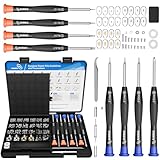
Now, for us folks who like to tinker, understanding how these screws are made helps us avoid common pitfalls. The biggest mistake people make is using the wrong screwdriver. Period. You absolutely must use the exact driver type and size for the screw head.
Trying to jam a Phillips head into a Torx screw, or using a T5 when it’s clearly a T6, is a recipe for disaster. You’ll strip the head, making it nearly impossible to remove or reinsert. I learned this the hard way, spending an hour trying to extract a stripped screw with a tiny file and a prayer, only to end up damaging the surrounding plastic anyway. It cost me time, frustration, and eventually a new housing part. (See Also: How To Adjust Eyeglass Screw )
Another common mistake is over-tightening. These screws are held in place by precisely cut threads in either metal inserts or plastic bosses. They don’t need to be cranked down like a lug nut on a car wheel.
Tighten them until they’re snug and the component is secure. Over-tightening can strip the threads in the component, crack plastic housing, or even warp delicate circuit boards. Conversely, under-tightening means the component won’t be held securely, leading to potential damage from vibration or movement. The key is a gentle, consistent feel.
When you’re putting a phone back together, it’s often a process of trial and error to find that sweet spot. You feel the resistance, then a little bit more, and then it’s seated. Stop there.
When buying replacement screws, quality matters. Avoid the cheapest bulk packs you can find online. Look for reputable repair part suppliers.
Often, you can buy kits specifically designed for certain phone models. These kits should have screws that are machined to the correct specifications. Pay attention to the materials if specified – if the original was stainless steel, try to get stainless steel replacements.
If a screw feels too soft, or the head looks a bit rough or not quite the right shape, it’s a red flag. You’re better off spending a few extra dollars on a decent set than risking damage to your device with subpar fasteners. My personal rule is if the price seems too good to be true, it probably is, and those screws are no exception.
Here’s a quick rundown:
| Screw Type | Common Use | Machining Factor | My Verdict |
|---|---|---|---|
| Pentalobe | iPhone external | Specialized 6-lobe head, precise depth | Annoying for DIY, brilliant for security. |
| Torx | Many Android phones, internal components | 6-pointed star, high torque transfer | Good grip, needs exact driver. |
| Phillips (Micro) | Older phones, some internal | Small cross-slot, prone to stripping if wrong size | Use with extreme care, often overrated for tiny electronics. |
| Tri-point (Y-Type) | Newer iPhones | 3-pronged head, unique for Apple | Another proprietary headache, requires specific tools. |
The Future of Micro-Fasteners in Tech
As our devices continue to shrink and become more integrated, the demands on screw machining are only going to get more intense. We’re already seeing phones that are incredibly difficult, if not impossible, to repair without specialized tools and significant risk of damage. This is partly driven by the need for water and dust resistance, which means fewer seams and fewer places for screws to go. But it’s also about manufacturers wanting to maintain control over the repair process. The tiny, proprietary screw types are a part of that strategy.
Looking ahead, I anticipate even more exotic materials and manufacturing techniques. We might see screws made from ceramics or advanced composites for specific applications where electrical conductivity is a concern or extreme lightness is needed. Additive manufacturing, or 3D printing, is also rapidly advancing. While it’s currently more suited for larger, complex parts, there’s research into micro-3D printing of metal components. Could we one day see screws printed on demand with custom geometries? It’s not outside the world of possibility, though the speed and cost-effectiveness of current thread rolling for mass production are hard to beat for commodity items like screws.
There’s also a growing discussion about the ‘right to repair,’ which could push manufacturers to reconsider some of these proprietary and difficult-to-access fasteners. If there’s more pressure to make devices easier to disassemble and repair, we might see a shift back towards more standardized, accessible screw types, albeit still manufactured with extreme precision. However, the trend towards thinner, more integrated devices generally works against this. The sheer ingenuity that goes into how are screws for mobile phones machined is, in a way, a reflection of how far we’ve pushed the boundaries of miniaturization and precision engineering in the pursuit of the next great gadget.
Conclusion
So, the next time you look at your phone, spare a thought for those minuscule screws. They’re not just bits of metal; they’re the product of incredibly precise machining, advanced material science, and rigorous quality control, all designed to hold together the complex technology that powers our lives. It’s a testament to the fact that even the smallest components demand big engineering.
Understanding how are screws for mobile phones machined might seem like niche knowledge, but it’s a fascinating peek into the hidden world of manufacturing that makes our everyday gadgets possible. It certainly changed how I view the little things. Next time you’re facing a repair, remember the precision involved and treat those tiny fasteners with the respect they deserve – use the right tool, apply the right pressure, and for goodness sake, buy decent quality replacements.
![AXTH 25-in-1 Small Precision Screwdriver Set, Professional Magnetic Mini Repair Tool Kit for Phone, Computer, Watch, Laptop, Macbook, Ring Doorbell, Eyeglass, Electronic, [Bearing Steel] Screw Driver](https://m.media-amazon.com/images/I/518YlLmPTcL._SL160_.jpg)
