
You know those infuriatingly tiny screws holding your smartphone together? The ones that look like they were made by elves with microscopic diamond tools? Yeah, me too. I once spent an entire Saturday trying to reassemble a tablet after a battery swap, only to realize I’d stripped the head of one of those little buggers. It felt like I was trying to thread a needle with oven mitts on. So, how are tiny screws for mobile phones machined? It’s a world away from the chunky deck screws you might use in your workshop.
It’s not just about making them small; it’s about making them incredibly precise, durable, and consistent. They need to withstand constant vibration, thermal expansion, and the sheer frustration of a DIY repair. This isn’t something you can knock out with a hammer and chisel. It requires a level of engineering finesse that borders on the absurd, and frankly, it’s pretty fascinating.
The Miniature Forge: How They’re Actually Made
Forget your grandpa’s workshop with a bench vise and a file. Making screws for phones is a high-tech ballet of automation and precision engineering. The vast majority of these minuscule fasteners are manufactured using a process called cold heading, sometimes also referred to as thread rolling. It’s a mouthful, I know, but it’s the core of how these little guys get their shape without melting anything.
Imagine a coil of super-fine, high-grade steel wire. This wire is fed into a specialized machine that’s basically a high-speed metal shaper. The first step is cutting the wire to the precise length needed for the screw. Then, the real magic happens: the machine uses a punch to slam the metal into a die, forming the head of the screw. It’s not cutting or milling; it’s deforming the metal. Think of it like squishing clay into a mold, but with steel and a force that’s frankly unbelievable. This cold deformation process actually strengthens the metal, which is exactly what you need for something that will be constantly stressed.
After the head is formed, the screw blank is then fed into a thread-rolling die. This isn’t like cutting threads with a tap. Instead, the die has hardened steel rollers with the screw thread pattern imprinted on them. The screw blank is then rolled between these dies at immense pressure. The metal of the screw blank is basically pushed and deformed into the grooves of the die, forming the threads. This process creates incredibly strong, smooth threads without removing any material, which is vital for maintaining the screw’s structural integrity and making sure a perfect fit. The precision here is astonishing; we’re talking tolerances measured in microns, not millimeters.
It’s a far cry from machining threads with a cutting tool, which would remove material and create stress points. Cold forming and thread rolling are much faster, more material-efficient, and result in a stronger, more durable screw. This is why your phone’s tiny screws are so tough to strip with a standard screwdriver – they’re built to take a beating, which is ironic given how easily they can be lost. The wire itself has to be of exceptional quality, with a very uniform chemical composition and grain structure to withstand the immense pressures of cold heading without fracturing.
The initial raw material, usually specialized alloy steels, is drawn down to the exact diameter required. The selection of the steel alloy is also important. It needs to be strong enough to withstand the forming process, resistant to corrosion (especially important in the humid environment of a pocket), and tough enough to endure the torque applied during assembly and disassembly. Companies producing these screws work with metallurgists to select the perfect blend of elements to achieve these properties. It’s a science that goes way beyond just making something small.
The machines themselves are marvels of engineering, capable of producing hundreds, even thousands, of screws per minute with minimal human intervention. They are highly automated, with sophisticated sensors monitoring every step of the process to make sure quality and consistency. Any deviation from the set parameters, like a slight inconsistency in the wire diameter or a flaw in the die, will be detected immediately, and the machine will stop or flag the issue.
The Tiny Threads That Hold Your World Together
Let’s talk about those threads. They’re not just there to look pretty; they’re a feat of miniature engineering themselves. When you hear ‘machining’ in relation to screws, you might picture a lathe or a milling machine, where metal is cut away. For phone screws, that’s almost never the case. The primary method for creating those microscopic threads is, as mentioned, thread rolling.
Think of it like this: instead of carving the threads out of a solid rod (which would be like trying to carve a perfect spiral into a spaghetti noodle without breaking it), thread rolling uses hardened dies with the thread pattern already pressed into them. The blank screw (the part with the head already formed) is then forced between these dies. The dies basically ‘imprint’ the threads onto the blank by displacing the metal. This process doesn’t remove any material; it rearranges it. This is a huge deal for screw strength. Cutting threads removes material, creating stress risers and weakening the screw. Rolling them actually work-hardens the material along the threads, making them significantly more resistant to stripping and breakage. (See Also: How To Fix Eyeglasses Arm Without Screw )
The precision required is mind-boggling. We’re talking about threads that are often finer than a human hair. The dies must be machined to incredibly tight tolerances, and the pressure applied during rolling must be just right. Too little pressure, and the threads won’t form properly. Too much pressure, and the screw could be deformed or the die could be damaged. The machines that do this are highly specialized and calibrated to within a few microns.
The pitch and diameter of these threads are optimized for the specific application. They need to be deep enough to provide sufficient grip but shallow enough to avoid weakening the screw shank too much. The angle of the thread also plays a role in how much torque can be applied before stripping occurs. Manufacturers use highly advanced optical inspection systems to verify that every single screw meets these exacting specifications. It’s a level of quality control that’s almost obsessive, and for good reason. A single faulty screw can mean the difference between a phone that’s easily repaired and one that ends up in e-waste.
The materials used are also important. While often steel, these aren’t your average hardware store screws. They’re typically made from specialized alloy steels with added elements like chromium and molybdenum to enhance strength, hardness, and corrosion resistance. The wire stock itself undergoes rigorous testing to make sure its uniformity and absence of internal flaws. Even a microscopic inclusion or variation in the metal can lead to a catastrophic failure during the high-speed forming process.
So, next time you’re fumbling with a tiny Pentalobe or Torx screw, remember the incredible journey it took from a coil of wire to that precise, almost impossibly small fastener. It’s a testament to modern manufacturing capabilities and the relentless pursuit of miniaturization and durability. It’s the unsung hero of your pocket computer.
Common Mistakes & What to Look for (when You Actually Need Them)
Alright, let’s be blunt. Most of us aren’t machining these screws ourselves. We’re usually on the other end: trying to put a phone back together after a repair or dealing with a stripped screw. And that’s where the real frustration begins. My first attempt to replace a phone battery? Utter disaster. I had a generic ‘iPhone screw kit’ that cost me about $15. Within minutes, I realized the Phillips-head screws were too shallow, and the Pentalobes were slightly off. I ended up cross-threading one and stripping another, turning a simple battery swap into a multi-day ordeal where I had to order a whole new set of actual OEM-equivalent screws.
The biggest mistake people make is buying the cheapest replacement screws they can find. You see these massive online marketplaces flooded with ‘compatible’ screw sets, and they’re tempting. But here’s the honest truth: they are often made from lower-quality materials, with less precise threading, and sometimes even the wrong head type or depth. This leads to stripped heads, damaged threads inside the phone’s chassis, and a general sense of despair. You might save a few bucks upfront, but you’ll likely spend more time and frustration, potentially damaging your device further.
When you absolutely must replace these tiny screws, here’s what you should look for:
- Exact Type and Size: This is a must. Your phone model uses specific screw types (like Pentalobe, Torx, Phillips) and sizes. Don’t guess. Research your exact model to find out what you need. Generic ‘iPhone screw kits’ are often a gamble.
- Material Quality: Look for kits that specify high-grade steel or stainless steel. While you won’t get the exact machining specs of the originals, better materials mean better durability and less chance of stripping.
- Reputable Seller/Brand: This is tough with tiny components. I’ve found that sticking with established electronics repair parts suppliers, rather than random marketplace sellers, generally yields better results. They often source from manufacturers who understand the precision required.
- Head Finish and Machining: While hard to tell from a picture, look for descriptions that hint at precision machining. If it sounds too good to be true for a few dollars, it probably is.
Honestly, if you’re not doing a lot of phone repairs, it’s often better to try and salvage the original screws if possible. If a screw is stripped, sometimes a tiny dab of superglue on your screwdriver bit can give it enough grip to back it out. It’s a hack, but it’s saved me more than once. Otherwise, accepting that you might need to invest in a slightly more expensive, but higher-quality, replacement screw set is the way to go. The difference in feel and fit is palpable, and it saves you from the ‘did I just ruin my phone?’ panic.
Another common pitfall is using the wrong screwdriver bit. A Phillips head can look a lot like a Pozidriv, but they’re different. Using the wrong one, even if it ‘fits’, will chew up the screw head in no time. I learned this the hard way when trying to fix a friend’s laptop. I thought my Phillips bits were all the same, but one specific laptop screw was designed for a slightly different profile, and I ended up mangling it. (See Also: How Measure Metric Computer Screws )
The Science of Stress and Tiny Metal
You might wonder why such extreme precision is even necessary for something as seemingly simple as a screw. It all comes down to the immense forces and stresses packed into a device that’s less than a centimeter thick. These tiny screws aren’t just holding plastic together; they’re often anchoring important internal components, securing the battery, or keeping the display assembly firmly in place. Any looseness or failure can lead to bigger problems.
Consider the thermal expansion and contraction that happens as your phone heats up during use or charging, and then cools down. These tiny screws are subjected to minuscule but constant expansion and contraction cycles. If the threads aren’t perfectly formed and the material isn’t strong, these cycles can lead to fatigue, loosening, or even fracture over time. The precise machining makes sure that the threads engage smoothly and consistently, allowing for this natural movement without creating undue stress on the materials.
Then there’s vibration. While we don’t usually think of phones vibrating violently, they do experience constant micro-vibrations from daily use – being placed on tables, carried in pockets, or even just the subtle hum of internal components. Over time, this can cause standard screws to work themselves loose. The tight tolerances and the specific thread profiles of phone screws are designed to resist this loosening effect. The slight interference fit and the strength of the rolled threads create a more secure connection that’s less prone to backing out unintentionally.
The materials science behind these screws is also fascinating. While steel is common, specific alloys are chosen for their unique properties. For example, some screws might use stainless steel alloys that offer a good balance of strength and corrosion resistance, which is vital since phones are exposed to moisture and sweat. Others might use high-tensile steel alloys specifically chosen for their ability to withstand the high pressures of cold heading and thread rolling without deforming or breaking. The exact composition is often proprietary, a closely guarded secret by the manufacturers who produce them for the big phone companies.
The manufacturing process, particularly cold heading and thread rolling, is important not just for precision but for creating a ‘grained’ structure within the metal. Unlike cut threads, where the grain structure of the metal is disrupted, rolled threads maintain a continuous grain flow. This significantly increases the fatigue strength and toughness of the screw, making it much less likely to fail under repeated stress or shock. It’s a subtle but important aspect of their engineering that makes sure reliability in such a small package.
The tight tolerances also mean that the torque applied during assembly is important. Overtightening can strip the threads within the phone’s chassis or even the screw itself. Undertightening means the component isn’t secured properly. This is why specialized, torque-controlled electric screwdrivers are used in assembly lines. They apply the exact, pre-programmed amount of torque, making sure each screw is seated perfectly without risking damage. It’s a level of control that’s hard to replicate in a DIY repair scenario.
How Are Tiny Screws for Mobile Phones Machined?
Tiny screws for mobile phones are primarily machined using a process called cold heading, followed by thread rolling. Cold heading deforms wire into the screw’s head shape without cutting or melting. Thread rolling then uses hardened dies to impress the thread pattern onto the screw shank under immense pressure, strengthening the screw and creating precise threads without removing material. This high-speed, automated process makes sure the microscopic accuracy and durability required for modern electronics.
A Table of Tiny Screw Types and Their Quirks
When you’re dealing with phone repairs, you’ll encounter a few common types of screw heads, each with its own set of annoyances and required tools. I’ve spent enough time wrestling with these to have developed a healthy respect, and sometimes a healthy disdain, for them. Here’s a quick rundown:
| Screw Type | Appearance | Typical Use | My Verdict |
|---|---|---|---|
| Pentalobe | Five-pointed star shape, often with a small dimple in the center. | Most iPhones (bottom edge), some MacBooks. | Annoying. Designed specifically to stop you from opening your own device easily. You need the right Pentalobe driver, and even then, they can be tight. |
| Torx (Security/Tamper-Resistant) | Six-pointed star shape with a small pin in the center of the recess. | Many Android phones, some laptops, gaming consoles. | Better than Pentalobe. The security pin adds a layer of ‘don’t touch this,’ but the Torx head itself offers good grip and is less prone to stripping than Phillips if the right driver is used. |
| Phillips (Modified/Micro) | Cross shape, but often smaller and shallower than standard Phillips. Sometimes has a tiny pin in the center (like a security Torx). | Various Android phones, internal components of many devices. | Can be a trap. The smaller size means they strip way easier than a standard Phillips. Always use a perfectly fitting micro-Phillips driver. |
| Tri-point (Y-Type) | Three-pointed or Y-shaped recess. | Increasingly common in newer iPhones (e.g., for battery connectors, logic board). | Frustratingly specific. Another proprietary head type designed to make DIY repairs harder. You absolutely need a dedicated Y-type driver. Don’t try to fake it. |
| Flathead/Slotted | Single straight slot. | Rare in modern phones, more common in older devices or accessories. | Classic, but fragile. Easy to strip if the driver isn’t seated perfectly. Largely phased out in phones for better grip types. |
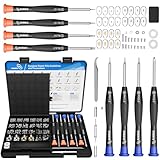
The real issue with all these specialized heads is the tool requirement. You can’t just grab a random screwdriver. For Pentalobe, you need a Pentalobe driver (often P2 for iPhones). For Tri-point, you need a Y-type driver (Y000 is common). For Torx, you need a Torx driver, and if it’s a security Torx, it has that little pin in the middle. Trying to use the wrong tool is a one-way ticket to a stripped screw head, which, trust me, is a monumental pain to deal with. (See Also: How To Adjust Eyeglass Screw )
I remember trying to replace a charging port on an older Samsung phone. It used tiny Phillips screws, but they were so small and shallow that my standard Phillips bits just spun. I ended up buying a cheap electronics repair kit, and even then, one of the bits broke midway through. That’s when I learned that investing in a good quality, precision screwdriver set, even if it seems overkill, is absolutely worth it. The bits are made of harder steel and are machined to fit the recesses perfectly, minimizing the risk of damage.
The materials used in the screwdriver bits themselves are also important. Hardened steel alloys are used to make sure they don’t deform or wear down quickly. Cobalt-infused bits are even better for durability. The handle should also offer a good grip, and ideally, have a rotating cap so you can apply downward pressure with your palm while turning the screw with your fingers. It’s all about control at this micro-level.
The Future of Tiny Screws: Less Screws, More Glue?
It’s becoming increasingly clear that the trend in consumer electronics, especially smartphones, is moving away from traditional screws. Manufacturers are constantly looking for ways to make devices thinner, more water-resistant, and more structurally integrated. This often means opting for adhesives, clips, and snap-fits instead of screws.
Think about it: screws create holes, and holes are entry points for dust and water. They also add to the overall thickness of the device. Adhesives, when engineered properly, can create a strong, smooth bond that seals the device and can even contribute to its structural rigidity. Many newer phones, for example, use strong adhesive strips to hold the display and back cover in place. Replacing a battery or screen on such a device often involves carefully heating and peeling away these adhesive layers, rather than undoing a few screws.
This isn’t necessarily a good thing for repairability. While it makes the devices more resistant to the elements and potentially more solid in terms of structural integrity, it makes DIY repairs significantly more difficult and often requires specialized tools and materials (like replacement adhesive strips) that aren’t readily available or easy to use. The days of easily swapping out components with a small screwdriver set might be numbered for many devices.
However, screws aren’t disappearing entirely, especially for internal components where a more secure, serviceable connection is still needed. You’ll still find them holding circuit boards in place, securing camera modules, or anchoring internal structural supports. And in other areas of technology, like industrial automation, robotics, or even high-end PC building, precision-machined screws of various sizes remain absolutely vital. The demand for high-quality, precisely manufactured fasteners isn’t going away, it’s just shifting focus.
The complexity of how are tiny screws for mobile phones machined highlights the incredible engineering that goes into even the smallest parts of our devices. As manufacturers push the boundaries of miniaturization and integration, the methods for creating these components will continue to evolve. We might see even more exotic materials or advanced forming techniques emerge to meet the demands of next-generation electronics. For now, though, cold heading and thread rolling remain the champions of creating these indispensable, minuscule fasteners.
It’s a fascinating intersection of material science, mechanical engineering, and high-volume manufacturing. The fact that billions of these tiny, perfectly formed screws are produced annually with such incredible consistency is a testament to human ingenuity. Even as adhesives gain prominence, the fundamental principles behind machining these screws will continue to inform the creation of other tiny, important components across a vast array of technologies.
Verdict
So, that’s the lowdown on how those microscopic screws that hold your phone together are actually made. It’s a far cry from whacking metal with a hammer; it’s a precision dance of high-speed machinery and advanced metallurgy. The cold heading and thread rolling processes create fasteners that are not only incredibly small but also remarkably strong and consistent, key for the complex world of modern electronics.
My own screw-related repair woes have taught me that while the manufacturing is sophisticated, the user experience can be a minefield of cheap imitations and the wrong tools. If you ever find yourself needing to replace one of these tiny titans, don’t skimp on quality. Getting the right screwdriver and a decent replacement screw can save you a world of headaches and potential damage.
The ongoing evolution of device design, with its move towards adhesives and snap-fits, means the era of the ubiquitous tiny screw might be waning in some areas. But the understanding of how are tiny screws for mobile phones machined will continue to inform the creation of countless other small, precise components in the technologies of tomorrow. Keep an eye on those screws – they’re tiny but mighty.
![AXTH 25-in-1 Small Precision Screwdriver Set, Professional Magnetic Mini Repair Tool Kit for Phone, Computer, Watch, Laptop, Macbook, Ring Doorbell, Eyeglass, Electronic, [Bearing Steel] Screw Driver](https://m.media-amazon.com/images/I/518YlLmPTcL._SL160_.jpg)
