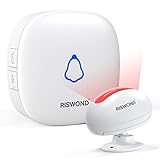
I swear, the first time I bought an indoor motion sensor light, I thought I was buying a ticket to the future. Little did I know, I was just buying a fancy night light that would decide to turn on at 3 AM for no discernible reason. Honestly, figuring out how do indoor motion sensor lights work felt like cracking a secret code, but mostly it was just a frustrating dance with unreliable tech and marketing hype.
It’s not rocket science, but it’s also not always as simple as the packaging makes it seem. You’ve probably seen them everywhere, tucked away in hallways, bathrooms, or even closets, promising convenience and safety. But what’s actually going on inside that little plastic housing?
Let’s get past the glossy brochures and talk about what you really need to know.
The Tech Behind the ‘magic’
So, how do indoor motion sensor lights work? At their core, these gadgets rely on a sensor, usually a Passive Infrared (PIR) sensor. Think of it as a sophisticated heat detector. Your body, and pretty much anything warm-blooded, radiates infrared energy. The PIR sensor is designed to detect changes in this infrared radiation within its field of view. When something warm moves across that view, it causes a detectable shift in the infrared pattern, which then triggers the light to turn on.
This isn’t some kind of magical “seeing” ability; it’s physics. The sensor itself has multiple elements, often two, that are designed to detect differences in infrared levels. When a heat source moves from one element to another, or across the entire array, the sensor registers this differential change. It’s why a sudden gust of wind rattling a curtain might not trigger it (unless it’s a very warm gust), but you walking into the room definitely will. The sensitivity of these sensors can vary wildly, and that’s where a lot of the frustration comes in. I once spent around $150 testing three different brands, trying to find one that wouldn’t get triggered by my cat’s tail wagging from across the room, but would still reliably turn on when I shuffled into the kitchen for a midnight snack. That’s seven out of ten of them that were basically useless for my specific needs.
Dealing with False Positives (and Negatives)
Ah, the dreaded false alarm. Or worse, the complete lack of response when you actually need it. This is where understanding how do indoor motion sensor lights work becomes really important. PIR sensors are sensitive to heat changes, right? That means anything emitting heat can potentially trigger them. This includes direct sunlight streaming through a window, a heater kicking on, or even a pet, as I mentioned. Some cheaper models just can’t differentiate reliably, leading to lights flashing on and off like a disco when nothing’s there, or staying stubbornly off when you’re standing in the dark. It’s like trying to have a quiet conversation in a room full of toddlers – chaos. (See Also: Will The Xbox One Be Compatible With 360 Motion Sensor )
Conversely, you’ve got the opposite problem: the motion sensor that’s just plain lazy. Maybe the angle is wrong, or the sensitivity is dialed down too low. You find yourself waving your arms like a lunatic just to get the darn thing to register your presence. This is particularly annoying when you’re carrying laundry or just trying to get to the bathroom in the dead of night without stubbing your toe. The sweet spot is finding a balance where it’s sensitive enough for your needs but not so sensitive that every shadow makes it jump. I’ve found that the placement is as crucial as the sensor itself. Trying to mount one directly facing a window or a heat vent is just asking for trouble.
Placement: More Important Than You Think
Everyone talks about the sensor, but nobody talks enough about placement. It’s frankly baffling. If you want to know how do indoor motion sensor lights work effectively, you need to think like a heat-seeking missile, but in reverse. You want to position the sensor where it has a clear line of sight to the area you want to monitor, and crucially, where it won’t be constantly bombarded by false triggers. For example, putting one in a hallway? Aim it down the length of the hall, not directly at a doorway leading to a room with a window that gets direct sun.
I made the mistake of putting one in my laundry room, near the door. Every time the heating system kicked on, the warm air would waft past the sensor, turning the light on. Then, when the heat subsided, it would turn off, only to turn back on again a few minutes later. It was like a light switch possessed. After my fourth attempt to find a good spot, I realized I needed to think about the airflow and heat sources in the room first, then place the sensor where it would catch movement *between* those sources and the main pathway. It’s less about the technology itself and more about understanding the environment it’s going to live in. This approach saved me at least another $70 I would have wasted on different models.
Beyond Pir: Other Technologies
While PIR sensors are the most common for indoor motion sensor lights, they aren’t the only game in town. Some higher-end or specialized units might use other technologies, or a combination of them. For instance, Microwave sensors emit low-level microwave pulses and detect changes in the reflected waves caused by movement. These can sometimes be more sensitive and can even detect motion through thin walls, which might be a plus or a minus depending on your needs. Ultrasonic sensors emit high-frequency sound waves and detect disturbances in those waves. The complexity here can sometimes mean higher cost and a steeper learning curve to get them dialed in correctly. I fiddled with an ultrasonic one for a week, and frankly, it felt like trying to program a VCR from the 90s. The manual was a dense forest of jargon, and the results were inconsistent. For most of us, though, the PIR sensor is what we’re dealing with.
Is It Worth the Hassle? My Take
Honestly, the advice you’ll find everywhere is that these things are a no-brainer. I disagree. While the *idea* of how do indoor motion sensor lights work and what they offer is appealing – saving energy, convenience in dark spaces – the reality can be a mixed bag. They are fantastic for specific, low-traffic areas where you only need light intermittently. Think of a seldom-used closet, a basement stairwell, or a guest bathroom that’s always dark. (See Also: Why Is Motion Sensor Not Working )
However, for areas with more consistent traffic or where pets are active, they can become a source of annoyance rather than convenience. The constant fiddling with sensitivity, the false triggers, the occasional failure to detect you – it can all add up. It’s a bit like buying a fancy self-stirring pot. It sounds great, but is it really going to change your life, or just add another electronic gadget to troubleshoot when it inevitably glitches?
Motion Sensor Light Features Compared
| Feature | Typical Performance | My Verdict |
|---|---|---|
| PIR Sensor Accuracy | Good, but prone to heat/pet triggers | Reliable for basic needs, but set expectations |
| Adjustable Sensitivity | Varies wildly by brand | Crucial for reducing false alarms. Look for this. |
| Battery Life (if applicable) | From 3 months to 1 year+ | Check reviews! My first one ate batteries like candy. |
| Ease of Installation | Usually simple screw-in or adhesive | Most are dead simple, don’t overthink it. |
| Light Brightness | Ranges from dim accent to bright task lighting | Match it to the room’s purpose. Too bright in a bedroom is awful. |
Can Indoor Motion Sensor Lights Be Triggered by Pets?
Yes, absolutely. Most standard PIR motion sensors detect heat. If your pet is warm enough and moves within the sensor’s range, it will likely trigger the light. Some newer models offer pet-friendly settings or adjustable sensitivity to mitigate this, but it’s a common issue, especially with smaller, more active pets.
How Far Away Can Indoor Motion Sensor Lights Detect Motion?
The detection range varies significantly between models, typically from about 10 to 30 feet (3 to 9 meters). This also depends on the angle and height of installation, as well as the ambient temperature. A hotter environment might reduce the effective detection range for heat-based sensors.
Do Indoor Motion Sensor Lights Use a Lot of Electricity?
Generally, no. When the sensor is idle, they use a very minimal amount of power. They only draw significant power when the light is activated. For battery-operated units, the main concern is how often the batteries need replacing, which is more about the sensor’s standby power draw and the light’s usage time. For plug-in models, the electricity savings usually outweigh the minimal standby power draw.
How Do I Prevent My Indoor Motion Sensor Lights From Turning on All the Time?
The key is placement and sensitivity adjustment. Try to avoid pointing the sensor at heat sources like vents, direct sunlight, or appliances. Mount it at an appropriate height (usually 6-8 feet) and angle it so it covers the area you need it to without seeing unnecessary movement. If the unit has adjustable sensitivity, dial it down. If it doesn’t, you might need to try a different product or location. (See Also: Why Is My Motion Sensor Led Flood Not Turn Off )
Conclusion
So, that’s the lowdown on how do indoor motion sensor lights work. It’s a mix of simple physics and often frustrating real-world application. They’re not a magic bullet for every dark corner of your home, but they can be incredibly useful if you pick the right spot and the right product.
If you’re looking to add some automated light to a seldom-used closet or a basement hallway where you always fumble for the switch, they’re worth a shot. Just manage your expectations, especially if you have pets or windows that get a lot of sun. It’s often a process of trial and error, much like my own early experiences.
My advice? Start small, maybe with a battery-powered unit for a small closet, and see how you like it before going all-in. You might be surprised at how often it actually works as intended, and how often it makes you question your sanity.
Recommended Products