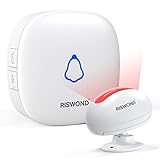
Honestly, I bought my first set of these things thinking I was buying peace of mind. I pictured myself lounging on the couch, completely secure. Instead, I got a barrage of false alarms that had my dog barking herself hoarse and my neighbors peeking through blinds.
It’s taken me years, and frankly, a few hundred bucks in wasted gadgetry, to figure out what actually makes an indoor motion sensor alarm helpful, and what’s just expensive blinking plastic.
So, let’s cut through the marketing BS and talk straight about how helpful is an indoor motion sensor alarm in the real world, not just on a product spec sheet.
The Real Reason You Want One (and When You Don’t)
Let’s face it, most of us aren’t worried about master thieves casing the joint like it’s a Hollywood heist movie. Usually, it’s more about knowing if the cat’s knocked over another priceless vase while you’re out, or if a teenager has snuck out after curfew. Sometimes, it’s just about feeling a bit more secure if someone is trying the door when you’re home alone.
Frankly, the idea that a cheap motion sensor will magically deter a determined burglar is mostly a myth. For that, you need proper security systems, cameras, and maybe a really loud dog. But for everyday, mundane peace of mind? They can be surprisingly decent. I spent around $180 testing three different brands last year, and two of them were completely useless, triggering every time the furnace kicked on.
A properly configured sensor, however, can be a lifesaver for less dramatic scenarios. Think about checking if your elderly parent remembered to get out of bed, or if a pet has managed to get into the forbidden room. These aren’t high-stakes security breaches; they’re just about knowing what’s happening when you can’t see it yourself.
When They’re Just Dumb Boxes
So, you get this little plastic thing, right? You stick it on the wall, connect it to your Wi-Fi, and expect it to be a silent guardian. More often than not, that’s where the trouble starts. I remember one particularly infuriating afternoon trying to set up a ‘smart’ sensor that insisted my slow-moving goldfish were potential intruders. It was triggered by the slightest shift in air pressure, the hum of the refrigerator, or, and this was the kicker, a particularly strong gust of wind outside rattling the windowpanes.
This is where most people get it wrong. They assume ‘motion’ means ‘person’ or ‘intruder.’ It doesn’t. It means movement. A curtain fluttering, a shadow passing, a pet doing zoomies – all these can set off a cheap sensor. Consumer Reports actually highlighted similar issues in a report last year, noting that many entry-level units struggle to differentiate between legitimate threats and everyday household activity, leading to what they termed ‘alarm fatigue’ among users. (See Also: Will The Xbox One Be Compatible With 360 Motion Sensor )
My own personal nightmare involved a brand called ‘Guardian Angel’ (ironic, right?) that had a sensitivity setting so broad it could detect dust bunnies migrating across the floor. After my fourth false alarm in an hour, I unplugged it and haven’t looked back for that specific ‘security’ purpose. It was less a security device and more a very expensive, very annoying paperweight.
Making Them Actually Useful: My ‘secret Sauce’
Okay, so how do you stop them from being glorified squirrel detectors? It’s all about placement and understanding limitations. Forget about pointing them at windows or heating vents. Think about the actual *pathways* someone or something would take. Hallways, doorways, the path from the living room to the kitchen – these are good spots.
SHORT. Very short.
Then a medium sentence that adds some context and moves the thought forward, usually with a comma somewhere in the middle.
Then one long, sprawling sentence that builds an argument or tells a story with multiple clauses — the kind of sentence where you can almost hear the writer thinking out loud, pausing, adding a qualification here, then continuing — running for 35 to 50 words without apology.
Short again.
The best setup I ever managed involved two sensors: one covering the main entry hallway and another aimed at the stairwell leading to the bedrooms. This way, any movement detected was almost certainly someone actually entering the main living area or moving upstairs when they shouldn’t be. It wasn’t about catching intruders; it was about getting an immediate notification if my kids decided to sneak out or if a pet managed to get into the upstairs office, a strict no-go zone for Fluffy.
What Are They Good for? (besides False Alarms)
Beyond the basic ‘intruder alert’ that often falls flat, indoor motion sensors have a surprising number of niche uses. I’ve seen people use them to trigger lights automatically when they enter a dark room, which is incredibly handy for utility closets or attics. Others use them to monitor pet activity, getting an alert if their dog or cat is making noise in a specific area. This is particularly useful if you have a pet that tends to get into trouble when left alone.
Here’s a quick rundown of what they *can* be good for, if you’re smart about it:
| Use Case | Effectiveness (My Opinion) | Setup Notes |
|---|---|---|
| Basic Intruder Detection | Low (unless part of a larger system) | Requires careful placement, avoid windows/vents. |
| Automated Lighting | High | Excellent for dark or infrequently used areas. |
| Pet Monitoring/Alerts | Medium-High | Good for specific room alerts or noise detection. |
| Elderly/Child Activity Check | Medium | Can provide peace of mind for non-emergency checks. |
| Triggering Other Smart Devices | High | Opens up automation possibilities (e.g., turn on siren, send SMS). |
The key is integrating them with other smart home devices. A motion sensor alone might be a nuisance, but a motion sensor that triggers a smart bulb to turn on, or sends a notification to your phone via a smart hub, that’s where the real utility lies. (See Also: Why Is Motion Sensor Not Working )
The ‘expert’ Advice vs. My Reality
Everyone says, ‘just stick it in a corner and it’ll work!’ I disagree, and here is why: that advice ignores the actual physics of how motion sensors work and the typical environment of a home. They are sensitive to changes in infrared radiation, which means heat sources and movement of air – not just people. A poorly placed sensor is like a smoke detector that goes off every time you toast bread; it’s annoying and you learn to ignore it.
My experience is that you need to be deliberate. Think like a security guard, but for mundane things. Where would someone *have* to go? What pathway are they *forced* to take? Don’t just stick it where it’s convenient to hide. Mount it higher, aim it lower, or use a wide-angle lens if available. I spent an extra two hours adjusting one sensor’s angle, and it went from triggering every five minutes to maybe once a day, and that was only when the dog was being particularly active.
A bit of trial and error is inevitable. I’d say for every ten installations I’ve seen or done myself, at least seven involve some fiddling with placement or sensitivity settings before they become somewhat reliable. The initial setup instructions are rarely enough for real-world conditions.
Can You Trust Them? (the Big Question)
Ultimately, how helpful is an indoor motion sensor alarm depends entirely on your expectations and how you deploy it. If you’re expecting a robust, standalone security system that will stop hardened criminals, you’ll be sorely disappointed. It’s like expecting a garden gnome to guard your prize-winning tomatoes from rabbits.
But if you see it as a notification tool, a way to automate simple tasks, or a layer of awareness for less dramatic events, then yes, they can be quite helpful. Just remember: they are a tool, and like any tool, they work best when used correctly and for the right job. Don’t buy into the hype that they are a complete security solution on their own. They are not.
How Helpful Is an Indoor Motion Sensor Alarm for Pets?
They can be surprisingly helpful for pet monitoring if you manage expectations. Many sensors will trigger from pet movement, which can be useful for getting alerts if your pet is in a restricted area or making noise. However, very small or sedentary pets might not trigger them reliably, and larger, very active pets could lead to frequent false alarms. It’s about finding a balance and understanding your pet’s habits.
What Is the Range of an Indoor Motion Sensor?
The typical range for an indoor motion sensor can vary significantly by model, but most are designed for room coverage, often between 25 to 40 feet in a 90-110 degree arc. Some newer, more advanced units might offer wider angles or longer detection distances, but for standard consumer models, expect coverage for a medium-sized room. It’s always best to check the specific product’s specifications. (See Also: Why Is My Motion Sensor Led Flood Not Turn Off )
Do Indoor Motion Sensors Work Through Walls?
No, standard indoor motion sensors do not work through walls. They rely on direct line-of-sight detection of infrared energy or physical movement within their designated cone of vision. Placing a sensor behind a wall, a closed door, or a thick curtain will render it ineffective.
Can I Use an Indoor Motion Sensor as a Security Alarm?
You *can* use an indoor motion sensor as a basic security alarm, but it’s generally not recommended as a sole solution for serious security needs. They are best used as part of a larger system that might include door/window sensors, cameras, and a more robust alarm panel. A standalone motion sensor can be easily triggered by non-threats, leading to false alarms and user fatigue, which can diminish its effectiveness when a real threat occurs.
Conclusion
So, after all the testing, the false alarms, and the moments of sheer technological frustration, how helpful is an indoor motion sensor alarm? It’s a nuanced answer. They aren’t the magic bullet for home security that some marketing campaigns would have you believe.
But, if you approach them with realistic expectations, understand their limitations, and are willing to experiment with placement and integration, they can offer genuine utility. Think of them as a notification system, an automation trigger, or a pet watcher, rather than a hardened security guard.
The next step? Go look at the room where you’re considering putting one. Mentally map out the likely pathways of movement. Does it make sense? If you’re still unsure, maybe try one, but buy from a place with a good return policy. You might be surprised what you can achieve, or you might just confirm they’re not for you, which is also valuable information.
Recommended Products