
I remember the first time I stripped a tiny screw on a vintage watch I was trying to repair. Felt like I’d broken the whole damn thing. Hours of meticulous work, gone. It made me wonder: how in the heck do they even make these things so small and precise in the first place? It’s not like you’re going to grab a pair of pliers and a file for this job. These aren’t your typical workshop fasteners; they’re miniature marvels of engineering that keep our timepieces ticking.
Understanding how do they make watch screws is key to appreciating the craft. It’s a world away from building a deck or fixing a leaky faucet. This is precision on a microscopic level, and it’s fascinating stuff.
The Grind: From Raw Metal to Tiny Threads
Let’s cut to the chase: making watch screws is less about brute force and more about surgical precision. Forget your big, clunky lathes. We’re talking about specialized machines that operate on a scale most people can’t even imagine. It all starts with the raw material, usually brass or stainless steel, but sometimes precious metals like gold or platinum are used for fancier watches. The metal is drawn into a wire of the exact diameter needed for the screw shank. Think of it like pulling taffy, but with metal and to incredibly tight tolerances.
Then comes the magic, or rather, the highly sophisticated machinery. The wire is fed into a machine that, in essence, shapes the head of the screw. This is often done through a process called heading or cold forming. A punch slams down on the end of the wire, displacing the metal to form the distinct head shape.
For slotted screws, a tiny, razor-sharp blade then slices a perfectly straight slot. For Phillips head screws, it’s even more complex, with multiple tiny cutters creating those iconic cross-grooves. This entire process happens at a mind-boggling speed, with hundreds, even thousands, of screws being formed every minute. The waste metal from trimming or shaping is minimal, which is a big deal when you’re working with expensive materials.
After the heads are formed and slotted, the real fiddly bit begins: creating the threads. This isn’t like cutting threads on a big bolt where you’d use a die. Watch screws are so small that they are typically made using a thread rolling process. A blank screw (just the shank and head) is placed between two hardened steel dies that have the negative thread pattern on them.
These dies roll against the screw shank under immense pressure, basically squeezing the metal into the shape of the threads. This method is preferred because it work-hardens the metal, making the threads stronger and more durable than if they were cut. It’s a cold working process that deforms the metal rather than removing it, which is why it’s so efficient and creates such clean threads.
The precision here is insane; a microscopic burr could render the screw useless, so the dies themselves are made with incredible accuracy, often using advanced CNC machining and EDM (Electrical Discharge Machining).
The whole operation is kept cool with a constant flow of cutting fluid. This isn’t just about preventing the tools from overheating; it also helps in flushing away any tiny metal shavings and making sure a smooth finish. The smell of that cutting fluid becomes a constant companion in these workshops. You can find companies that specialize solely in making these miniature fasteners, supplying them to watch manufacturers all over the world. It’s a highly specialized niche, and the equipment they use can cost hundreds of thousands of dollars. It really makes you reconsider the price of a decent watch when you think about the manufacturing behind these tiny components.
Beyond the Basic: Materials, Coatings, and Odd Shapes
While brass and stainless steel are the workhorses of the watch screw world, the materials story doesn’t end there. For watches that aim for the absolute pinnacle of luxury or performance, you’ll find screws made from materials that sound more like they belong in a spacecraft than on your wrist.
Titanium, for instance, is lighter and stronger than steel, and it’s hypoallergenic, making it a great choice for high-end sports watches or for people with metal sensitivities. However, it’s also harder to machine and more expensive. Then there are the precious metals – gold and platinum. While they look gorgeous, they’re soft and easily damaged, so screws made from these materials are often found more for aesthetic purposes in ultra-luxury pieces or as decorative elements, rather than for structural integrity in high-stress applications.
Coatings are another big deal. Even stainless steel can corrode over time, especially if exposed to moisture or harsh chemicals.
To combat this, watch screws might get a thin layer of something else. Think of a PVD (Physical Vapor Deposition) coating.
This process bombards the screws with ions in a vacuum chamber, depositing a thin, incredibly hard, and often colored layer – commonly black or rose gold. It’s not just for looks; it adds a significant layer of scratch resistance and corrosion protection. Some high-end brands might use specialized alloys or even ceramic coatings for extreme durability and a unique aesthetic. It’s a subtle detail, but it contributes to the overall longevity and appearance of the watch.
The common advice for many DIYers is to avoid cheap coatings, but in watchmaking, a well-applied coating is a sign of quality and thoughtful design.
Now, about those shapes. Most people picture standard slotted or Phillips heads, but the world of watch screws is surprisingly diverse. You’ve got the ubiquitous flat head, the cross-head, and then you get into the more specialized stuff.
The ‘Torx’ or star drive is becoming more common in modern watches, offering better torque and less stripping risk. But the real eye-catchers are the proprietary designs. Some brands use unique screw heads that require their own specific tools. This is partly for security, making it harder for unauthorized people to take the watch apart, and partly for brand identity. (See Also: How To Fix Eyeglasses Arm Without Screw )
Think of the iconic double-C logo screws used by certain French luxury brands, or the distinctive multi-pointed screws found on some high-end dive watches. These aren’t just functional; they’re a design element, adding to the overall character and perceived value of the timepiece. I once encountered a watch with tiny, almost octagonal heads that looked like they were from another planet. Took me ages to find a bit that would even seat properly.
The manufacturing process for these specialized heads often involves multi-axis CNC machining, where tiny milling tools carve out the intricate shapes. It’s a far cry from the simple heading and rolling of standard screws. The complexity means higher costs and longer production times, but for brands chasing exclusivity and unparalleled detail, it’s a worthwhile investment. It’s this attention to tiny details, like the exact finish of a screw head or the precise thread pitch, that separates a cheap quartz movement from a finely crafted mechanical one.
The Art of Precision: Screw Making Machines and Techniques
Let’s talk about the machines that actually do the work. These aren’t your grandpa’s lathes from the local garage. We’re talking about high-precision, multi-spindle automatic screw machines and CNC turning centers specifically designed for micro-machining. For standard screws, multi-spindle machines are workhorses. Imagine a machine with several rotating spindles, each performing a different operation on a screw blank simultaneously. One spindle might be cutting the shank, another forming the head, and another threading it. It’s a synchronized dance of metal, all happening at speeds that would make your head spin. These machines are incredibly rigid and precisely built to minimize vibration, which is most important when you’re working with tolerances measured in microns.
For more intricate or custom screw head designs, CNC (Computer Numerical Control) lathes and milling machines come into play. These machines are programmed with digital instructions that tell them exactly where to move the cutting tool and how fast.
This allows for incredible flexibility and the ability to create complex geometries that would be impossible on older machines. Think of a tiny milling cutter, no bigger than a needle, precisely carving out a unique screw head pattern. It’s like a robotic sculptor working on a grain of rice.
The tooling itself is also specialized – tiny carbide or diamond-tipped cutters that can maintain their sharpness under intense use. The cost of these machines alone can be astronomical, running into hundreds of thousands, if not millions, of dollars for the most advanced micro-machining centers.
Another key technique, especially for very small or delicate screws where heat might be an issue, is wire EDM (Electrical Discharge Machining). This process uses a thin wire electrode to erode the metal, cutting intricate shapes or holes without any physical contact. It’s incredibly precise and can cut through hardened materials like tool steel, which is important for making the dies and tools used in screw manufacturing. It’s also great for making those unique, complex slots or head patterns that traditional machining might struggle with. The process uses electrical sparks to vaporize tiny amounts of material, leaving a smooth, precise finish. It’s not the fastest method, but for certain applications, it’s the only way to achieve the required precision.
Beyond the machinery, there’s the human element. Skilled technicians and engineers are needed to set up, program, and maintain these machines. They have to understand metallurgy, cutting speeds, tool wear, and quality control. A tiny mistake in setup can ruin thousands of screws. It’s a constant battle against microscopic imperfections. The ambient temperature and humidity of the workshop are even controlled to prevent expansion or contraction of parts, which could throw off important measurements. This level of attention to detail is what differentiates a mass-produced bolt from a watch screw. It’s a serious engineering discipline, far removed from simply turning a crank.
Quality Control: Catching the Duds Before They Wreck Your Watch
You might think that once a screw is made, the job is done. Nope.
For anything that goes into a watch, especially mechanical watches where precision is everything, quality control is absolutely brutal. We’re not talking about tossing a few screws into a bin.
Every batch is scrutinized. The first line of defense is visual inspection, but this isn’t just a quick glance. Technicians use high-powered optical comparators and microscopes to check for any imperfections on the head, shank, or threads.
They’re looking for burrs, nicks, cracks, or any deformation that could affect how the screw fits or functions. A single microscopic burr on a thread can prevent it from seating properly, leading to stripped threads or an uneven fit, which in turn can affect the alignment of delicate parts within the movement.
Then there’s dimensional inspection. This is where things get really serious.
Go/no-go gauges, which are precision-ground plugs and rings, are used to quickly check if the screw’s dimensions are within the specified tolerance. A ‘go’ gauge should pass through or fit perfectly, while a ‘no-go’ gauge should not.
For even more precise measurements, micrometers and coordinate measuring machines (CMMs) are employed. CMMs are incredibly sophisticated machines that use a probe to touch thousands of points on the screw, creating a 3D model and comparing it against the digital design.
These machines can measure to within a few microns. I once saw a CMM in action, and it felt like watching a surgeon operate with a robot arm – incredibly precise and deliberate. (See Also: How Measure Metric Computer Screws )
Material analysis is also part of the process, especially for important components. Techniques like X-ray fluorescence (XRF) can be used to verify the exact alloy composition of the metal, making sure it meets the specifications for strength, corrosion resistance, and even magnetic properties. Yes, magnetic properties are a thing in watchmaking; stray magnetism can wreak havoc on a mechanical movement, so screws might be made from non-magnetic alloys or be demagnetized as part of the QC process. The overall hardness is often checked using Rockwell or Vickers hardness testers. Even the finish and surface roughness are measured, as a rough surface can lead to increased friction or premature wear.
The standards for watch screws are incredibly high. A single faulty screw can lead to costly warranty claims, damage to the brand’s reputation, and, of course, a malfunctioning watch. Some manufacturers even have their own proprietary screw designs and strict quality control protocols that go above and beyond industry standards. It’s a testament to how important these tiny components are. A screw that looks insignificant can be the reason a thousand-dollar watch stops working. The tolerance for error is practically zero. It’s a stark contrast to the DIY world where a slightly stripped screw often just means you grab a bigger one or use a bit of thread locker.
Common Mistakes and What to Look For
When you’re dealing with something as specialized as watch screws, the common mistakes often stem from a lack of understanding about their purpose and the precision involved. The biggest mistake people make, especially DIYers attempting watch repair, is using the wrong size or type of screwdriver.
You absolutely MUST use the correct size and type of screwdriver that perfectly matches the slot or recess on the screw head. Using a screwdriver that’s too big will damage the screw head, making it impossible to remove or tighten later.
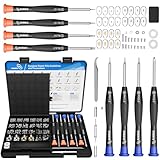
Using one that’s too small can slip and scratch the surrounding metal or, worse, damage the delicate movement parts. Investing in a good set of watchmaker’s screwdrivers is a must if you plan on doing any kind of repair work. They have hardened steel tips, often with a swivel cap to allow for easy rotation with one finger.
Another common pitfall is applying too much force. Watch screws are not meant to be tightened with brute strength.
They are designed to hold parts in place with minimal torque. Overtightening can strip the threads, crack the tiny screw head, or even warp the parts the screw is holding. The goal is a snug fit, not to torque it down like a lug nut on a car wheel. For important applications, watchmakers use specialized torque screwdrivers that apply a precise, measured amount of force, often just a few centiNewtons.
It’s about feel and precision, not power. I learned this the hard way after nearly snapping a screw while trying to seat a movement bridge. I had to replace it, and it was a specialized screw that took weeks to source.
People also often overlook the material of the screw. While stainless steel is common, some watches might use brass screws, especially in older pieces or for certain aesthetic reasons.
Brass is softer and more prone to damage. It’s also important to be aware of whether the screws are magnetized. If a screw becomes magnetized, it can attract metal dust or interfere with the watch’s movement. If you suspect a screw is magnetized, you can use a demagnetizer, a tool that can be bought online relatively cheaply.
For those attempting repairs, simply accepting a damaged screw and putting it back in is a massive mistake. It’s far better to source a correct replacement, even if it takes time and a bit of effort. Trying to salvage a stripped screw often leads to more damage and a less secure assembly.
When buying replacement screws, always try to get them from a reputable watch parts supplier. Generic screws from a hardware store, even if they look similar, will likely not have the correct dimensions, thread pitch, or material properties.
They might fit, but they won’t be right. Pay attention to the thread size (often denoted by a number like 0.5, 0.6, or 0.8mm), the length of the shank, and the diameter of the head. For specific brands, you might need to find OEM (Original Equipment Manufacturer) parts.
It’s a rabbit hole, but getting it right means your watch will function as intended and maintain its value. The common advice is often to ‘just use what you have’, but with watch screws, that’s terrible advice.
Here’s a table comparing some common screw types you might encounter in watchmaking:
| Screw Type | Head Style | Pros | Cons | Verdict |
|---|---|---|---|---|
| Standard Slotted | Flat Slot | Simple to make, traditional look. | Easy to strip, can slip easily. | Okay for non-important applications, but needs precise fitting. |
| Phillips/Cross Head | Cross Slot | Better engagement than slotted, less slip. | Can still strip, not the most secure. | Common, but still requires good screwdriver fit. |
| Torx/Star Drive | 6-Point Star | Excellent grip, high torque transfer, less stripping. | Requires specific Torx drivers, less traditional look. | Great for modern watches needing durability. |
| Proprietary/Unique | Brand-Specific | Aesthetic appeal, brand identity, security. | Requires specialized tools, hard to find replacements. | Best for aesthetics and exclusivity, a pain for repairs. |
| Flathead (Watchmaker’s) | Precisely Sized Flat Slot | Designed for micro-adjustments, clean look. | Requires specific micro-drivers, can still damage if forced. | The standard for most mechanical watch repairs. |
The Final Assembly: Putting It All Together
Once you’ve got your pristine screws, the final assembly is where all that precision manufacturing pays off. For watchmakers, this stage is a methodical process. The movement parts are laid out, and each screw is picked up with specialized tweezers or a fine-tipped tool. The goal is to place the screw into its designated hole without touching any other components or leaving any smudges. The process is often done under magnification, either through a loupe or a microscope, because even a slight misalignment can cause problems. (See Also: How To Adjust Eyeglass Screw )
The first few turns of a watch screw are important. You’re not just screwing it in; you’re making sure it’s engaging the threads correctly. This is done slowly and deliberately.
Many watchmakers will ‘chase’ the threads by just turning the screw a bit forward and then a bit back, especially if it’s a new screw or a new assembly. This helps to clear any debris and makes sure a smooth path for the threads. Once it’s properly engaged, the screw is then tightened using the appropriate torque. As mentioned, this is often done with a torque screwdriver.
For a specific screw holding down a delicate bridge, the torque might be as little as 0.1 to 0.3 Newton-centimeters. That’s incredibly light.
It’s enough to keep the part secure without putting undue stress on it or the screw itself.
The type of metal the screw is made from also influences the tightening process. Steel screws are generally stronger and can handle slightly more torque than brass. However, the design of the watch movement dictates the torque, not just the screw material. Some screws are designed with a shoulder that stops them from going too deep, while others have a fine thread that needs careful handling. You’ll also notice that the heads of screws used in higher-end watches are often finished beautifully. They might be polished, or the slots might be perfectly clean and centered. Some brands even chamfer the edges of the screw heads for a refined look. It’s these subtle details that contribute to the overall craftsmanship.
The order in which screws are tightened can also be important, especially for larger plates or bridges that connect multiple parts. Tightening one side too much before the other can cause the plate to warp, leading to uneven pressure and potential binding of moving parts. Watchmakers often follow a specific tightening sequence, working diagonally or in a star pattern to distribute the pressure evenly. It’s a learned skill that comes with practice.
The feeling of a screw seating correctly, the slight resistance as it tightens, is something you develop a sense for. It’s a satisfying moment when a complex movement comes together, and all those tiny screws are holding everything perfectly in place. The entire watch movement, with all its gears, springs, and levers, relies on the integrity of these minuscule fasteners.
It’s a testament to how something so small can be so fundamentally important.
People Also Ask:
What Is the Difference Between a Screw and a Bolt?
For watch parts, the distinction is often blurred, but generally, a bolt is meant to pass through a hole and be secured by a nut, while a screw engages with threads tapped directly into the material it’s fastening or into a nut that is integral to the assembly. In watchmaking, almost everything is a screw because there are no nuts; the threads are tapped into plates or bridges.
Why Are Watch Screws So Small?
Watch screws are small to fit within the confined space of a watch movement, which is designed to be as compact as possible. Their size also needs to be proportional to the delicate parts they secure. Making them smaller allows for more components to be fitted into a limited area, enabling complex movements with many gears and functions.
Are Watch Screws Magnetic?
Some watch screws can be magnetic, especially if made from certain grades of stainless steel or other ferromagnetic materials. Magnetism is undesirable in watch movements as it can affect the accuracy of the timekeeping. Therefore, watchmakers often use non-magnetic alloys or specific stainless steels, and sometimes employ demagnetizers during assembly and servicing.
How Do You Remove a Stripped Watch Screw?
Removing a stripped watch screw is delicate. Specialized tools like screw extractors designed for micro-screws are used, or sometimes a tiny amount of specialized adhesive is applied to the screwdriver tip to get a better grip. In severe cases, a tiny amount of metal might be carefully drilled away from the screw head to allow it to be gripped or removed. It often requires significant expertise and the right tools.
Verdict
So, there you have it. How do they make watch screws is a question that leads down a rabbit hole of micro-manufacturing, advanced metallurgy, and relentless quality control. It’s not just about tiny pieces of metal; it’s about precision engineering on a scale that’s frankly astonishing. The next time you look at a watch, take a moment to appreciate those seemingly insignificant screws holding it all together. They’re miniature feats of engineering.
If you’re thinking about tackling a watch repair yourself, please, for the love of all that is good, invest in the right tools. Don’t learn the hard way like I did with that stripped screw. Get the proper watchmaker’s screwdrivers. Your sanity, and your watch, will thank you for it.
What’s the most intricate tiny component you’ve ever worked with? Let me know.
![AXTH 25-in-1 Small Precision Screwdriver Set, Professional Magnetic Mini Repair Tool Kit for Phone, Computer, Watch, Laptop, Macbook, Ring Doorbell, Eyeglass, Electronic, [Bearing Steel] Screw Driver](https://m.media-amazon.com/images/I/518YlLmPTcL._SL160_.jpg)
