
I’ve lost count of how many times I’ve wrestled with a tiny screw on a piece of tech, only to have it strip or vanish into the ether. Usually, it’s a cheap gadget, but sometimes it’s something I’ve spent a pretty penny on, like an older iPhone I was trying to fix. It makes you wonder about the little guys, the screws that hold it all together. They seem so insignificant, but their quality is everything. So, how are iPhone screws made? It’s not as simple as you might think.
When you’re deep into a repair, fiddling with those minuscule fasteners, you start to appreciate the engineering that goes into them. They’re not just off-the-shelf bits; they’re precision components designed for a specific job. The whole process behind how iPhone screws are made is actually pretty fascinating, and it explains a lot about why some tech stays together and some falls apart.
The Tiny Titan: What Makes an iPhone Screw Different?
Let’s be honest, most of us don’t give a second thought to the screws holding our phones together. We assume they’re just… screws. But that’s where the common advice can be misleading. You see a bunch of ‘replacement screws for iPhone’ pop up online, and they all look the same, right? Wrong. The screws Apple uses, and the ones you should be looking for if you’re doing any kind of repair, are built to a much higher standard than your average hardware store fare. They’re small, yes, but they’re mighty, and the material science behind them is surprisingly complex.
The primary material is usually high-grade stainless steel, chosen for its strength, corrosion resistance, and non-magnetic properties (important when you’ve got sensitive electronics nearby). But it’s not just about the metal; it’s about how it’s treated.
We’re talking about specific alloys and heat treatments that give these tiny screws incredible tensile strength and durability. This means they can be tightened firmly without deforming and loosened repeatedly without stripping the head or the threads. I learned this the hard way trying to save a few bucks on a third-party repair kit.
The screws felt flimsy, and the Pentalobe driver I bought barely engaged. One screw stripped halfway through, and I ended up having to superglue a replacement in, which was a whole other nightmare.
The head design is also important. While many consumer electronics use Phillips or Torx heads, iPhones famously use Pentalobe screws. This isn’t just to make your life difficult; it’s a security measure and a way to make sure the right tools are used. The Pentalobe head has six distinct points, and the driver must have a precise fit. This prevents casual users from opening their devices and potentially damaging them, while also making sure that repair professionals use compatible, high-quality tools that won’t damage the screw head. The tolerances are incredibly tight – think microns, not millimeters.
When you’re looking at replacement screws, you’ll often see them categorized by model (iPhone 11, iPhone X, etc.). This isn’t just for show. Different iPhone models use slightly different screw lengths and sometimes even minor variations in thread pitch. Using the wrong screw, even a millimeter too long, can damage internal components like the logic board or battery. I once tried to use a screw that looked identical from an iPhone 7 on an iPhone 8; it went in too far and created a bulge on the display. Lesson learned: specificity matters in the world of tiny fasteners.
From Raw Material to Tiny Thread: The Manufacturing Process
So, how do these minuscule marvels go from raw metal to being meticulously placed inside your iPhone? It’s a multi-stage process that relies on precision engineering and specialized machinery. The journey typically begins with high-quality stainless steel wire. This wire is fed into incredibly sophisticated cold-heading machines. These machines, operating at high speeds, use dies and punches to form the head of the screw from a blank piece of wire. It’s not a cutting process; it’s a deformation process, which is important for creating strong, grain-aligned metal that resists fracturing.
After the head is formed, the screw blanks move on to thread rolling machines. Unlike cutting threads, which removes material and can weaken the screw, thread rolling deforms the metal to create the helical grooves of the thread. This process actually strengthens the screw by compressing the metal and aligning its grain structure. The precision required here is phenomenal, making sure the threads are perfectly formed to mate with the threaded inserts in the iPhone chassis and components. Any imperfection can lead to cross-threading or a loose fit, neither of which is acceptable for Apple’s standards.
Following the forming of the head and threads, the screws undergo a series of treatments. This includes cleaning to remove any manufacturing oils or debris. Then comes heat treatment, which is vital for achieving the desired hardness and strength. Different types of stainless steel require specific heat cycles to optimize their properties. Finally, there’s often a passivation process, which further enhances the corrosion resistance of the stainless steel by creating a passive oxide layer on the surface. This is what gives stainless steel its ‘stainless’ quality. (See Also: How To Fix Eyeglasses Arm Without Screw )
The final, and arguably most important, stage for Apple’s screws is the application of the Pentalobe drive. This is typically done using a specialized milling or stamping process after the main body of the screw is formed. The machines must be perfectly calibrated to create the precise angles and depths of the Pentalobe recess. It’s a high-precision operation because even a slight deviation can render the screw incompatible with the Pentalobe driver, or worse, allow the driver to slip and damage the surrounding components. It’s a testament to industrial automation that this entire complex process can produce millions of identical, high-quality screws every day.
What to Look for in Replacement Screws
When you’re in the market for replacement iPhone screws, especially if you’re doing your own repairs, paying attention to detail is key. Don’t just grab the cheapest pack you find online. Here’s what I’ve learned to look for:
- Material Quality: Look for descriptions that specify high-grade stainless steel (e.g., SUS304, SUS316). Avoid generic terms if possible.
- Head Type & Size: Make sure you’re getting the correct Pentalobe size for your specific iPhone model. There are P2, P5, P6, etc.
- Thread Precision: While hard to gauge from a listing, reputable sellers will often mention precision threading.
- Magnetic Properties: While stainless steel is generally non-magnetic, some treatments can alter this slightly. It’s less of a concern for screws, but good to be aware of.
- Supplier Reputation: Buy from established repair part suppliers who have good reviews and a track record of quality.
The Pentalobe Predicament: Why Apple Uses Them
Okay, let’s talk about the Pentalobe. Everyone complains about them, right? They’re not standard, they require special tools, and they feel like an annoying barrier. But there’s a method to Apple’s madness, and it’s not just about making your life difficult. The first and most obvious reason is security. The Pentalobe screw head is a proprietary design, making it harder for unauthorized individuals or shops to open devices. This is intended to protect Apple’s intellectual property and make sure that repairs are done by certified technicians using approved methods and parts. It’s a small but effective layer of control.
Beyond simple security, the Pentalobe design is engineered for a specific purpose in the context of device assembly. The six-point star shape, with its specific angles and depths, offers a good balance between torque transmission and resistance to cam-out (slipping). When you’re dealing with very small screws in tightly packed internal spaces, you need a driver that can grip securely without excessive force and without damaging the screw head. A standard Phillips head, for instance, can be more prone to stripping if the driver isn’t perfectly seated or if too much torque is applied. The Pentalobe, when used with the correct, high-quality driver, provides a very positive engagement.
This leads to the second major benefit: making sure proper assembly and preventing damage. Apple designs its iPhones with extremely tight tolerances. Using a tool that doesn’t fit perfectly can easily damage the screw head, making it impossible to remove later, or worse, it can slip and gouge sensitive internal components like the battery, display, or logic board. The Pentalobe system, when adhered to, helps enforce the use of the correct tools, thereby reducing the risk of user-induced damage during repairs or unauthorized tampering. It’s a way of saying, ‘We know how this should be opened, and here’s a small hurdle to make sure you’re doing it right.’
My personal experience with Pentalobe screws has been… mixed. The first time I encountered one was on an old MacBook Air, and I remember being utterly baffled. I didn’t have the right screwdriver, and I almost gave up. Later, when I finally got the correct Pentalobe driver (it cost me about $15 for a decent one), the process was smooth. The screw came out cleanly, and went back in just as easily. It made me realize that while they’re an inconvenience for the average user, for anyone doing serious repair work, the precision they offer is actually a benefit. It’s the cheap, ill-fitting knock-off drivers that give Pentalobe a bad name, not the screw itself.
Common Mistakes When Dealing with iPhone Screws
People mess up with these tiny screws all the time, and it usually comes down to a few common blunders. The most frequent mistake is using the wrong size or type of screwdriver. This is especially true with the Pentalobe screws. If you try to use a Torx driver or a Phillips that’s too small or too large, you’re going to strip the head. I’ve seen friends try to force it, thinking ‘it’s just a screw,’ and end up with a mangled mess that requires pliers to extract, often damaging the surrounding components in the process. A stripped screw is a disaster on a tiny phone.
Another huge error is mixing up screws. iPhones, even within the same model, often use screws of slightly different lengths.
For example, the screws holding the display bracket might be shorter than those holding the logic board. If you put a longer screw into a hole that’s meant for a shorter one, it can easily puncture internal components. I learned this on an iPhone 6S; I was reassembling it after a battery swap, got a bit rushed, and put a slightly longer screw into the wrong spot.
When I powered it on, the screen flickered and died. It took me another hour to figure out I’d pierced a tiny ribbon cable with the errant screw. The cost of that mistake was a replacement screen, which was about $80 back then, plus my time. (See Also: How Measure Metric Computer Screws )
Never again.
People also tend to overtighten. These screws are tiny, and the threaded holes they go into are often delicate. While Apple uses solid materials, excessive force can strip the threads, rendering the hole useless. Or, as I discovered, it can cause physical damage to underlying components. The rule of thumb is to tighten until you feel resistance, and then give it just a tiny extra turn. If you have to apply significant force, something is wrong. It should feel snug, not strained.
Finally, there’s the issue of using low-quality replacement screws. As mentioned before, cheap screws can have inconsistent threading, weak metal that strips easily, or incorrect head depths. These problems might not be apparent until you’re halfway through a repair, leading to frustration and potentially damaging your device. It’s a false economy to save a few dollars on screws when the potential cost of damaging your phone is so much higher. I’ve started buying screw kits from reputable repair shops that specifically label each screw type and length for the model. It’s saved me hours of headaches.
| Mistake | Consequence | Opinion/Verdict |
|---|---|---|
| Using the wrong screwdriver | Stripped screw head, difficulty in removal, potential damage to surrounding components. | Absolutely avoidable. Invest in the right tool kit. It’s cheaper than a new phone. |
| Mixing up screw lengths | Punctured internal components (display, logic board, battery), device malfunction, costly repairs. | A very common and expensive mistake. Labeled screw sets are your best friend. |
| Overtightening | Stripped threads, damaged internal components due to pressure. | Tighten until snug, then stop. Force is a sign you’re doing it wrong. |
| Using cheap replacement screws | Poor fit, easy stripping, inconsistent quality, potential for damage. | A false economy. Quality screws are vital for a successful repair. |
The Practicalities of Pentalobe and Beyond
When you’re actually holding an iPhone in your hand, ready to perform some maintenance, the screws are the first thing you interact with. It’s about more than just the material science; it’s about the tactile feedback, the feel of the tool engaging, and the satisfying ‘click’ (or lack thereof) when the screw is properly seated. Apple’s choice of Pentalobe, as we’ve discussed, is a deliberate design decision. It’s part of their ecosystem control and a way to subtly guide users towards using the correct tools and processes.
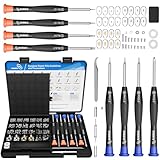
For those of us who are DIY repair enthusiasts, this means investing in a good set of screwdrivers. You’ll likely need a Pentalobe P2 driver for most iPhone models, and possibly others depending on the device. You’ll also need a Phillips #000 or similar small Phillips head, and sometimes a small Torx driver for other parts of the phone or older models. A magnetic mat or a tray with labeled compartments is also a lifesaver. I can’t stress enough how much easier it is to keep track of screws when you have a designated spot for each one.
Regarding the actual production of iPhone screws, it’s a fascinating example of high-volume, high-precision manufacturing. Companies that supply these components to Apple operate under incredibly stringent quality control standards. The entire process, from the raw metal sourcing to the final inspection, is geared towards producing perfect, repeatable results. Automated optical inspection systems are used to check for minute flaws in the screw head, threads, and dimensions. Any screw that falls outside the tight specifications is rejected.
It’s also worth noting that while Apple uses Pentalobe for external screws on many iPhones, internal components might use standard Phillips or other types. This means a complete internal repair might require a small toolkit anyway. The goal is always to have the right tool for the job, and for iPhones, that often includes specialized drivers. The common advice to ‘just use a small Phillips’ for everything is frankly dangerous when it comes to modern smartphones.
A Quick Look at the ‘other’ Screws
While the Pentalobe screws on the exterior of iPhones grab most of the attention, it’s important to remember that there are other types of screws at play once you get inside. Apple uses a variety of tiny Phillips head screws (often labeled as #000 or #00) for securing internal components like brackets, connectors, and speakers. These are still precision-manufactured, but they follow more traditional head designs. The key difference is that the quality of the metal and the precision of the threads remain most important.
The lengths of these internal Phillips screws can vary significantly, even within the same device. This is where the mixing-up mistake, which I’ve already lamented, comes into play. A common set of replacement screws will often include a variety of lengths and types, sometimes color-coded for easier identification. However, even with these kits, it’s important to double-check the original placement of each screw before reassembly. I’ve found that taking pictures or using a screw map (if one is available for your specific model) is an invaluable step. It saves so much time and prevents costly errors.
Beyond Phillips and Pentalobe, you might occasionally encounter Tri-point Y000 screws, especially in newer iPhone models and Apple Watch devices. These are another proprietary Apple design, featuring a three-pronged head. Like the Pentalobe, they require specific drivers and are used to enhance security and make sure the correct tools are used during repair. Their design is intended to offer good torque transmission while minimizing the risk of cam-out and damage to the surrounding circuit board. (See Also: How To Adjust Eyeglass Screw )
The manufacturing process for these Tri-point screws is similarly complex, involving specialized milling machines to create the unique Y-shaped recess. The precision is just as important as with any other screw type used in consumer electronics. The common thread running through all these different screw types used by Apple is a commitment to high-quality materials, precise manufacturing, and designs that, while sometimes frustrating for the end-user, are engineered for reliable assembly and longevity of the device. Understanding how iPhone screws are made really shines a light on this attention to detail.
Why Are iPhone Screws So Small?
iPhone screws are small because the devices themselves are incredibly compact. Every millimeter of internal space is used to fit components like the battery, logic board, cameras, and speakers. Smaller screws allow for denser component placement and thinner device profiles. Their small size also requires high-precision manufacturing to make sure strength and proper function.
Can I Use Regular Screws in an iPhone?
No, you absolutely cannot use regular hardware store screws in an iPhone. They are typically too large, have the wrong thread pitch, and often use incompatible head types (like standard Phillips). Using incorrect screws can easily strip the heads, damage internal components by being too long, or fail to provide a secure fit, leading to device malfunction or permanent damage.
Are Pentalobe Screws Magnetic?
Typically, the stainless steel used for Pentalobe screws is not significantly magnetic. While some stainless steel alloys can exhibit slight magnetic properties depending on their composition and treatment, they are designed to be non-magnetic to avoid interfering with the sensitive electronic components inside the iPhone.
What Is the Most Common Screw Size in an iPhone?
The most common external screw type on many iPhones is the Pentalobe P2, which is unique to Apple devices. Internally, the most prevalent types are very small Phillips head screws, often size #000 or #00, used for securing various internal brackets and components.
How Do I Prevent Stripping iPhone Screws?
To prevent stripping iPhone screws, always use the correct size and type of screwdriver for the specific screw. Make sure the driver bit is fully seated in the screw head before applying torque. Apply steady, controlled pressure. Avoid using excessive force, and if a screw feels stuck, try wiggling it gently or applying a tiny amount of penetrating oil (with extreme caution and only if you know what you’re doing) before trying to force it further.
Final Thoughts
So, the next time you find yourself staring down a tiny Pentalobe screw or a minuscule Phillips head on your iPhone, remember it’s not just a piece of metal. It’s the product of complex engineering, specialized machinery, and strict quality control. The journey from raw steel wire to the precise fastener holding your phone together is a testament to modern manufacturing.
Understanding how iPhone screws are made, and why they’re designed the way they are, can save you a world of pain – and money – when it comes to repairs. Don’t skimp on the tools or the parts; the integrity of your device depends on these little guys.
Next time you see one of those cheap screw kits advertised for a few dollars, think twice. Your iPhone deserves better.
![AXTH 25-in-1 Small Precision Screwdriver Set, Professional Magnetic Mini Repair Tool Kit for Phone, Computer, Watch, Laptop, Macbook, Ring Doorbell, Eyeglass, Electronic, [Bearing Steel] Screw Driver](https://m.media-amazon.com/images/I/518YlLmPTcL._SL160_.jpg)
