
I remember the first time I tried to replace an iPhone battery. It was my old iPhone 6, a relic by today’s standards, but back then, it felt like a complex surgical procedure. I’d watched a few YouTube videos, feeling reasonably confident. Then I opened the thing, and my jaw hit the floor. It wasn’t just one or two screws; it was a whole miniature hardware store in there. So, let’s cut to the chase: how many screws are in an iPhone? The answer isn’t as simple as you might think, and it’s definitely more than you’d expect.
Most people just want to know if they can fix it themselves without losing a tiny screw into the abyss of their carpet. The truth is, it’s a testament to Apple’s engineering, but it also means DIY repairs can be a nightmare if you’re not prepared. Don’t let anyone tell you it’s just a quick swap-out; there’s a lot more going on under that sleek glass.
The Tiny, Tiny World of iPhone Fasteners
Alright, let’s talk about the screws. Because, holy moly, there are a lot of them. When you’re looking at how many screws are in an iPhone, you’re not just counting the big ones you see holding the casing together (spoiler: there aren’t any like that on the outside). You’re dealing with miniature marvels of engineering that hold everything from the screen to the logic board to the tiny speaker grilles in place. The number varies slightly by model, but we’re generally talking about a dozen or more, often a good chunk of them being unique sizes and types.
Take the iPhone X, for example. Just to get the screen off, you’re looking at two pentalobe screws on the bottom edge, which are pretty standard. But then, once the screen is loosened, you’ve got about five or six tiny Phillips-head screws holding down the bracket that protects the display connectors.
Mess one of these up, or drop it into the ether, and you’re in for a world of hurt. These aren’t your dad’s IKEA furniture screws; they’re smaller than a grain of rice, and if you lose one, finding a replacement that fits exactly can be a genuine quest.
I once spent an embarrassing amount of time on my hands and knees with a flashlight, convinced a screw had vanished into another dimension, only to find it clinging to the magnetic tip of my screwdriver.
And that’s just the screen! To get to anything deeper, like the battery or the charging port, you’re peeling back more layers, each secured by its own set of fasteners. It’s like a Russian nesting doll, but instead of dolls, it’s screws and brackets. The common advice you’ll find online, “just follow a guide,” often glosses over the sheer volume of these little guys and the precision required. For instance, some screws are shorter than others, and if you put the wrong length screw back into a hole, you can punch right through the logic board. Yeah, I’ve heard horror stories. Thankfully, none involving my own phone, but the thought alone is enough to make you sweat.
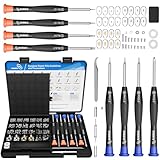
The materials these screws are made from are also worth noting. They’re typically high-strength steel, often with a black oxide coating to prevent corrosion and improve grip. Apple uses a mix of pentalobe (five-point star) and Phillips-head screws, but the Phillips screws are usually so small that a standard household Phillips screwdriver won’t do the job. You need specialized electronics repair kits. The sheer number and variety are a deliberate design choice, contributing to the phone’s water resistance and structural integrity, but making it a pain for anyone not Apple-certified.
The Anatomy of an iPhone Screw Arsenal
Let’s break down where all these little blighters actually live. It’s not just about the total count, but the strategic placement that truly highlights the engineering. You’ve got your external screws, which are primarily the pentalobe ones at the bottom of most iPhones since the iPhone 7. These are the gatekeepers, the first line of defense. They’re designed to be difficult for the average user to remove, which is Apple’s way of nudging you towards their authorized repair services or simply encouraging you to buy a new phone when something goes wrong.
Then, you move internally. This is where the real party starts.
The display assembly is usually held down by a series of small Phillips screws. These are important because they secure the delicate ribbon cables connecting the screen to the logic board. Each screw might be holding down a tiny metal bracket. (See Also: How To Fix Eyeglasses Arm Without Screw )
And here’s a pro tip that’s often overlooked: the length of these screws matters. A screw that’s even a millimeter too long can, and often will, damage the underlying components.
I learned this the hard way when attempting a screen replacement on an iPhone 8. I rushed, and one slightly longer screw I inserted ended up creating a hairline fracture on the display’s internal connector. Took me an extra hour to diagnose and another repair to fix.
Lesson learned: organization is key.
Beyond the screen, you’ll find screws securing the battery, the logic board itself, the cameras, the Taptic Engine (that’s Apple’s fancy name for the vibration motor), the speakers, and even the charging port assembly. Each component has its own little entourage of screws, making sure it stays firmly in place. For example, the logic board, the brain of the operation, is typically held down by multiple small screws, some of which might have a bit of thread locker applied to prevent them from vibrating loose. Apple’s documentation, which is surprisingly detailed for authorized technicians, shows a dizzying array of screw types and placements. It’s a testament to their focus on miniaturization and reliability, but a significant hurdle for DIY enthusiasts.
The types of screws used are also varied. While Phillips and pentalobe dominate, you might encounter tri-point screws (Y-shaped) on newer models, particularly around the logic board and battery connectors. These offer even more secure fastening. It’s this meticulous attention to detail, the sheer number of fastening points, that contributes to the phone’s sleek, unibody feel and its resistance to dust and water. But for the average person wondering how many screws are in an iPhone, the answer starts to feel less like a number and more like a statement about the phone’s intricate, almost obsessive, internal construction.
Common Mistakes When Dealing with iPhone Screws
Let’s be real: messing with iPhone screws is where most DIY repairs go sideways. The most frequent offender? Stripping the screw head. Those tiny Phillips and pentalobe heads are made of soft metal, and if your screwdriver isn’t perfectly seated or if you apply too much pressure at an angle, you can easily round off the slots. Suddenly, that screw is impossible to remove. I’ve seen people resort to superglue and pliers, which is a surefire way to turn a minor repair into a phone graveyard. The best advice I can give is to use the correct size screwdriver, apply firm, steady pressure, and turn slowly. If it feels like you’re forcing it, stop and reassess.
Another massive mistake is mixing up screws. As I mentioned, different screws have different lengths. Putting a longer screw into a shorter hole is like using a sledgehammer to put in a thumbtack – you’re going to cause damage. This is why having a magnetic project mat with labeled compartments or a screw organizer tray is a must for any serious iPhone repair.
I personally use a cheap, felt-lined tray with tiny wells, and I draw a little diagram of the phone’s internal layout on paper to mark which screw goes where. It sounds overkill, but trust me, it saves you hours of guesswork and potential disaster.
I learned this the hard way when I accidentally used a logic board screw to reattach a speaker bracket on my old iPhone 5S. It worked physically, but the slight protrusion caused intermittent speaker static.
Annoying doesn’t even begin to cover it. (See Also: How Measure Metric Computer Screws )
The third common pitfall is forgetting to put screws back. Yes, it happens. You get caught up in the excitement of reassembly, or you’re just exhausted, and you miss one. Or worse, you put a component back without securing it properly because you ran out of screws. This can lead to loose parts rattling around inside, short circuits, or components not functioning correctly. Forgetting even a single screw can compromise the phone’s structural integrity and its resistance to elements like dust and moisture. It’s a small oversight with potentially big consequences.
Finally, there’s the issue of using the wrong type of screw. Some screws might have different thread pitches or head types that aren’t immediately obvious. While Apple tries to standardize, subtle differences exist. Relying on generic screw kits without cross-referencing with a specific model’s repair manual can lead to problems. The common advice to “just use any tiny Phillips screw” is frankly dangerous. It’s like saying “just use any nail” for framing a house – precision matters immensely at this scale. It’s why understanding how many screws are in an iPhone and the specific nature of each one is so important before you even pick up a screwdriver.
The Practicality of iPhone Repair: A Screwdriver’s Eye View
So, you’re staring at your iPhone, and you’re wondering if you really need to know exactly how many screws are in an iPhone to fix a cracked screen. The short answer is yes, you absolutely do, if you’re going to attempt it yourself. It’s not just about the count, but the implications of that count. Each screw represents a point of connection, a potential failure point, and a testament to the device’s complexity. When I first opened an iPhone, it was like looking into a microscopic city. The sheer density of components and the way they are held together by these minuscule screws is astonishing. It’s not just about assembly; it’s about creating a durable, sealed unit.
For a simple screen replacement on a relatively modern iPhone (say, iPhone 11 or newer), you’re looking at roughly 10-15 screws just to get the display off and reattached, including the brackets for the cables. If you’re doing a battery swap, that adds another 5-10 screws, depending on the model, to access and remove the battery. Going deeper, like replacing a charging port or a speaker module, adds more. So, in total, for a moderately involved repair, you could easily be dealing with 20-30 unique screws of varying sizes and types. This is why repair guides often show detailed diagrams of screw placement. It’s not for decoration; it’s a vital part of the process.
Here’s a breakdown in a table format to give you a clearer picture. This isn’t exhaustive for every single iPhone model ever made, but it gives you a representative idea of the screw count for common repair tasks. Notice the variety in screw types; this isn’t just about quantity.
| Repair Task | Approximate Screw Count | Typical Screw Types | My Verdict |
|---|---|---|---|
| Screen Replacement | 10-15 | Pentalobe (2), Phillips (small), Tri-point (newer models) | Manageable if organized. The brackets are the tricky part. |
| Battery Replacement | 5-10 | Phillips (small), Tri-point (newer models) | Mostly internal. Battery adhesive is often the bigger challenge. |
| Charging Port Replacement | 8-12 | Phillips (small), Tri-point (newer models) | Requires careful disconnection of multiple components. |
| Logic Board Removal | 15-20+ | Phillips (small), Tri-point (newer models) | Expert territory. Easy to damage vital connections. |
The most overrated aspect of iPhone repair? The idea that it’s a quick and easy job for anyone with a YouTube account. While guides are helpful, they often don’t convey the tactile feel of these tiny screws, the risk of static discharge, or the sheer tedium of organizing them. My first few attempts felt more like a delicate archaeological dig than a repair. It’s a meticulous process that demands patience and the right tools. If you’re not prepared for that level of detail, you’re better off paying a professional or accepting the phone’s fate. The number of screws is a direct indicator of this internal complexity.
The Myth of the Universal iPhone Screw
One piece of common, and frankly dangerous, advice you’ll find online is that all iPhone screws are pretty much the same, or at least interchangeable within a certain range. This is absolute hogwash. I can’t stress this enough. Apple is notorious for using very specific screw lengths and thread pitches for different components. While you might get away with using a slightly longer screw in a hole that doesn’t go all the way through, you’re basically gambling with your phone’s internal components. The risk of puncturing a circuit board, damaging a connector, or even creating a stress point that leads to future failure is incredibly high.
Let me tell you about a friend who swore he could fix his iPhone 7’s charging port with just a generic toolkit. He found a video that vaguely mentioned “small screws.” He got the phone open, replaced the port, and thought he was a hero. A week later, his phone started randomly shutting down.
Turns out, one of the screws he used for the port assembly was about 1mm too long. This tiny protrusion was pressing against the back of the logic board, causing intermittent connection issues that escalated over time. He ended up having to pay for a logic board replacement, which cost him more than the original repair would have.
It’s a vivid example of why the specific nature of how many screws are in an iPhone matters, and not just their quantity. (See Also: How To Adjust Eyeglass Screw )
The reason behind this screw specificity is twofold. Firstly, it’s about structural integrity.
In a device as thin as an iPhone, every millimeter counts. Different screw lengths allow components to sit flush and prevent internal collisions. Secondly, it’s about electromagnetic interference (EMI) shielding.
Certain metal brackets held down by specific screws help to block or redirect unwanted radio frequencies, making sure the various components communicate cleanly. Using the wrong screw can compromise this shielding, leading to performance issues or even dropped calls. While Apple doesn’t make it easy for us to get exact screw specs for every model readily, third-party repair companies that specialize in iPhone parts often sell meticulously sorted screw kits for specific models, which are worth the investment if you’re serious about DIY repair.
Everyone says that a good repair guide is all you need. I disagree. While a guide is key, it’s the execution and the attention to detail that make or break a repair. The guide will tell you to remove screw X and put screw Y back. It won’t always convey the subtle difference in feel between a correct screw and an incorrect one, or the precise torque needed. This is where experience, a good organized workspace, and the right tools – especially a high-quality screwdriver set with perfectly fitting bits – become most important. You’re not just turning screws; you’re performing microscopic surgery, and precision is the name of the game.
Frequently Asked Questions About iPhone Screws
How Many Screws Are in an iPhone 13 Pro?
The iPhone 13 Pro, like its predecessors, features a significant number of internal screws, typically around 20-25 when considering a full teardown for component replacement like the screen or battery. These include pentalobe screws at the bottom, and various small Phillips and tri-point screws internally holding brackets, cables, and components in place. The exact number can vary slightly depending on the specific internal components being accessed.
Are iPhone Screws All the Same Size?
No, iPhone screws are decidedly not all the same size. Apple uses a variety of screw lengths and types (pentalobe, Phillips, tri-point) throughout the device. Using the wrong size screw in the wrong hole is a common cause of damage during repairs, as it can strip the threads, damage the casing, or even puncture internal components like the logic board.
Can I Use a Regular Screwdriver on an iPhone?
Generally, no. Standard household screwdrivers are too large and not precise enough for iPhone screws. You will need specialized electronics repair toolkits that include very small Phillips head bits, pentalobe bits (usually P2 size for the external screws), and often tri-point bits for newer models. The tips need to fit perfectly to avoid stripping the screw heads.
What Happens If I Lose an iPhone Screw?
Losing an iPhone screw can range from a minor annoyance to a major problem. If it’s an external screw, the phone might be less secure or lose some water resistance. Internally, losing a screw that holds down a important bracket or component can lead to that part becoming loose, causing malfunctions, short circuits, or damage to other parts. It’s best to use a magnetic mat or screw organizer to keep track of all screws during a repair, and if one is lost, try to source an exact replacement from a reputable repair parts supplier.
Final Verdict
So, the next time you find yourself wondering about how many screws are in an iPhone, remember it’s not just a number; it’s a testament to Apple’s intricate design philosophy. It’s a complex dance of tiny fasteners holding together a powerful piece of technology. Whether you’re a seasoned tinkerer or just curious, understanding this internal complexity is key.
My advice? If you’re not comfortable with meticulous organization and the potential for tiny screw-related disasters, save yourself the headache and the potential cost of a failed repair. Take it to a professional. But if you’re feeling brave, armed with the right tools, an organized workspace, and a healthy dose of patience, it can be a surprisingly rewarding experience. Just don’t blame me when you’re on your hands and knees searching for a screw that decided to go on an adventure.
![AXTH 25-in-1 Small Precision Screwdriver Set, Professional Magnetic Mini Repair Tool Kit for Phone, Computer, Watch, Laptop, Macbook, Ring Doorbell, Eyeglass, Electronic, [Bearing Steel] Screw Driver](https://m.media-amazon.com/images/I/518YlLmPTcL._SL160_.jpg)
