
You know the feeling. Your favorite pair of glasses, the ones that just work, start to slide down your nose. Again. You push them up, and they feel… loose. That tiny screw holding the arm to the frame has decided to make a break for it. It’s maddening, right? You’ve probably tried shoving them in your pocket, hoping the pressure would fix it, only to find the screw missing entirely. I’ve been there, countless times. Learning how to adjust glasses screws yourself isn’t some arcane art; it’s a basic life skill that saves you time, money, and a whole lot of frustration.
This isn’t about a fancy optometrist appointment for a simple wiggle. This is about grabbing the right tool and getting it done. Whether your glasses are slipping, pinching, or just feel generally wonky, a little tweak to those minuscule screws can make a world of difference. Let’s get these bad boys fitting right again.
That Tiny Screw Is More Important Than You Think
It’s amazing how much a single, barely-there screw can impact your daily life. I remember a pair of Ray-Bans I splurged on a few years back. They fit perfectly out of the box, a rare win. About three weeks in, I noticed them slipping. Annoying, but manageable. I’d just push them up. Then one morning, I leaned over to tie my shoe, and bam, one lens was halfway down my cheek. The screw had vanished. I spent twenty minutes crawling around my living room floor, convinced it was lost forever. Luckily, I found it under the sofa. That day, I vowed to learn how to adjust glasses screws properly.
Most people don’t give these little screws a second thought until something goes wrong. They’re usually made of steel, sometimes with a coating. The heads can be tiny Phillips or flathead.
It’s not rocket science, but the precision required is key. The threads are microscopic, designed to grip tightly into the frame and hinge. When they loosen, it’s often due to friction from opening and closing the arms, vibrations from everyday wear, or even just the oils from your skin.
Think about it: those arms flip open and closed hundreds of times a day. It’s bound to create some play. A properly tightened screw keeps the hinge snug, making sure the glasses sit correctly on your face, maintaining the intended optical alignment. If they’re too loose, the arms might splay outwards, making the glasses sit wider than they should, or droop forward.
Too tight, and they might feel stiff or even damage the frame material. It’s a delicate balance, and the screw is the linchpin.
This is why investing in a decent, albeit tiny, screwdriver set is one of the best DIY decisions you can make. Forget the cheap plastic ones that come with some glasses – they’re often made of soft metal and strip easily. You need something with a bit of grip and decent quality steel. I’ve seen people try to use paperclips or even their fingernails, which is just asking for trouble. You’re more likely to scratch the frame or slip and poke yourself in the eye than achieve any meaningful adjustment. The right tool makes all the difference between a quick fix and a trip to the optician, or worse, a damaged pair of glasses.
What You Actually Need (beyond Blind Hope)
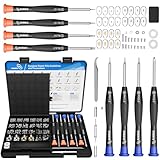
Alright, let’s talk tools. You don’t need a workbench full of specialized equipment. The most important thing is a precision screwdriver set. I’m talking about the kind you might find in a hobby shop or a good hardware store, the ones with an array of incredibly small Phillips and flathead bits. You want something that fits snugly into the screw head without wobbling. Brands like Wiha, Klein Tools, or even some decent generic sets from Amazon will do the trick. A set that costs between $15 and $30 is usually more than enough and will last you years. I personally have a set from Wiha that cost me about $25, and it’s been worth its weight in gold.
Beyond the screwdriver, a few other things can be incredibly helpful. First, good lighting. You’re dealing with screws smaller than a grain of rice. Trying to do this in dim light is like trying to thread a needle in a blackout.
A bright desk lamp or even a headlamp can be a lifesaver. Second, a clean, flat surface. (See Also: How To Fix Eyeglasses Arm Without Screw )
Trying to adjust screws on a wobbly table or your lap is a recipe for disaster. You want a stable base where if you drop a screw (and you will, probably), it doesn’t immediately roll into the abyss. A small tray or even a piece of dark cloth can help catch errant screws.
Lastly, and this is where I’ve seen people mess up, magnification. A magnifying glass, or even better, a pair of reading glasses with a higher prescription than you normally use, can make those tiny screws visible and manageable. I keep a cheap magnifying glass with a built-in LED light right next to my glasses repair kit.
Some kits come with tiny replacement screws and nose pads. These can be useful, but honestly, most of the time you’re just tightening what’s already there.
If a screw is truly stripped or lost, then you’ll need a replacement. The problem is, not all screws are created equal. Different frames use different sizes and types.
If you lose one, your best bet is often to take the other arm to an optician and see if they can match it. Trying to guess online can lead to buying a whole pack that doesn’t fit. I learned this the hard way, ordering a $10 pack of tiny screws that turned out to be slightly too thick for my favorite frames, rendering them useless.
| Tool | Purpose | My Verdict |
|---|---|---|
| Precision Screwdriver Set | Fits tiny screw heads for tightening/loosening. | Key. Don’t skimp. |
| Magnifying Glass/Reader Glasses | Makes tiny screws visible. | Highly Recommended. Saves frustration. |
| Good Lighting | Illuminates the work area. | Important for accuracy. |
| Clean, Flat Surface | Stable base for working, catches dropped parts. | Prevents lost screws. |
| Tweezers (Optional) | For picking up and placing tiny screws. | Handy, but can be fiddly. |
The Actual ‘how-To’: Tightening, Loosening, and Adjusting
Okay, here’s the meat and potatoes. You’ve got your tools, you’ve got your light, and you’ve got your loose glasses. First, identify the problem screw. It’s usually where the arm (temple) meets the frame front. Gently wiggle the arm. If there’s play where it attaches, that’s your culprit.
- Preparation: Place your glasses on a clean, flat, well-lit surface. Make sure your chosen screwdriver bit fits snugly into the screw head. If it’s a Phillips head, make sure the bit is seated perfectly in the cross.
- Tightening: This is the most common fix. Place the screwdriver bit into the screw head. Turn the screwdriver clockwise. Go slowly and apply gentle, steady pressure. You’re not trying to torque it down like a car engine. Just turn it until you feel resistance. Don’t force it. Over-tightening can strip the screw or crack the frame material, especially if it’s plastic. Try the glasses on after a quarter turn or so. See if the looseness is gone. If not, repeat with another small turn.
- Loosening: Sometimes, glasses can pinch your head or feel too tight because the screws are too tight, making the arms stiff and unyielding. To loosen, turn the screwdriver counter-clockwise. Again, go slowly, just a tiny bit at a time. Try the glasses on. You’re looking for a smooth, comfortable opening and closing of the arms.
- Adjusting Angle (Hinge Play): If the arm feels loose but tightening doesn’t seem to fix the position of the arm, it might be that the hinge itself is slightly splayed open. In this case, you might need to gently coax the hinge plates closer together. This is delicate. Sometimes, a slight inward press on the arm near the hinge while gently tightening the screw can help seat it better. Be extremely careful here not to bend the arm or damage the hinge.
- Dealing with Stripped Screws: This is the real pain. If the screw head is damaged (the cross for a Phillips head is worn down, or the slot for a flathead is rounded), your screwdriver won’t grip. Sometimes, a slightly larger flathead bit can catch an edge. If it’s really bad, you might need a screw extractor kit, but that’s getting into more advanced territory. Often, this is when you admit defeat and visit an optician or a jeweler. They have specialized tools and experience. My first stripped screw cost me a pair of $300 glasses because I tried to force it. Don’t be me.
I remember one time, a friend brought over a pair of expensive designer frames. She’d lost a screw and tried to replace it with a tiny piece of wire. It looked ridiculous and the arm was flopping around. I pulled out my kit, found the right tiny Phillips head, and managed to tighten the original screw (which was just loose, not lost). She was amazed. It took maybe thirty seconds. That’s the power of knowing how to adjust glasses screws.
Common Mistakes and Why They Happen
Let’s be honest, messing with tiny screws isn’t always straightforward. I’ve made my share of mistakes, and I’ve seen others make them too. The biggest one? Using the wrong tool. Like I said, those flimsy plastic screwdrivers that come with cheap glasses are mostly useless. They’re made of soft metal or plastic that strips the screw head in seconds. I once ruined a perfectly good screw on a pair of Oakley sunglasses trying to tighten it with one of those. It was infuriating. Now I always use my dedicated precision set.
Another massive mistake is over-tightening. People think ‘tighten it until it’s fixed,’ but that’s not how these tiny threads work. You can easily strip the screw, meaning the screwdriver just spins without gripping, or worse, you can crack the frame material. Plastic frames are particularly vulnerable. I’ve seen the hinge area on acetate frames fracture because someone cranked down too hard on the screw. It’s a delicate operation. You want it snug, not immovable.
Then there’s the ‘set it and forget it’ mentality. People tighten the screw once and assume it’s done forever. But glasses are constantly subjected to stress – opening and closing, being put on and taken off, being tossed into a bag. Those screws will loosen over time. It’s why I’ve developed a habit of giving my glasses a quick check every few weeks. A tiny turn here, a slight adjustment there, and they stay comfortable and functional. It’s preventative maintenance, really. It’s like oiling a squeaky hinge on a door; a little attention keeps things running smoothly. (See Also: How To Buy A Used Smartphone Without Getting Screwed )
Lastly, and this is more about patience, people tend to rush. They’re fiddling with the screw, it’s not working immediately, so they get frustrated and force it or give up. That’s when you end up with bent arms, damaged screws, or even broken frames.
Take your time. Breathe. If you’re not seeing progress, step away for a minute.
Sometimes a fresh perspective is all you need. Trying to force a screw that’s stuck or jammed is a guaranteed way to create a bigger problem. I’ve learned that the hard way more than once.
That $180 pair of titanium frames? Nearly destroyed them trying to force a stuck hinge screw without proper lubrication or understanding how the hinge mechanism worked. It took me hours of delicate work and a lot of cursing to fix that one.
When to Call in the Pros (or Just Buy New Ones)
So, you’ve tried the screwdriver, you’ve been gentle, you’ve even used your magnifying glass, and things are still not right. When do you throw in the towel? The most obvious sign is a stripped screw head. If your screwdriver just spins and doesn’t engage the screw, it’s likely stripped. You can try a slightly larger flathead or even a specialized screw extractor if you’re feeling brave, but honestly, most DIY attempts at this end in frustration. A professional optician or a jeweler has micro-extractors and the experience to deal with this without further damaging your frame. It’s usually a quick fix for them, and they might even have the exact replacement screw you need.
Another situation is when the frame itself is damaged. If the screw hole is enlarged or cracked, especially in plastic frames, a simple tightening won’t help. The frame material needs repair, which is beyond a basic screw adjustment. Some opticians offer frame repair services, but it depends on the material and the extent of the damage. For very expensive or antique frames, it might be worth it. For a $30 pair of drugstore glasses, it might be more cost-effective to just buy new ones.
Then there’s the case of bent or misaligned frames that aren’t just about screw tightness. If the arms are bent outwards or inwards at the temple, or the bridge is warped, you need more than a screwdriver. This involves careful bending of the frame material. While you can sometimes do minor adjustments yourself (like gently bending arms for a better fit), significant warping often requires specialized tools and knowledge to avoid snapping the frame. An optician can heat and gently bend metal or plastic frames to their original shape. I once tried to straighten a bent metal arm myself and ended up snapping it clean off. Lesson learned.
Finally, consider the cost versus benefit. If your glasses are old, scratched, or you’ve been wanting a new pair anyway, and the repair requires significant effort or cost, it might just be time to move on. However, for most minor issues – a loose arm, a slightly slipping nose pad (which often involves tiny screws too) – learning how to adjust glasses screws yourself is the most practical solution. The cost of a good precision screwdriver set is minimal compared to the cost of repeatedly visiting an optician for minor adjustments or buying new glasses when an old pair is perfectly salvageable.
Why Do My Glasses Keep Getting Loose?
Your glasses get loose primarily due to friction and vibration from everyday wear. Each time you open and close the arms, or as the glasses move on your face, the tiny screws can gradually work themselves out. Oils from your skin can also sometimes contribute to loosening. It’s a natural process for these small components subjected to constant movement.
Can I Use Super Glue on a Loose Glasses Screw?
It’s generally a bad idea to use super glue on a loose glasses screw. Super glue is permanent and can permanently fuse the screw, making it impossible to tighten or loosen later. It can also damage the frame material and make future repairs much more difficult, potentially requiring replacement of the entire screw or even the frame. (See Also: How Measure Metric Computer Screws )
How Tight Should Glasses Screws Be?
Glasses screws should be tightened just enough to feel snug and prevent any wobbling or play in the hinge. You want the arm to open and close smoothly without being too stiff or too loose. Do not overtighten, as this can strip the screw, damage the frame, or make the hinge brittle and prone to breaking.
What If I Lose a Glasses Screw?
If you lose a glasses screw, your best immediate options are to use a glasses repair kit that might contain a universal replacement, or to visit an optician. Opticians have a wide variety of replacement screws and the tools to fit them correctly. If you try to use a screw from a general hardware store, it might be the wrong size or type, leading to further problems.
The Hidden World of Nose Pad Screws
It’s not just the arms that have screws. Many glasses, especially those with metal frames or adjustable nose pads on plastic frames, have tiny screws holding the nose pads in place. These are often even smaller than the hinge screws, and they can be a real pain. If your nose pads are loose, wobbly, or one has fallen off entirely, you’re likely dealing with these little guys.
The process for adjusting or replacing these is similar to hinge screws, but the stakes can feel higher because they’re so visible. You absolutely need a very fine-tipped precision screwdriver, usually a minuscule Phillips head. If the screw is just loose, a gentle clockwise turn will snug it up. If it’s fallen out, you’ll need a replacement. The challenge here is finding the exact size and thread pitch. Generic glasses repair kits often include a variety of tiny screws, and you’ll need to try a few to find one that fits snugly into the threaded insert on the nose pad arm.
My own experience with nose pad screws was a lesson in humility. I had a pair of vintage aviator-style glasses where the nose pads kept tilting inwards. I kept trying to adjust them by just pushing them, which obviously didn’t work.
Finally, I decided to look at the screws. One was almost completely out. I managed to tighten it, but it was a fiddly job.
Then, about a month later, one of the nose pads fell off completely while I was eating lunch. The tiny screw was gone. I spent a solid hour trying to find a replacement screw that would fit.
I ended up using a screw from a disassembled old digital watch, which worked, but it was a stressful afternoon. The key is to have a good assortment of tiny screws on hand if you deal with multiple pairs of glasses, or just accept that sometimes an optician is the easiest route for these specific repairs.
Final Thoughts
So there you have it. Learning how to adjust glasses screws is less about complex mechanics and more about a steady hand, the right tiny tools, and a bit of patience. You can save yourself a trip to the optician, a few bucks, and a lot of annoyance by tackling these small issues yourself. Don’t let a loose screw make your favorite frames unusable.
Next time your glasses start to slip, don’t just shove them up your nose or curse your luck. Grab that precision screwdriver set you now know you need. A few minutes of careful adjustment can make your glasses feel like new again. It’s a small skill that makes a big difference in comfort and function. Keep those tiny screws snug!
![AXTH 25-in-1 Small Precision Screwdriver Set, Professional Magnetic Mini Repair Tool Kit for Phone, Computer, Watch, Laptop, Macbook, Ring Doorbell, Eyeglass, Electronic, [Bearing Steel] Screw Driver](https://m.media-amazon.com/images/I/518YlLmPTcL._SL160_.jpg)
