
You know that feeling? Your favorite watch, the one that just feels right on your wrist, suddenly dies. Just… stops. My trusty dive watch did that last Tuesday. I swear I heard a tiny gasp for air before the second hand froze mid-sweep. Instead of a hundred-dollar trip to the jewelers or messing with some mail-away service, I remembered I had the tools to tackle how to change a watch battery with wrench screw back myself.
It’s not rocket science, but it’s also not something you want to botch. One wrong move and you’ve got a scratched case or, worse, a ruined movement. Over the years, I’ve learned that while some DIY watch fixes are best left to the pros, swapping out a simple battery is totally doable for most folks. You just need the right approach and a little patience.
This isn’t about fancy watchmaking; it’s about getting your everyday timepiece ticking again without breaking the bank. Let’s get that reliable old friend back to life.
The Right Tools for the Job (you Probably Have Most of Them)
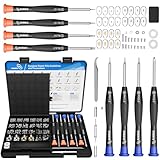
Look, I’ve wasted good money on those “all-in-one” watch repair kits that come with a dozen flimsy plastic tools and a battery assortment that looks like it was scavenged from a remote-controlled car graveyard. Most of it is junk. For tackling how to change a watch battery with wrench screw back, you really only need a few specific items, and chances are, you’ve got them lying around your garage or toolbox already. The most important, and the one most people overlook, is a decent set of small, flat-head screwdrivers. I’m talking the kind you use for eyeglass repair or electronics. You need a few different sizes, from tiny to maybe 2mm wide.
Next, you’ll need a case back opener. For screw-back watches, this usually means a watch case wrench. These look like little adjustable wrenches designed specifically for the notches on the back of a watch. You can find decent ones online for about $15-$25. Don’t buy the cheapest one you see; a bit of heft and decent adjustment mechanism makes a huge difference. I made the mistake of buying a $5 one once, and it slipped constantly, leaving little gouges on the case back before I finally gave up and bought a better one for $20. It was worth every penny.
You’ll also want a pair of fine-tipped tweezers. Plastic ones are best for handling the battery itself to avoid shorting it out with your fingers or accidentally dropping it into the watch guts. A small bowl or magnetic tray to hold tiny screws is a lifesaver.
Trust me, dropping a screw the size of a gnat’s eyelash into your carpet is a special kind of frustration. A soft cloth or microfiber towel is also key for protecting your watch face and wiping away any smudges.
For some watches, you might need a tiny rubber or plastic pry tool if the case back has a small lip to help lift it. Finally, and this is the big one, you need the correct replacement battery. This is where many people stumble.
You can’t just guess. You need to know the exact battery number. This is usually printed on the old battery itself, or you can find it in your watch manual, or by searching the watch’s model number online.
I once bought a generic “watch battery” pack, and none of them fit or worked. It was a total waste of about $10 and a bunch of annoyance.
Here’s a quick rundown of what you should have: (See Also: How To Fix Eyeglasses Arm Without Screw )
| Tool | Purpose | My Verdict |
|---|---|---|
| Small Flat-Head Screwdrivers (set) | Prying case, removing retaining screws | Absolutely necessary. Get a good set, not the cheap giveaway ones. |
| Watch Case Wrench | Opening screw-back cases | Key for screw-backs. Invest in one that adjusts smoothly. |
| Fine-Tipped Tweezers (plastic preferred) | Handling battery, small parts | Plastic is best to avoid shorts. A must-have. |
| Small Bowl/Magnetic Tray | Holding tiny screws | Saves sanity. Don’t underestimate this. |
| Soft Cloth/Microfiber Towel | Protecting surfaces, cleaning | Keeps your watch and workspace scratch-free. |
| Replacement Battery | Powering the watch | A must. Get the exact number. |
Peeking Under the Hood: What to Expect Inside
Alright, you’ve got your tools laid out, your workspace prepped with that soft cloth, and you’re ready to see what’s going on inside your watch. This is where the real ‘how to change a watch battery with wrench screw back’ process begins. First, find the little notches on the edge of your watch’s screw-back case. These are what the watch case wrench grabs onto. Make sure the wrench is set to the correct size so it fits snugly into those notches. You don’t want it wobbling around; that’s how you slip and scratch the metal.
With the wrench firmly in place, give it a firm, steady turn counter-clockwise. It might take a bit of force if it hasn’t been opened in a while. You’ll feel it loosen up. Once it’s loose enough, you can usually unscrew it the rest of the way by hand. Place the case back gently aside, making sure not to let it spring off and go flying across the room. I’ve had that happen. It’s usually not a big deal, but it can be startling and you might lose it under the sofa if you’re not careful.
Now, take a good look inside. Most common quartz watch movements are pretty straightforward. You’ll see the battery, often held in place by a small metal clip or a tiny screw.
The battery itself is usually a small, silver, coin-shaped cell. Beside it, you might see a small plastic or metal lever.
This is the battery retaining mechanism. On some watches, you’ll need to gently lift this lever or push it out of the way with your flat-head screwdriver to release the battery. On others, there’s a tiny screw holding a small metal bridge over the battery.
If it’s a screw, use your smallest flat-head screwdriver to remove it and set it in your little bowl. Remember which way the battery was oriented – positive side up or down. This is super important for the new one.
I once opened up a cheap Timex and was surprised to find a little spring coiled up under the battery. I didn’t notice it, and when I popped the new battery in, it just wouldn’t work. Turns out, that tiny spring was important for making consistent contact. I almost tossed the whole watch before I spotted a faint outline of where the spring belonged. It’s a good reminder to really look at how everything is put together before you start yanking parts out. Pay attention to any tiny springs, screws, or clips. They’re there for a reason.
The battery itself is usually a CR (for lithium) or SR (for silver-oxide) battery, followed by a number like 2032, 2025, 1620, etc. That number is the key. It tells you the diameter and thickness. For example, CR2032 is 20mm in diameter and 3.2mm thick.
You absolutely need to match this number. Getting it wrong means the battery won’t fit, won’t make contact, or could even damage the movement. Don’t rely on just the price of the battery either.
A $5 battery from a reputable brand like Energizer or Renata is usually better than a $1 pack of 10 generic ones. Sometimes, the battery is labeled with a code like ‘377’ or ‘LR626’. If you see this, use that exact number. (See Also: How Measure Metric Computer Screws )
I’ve found that often, looking up the watch manufacturer and model number online is the most reliable way to confirm the correct battery type, especially for less common brands.
Common Mistakes and How to Avoid Them
Let’s talk about screw-ups. Because, believe me, I’ve made them, and most of them are totally avoidable if you know what to look out for. The biggest one, by far, is using the wrong tools. People try to use a butter knife, a coin, or pliers to open the case back. This is a recipe for disaster. You’ll scratch the metal, bend the case, and potentially damage the seals that keep your watch water-resistant. Stick to the watch case wrench. If you don’t have one, it’s worth buying. Trying to force it with the wrong tool is like trying to hammer in a screw – it never ends well.
Another common mistake is losing or damaging those tiny screws that hold the battery retaining bracket in place. Seriously, these things are microscopic. I keep a small, shallow plastic container with a lid, or a magnetic parts tray, specifically for these tiny screws. When you take one out, immediately put it in the tray. Don’t just set it on your workbench where it can roll away or get swept up by accident. I once spent twenty minutes on my hands and knees with a flashlight looking for a screw that had vanished into thin air. It was stuck to the bottom of my sleeve. Never again.
Forgetting to note the battery orientation is a classic. Most watch batteries have a positive (+) side and a negative (-) side. It’s usually printed on the battery itself. Before you remove the old battery, take a quick peek and make sure you know which side was facing up. If you put the new one in backward, the watch won’t work. It sounds obvious, but in the heat of the moment, or if the markings are worn off, it’s easy to mess up. I’ve done it. Put the new battery in, it doesn’t start, I panic, check the orientation, realize my mistake, flip it, and boom – it works. So, pay attention!
People also tend to force things. If a case back isn’t unscrewing easily, don’t just crank on it. Make sure the wrench is properly seated in the notches. Sometimes, a bit of grime can make it difficult. A gentle cleaning around the edge with a soft brush might help. Similarly, when you’re putting the new battery in, don’t jam it. It should sit snugly. If you have to force it, something’s not right. You might have the wrong size battery, or it’s not sitting in the correct position.
Finally, and this is a big one for any watch that claims to be water-resistant: don’t forget to check and potentially replace the gasket. The gasket is a thin rubber O-ring that sits in a groove around the case back. Its job is to create a watertight seal. If it’s old, brittle, or damaged, your watch is no longer water-resistant, even if you’ve changed the battery correctly.
When you remove the case back, gently examine the gasket. If it looks cracked, flattened, or distorted, you should replace it. You can buy assorted gasket kits online for a few dollars. If you don’t replace it and your watch gets wet, you could end up with much bigger problems than a dead battery, like a ruined movement from water damage.
I learned this the hard way when a splash from washing my hands got into a watch where I’d skipped replacing the gasket. Cost me $50 to get it cleaned and dried out.
People Also Ask:
How Do I Know If My Watch Needs a Battery Change?
The most obvious sign is that the watch stops running altogether. You might also notice the second hand ticking in one-second intervals instead of smoothly, or it might start jumping in two or four-second increments. Some digital watches will display a low battery icon. If your watch has a day/date function and it’s not changing correctly, that can also be a sign of a weak battery.
Can I Use Any Battery to Replace My Watch Battery?
No, you absolutely cannot. You must use the exact battery number specified for your watch. These numbers, like CR2032 or SR626SW, indicate the size and voltage. Using the wrong battery can cause the watch to malfunction, not work at all, or even damage the delicate internal components of the watch movement. (See Also: How To Adjust Eyeglass Screw )
How Much Does It Cost to Get a Watch Battery Replaced at a Store?
The cost can vary widely depending on the type of watch and the store. For a simple quartz watch battery replacement at a mall kiosk or a jeweler, you might expect to pay anywhere from $10 to $30. However, for more complex watches, luxury timepieces, or if specialized tools are needed, the cost can be significantly higher, sometimes $50 or more.
The Actual Process: Step-by-Step
Okay, let’s get down to the nitty-gritty of how to change a watch battery with wrench screw back. This is the part where you actually do it. Make sure you’ve read through the previous sections and have your tools and the correct battery ready. Precision and patience are your best friends here.
- Prepare Your Workspace: Lay down a soft cloth or microfiber towel on a well-lit, flat surface. This protects your watch and workbench from scratches. Have your small bowl or magnetic tray ready for screws.
- Open the Case Back: Identify the notches on the screw-back case. Adjust your watch case wrench to fit snugly into these notches. Turn the wrench counter-clockwise firmly but steadily until the case back loosens. Once loose, unscrew it by hand and set it aside carefully.
- Inspect the Movement: Take a moment to observe how the battery is secured. Note any retaining clips, screws, or levers. Pay attention to the orientation of the old battery (which side is facing up). If there’s a gasket, gently check its condition.
- Remove the Old Battery: If there’s a retaining screw, use the smallest flat-head screwdriver to remove it and place it in your screw tray. If there’s a clip or lever, gently pry it open or push it aside with your screwdriver to release the battery. Use your plastic tweezers to carefully lift the old battery out. Do NOT use metal tweezers if you can avoid it.
- Install the New Battery: With your plastic tweezers, pick up the new battery by its edges. Make sure to orient it exactly as the old one was. Gently place it into the battery compartment. It should sit flat and snug without needing to be forced.
- Secure the Battery: If you removed a retaining screw and bracket, carefully put them back in place and tighten the screw gently. Do not overtighten. If there’s a clip or lever, make sure it clicks back into its original position, holding the battery firmly.
- Check the Gasket (Optional but Recommended): If you removed the gasket, inspect it for damage. If it looks worn, brittle, or deformed, it’s a good idea to replace it with a new one that’s the correct size. Clean the groove where the gasket sits before installing a new one.
- Replace the Case Back: Carefully align the case back with the watch case. For screw-backs, you’ll often see a small notch on the case back that corresponds to the crown or a marking on the watch case. Gently screw it back on by hand, turning clockwise, until it’s snug.
- Tighten the Case Back: Once the case back is hand-tight, use your watch case wrench again. Fit it into the notches and turn clockwise to tighten it securely. You want it tight enough to create a seal, but don’t overtighten and strip the threads or damage the case.
- Test the Watch: Give your watch a gentle shake. The second hand should start moving. If it’s a digital watch, check the display. If it’s not working, re-open the case and double-check the battery orientation, the securing mechanism, and the battery contacts.
This process, for a standard screw-back watch, should ideally take you about 10-15 minutes once you’ve done it a couple of times. The first time might take a bit longer as you figure out how everything works on your specific watch. I remember my first attempt took nearly half an hour because I was being overly cautious and kept re-reading instructions. But the satisfaction of hearing that little tick-tick-tick resume is totally worth it.
When to Just Pay Someone Else
Look, I’m all for DIY. I’ve built decks, plumbed sinks, and even rewired a lamp that looked beyond repair (it still works, by the way). But there are times when wrestling with tiny screws and fragile mechanisms isn’t the smartest move, and knowing when to admit defeat and hand it over to a professional is part of the skill. For this particular task, how to change a watch battery with wrench screw back, most common quartz watches are fair game for DIY. If you’ve got a simple, everyday watch with a standard screw-back case, you’re probably golden.
However, there are definitely red flags that should send you straight to a qualified watchmaker. First, if your watch is water-resistant to a significant depth (like a dive watch rated for 100m or more), and you rely on that water resistance, changing the battery yourself is risky business. Professionals have specialized tools to test the water resistance after they’ve sealed it back up. Without that testing equipment, you’re just guessing. A blown seal can lead to water damage that costs far more to repair than the battery change itself.
Second, if your watch is valuable, either sentimentally or financially, it’s probably not worth the risk of a DIY attempt. A high-end automatic watch, or a vintage piece, has intricate movements that can be easily damaged by an inexperienced hand. These often have snap-on backs or more complex case designs that require specialized tools and knowledge. Trying to force one of these open could cause irreversible damage to parts that are hard or impossible to replace.
For example, my friend Mark tried to change the battery on his grandfather’s old Omega Speedmaster. He ended up scratching the crystal and bending a lug on the case. It was a $50 battery change that turned into a $400 repair bill because he didn’t want to pay a professional in the first place.
Third, if the case back isn’t a simple screw-back design, steer clear. Some watches have snap-on backs that require a specific type of case knife and technique to open without damaging the case or the seal. Others have intricate latches or require specialized tools to access the movement. If you’re looking at your watch and it doesn’t have obvious notches for a wrench, it’s probably not a simple screw-back.
Finally, if you’re just not comfortable with it, or if you’ve tried and can’t get it open, don’t keep forcing it. There’s no shame in admitting that a task is beyond your current skill set or comfort level. A reputable watch repair shop can usually perform a battery change quickly and affordably, and they’ll have the right tools and expertise to do it properly, including making sure water resistance if applicable. Think of it as an investment in preserving your timepiece. For a $500 watch, paying $20-$40 for a professional battery change that guarantees everything is sealed and working correctly is a no-brainer.
Conclusion
So there you have it. Changing a watch battery with a wrench screw back is one of those small victories that feels disproportionately good. You saved money, you learned something new, and you brought a beloved gadget back to life with your own two hands. It’s helping, really.
Remember, the key is having the right tools, taking your time, and paying attention to the little details – especially the battery type and orientation, and that all-important gasket. If your watch is a cheap digital or a standard quartz, you’re probably good to go. For anything fancy, valuable, or importantly water-resistant, a trip to the watchmaker is the smarter play.
Now, go find that dead watch in your drawer. It’s probably just waiting for a fresh battery and a little bit of your attention. Go on, give it a shot. What’s the worst that could happen?
![AXTH 25-in-1 Small Precision Screwdriver Set, Professional Magnetic Mini Repair Tool Kit for Phone, Computer, Watch, Laptop, Macbook, Ring Doorbell, Eyeglass, Electronic, [Bearing Steel] Screw Driver](https://m.media-amazon.com/images/I/518YlLmPTcL._SL160_.jpg)
