
That little ticking sound has gone silent, hasn’t it? For a while there, my trusty dive watch was just a fancy bracelet. I’d look at it, feeling a bit of a pang, knowing I could pop into a jeweler and pay them twenty bucks to swap the battery. Twenty bucks! For a button cell and about two minutes of work. I always figured it was too fiddly for me, but then I watched a buddy do it in his garage and thought, ‘Seriously? I’ve spent more time wrestling with IKEA furniture.’ This isn’t rocket science, folks. Learning how to change battery in watch with screw on back is a skill that saves you cash and gives you a little win.
It’s one of those things that seems intimidating until you break it down. Most of the time, you’re dealing with a simple case back that just needs a gentle persuasion to unscrew. Forget those fancy Swiss watchmakers who charge you an arm and a leg for a job you can totally do yourself with a few basic tools and a bit of patience.
The Right Tools for a Screw-Back Watch Battery Swap
Look, you don’t need a whole workbench for this. I learned the hard way, trying to use a butter knife and a pair of pliers for my first attempt.
That nearly cost me the watch. For a screw-on back, the absolute most important tool is a proper watch case back opener. There are a few types, but the most common and effective one for screw-down backs looks like a little three-pronged gizmo. You adjust the prongs to fit into the notches on the watch case, tighten it down, and then twist.
It’s designed to grip those little grooves without marring the metal. I’ve seen them online for anywhere from $10 to $30, and trust me, it’s worth every penny. Anything less, and you’re just asking for trouble.
Cheap ones will flex and slip, and you’ll end up scratching your watch. You want one with solid metal prongs, preferably adjustable ones so it fits multiple watches.
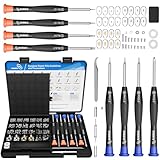
Beyond the case opener, you’ll need a tiny Phillips head screwdriver if your watch has a metal bracelet that needs to be removed to get better access to the case back. Sometimes, the bracelet screws are tiny, so a set of precision screwdrivers is a good investment for general DIY, not just watches.
You’ll also want a pair of fine-tipped tweezers. These are for gently lifting out the old battery and placing the new one. Never use metal tweezers directly on the battery contacts unless you’re absolutely sure you know what you’re doing; you can short-circuit things.
A small plastic or non-metallic tipped tweezers are safer. And, of course, you need the replacement battery itself.
Always check the number printed on the old battery – it’ll be something like ‘SR626SW’ or ‘CR2032’. Buying the wrong one is a wasted trip and a wasted battery.
A small bowl or tray to put all your tiny screws and parts in is also a lifesaver. I once dropped a microscopic screw and spent nearly an hour on my hands and knees with a flashlight trying to find it. It was mortifying. So, to recap: a good quality watch case back opener, a set of precision screwdrivers (just in case), fine-tipped non-metallic tweezers, the correct replacement battery, and a small container for parts. That’s it. No specialized electronics knowledge needed, just a bit of steadiness. (See Also: How To Fix Eyeglasses Arm Without Screw )
Peeling Back the Layers: Getting to the Battery
Okay, so you’ve got your tools. The first real step is often removing the watch band if it’s a metal bracelet, especially on diver-style watches.
These usually have tiny pins holding the links together or connecting the bracelet to the watch case. You’ll see small holes on the underside of the bracelet or where it meets the watch lugs. Use your smallest screwdriver or a specialized pin-pushing tool to gently push out the pins. Be careful, these pins can sometimes shoot out with surprising force.
Keep them safe in your little tray! Once the bracelet is off, you have a clear view of the case back, which is usually circular with small notches around its edge. Some watches have a smooth, plain case back, but the screw-on kind almost always has some sort of groove or indentation for a tool to grip.
Now for the main event: the case back opener. Place the opener so its prongs align with the notches on the case.
You want a good, firm grip on the case back. Adjust the prongs so they sit snugly in the indentations. Once you’ve got it locked in, it’s time to turn. Apply steady, firm pressure counter-clockwise.
Don’t yank it or force it. If it’s stuck, a tiny drop of penetrating oil (use sparingly and clean it off immediately after) might help, but usually, they come loose with consistent pressure.
I remember my first screw-back watch, a vintage Seiko. It felt like it was welded shut. I was ready to give up, but I just kept applying gentle, steady pressure, and then, with a soft ‘click,’ it started to turn. The feeling of accomplishment was immense, and I hadn’t even gotten to the battery yet!
Once the case back is loose, you can usually unscrew it the rest of the way by hand. Lay it aside carefully. Inside, you’ll see the movement, often covered by a plastic shroud or metal retainer. The battery is usually held in place by a small clip or a screw. You might need your tiny screwdriver again here to undo a small screw holding a retaining bracket. Be super careful not to lose this screw – it’s probably the smallest thing you’ll encounter. Some batteries are just popped into place and held by tension, so you might not need to remove any screws, just carefully pry up the retaining clip with a non-metallic tool.
| Tool/Part | Purpose | Verdict |
|---|---|---|
| Watch Case Back Opener | Unscrews the case back | Key – Don’t cheap out here. Get a decent adjustable one. |
| Precision Screwdriver Set | Removes battery retainer screws, bracelet pins | Highly Recommended – You’ll use these for more than just watches. |
| Fine-Tipped Tweezers | Removes and installs battery | Key – Non-metallic tips are safer for the movement. |
| Replacement Battery | Powers the watch | Important – Get the exact model number. |
| Small Container/Tray | Holds tiny parts | Smart Move – Prevents lost screws and headaches. |
The biggest mistake I see people make, and honestly, one I made myself early on, is using the wrong tool for the job. Trying to pry off a screw-down case back with a flathead screwdriver is a recipe for disaster. You’ll likely damage the case, slip, and cut yourself, and you probably won’t even get the back off. The case back opener is designed specifically for those notches. If you don’t have one, stop. Go buy one. It’s not worth the risk of ruining your watch, which will cost way more to fix than the opener costs.
Another common pitfall is forcing things. If the case back isn’t unscrewing, don’t just put all your weight into it. It might be cross-threaded, or there could be some gunk or corrosion. Sometimes, a gentle tap with the handle of your screwdriver on the edge of the opener can help break it loose. (See Also: How Measure Metric Computer Screws )
But if it’s really stubborn, you might need to take it to a professional. Pushing too hard can strip the threads on the case back or the watch case itself, which is a much more expensive repair than a battery change. I once had a friend who was so determined to change his watch battery himself that he ended up cracking the crystal trying to pry the case back off. The look on his face was priceless, and not in a good way.
When you’re taking out the old battery, be mindful of the polarity. Batteries have a positive (+) and negative (-) side. Usually, the flat side is positive and the side with markings or numbers is negative. Make sure you note which way the old battery was installed before you remove it. Reinstalling it backward won’t work, and in some rare cases, it could even damage the watch movement. Also, handle the new battery with clean hands. Fingerprints and oils can interfere with the electrical contact. This is why those non-metallic tweezers are so handy. Avoid touching the flat surfaces of the battery as much as possible.
Finally, don’t lose those tiny screws or retainers. Seriously. I’ve seen people try to tape their battery in place because they lost the screw. That’s a terrible idea. It’s prone to failure, looks awful, and can let dust and moisture into the movement. If you lose a screw, try to get a replacement from a watch parts supplier. It’s a small price to pay for the integrity of your watch.
The Mechanics: How a Screw-on Back Works
A screw-on watch case back, also known as a screw-down or screw-off back, is a design commonly found on water-resistant watches, particularly dive watches, but also on many everyday and sport watches. The fundamental principle is creating a strong, sealed closure that prevents water and dust from entering the watch’s delicate movement. Unlike snap-on backs, which rely on a friction fit and a small lip, screw-on backs have threads around their perimeter that engage with corresponding threads on the watch case itself. This engagement creates a much more solid and water-tight seal.
The edge of the screw-on case back typically features a series of notches, usually between four and eight, evenly spaced around its circumference. These notches are specifically designed to accommodate the prongs of a watch case back opener tool. When you insert the tool and turn it counter-clockwise, the notches engage with the tool, allowing you to exert rotational force to unscrew the back. The threads are usually quite fine, meaning you have to turn the case back multiple times to fully remove it. This fine threading also contributes to the strength of the seal; the more it’s screwed down, the tighter it is.
The seal itself is usually achieved through a rubber or silicone gasket that sits in a groove on the edge of the case back or the watch case. As the case back is screwed down, it compresses this gasket, creating a watertight barrier.
This gasket is a important component, and it should be inspected during a battery change. If it looks cracked, brittle, or damaged, it should be replaced.
A worn gasket is the primary reason a water-resistant watch loses its resistance, even if the case back is screwed down tightly. When reassembling, it’s good practice to lubricate the gasket with a tiny amount of silicone grease specifically made for watches. This helps it seal better and also prevents it from drying out or sticking to the metal, making future battery changes easier.
The complexity of the screw-on mechanism can vary. Some are very simple, with just the threaded edge. Others, especially on higher-end watches, might have more intricate threading or additional features to enhance water resistance. However, the core principle of engaging threads to create a secure, sealed closure remains the same. This design makes them more secure against accidental opening than snap-back cases, but also requires specialized tools for removal. The good news is, the tools aren’t expensive, and the process is straightforward once you understand the mechanics.
How to Change Battery in Watch with Screw on Back: Step-by-Step
- Gather your tools: watch case back opener, precision screwdrivers, fine-tipped tweezers (non-metallic preferred), correct replacement battery, and a small container for parts.
- If necessary, remove the watch band using precision screwdrivers or a pin-pushing tool to release pins.
- Place the watch face down on a soft, clean surface.
- Align the watch case back opener’s prongs with the notches on the screw-down case back. Adjust the prongs for a snug fit.
- Gently but firmly turn the opener counter-clockwise to unscrew the case back. It may take several turns.
- Once loose, unscrew the case back the rest of the way by hand and place it and the gasket (if present) in your parts container.
- Locate the old battery. It may be held by a small retaining clip or a screw. Remove any screws with a precision screwdriver.
- Note the orientation of the old battery (positive/negative sides).
- Using the fine-tipped tweezers, carefully lift out the old battery.
- Insert the new battery, making sure it’s oriented correctly (matching the old one). Press it gently into place.
- If there was a retainer clip or screw, re-secure it. Do not overtighten screws.
- Inspect the gasket. If it looks damaged, replace it. Lubricate the gasket with a tiny amount of silicone grease if desired.
- Carefully place the gasket back into its groove on the case or case back.
- Screw the case back on by hand as far as it will go, making sure the threads engage smoothly.
- Use the case back opener again to firmly tighten the case back clockwise. Don’t overtighten, but make sure it’s snug and the gasket is compressed.
- Reattach the watch band if you removed it.
- Test the watch to make sure it’s running.
The Unsung Hero: Battery Life and What to Expect
People often ask how long watch batteries last. It’s not a simple number because it depends on so many factors: the size of the battery, the complexity of the watch movement, and how many features the watch uses. (See Also: How To Adjust Eyeglass Screw )
A simple quartz watch with just timekeeping might run for 2-5 years on a standard button cell. A chronograph, with its stopwatch functions, or a watch with an alarm or backlight, will drain the battery faster.
My old G-Shock, which has about a million features and is practically indestructible, used to eat batteries every 18 months to two years. Those batteries were also a bit larger and more expensive, costing me nearly $15 each time, so the DIY route saved me a decent chunk of change annually.
The type of battery also matters. Lithium coin cells (like the CR series) generally have a longer shelf life and higher energy density than silver-oxide cells (like the SR series), which are common in smaller watches. You’ll often see numbers like ‘SR626SW’ or ‘CR2016’. The ‘SR’ usually denotes silver-oxide, and ‘CR’ denotes lithium. The numbers refer to the diameter and thickness. Always use the exact replacement number found on the old battery. Using a battery with a higher voltage than what the movement is designed for can fry the electronics. Likewise, a battery with lower voltage might not have enough power to run the watch reliably, or it might run for a very short time.
So, when should you change it? The most obvious sign is when the second hand starts to stutter or jump in two-second intervals. This is a common low-battery indicator on many quartz watches. If the watch stops completely, that’s a pretty clear sign. Some digital watches might display a battery icon. My advice? Don’t wait for it to die completely if you have an important event coming up. A dead battery is annoying, but a watch that dies mid-presentation or during a important moment is just embarrassing. I try to swap mine out preemptively every 18 months to two years on my daily wearers, just for peace of mind. It’s a cheap insurance policy against a dead watch.
Regarding battery sourcing, avoid the super-cheap, no-name brands if you can. While they might be a few cents cheaper, their performance and lifespan can be inconsistent. Stick to reputable brands like Energizer, Duracell, Sony, or Renata (a common OEM supplier for watches). You can often buy them in multi-packs online for a better price than buying a single battery at a convenience store. I found a pack of 10 popular watch batteries online for about $12, which is less than what I used to pay for a single one at the drugstore. That’s the kind of value that makes learning how to change battery in watch with screw on back totally worthwhile.
People Also Ask
What Tool Do I Need to Open a Screw-on Watch Back?
You need a watch case back opener, also known as a watch case knife or wrench, specifically designed for screw-down backs. These tools have adjustable prongs that fit into the notches on the watch case. They allow you to grip the case back securely and turn it counter-clockwise to unscrew it without damaging the metal. Trying to use regular tools like pliers or screwdrivers is highly likely to damage your watch and is not recommended.
How Do I Know Which Battery to Buy for My Watch?
The easiest way is to carefully remove the old battery and look for the number printed on its surface. This number, often a combination of letters and numbers like ‘SR626SW’ or ‘CR2032,’ is the specific battery model. You should buy an exact replacement for this number. If you can’t remove the old battery, consult your watch’s manual or the manufacturer’s website for the correct battery type. Using the wrong battery can damage the watch’s movement.
Can I Just Pry Off a Screw-on Watch Back?
No, you absolutely should not try to pry off a screw-on watch back. These backs are designed with threads that engage with the watch case to create a secure, often water-resistant seal. Prying will likely damage the case, bend the back, strip the threads, and potentially break the crystal or damage the internal movement. Always use the appropriate watch case back opener tool designed for screw-down backs.
Is It Safe to Change a Watch Battery Myself?
Yes, it is generally safe to change a watch battery yourself, especially for watches with screw-on backs, provided you have the correct tools and take your time. The process involves unscrewing the back, carefully removing the old battery, and inserting the new one. The main risks involve scratching the watch, losing small parts, or accidentally damaging the delicate movement if you force anything. If you are careful and use the right tools, it’s a straightforward DIY task that saves money.
Verdict
So there you have it. Learning how to change battery in watch with screw on back isn’t some arcane art reserved for watchmakers in sterile labs. It’s a practical skill, a little bit of DIY that can save you a surprising amount of cash over time. You just need the right tools and a bit of patience. Don’t be that person who pays $20 for a 50-cent battery swap.
The next time your watch goes quiet, take a deep breath, gather your simple toolkit, and give it a go. You’ll probably find it’s easier than you thought, and that feeling of fixing it yourself? That’s pretty good. If you’re still hesitant, find a cheap, old watch with a screw-on back and practice on that first. Worst case, you’re out a few bucks for a battery and an old watch. Best case, you’ve just gained a useful skill.
![AXTH 25-in-1 Small Precision Screwdriver Set, Professional Magnetic Mini Repair Tool Kit for Phone, Computer, Watch, Laptop, Macbook, Ring Doorbell, Eyeglass, Electronic, [Bearing Steel] Screw Driver](https://m.media-amazon.com/images/I/518YlLmPTcL._SL160_.jpg)
