
You know that feeling. You reach up to adjust your glasses, and one side just… droops. The tiny screw that holds the arm to the frame is gone, vanished into the ether, probably mocking you from under the sofa. It’s infuriating, isn’t it? Suddenly, your world is blurry, and you’re fumbling around, trying to see what’s even happening. I’ve been there more times than I care to admit, usually when I’m halfway out the door to somewhere important.
Losing that little bit of metal can feel like a monumental disaster, but honestly, how to find a small eyeglasses screw and fix it yourself is simpler than you think. Forget about rushing to the optometrist for a quick fix that’ll cost you twenty bucks and twenty minutes of your life. This is a job you can absolutely do at home with the right approach and a bit of patience.
This guide is about cutting through the usual nonsense and getting straight to what works. We’re talking about practical steps, not sales pitches for overpriced kits. Let’s get your glasses back in working order.
Don’t Lose Your Marbles (or Your Tiny Screws)
Losing a screw from your eyeglasses is a classic DIY disaster. It’s not like a loose bolt on a shelf bracket that you can just jam a shim into. This is precision work, folks. The screws are minuscule, often threading into plastic or delicate metal that can strip faster than a politician’s promise. My first pair of wire-rimmed glasses had screws so small, I swore they were made by hobbits. I lost one about three weeks after buying them, and the panic was real. I spent a good hour crawling around my apartment, using a flashlight and a magnifying glass, feeling like a detective on a case that paid precisely zero dollars.
The reality is, these screws don’t just randomly fall out. Usually, there’s a reason. Vibration from walking, heat and cold cycles causing materials to expand and contract, or simply over-tightening and then loosening over time. Sometimes, it’s just bad luck.
The hinge mechanism might be worn, or the screw itself might have a slightly stripped head, making it prone to loosening. When you’re trying to figure out how to find a small eyeglasses screw, the first step is understanding why it’s gone. Knowing the cause can help you prevent it from happening again. For instance, if the hinge feels loose even with a tight screw, it might be time for a new pair of glasses, or at least a visit to an optician who can sometimes replace the entire hinge assembly.
But for that immediate fix? We need to find the damn screw or a replacement.
People often ask if they can just use super glue. Look, I’ve seen it. I’ve done it in a pinch.
And it works for about a week, maybe two, before the glue gets brittle, cracks, and you’re back to square one, only now you’ve got a sticky mess to clean up. Plus, if you get glue on the lens or the frame hinge itself, you’ve made things infinitely worse. It’s a hack that sounds good in theory when you’re desperate, but in practice, it’s a short-term band-aid that creates more problems. Another common piece of advice is to go to any watch repair shop.
While they deal with tiny screws, eyeglass screws are a specific size and thread pitch. They might have something close, but it’s a gamble, and they’ll charge you for their time, which could be half the cost of a cheap replacement screw kit anyway.
The most frustrating part for me was the sheer lack of visible screws. Some frames have these little barrel nuts on the other side, which makes the screw even harder to grip. Others have flat-headed screws that are almost impossible to grab with anything but the tiniest precision screwdriver. I once spent two hours with tweezers and a magnifying lamp trying to get a screw back into my sunglasses on a beach trip. I ended up using a tiny piece of blu-tack to hold it in place until I could get home. It was ridiculous.
The Treasure Hunt: Locating the Fugitive Screw
Alright, so the screw is gone. Poof. Vanished. Where do you even begin looking? First, stop moving. Seriously. If you’ve just noticed the loose arm, stay put. The screw likely fell straight down or rolled a short distance. Check the immediate vicinity. Get down on your hands and knees. I know, it feels undignified, but trust me, it’s less undignified than wearing crooked glasses for a week. Use a bright flashlight, ideally one with a focused beam. Shine it from different angles across the floor, especially in areas where you were sitting or standing when you noticed the problem. The tiny metal glint can catch the light surprisingly well, even on dark carpets or busy floors.
A good trick is to use a piece of white paper or a light-colored cloth as a backdrop. Place it under the area you’re searching. This contrast can make the screw much easier to spot. If you’re in a place with lots of nooks and crannies, like under furniture or near baseboards, be thorough. Use the flashlight to peer into every crevice. Sometimes, the screw doesn’t fall far but gets lodged in a seam or a carpet fiber. I once found a runaway screw for my reading glasses stuck to the bottom of my slipper. I’d walked all over it for ten minutes before I felt the little bump. (See Also: Does Diy Computer Vanguard Come With Screws )
If you’re outside or in a place where the screw might have rolled away, try to retrace your steps mentally. Where were you standing when you first felt the wobble? Were you walking? Sitting?
Standing still? This can help narrow down the search area. If it’s a public place, well, good luck.
Your best bet is usually to just accept it’s gone and focus on finding a replacement. But if it’s your own home or office, precision searching is key. Don’t just glance; really look. Move things around if you have to, but be careful not to accidentally sweep the screw further away.
For a really stubborn search, especially on carpet, you can try running a vacuum cleaner with a stocking or cheesecloth stretched over the nozzle (secured with a rubber band). This way, if the screw gets sucked up, it’ll be caught on the stocking instead of lost forever in the vacuum bag.
When you’re trying to find a small eyeglasses screw, it’s also worth considering its magnetic properties. Most eyeglass screws are made of steel, which is often magnetic. If you have a strong magnet, you can carefully sweep it over the area. Be cautious, though; you don’t want to magnetize your glasses themselves or pull them out of your hand if you’re trying to retrieve them from a tricky spot. A small, handheld magnet, like one from a craft store or a magnetic pickup tool, can be surprisingly effective. Just sweep it gently and see if anything sticks. It’s a lot less stooping and crawling.
The Tiny Tool Chest: What You Actually Need
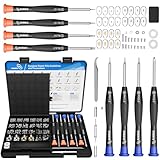
Forget those massive multi-tools with screwdrivers the size of your thumb. You need specialized tools for eyeglass screws. The absolute best thing to have is a dedicated eyeglass repair kit. These aren’t fancy, and you can find decent ones for less than $10 online or at drugstores. They typically come with a variety of tiny screws, washers, and a few different precision screwdrivers – usually a Phillips head and a flathead. The screwdrivers in these kits are often double-ended, giving you more options.
I used to think these kits were a rip-off, but after wasting money on various other “precision” screwdrivers that were still too large, I caved. And honestly, they’re worth every penny. The screwdrivers are small enough to actually grip the heads of those microscopic screws. The variety of screws is key too. Not all eyeglass screws are the same. Some are shorter, some longer, some have slightly different head types. Having a selection means you’re more likely to find one that fits perfectly. The worst thing you can do is force a screw that’s too long, which can crack the frame, or one that’s too short, which won’t hold.
When selecting a kit, look for one that has a good assortment of screw sizes. Some kits are more complete than others. I recommend one that has at least 10-20 different screw sizes. Also, check if it includes nose pads, as those can wear out and fall off too, often around the same time you lose a screw. Some kits also come with a small pair of tweezers, which are invaluable for handling the tiny parts. If your kit doesn’t have tweezers, grab some fine-tipped ones from a craft store or a first-aid kit. You’ll need them to hold the screw steady while you’re trying to thread it into the hinge.
Here’s a quick rundown of what to look for in a good kit:
| Component | Why it’s important | My Verdict |
|---|---|---|
| Assorted Screws | Different sizes and lengths are important for a proper fit. | Must-have. Don’t skimp here. |
| Precision Screwdrivers | Phillips and flathead, small enough for eyeglass screws. | Key. The ones in the kit are usually fine. |
| Tweezers | For holding tiny screws and parts steady. | Highly recommended, even if not in the kit. |
| Magnifying Glass | To see what you’re doing! | Not always in kits, but super helpful. |
| Nose Pads | Good to have spares if yours are worn. | Nice bonus, but not strictly for screw replacement. |
This might seem like a lot for something so small, but trust me, having the right tools makes the job go from ‘impossible’ to ‘annoying but doable’ in about ten seconds. Don’t try to make do with household screwdrivers; you’ll just strip the screw head and make a mess.
The Actual Process: Putting It Back Together
Okay, you’ve found a replacement screw (either the original or from a kit), and you have your tiny tools. Now for the main event. First, lay your glasses down on a clean, flat surface with the frame facing up. The side with the missing screw is the one you’re working on. If the arm is completely detached, you might need to gently hold it in place against the hinge with one hand. This is where those tweezers come in handy. You can use them to position the arm correctly and even hold the screw.
Take your chosen replacement screw and the appropriate screwdriver. You want to start threading the screw into the hole. This is the trickiest part. If the hole is clear, it should go in relatively easily at first. If it feels like it’s not catching, don’t force it. Try wiggling the arm slightly or backing the screw out and trying again. Sometimes, there’s a bit of debris in the screw hole that’s preventing it from seating properly. A gentle puff of air or a quick poke with a very fine needle (again, be careful not to damage the threads) might clear it. Once the screw starts to catch, turn it slowly and deliberately. (See Also: Could Not Unscrew Iphone Screws )
You’re aiming for a snug fit, not ‘superhuman strength’ tight. Over-tightening can strip the threads in the frame or snap the screw head off, which is a whole new level of DIY hell. Turn the screwdriver until you feel resistance. Then, give it just a tiny bit more to snug it up. It should hold the arm firmly without any wobble. If the arm still feels loose, you might need to tighten it a smidge more, but listen for any creaking or straining sounds. If you’re using a kit with different screw sizes, and the first one you try isn’t holding, try a slightly larger diameter screw if available, or one that seems to thread in more fully.
A common mistake here is rushing. I’ve done it. Got impatient, cranked on the screw, and heard that sickening little snap. Suddenly, the frame is ruined, and the screw is broken off inside the hinge. It’s a disaster. Take your time. Breathe. If you’re having trouble, put the glasses down for five minutes, walk away, and come back with fresh eyes. Sometimes, the best thing you can do is just stop and reassess. If the hinge itself looks bent or damaged, a new screw might not solve the problem entirely. You might need to carefully try and gently realign the hinge first, or consider if it’s time for a professional.
Here’s a simple numbered process:
- Lay glasses on a flat, clean surface.
- Position the eyeglass arm against the hinge.
- Use tweezers to pick up the correct replacement screw.
- Carefully insert the screw into the hinge hole.
- Start threading the screw slowly with the appropriate screwdriver.
- Continue turning until snug, but do not over-tighten.
- Test arm for looseness; adjust slightly if needed.
If you’re following these steps, you should have your glasses back in working order relatively quickly. The key is patience and the right tiny tools. It’s a surprisingly satisfying fix, turning a frustrating problem into a small victory.
Common Pitfalls and How to Avoid Them
I’ve made every mistake in the book when it comes to fixing small things, and eyeglass screws are no exception. One of the biggest blunders is using the wrong screwdriver. People think, “Oh, it’s a screw, any screwdriver will do.” Wrong. Eyeglass screws often have very fine heads.
Using a standard Phillips screwdriver, even a small one, can strip the head. This means the screwdriver can’t grip the screw anymore, and you can’t tighten or loosen it. Then you’re stuck with a wobbly arm or a screw that’s partially in, and you can’t get it out. The same goes for flathead screwdrivers; they need to fit the slot perfectly.
Dedicated eyeglass kits have screwdrivers that are precisely sized for these tiny heads.
Another mistake is forcing a screw that doesn’t seem to fit. If you’re trying to thread a screw and it’s meeting a lot of resistance, it’s probably not the right size or thread pitch for that particular hinge. Forcing it can strip the threads in the frame itself, whether it’s plastic or metal. Once those threads are stripped, no screw will hold properly.
It’s better to try a different screw from your kit or, if you’ve lost the original and can’t find a match, take your glasses to a shop. They can sometimes re-tap the threads or use a slightly larger screw if the damage isn’t too severe.
I once stripped the threads on a metal frame trying to force a screw that was just a millimeter too thick. I was so annoyed with myself, I almost threw the glasses away.
People also overestimate their dexterity. Trying to hold a tiny screw steady with shaky fingers while simultaneously trying to turn a microscopic screwdriver is a recipe for disaster. This is where tweezers and a stable work surface are a must. I highly recommend having a good magnifying glass or a magnifying lamp nearby, especially if your eyesight isn’t what it used to be. Trying to do this work by feel alone is a losing battle. You need to see what you’re doing. I’ve learned that good lighting and magnification are as important as the right tools for these fiddly jobs.
Finally, there’s the “good enough” mentality. You get the screw in, it seems to hold, and you stop. But if the arm is still a bit wobbly, it means the screw isn’t fully seated, or it’s the wrong size. That slight wobble will, over time, put stress on the hinge and the screw, leading to it loosening again or even breaking. Take the extra minute to make sure the arm is secure and doesn’t move independently of the frame hinge. This attention to detail is what separates a temporary fix from a lasting repair. When you’re learning how to find a small eyeglasses screw, also learn how to put it in correctly the first time. (See Also: How Many Screws To Take Off Iphone 5se )
Beyond the Repair Kit: Other Options and When to Call It Quits
So, you’ve scoured your house, you’ve bought a tiny repair kit, you’ve even tried some of the tricks I’ve mentioned. What happens if you still can’t find the original screw, or the kit doesn’t have a perfect match? You have a few options. The most obvious is to go back to where you bought your glasses. Most opticians will replace a lost screw for free or a nominal charge. They have specialized tools and a wider variety of screws than you’ll typically find in a consumer kit. They also know how to handle delicate frames without causing damage. This is usually the best route if your glasses are expensive or you’re worried about damaging them.
Another option, especially for less expensive frames, is to buy a different pair. It sounds defeatist, but sometimes the cost and hassle of repeatedly fixing fragile glasses outweigh the cost of new ones.
If you lose screws frequently, it might be a sign that the frames themselves are not durable enough for your lifestyle, or perhaps you need glasses with a different type of hinge mechanism. For about $50-$100, you can often get a decent pair of prescription glasses online, and they’ll come with fresh screws and no previous history of losing parts.
I recently priced a replacement screw service at a local chain and they wanted $25 to install one! I decided to just buy a new pair of readers online for $30 instead.
For those of you who are really handy or have a favorite pair of glasses that are just too good to replace, there are more advanced solutions. Some jewelers or watchmakers might be able to fabricate a custom screw, but this is usually prohibitively expensive for eyeglasses. If the hinge is completely broken, you might be able to get it repaired or replaced by a specialist frame repair service. These services are less common and can be costly, but for high-end or vintage frames, they can be worth it. I saw a guy online who repaired a broken hinge on a pair of vintage Ray-Bans for a few hundred dollars, making them look brand new. That’s a different league, though.
Ultimately, you need to assess the value of your glasses versus the cost and effort of repair. If your glasses cost $500, definitely go to the optician. If they’re a $30 pair of reading glasses and you’ve lost the screw for the third time, maybe it’s time to accept that they’ve served their purpose. The goal of learning how to find a small eyeglasses screw is to help you to do simple repairs, but also to know when a situation is beyond a DIY fix. Don’t be afraid to call in the professionals if you’re in doubt or if the fix isn’t holding.
People Also Ask:
What Size Is an Eyeglass Screw?
Eyeglass screws are incredibly small, typically ranging from 1.0mm to 2.0mm in diameter. The length can vary more, from around 3.0mm up to 8.0mm or more, depending on the thickness of the frame hinge. The thread pitch is also very fine. Because there are so many variations, it’s often impossible to know the exact size without comparing it to the original or using a specialized gauge, which is why having a kit with assorted sizes is so useful.
Can I Use Nail Polish to Fix My Glasses?
Using nail polish as an adhesive is generally not recommended for fixing eyeglass screws. While it might temporarily hold a loose screw in place, nail polish is brittle and can easily crack or chip, especially with the constant movement of the glasses. It can also gum up the hinge mechanism, making it stiff or even impossible to open and close properly. It’s a poor substitute for a proper screw or a specialized adhesive designed for plastics or metals.
Where Can I Get My Glasses Repaired?
You can get your glasses repaired at most optical shops or optician stores. They typically offer screw replacement and hinge adjustments as a service, often for free or a small fee. If your glasses are more complex or valuable, you might consider specialized frame repair services that can handle more extensive damage, like broken hinges or temples. Online retailers that sell glasses sometimes also have repair services or offer replacement parts.
Final Thoughts
So there you have it. Losing that tiny bit of metal can feel like the end of the world for your vision, but it’s usually a fixable problem. The key to successfully learning how to find a small eyeglasses screw and get your specs back on your face is preparation and patience. Having a decent eyeglass repair kit on hand, knowing where to look, and taking your time during the repair process will save you a lot of frustration and a few bucks.
Don’t be the person who lets a loose screw turn into a week of blurry vision or an expensive trip to the optician. Grab a cheap kit, keep it in a drawer, and consider it part of your basic homeowner’s toolkit, right next to the hammer and duct tape. It’s a small investment for a big convenience.
The next time you feel that tell-tale wobble, you’ll know exactly what to do. You’ve got this.
![AXTH 25-in-1 Small Precision Screwdriver Set, Professional Magnetic Mini Repair Tool Kit for Phone, Computer, Watch, Laptop, Macbook, Ring Doorbell, Eyeglass, Electronic, [Bearing Steel] Screw Driver](https://m.media-amazon.com/images/I/518YlLmPTcL._SL160_.jpg)
