
You know that feeling. You’re out, maybe grabbing lunch, maybe wrestling with a stubborn garden hose, and then… click. Your glasses feel loose. One of those tiny screws has vanished into the ether. Suddenly, everything is a blurry mess. I’ve been there more times than I care to admit. It’s not rocket science, but fumbling around with a dollar-store screwdriver that’s too big can turn a five-minute fix into a ten-minute frustration. Knowing how to fix eyeglass screw situations properly saves you time, sanity, and maybe even a trip to the optician.
Honestly, some of the ‘solutions’ you see online are pure garbage. Tiny screwdrivers that don’t fit, super glue that ruins the frame, or advice that assumes you have a jeweler’s bench in your garage.
This is about getting those specs back on your face, pronto, without resorting to duct tape.
The Tiny Screw Problem and Why It Happens
Let’s talk about these minuscule screws. They’re usually made of brass or stainless steel, and they’re tiny. Like, really tiny. We’re talking about screws with heads smaller than a pinhead and threads finer than a hair.
They hold the arms of your glasses to the frame, and they’re notorious for backing out on their own. Why?
Vibration, mostly. Every time you take your glasses off or put them on, you’re applying a little torque.
You might not even notice it, but over weeks and months, that tiny bit of twisting adds up. Then there’s sweat, oils from your skin, and just general wear and tear.
Gravity doesn’t help, either. Sometimes, they just decide to make a break for it when you’re least expecting it.
I had a pair of Wayfarers once that were possessed. Every other week, one of the screws would be loose. I tried tightening them with a knife edge, a coin, you name it. Ended up losing one down a storm drain while at a concert. Brilliant. That was the moment I realized I needed to get serious about the right tools and technique for how to fix eyeglass screw issues before they became full-blown disasters.
Another reason they fail is wear. The threads can get stripped over time, or the screw head can get rounded off, making it impossible to grip. If you’ve ever dropped your glasses – and who hasn’t? – that impact can loosen things up considerably. It’s not always a dramatic fall; even a gentle tumble off a table can be enough to jiggle a screw loose. Think of it like a bolt on a car engine that’s been subjected to years of vibration and heat cycles. Eventually, it’s going to loosen up.
The common advice is usually ‘just tighten it,’ but that’s like telling someone with a leaky faucet to ‘just turn it off.’ It doesn’t address the underlying issue or provide the right tools. Many people end up using the wrong size screwdriver, stripping the screw head further, or even damaging the hinge itself. I’ve seen people try to use super glue. Big mistake. Super glue is brittle, it can seep into the hinge mechanism and seize it up completely, and it looks awful. You’ll end up needing a professional repair or a whole new pair of glasses. It’s not worth the risk when a proper fix is so simple.
What You Actually Need: The Right Tools for the Job
Forget that random bit of wire or your fingernail. To properly address how to fix eyeglass screw problems, you need a proper eyeglass repair kit. Now, not all kits are created equal. I’ve bought kits that were utter junk. The screwdrivers were made of pot metal that bent after one use, and the screws were so soft they’d strip if you looked at them wrong. So, what should you look for? (See Also: How To Fix Eyeglasses Arm Without Screw )
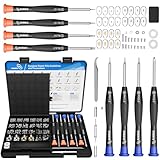
First, the screwdrivers. You need precision screwdrivers. The heads should be made of hardened steel. They’ll have different sizes, usually Phillips (the little cross shape) and flathead (the straight line). Your glasses will likely use one of these, most commonly a tiny Phillips. A good kit will have at least two or three sizes of each, so you can get the perfect fit. The handle should be comfortable to grip, too. It sounds minor, but when you’re dealing with screws the size of a gnat’s eyelash, a good grip makes a world of difference. I look for kits where the screwdrivers have swiveling caps on the end; it makes it easier to apply steady pressure without your hand cramping.
Second, the screws. Again, quality matters. You want screws that are made of stainless steel or a decent alloy. They should have clean, sharp threads. Most kits come with an assortment of sizes, which is good because you might not know the exact size you need. Some kits even include screws with little plastic nuts attached, which are great for certain types of hinges where the screw threads into a nut rather than the frame itself. I’ve found that having a variety of screw lengths is also important; sometimes the original screw is just a hair too long or too short after some wear.
Third, tweezers. You’ll need a pair of fine-tipped tweezers. Not those chunky eyebrow tweezers you use for stray hairs, but slender, precise ones. These are for holding the tiny screws steady while you try to insert them, especially if the screw hole is a bit fiddly. Some kits include them, but often they’re flimsy. I keep a good pair of jewelers’ tweezers handy.
Finally, a magnifying glass. Seriously. Unless you have the eyes of a hawk, you’re going to need some magnification. This isn’t just for seeing the screw; it’s for seeing the threads in the hinge and making sure you’re not cross-threading the screw. A cheap magnifying glass from a dollar store works fine, or many repair kits include a small one.
Here’s a quick rundown of what to prioritize:
| Component | What to Look For | My Verdict |
|---|---|---|
| Screwdrivers | Hardened steel, multiple sizes (Phillips/flathead), comfortable grip, swiveling caps | Key. Don’t skimp here. Bad ones will strip screws and frustrate you. |
| Screws | Stainless steel or quality alloy, clean threads, assortment of sizes | Good to have extras. Quality avoids stripping and makes sure longevity. |
| Tweezers | Fine-tipped, precise | Very helpful for handling tiny parts. |
| Magnifying Glass | Any magnification will do | A must-have for accurate work. |
When I first started buying these kits, I’d grab the cheapest one. Big mistake. I spent more money in the long run buying multiple cheap kits because they’d break or not work. One kit I bought for about $8 had screwdrivers that felt like they were made of butter. Total waste of money.
The Step-by-Step Process: How to Actually Fix It
Alright, you’ve got your tools. Now, let’s get down to business on how to fix eyeglass screw issues. It’s a simple process, but it requires a bit of patience and a steady hand. Don’t rush it, and you’ll be golden.
- Assess the Damage: First, figure out what’s going on. Is the screw completely gone? Or is it just loose? If it’s loose, you might be able to just tighten it. If it’s gone, you’ll need to find a replacement screw from your kit.
- Prepare Your Workspace: Find a well-lit area. A desk or table is perfect. Lay down a piece of paper or a small cloth. This is important because if you drop a tiny screw, it’s going to disappear into the carpet or floor cracks like magic. The paper or cloth gives you a visible surface to work on and helps catch anything that rolls away.
- Remove the Old Screw (if applicable): If the old screw is still in there but loose, use the correct size screwdriver from your kit. Place the tip of the screwdriver firmly into the screw head. Turn it counter-clockwise (lefty-loosey) to remove it. If the screw is stuck, don’t force it too hard, or you’ll strip it. A tiny drop of penetrating oil (like WD-40, but be careful not to get it on the lenses) can sometimes help, but it’s usually overkill for glasses.
- Select Your Replacement Screw: If you lost the screw, grab your kit. You need to select a screw that’s the right length and thread. Hold the new screw up to where the old one was. It should be roughly the same length as the original screw hole. The threads should look similar. Don’t pick one that’s way too long, or it might poke through the other side of the hinge.
- Insert the New Screw: This is the fiddly part. Use your fine-tipped tweezers to pick up the new screw. Line up the screw with the hole in the hinge. If you have a magnifying glass, use it now. Gently guide the tip of the screw into the hole.
- Start Threading: This is where you need to be careful. You want to turn the screw clockwise (righty-tighty) to start threading it. Make sure you’re engaging the threads correctly. If you feel a lot of resistance or it feels like it’s skipping, stop. You might be cross-threading it. Back it out and try again. It should turn relatively smoothly at first.
- Tighten the Screw: Once the screw is threaded in, use your precision screwdriver to tighten it. Don’t overtighten! You want it snug, but not so tight that you’re putting excessive pressure on the hinge. The arm should move freely but without any wobble. If you tighten it too much, you can strip the threads in the frame or even crack the plastic/metal around the hinge.
- Test the Hinge: Gently open and close the arm a few times. Does it feel smooth? Is there any play? If it’s still wobbly, tighten it a tiny bit more. If it’s stiff, you might have overtightened it, or the screw is slightly too long.
I remember the first time I successfully replaced a screw without making a mess. I was so proud. It took me maybe five minutes, and I didn’t have to go to the eye doctor. That feeling of self-sufficiency is pretty great.
Common Pitfalls and What Not to Do
We’ve all been tempted to take shortcuts. When your vision is blurry and you just want your glasses back on your face, the urge to grab the nearest pointy object and jam it in is strong. But trust me, most of those shortcuts lead to more problems down the line. So, what should you absolutely avoid when trying to fix eyeglass screws?
First and foremost, DO NOT use super glue or any permanent adhesive. I’ve said it before, and I’ll say it again because it’s that important. Super glue is designed to bond materials permanently. On a tiny, intricate hinge mechanism, it’s a disaster waiting to happen. It’s brittle, it can gum up the works, and it’s nearly impossible to remove without damaging the frame. If you get any on the lenses, you might as well toss the glasses. It’s a temporary fix that causes permanent damage. You’re better off wearing a blindfold for a day than using super glue.
Second, don’t use the wrong-sized screwdriver. This is a classic mistake. You grab a screwdriver that’s too big, and you round off the screw head. Then it’s impossible to get it out, and impossible to put a new one in. If the screwdriver is too small, it can slip out and scratch your lenses or frame. It’s why having a dedicated eyeglass repair kit with multiple precision sizes is so important. The common advice to ‘use a flathead screwdriver if you don’t have a Phillips’ is often terrible advice because generic screwdrivers are usually too thick and poorly fitted for eyeglass screws. (See Also: How Measure Metric Computer Screws )
Third, don’t force it. If a screw isn’t going in smoothly, or it feels like it’s grinding, stop. You’re likely cross-threading it, meaning the threads aren’t aligning properly. Forcing it will strip the threads in the screw hole of the frame. This is a much harder repair. The proper fix for stripped threads often involves getting a slightly larger screw (if the frame can handle it) or sometimes even a professional repair. Patience is key here. Take a deep breath, back the screw out, and try again, making sure you’re aligning it perfectly.
Fourth, don’t over-tighten. I see this a lot. People crank down on the screw until it’s as tight as they can get it. This can actually crack the plastic frame around the hinge, or deform the metal. The goal is to have the arm secure, with no wobble, but still able to open and close smoothly. If the arm feels stiff, you’ve gone too far. A good rule of thumb is to tighten it until it feels firm, then give it just a quarter-turn more. You can always tighten it a bit more later if needed.
Finally, don’t just ignore it. A loose screw might seem like a minor annoyance, but it can lead to bigger problems. A wobbly arm can put uneven stress on the hinge, potentially bending or breaking it. If a screw falls out completely and you don’t replace it soon, you risk losing the tiny washer (if your glasses have one) or dust and debris getting into the hinge, causing it to stick or corrode. It’s better to take five minutes to fix it properly than to wait until you need a whole new hinge replacement.
When to Call in the Pros (or at Least a Friend Who’s Good at This)
Look, I’m all about DIY. I’ve built furniture, fixed my car, and wrestled with plumbing more times than I’d care to admit. But there comes a point where trying to fix something yourself can actually make it worse, or it’s just not worth the headache. Knowing when to punt on how to fix eyeglass screw issues is part of being smart about repairs.
The most obvious sign is when you’ve completely stripped the screw head. If you can’t get a screwdriver to grip it at all, and you’ve tried all the tricks, it’s probably time to call it. You can try a tiny bit of rubber band between the screwdriver and the screw head for extra grip, but if that doesn’t work, you’re likely looking at a professional job. Trying to drill out a stripped screw on glasses is a recipe for disaster unless you have extremely steady hands and the right equipment.
Another situation is if the screw hole itself is damaged. This could mean the threads are stripped inside the frame, or the plastic or metal around the hole has cracked. If the frame is cracked, that’s a structural issue that a simple screw replacement won’t fix. You might need adhesive bonding or even frame repair services, which are beyond a basic DIY fix. Some opticians offer frame repair, but it’s often more cost-effective to get new glasses if the damage is significant.
If your glasses are expensive, say designer frames, you might want to err on the side of caution. While fixing a screw is usually straightforward, if you’re nervous about damaging a $300 pair of frames, taking them to the optician where you bought them is a good move. They often have specialized tools and experience. They might charge a small fee, or sometimes they’ll do it for free as a courtesy, especially if you bought the glasses there. I once took a pair of Ray-Bans in, and they fixed it in about two minutes for free. Saved me a lot of potential frustration.
Sometimes, it’s not about your ability, but your equipment. If you’ve tried with a cheap kit and it’s not working, or if the screws in your kit are clearly poor quality and stripping easily, it might be time to invest in a better kit or seek help. A good quality repair kit, like the one from iFixit (even though it’s for electronics, their precision tools are top-notch and would work), can make all the difference. Or, if you have a friend who’s always tinkering with electronics or watches, they probably have a decent set of precision tools and might be happy to lend a hand. It’s a small task for someone who’s used to working with tiny components.
Finally, if you’ve lost a screw and can’t find a replacement that fits exactly, it’s worth getting professional advice. Using a screw that’s too long or too short, or has the wrong thread pitch, can cause long-term damage to the hinge. An optician can measure the exact screw you need and often has them on hand. They have a vast inventory of replacement parts for different frame types.
Real-World Use and Unexpected Benefits
I’ve been fixing my own glasses for years now. It started out of necessity, but it’s become one of those little skills that just makes life easier. It’s not just about saving money, although that’s a big part of it. A good eyeglass repair kit costs maybe $10-$15, and it can last you years. Contrast that with a trip to the optician, which might cost $25-$50 for a simple screw replacement, or more if they try to sell you a new screw kit.
Beyond the obvious savings, there’s a real sense of empowerment. Think about it: one of the most key tools you use every single day (your glasses) can be maintained by you. You don’t need to rely on someone else for a simple fix. This applies to so many things in life, not just glasses. If you can learn how to fix eyeglass screw problems, you can probably tackle other small repairs around the house. It builds confidence. (See Also: How To Adjust Eyeglass Screw )
I’ve also noticed that when I fix my own glasses, I’m more mindful of them. I’m less likely to toss them carelessly on a table or shove them into a pocket without a case. Knowing how they go together, and how easily they can fall apart, makes you treat them with a bit more respect. This can lead to them lasting longer overall, reducing the need for any repairs.
A little trick I picked up: if a screw is really stubborn and won’t tighten enough, sometimes you can very carefully use a tiny drop of clear nail polish on the threads. You only need a microscopic amount. Apply it with the tip of a toothpick, let it dry, and then try screwing it in. The nail polish acts as a mild thread locker. This is a last resort, and you have to be incredibly sparing. Too much and you’ll seize the screw solid. I’ve done this maybe twice in ten years and it worked both times, but it’s risky. Always try a better-fitting screw first.
Another unexpected benefit? It makes you a better problem-solver. When you’re faced with a tiny screw, a wobbly hinge, and a deadline to get your vision back, your brain kicks into gear. You have to think logically, try different approaches, and be methodical. It’s a mini-exercise in important thinking. I’ve found that this mindset spills over into other areas. For example, when I’m trying to assemble IKEA furniture, the same careful, step-by-step approach that I use for fixing my glasses comes in handy.
The key takeaway here is that these are not complex repairs. They are simple mechanical fixes that anyone can learn. Investing a few dollars in a decent repair kit and taking a few minutes to learn the process will pay dividends in convenience and self-reliance. It’s a small skill, but it’s one of those things that makes you feel a little bit more capable in the world.
Frequently Asked Questions About Eyeglass Screw Repair
Can I Use Nail Polish to Fix a Loose Eyeglass Screw?
Yes, but with extreme caution. A tiny drop of clear nail polish applied with a toothpick to the screw threads can act as a mild thread locker if the screw keeps loosening. Make sure you use an absolute minimal amount, as too much will seize the screw permanently. It’s best used as a last resort after trying a properly fitting screw. Always allow it to dry completely before attempting to tighten or use the glasses.
What If I Lose an Eyeglass Screw and Can’t Find a Replacement?
If you lose a screw and cannot find a suitable replacement in your repair kit, your best bet is to visit an optician or an optical shop. They have a wide variety of replacement screws and the tools to fit them correctly. Trying to force an ill-fitting screw can damage the hinge or frame, so professional help is often more cost-effective in the long run.
Are Eyeglass Repair Kits Worth Buying?
Absolutely. A good quality eyeglass repair kit is a worthwhile investment for anyone who wears glasses. They typically cost between $10 and $20 and contain the specialized precision screwdrivers, screws, and often tweezers needed for quick fixes. It saves you time, money, and the hassle of visiting an optician for minor issues like a loose screw.
How Often Should I Check My Eyeglass Screws?
It’s a good habit to check your eyeglass screws periodically, perhaps once a month, or whenever you notice your glasses feel a bit loose or wobbly. A quick visual inspection and a gentle attempt to tighten can prevent a screw from falling out completely and causing more significant problems. Keep your repair kit handy for quick adjustments.
Conclusion
So there you have it. Fixing a loose or missing eyeglass screw isn’t some arcane art. It’s a simple, practical skill that can save you a lot of grief. Forgetting the super glue and grabbing the right tools are the two biggest things you need to remember.
Most of the time, a decent repair kit and a steady hand are all it takes. Don’t let those tiny, annoying screws get the better of you. Knowing how to fix eyeglass screw issues means you’re less reliant on others and more in control of your own gear.
Next time you feel that tell-tale wobble, don’t panic. Just reach for your kit, find a well-lit spot, and get those specs back in working order.
![AXTH 25-in-1 Small Precision Screwdriver Set, Professional Magnetic Mini Repair Tool Kit for Phone, Computer, Watch, Laptop, Macbook, Ring Doorbell, Eyeglass, Electronic, [Bearing Steel] Screw Driver](https://m.media-amazon.com/images/I/518YlLmPTcL._SL160_.jpg)
