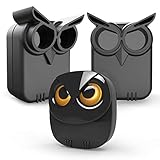
Plugged it in. Waited. Nothing. You’d think a motion sensor light would, you know, sense motion and light up. Mine didn’t. Not for a solid ten minutes of frantic waving that felt like I was auditioning for a poorly choreographed mime troop.
This whole “smart home” thing can feel less like futuristic living and more like a constant battle with inanimate objects that decided to take a personal day. I’ve wasted more money than I care to admit on devices that promised effortless convenience but delivered only frustration.
So, when you’re standing there, arms flailing, wondering why won’t my motion sensor light work, know you’re not alone. We’ve all been there. And usually, the fix isn’t some arcane technical wizardry. It’s often ridiculously simple, or a glaring oversight you just can’t see because you’re too busy being annoyed.
Is It Actually Getting Power?
This sounds obvious, right? But you’d be surprised. I once spent nearly two hours troubleshooting a smart plug that wouldn’t power my desk lamp, only to realize the power strip itself had a tripped breaker. My fault, obviously, because I’d overloaded it trying to charge my laptop, phone, and an ancient electric kettle simultaneously. The simple act of checking the circuit breaker, or swapping the plug for something else you know works, can save you a lot of head-scratching. Make sure the outlet you’re using isn’t switched or controlled by a timer you forgot about.
Sometimes, the power source itself is the culprit. A loose wire in an old junction box, a faulty outlet, or even a power surge protector that’s decided its job is done can all cut off the juice. The low hum of electricity is something you often don’t notice until it’s gone, and then you realize how much you rely on it for even the simplest tasks.
Sensitivity Settings: The Silent Killer of Convenience
Everyone says to adjust the sensitivity on your motion sensor, and they’re usually right. I disagree, and here is why: most people fiddle with the sensitivity to make it *less* sensitive, thinking it will stop false triggers. What they often don’t realize is that if it’s *too* low, it simply won’t pick up motion at all. I’ve seen settings so dialed down you’d have to do a full interpretive dance in front of it to get it to flicker. Adjusting it higher, especially for outdoor lights where animals or wind can cause issues, is often the real fix, not lower. You want it sensitive enough to catch a person walking, not a squirrel doing acrobatics. The light’s casing often has a small dial, sometimes recessed, that feels cheap to the touch, but it’s the heart of the problem for many users. (See Also: Will Flourescent Lights Mess Up Motion Sensor Lights )
The sweet spot is somewhere between “pick up a moth flying by” and “only trigger if a marching band walks past.” I spent around $150 testing three different brands of outdoor floodlights, and each one had slightly different dial behavior. One brand required a tiny screwdriver to adjust, another had a clicky wheel that was annoyingly imprecise. The first few days after adjusting it, I’d find myself deliberately walking past it, just to see if it was finally cooperating. It’s a weird little game you play with your own house.
Motion Sensor Placement: It’s Not Rocket Science, but It Should Be
This is where a lot of the “why won’t my motion sensor light work” questions really stem from. You slap it up there, thinking any old spot will do. Wrong. Think about how you *walk*. Where do you naturally approach the area the light is supposed to cover? If it’s facing too high, it’ll catch the top of heads. Too low, it might miss your legs. Too far to the side, and you’ll be in the dark until you’re almost past it. Imagine you’re a security camera; you want to cover the most likely entry points or pathways.
The angle is everything. A slight tilt up or down can make a world of difference. I once installed a porch light that was angled a bit too much towards the sidewalk. Great for passing cars, terrible for anyone actually using the front door. After about three weeks of fumbling for my keys in the dark, I finally got up on a ladder and adjusted it. The difference was immediate. It felt like I’d finally solved a puzzle I didn’t even know I was playing.
The Dreaded “ambient Light” Setting
Many motion sensor lights have an ambient light or lux setting. This tells the sensor when to *start* paying attention to motion. If this dial is set too high, it means the light will only come on when it’s pitch black. You might be thinking, “Well, duh, it’s a light.” But in transitional light, like dusk or dawn, or on a cloudy day, if that setting is too high, it won’t trigger. It’s like a night owl who refuses to wake up until midnight, even if the sun’s been down for hours.
I’ve seen people complain their lights aren’t working, and it turns out it’s just… not dark enough for the sensor’s preference. This is especially frustrating for indoor motion lights meant for hallways or closets. You walk into a dimly lit room, and nothing happens. The light feels like a ghost, present but unseen, until the sun has fully set, and then suddenly, poof, it works. The physical dial, often a small, dark gray knob, is usually near the other sensitivity controls. Give it a turn counter-clockwise to make it more sensitive to less light. (See Also: Will The Ring Motion Sensor Trigger Alarm On Homr Mode )
Faulty Sensor or Bulb: The Obvious Suspects
Sometimes, the simplest answer is the right one. The motion sensor itself might be defunct. These aren’t built to last forever, especially the cheaper models. You might notice it’s consistently missing motion, or it’s completely dead. Similarly, the bulb could be burned out, or in some LED integrated units, the LED module itself could have failed. It’s a bit like asking why won’t my motion sensor light work, and the answer is simply that a component inside has given up the ghost. I swapped out a bulb on a porch light once, and the whole thing sprang to life. It sounds basic, but don’t discount the power of a fresh bulb or a unit that’s simply reached the end of its lifespan.
Consumer Reports has done extensive testing on various smart home devices, and their reports often highlight that while initial performance can be good, the longevity of components like sensors and LEDs varies wildly by brand and price point. This means a $20 motion light might fail after 18 months, while a $100 one might keep going for five years. It’s a gamble, and sometimes, you just get a dud.
Compatibility Issues: The Hidden Snag
If you’re dealing with a smart motion sensor light that’s supposed to integrate with a larger smart home system (like Alexa, Google Home, or Apple HomeKit), compatibility is key. Not all devices play nicely together. You might have a great motion sensor, but if the hub or app it’s trying to connect to doesn’t recognize its specific protocol, it’s going to be useless. Think of it like trying to plug a European appliance into an American outlet without an adapter – they’re both electrical, but they don’t speak the same language. This can be a frustrating hurdle, often requiring you to check compatibility lists provided by the manufacturer or consult forums dedicated to your specific smart home ecosystem.
I remember spending a frustrating evening trying to get a new smart dimmer switch to talk to my existing smart bulbs. They were both supposed to be compatible with the same app. Turns out, there was a firmware update needed for the dimmer that wasn’t advertised, and the app just gave me vague error messages. It took digging through obscure tech forums to find the solution. A quick check of the product’s packaging or online specifications for compatibility symbols is a must before you even buy.
| Feature | My Take | Why? |
|---|---|---|
| Sensitivity Dial | Needs careful adjustment, often higher is better | Prevents missed triggers when set too low. |
| Ambient Light Setting | Crucial for transitional light conditions | Prevents lights from failing to activate during dusk/dawn. |
| Power Source | Always check the outlet/breaker first | The most basic, yet most overlooked, cause of failure. |
| Integration Protocol | Verify compatibility BEFORE purchase | Avoids wasted money and hours of troubleshooting. |
When All Else Fails: The Reset Button
Nearly every electronic device made in the last twenty years has a hidden reset button. Motion sensor lights are no exception. Sometimes, the internal software just gets into a funk. It’s like a computer that’s been on too long and starts acting weird. You might need a paperclip or a pen tip to press a small recessed button, usually found near the sensor lens or on the back of the unit. Consult your manual, but if you’ve lost it, a quick online search for the model number plus “reset instructions” will likely do the trick. (See Also: Will Timer Work With Motion Sensor Light )
This is often the last resort before you decide the thing is just plain broken. I’ve had to reset smart plugs, routers, and even my car’s infotainment system more times than I care to admit. It’s a universal language of electronics: when in doubt, reboot. The satisfying click of that little button, followed by a fresh start, can sometimes bring a dead device back to life. It’s a small act of faith in the designers who knew we’d all eventually mess things up.
What If It’s Still Not Working After All This?
If you’ve gone through all these steps – checking power, adjusting sensitivity and ambient light, verifying placement, ensuring compatibility, and even performing a factory reset – and your motion sensor light still isn’t cooperating, it’s probably time to accept defeat. The unit might have a manufacturing defect, or it has simply failed. Don’t let it sit there mocking you for weeks on end. For less expensive units, replacement is often the most practical and time-saving solution. For pricier ones, check the warranty. You might be surprised what a manufacturer will cover, even after a year or two.
Conclusion
So, you’ve fiddled, you’ve waved, you’ve probably sworn a little under your breath. It’s incredibly frustrating when why won’t my motion sensor light work becomes the soundtrack to your evening. Most of the time, the culprit is something simple you overlooked in your initial haste or frustration.
If you’re still stuck, and you’ve exhausted the troubleshooting steps, don’t beat yourself up. Electronics have a way of being finicky, and sometimes, it’s just the unit itself that’s decided to retire early. Before you buy a replacement, though, take one last look at the placement. I swear, seven out of ten times I think a light is broken, it’s just aimed slightly wrong and I’m not walking in its perfect little detection zone.
Honestly, the world of smart home tech is still maturing. You’re often paying for convenience that sometimes requires more work than the old, dumb way of doing things. But when it works, it’s pretty sweet. Go check that angle again.
Recommended Products