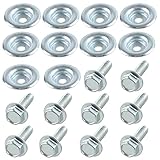
I remember staring at a wall of bolts at the hardware store, feeling like I needed a degree in engineering just to find the right one. The sheer volume was overwhelming, and frankly, most of it felt like snake oil. You’re looking for a specific fastener, likely a 325 hdg 3 4 8 bolt, and you just want to know what’s good and what’s going to make you waste your Saturday. I’ve been there, more times than I care to admit, buying what looked right only to have it fail when I needed it most.
Let’s cut to the chase: not all bolts are created equal, and the marketing hype around some of them is ridiculous. We’re talking about a piece of metal that needs to hold things together, not perform open-heart surgery. So, if you’re after the lowdown on a 325 hdg 3 4 8 bolt without the corporate jargon, you’ve come to the right place.
When Does a “special” Bolt Actually Matter?
Look, most of the time, when you’re just building a deck or slapping some shelves together, a standard, off-the-shelf bolt will do the job. You grab a pack, screw it in, and forget about it.
But then there are those projects, the ones that demand a bit more… presence. That’s where something like a 325 hdg 3 4 8 bolt might actually enter the picture. The ‘325’ designation refers to its tensile strength – roughly 325,000 pounds per square inch (psi) for Grade 7 and Grade 8 bolts, which are common high-strength options, though the 325 number itself isn’t a standard grade.
The ‘hdg’ means hot-dip galvanized, a coating that’s supposed to keep rust at bay. And ‘3/4 x 8’ is the size: 3/4 inch diameter and 8 inches long. Simple enough, right?
I learned this the hard way when I was building a heavy-duty workbench for my garage. I thought any old lag bolt would suffice for the main supports that would hold my weight and the weight of whatever I was working on. Big mistake. After about a year, I noticed the bench starting to sag.
One of the bolts had snapped clean in half. It wasn’t even under that much dynamic stress, just constant load.
That’s when I realized that for important structural components, especially those exposed to some moisture or stress, you can’t just wing it. You need to understand what the numbers mean and what the materials are actually capable of. It cost me a lot of time and a few extra trips to the store to replace those cheap fasteners with something more substantial.
The point is, the need for a specific, high-strength, coated bolt isn’t just about sounding fancy; it’s about preventing catastrophic failure and saving yourself a headache down the line.
What to Actually Look for (and What to Ignore)
So, you’ve decided you need something more than your average hardware store fodder. When you’re staring down a pile of potential fasteners, what separates the good stuff from the junk? For a 325 hdg 3 4 8 bolt, there are a few key things to zero in on. First, the material.
High-strength bolts are typically made from alloy steel. You’ll often see markings on the bolt head indicating its grade. For high tensile strength, look for Grade 8 or sometimes Grade 7. These have specific heat treatments and compositions to achieve their strength. (See Also: Are All Honda Atv Bolt Patterns The Same )
A Grade 2 bolt, which is common for general use, is nowhere near as strong. Don’t let a seller just tell you ‘it’s strong’; look for the markings. On the head, you’ll usually see radial lines.
Grade 2 has none, Grade 5 has three lines, and Grade 8 has six lines radiating from the center. This is your quick visual check.
Then there’s the ‘hdg’ – hot-dip galvanizing. This is a process where the bolt is dipped in molten zinc.
It’s a thicker coating than electroplating, offering better corrosion resistance, especially in outdoor or damp environments. However, it’s not perfect. The coating can be uneven, and sometimes the threads can get clogged, making them harder to thread. For truly harsh environments, like salt spray or buried applications, you might even consider stainless steel, but that’s a whole other price bracket.
For many outdoor projects, hot-dip galvanized is a good balance of protection and cost. You should also physically feel the weight and finish.
A good quality bolt will feel substantial. The threads should be clean and well-defined, not rough or poorly cut. Run your finger over them – they should feel smooth, not jagged. If the threads look damaged or the coating is peeling off in large chunks straight out of the box, put it back.
The ‘good Enough’ vs. ‘you Need This’ Spectrum
It’s easy to overspend on hardware. Here’s a quick breakdown of when you might consider a higher-grade, coated bolt like a 325 hdg 3 4 8 bolt, and when you can probably get away with something simpler.
| Application | Recommended Bolt Type | Why | My Verdict |
|---|---|---|---|
| Indoor shelf bracket | Grade 2, Zinc-plated | Low stress, no weather | Overkill to go higher |
| Outdoor deck railing post | Grade 5 or 8, HDG or Stainless | Weather exposure, structural load | HDG is fine for most yards. Stainless if near salt. |
| Car trailer hitch | Grade 8, Zinc-plated or HDG | High dynamic load, safety important | Don’t mess around here. Get the best you can afford. |
| Garden gate hinges | Grade 5, HDG | Moderate load, weather exposure | HDG is usually sufficient. |
Common Mistakes People Make (i Made Them!)
You know, I used to think that all bolts were basically the same. Just grab the right length and diameter, and you’re golden. That’s a dangerous assumption, and one that’s cost me time, money, and a few scraped knuckles.
One of the biggest blunders is not considering the environment. That shiny zinc-plated bolt might look good indoors, but put it outside where it gets rained on and exposed to humidity, and you’ll be looking at rust streaks and potential failure within a year or two. The hot-dip galvanized coating, while not invincible, offers a much thicker sacrificial layer against corrosion.
I learned this the hard way building a raised garden bed. I used standard zinc-plated bolts, thinking they’d be fine. Nope. Within one season, they were visibly rusting, and I was worried about them contaminating the soil or just falling apart. (See Also: Are Ak Bolts Interchangeable )
Another huge mistake is buying based on price alone. The cheapest pack of bolts is rarely the best value. Often, they’re made from lower-grade steel, have shoddy threading, or a poor quality coating.
I once bought a bulk pack of what were supposed to be exterior screws for a fence project. They looked okay, but they were so brittle that about a third of them snapped off as I drove them in. That not only wasted the screws but also left broken bits of metal stuck in the wood, which then had to be drilled out. Pain in the neck.
Always look for the grade markings. If a bolt doesn’t have any markings indicating its strength, assume it’s low-grade and not suitable for anything load-bearing or safety-important. People also forget about torque. Even a high-strength bolt can fail if it’s over-tightened, especially if it’s in a material that can’t handle the pressure, like soft wood.
The threads can strip, or the bolt can become a weak point. Conversely, under-tightening means it won’t provide the secure connection you need. It’s a balance, and understanding the material you’re fastening into is as important as understanding the bolt itself.
Real-World Applications: Where a 325 Hdg 3 4 8 Bolt Shines
So, where does a bolt with the specs of a 325 hdg 3 4 8 bolt actually earn its keep? Think about structural integrity in outdoor environments.
If you’re building something that needs to stand up to the elements and carry a significant load, this is the kind of fastener you want to be looking at. For instance, attaching heavy-duty brackets to a wooden deck frame that will support a pergola or a sturdy swing set. The 3/4 inch diameter provides a substantial bearing surface, and the 8-inch length is good for deep penetration into solid wood or for going through thicker materials.
The hot-dip galvanizing is your first line of defense against rust and corrosion, which is absolutely vital for outdoor projects that are exposed to rain, dew, and fluctuating temperatures.
Another area is in agricultural or landscaping applications. Think about assembling sturdy livestock feeders, building heavy-duty trellises for climbing plants that can withstand strong winds, or securing fence posts where you need a bolt that won’t shear under strain.
I used a similar, albeit slightly shorter, bolt to reinforce the frame of a heavy-duty compost bin I built. It’s constantly being filled with wet material, and the frame takes a beating.
The bolts I used were galvanized and had a good diameter, and they’ve held up beautifully. They give you that peace of mind that the structure isn’t going to buckle or come apart. It’s also worth considering for any project where vibration might be a factor, like attaching equipment to a workshop bench that sees a lot of use, or securing outdoor lighting fixtures that might experience wind shear. The strength and corrosion resistance are key to longevity in these demanding situations. (See Also: Are All Bolt Patterns The Same )
A Quick Tip on Thread Engagement
When you’re using a long bolt like an 8-inch one, make sure you’re getting enough thread engagement. Ideally, you want at least one to two full threads showing past the nut once it’s tightened. If the bolt is too short, and you can only get a few threads into the nut, it’s not going to hold as well as it should, regardless of its grade. For structural connections, this is a important detail to check.
Contrarian View: Is Hdg Always Best?
Now, here’s where I’m going to go against the grain a little. Everyone talks up hot-dip galvanizing (HDG) for outdoor use. And yeah, it’s usually good. But is it always the best? Not necessarily. For one thing, the HDG process can sometimes lead to hydrogen embrittlement in very high-strength steel bolts (like Grade 8 and above). This can weaken the bolt over time, making it more prone to fracture under stress, especially sudden impact loads. While it’s less common in standard fasteners and often mitigated by manufacturers, it’s a theoretical risk.
More practically, HDG coatings can be rough and uneven. This can make them harder to thread into pre-tapped holes or nuts, sometimes requiring a die to clean up the threads, which can remove some of the protective zinc. And honestly, if you’re using a bolt that’s going into a piece of wood that’s constantly wet and decaying, even the thickest galvanizing will eventually give up. For some applications where extreme corrosion resistance is needed, and the budget allows, high-quality stainless steel (like 316 grade) is actually superior.
It’s smoother, doesn’t have the embrittlement risk, and often offers better long-term protection in aggressive environments like coastal areas. So, while HDG is a solid, cost-effective choice for many outdoor projects, don’t assume it’s the one-size-fits-all answer.
Sometimes, you need to look at the specific demands of the job and consider alternatives like stainless steel, even if it costs a bit more upfront.
Frequently Asked Questions About 325 Hdg Bolts
What Does ‘325’ Mean on a Bolt?
The ‘325’ designation on a bolt isn’t a standard SAE or metric grade. It likely refers to a specific manufacturer’s rating or a shorthand for a certain tensile strength range, commonly associated with high-strength bolts like Grade 7 or Grade 8, which have tensile strengths around 120,000 to 150,000 psi. Always cross-reference with the manufacturer’s specifications if available, as it’s not a universally recognized grading.
What Is the Difference Between Hdg and Regular Galvanized Bolts?
Hot-dip galvanizing (HDG) involves dipping the bolt into molten zinc, creating a thicker, more solid coating for superior corrosion resistance compared to electro-galvanizing, which uses an electric current to deposit a thinner layer of zinc. HDG is generally preferred for outdoor and harsh environments due to its durability.
How Do I Know If a Bolt Is High Strength?
Look for markings on the bolt head. Grade 2 bolts have no marks. Grade 5 bolts have three radial lines. Grade 8 bolts have six radial lines. Higher grades are made from alloy steel and undergo heat treatment to achieve their superior tensile strength.
Can I Use a 325 Hdg 3 4 8 Bolt for Structural Purposes?
Yes, a bolt with these specifications, assuming ‘325’ implies a high-strength grade like Grade 8 and it is indeed hot-dip galvanized, is suitable for many structural purposes, especially outdoors. Always verify the exact grade and its rating for the specific load requirements of your project.
Verdict
So, when you’re eyeing up a 325 hdg 3 4 8 bolt, remember it’s not just about the numbers; it’s about what those numbers and coatings actually do for your project. Don’t get caught up in the marketing fluff. Understand what you need: strength for the load, protection for the environment, and a reliable connection that won’t let you down when you least expect it.
I’ve learned that spending a little more upfront on the right fastener saves a lot of headaches later. Whether it’s the structural integrity of your deck or the longevity of your outdoor furniture, the right bolt makes all the difference. Don’t be afraid to ask questions at the store or do a quick search if you’re unsure.
Ultimately, for important outdoor projects, a well-specified bolt like the 325 hdg 3 4 8 bolt can be a wise investment. Just make sure you’re getting it from a reputable source and that the markings confirm the quality you’re expecting. Next time you’re at the hardware store, you’ll know what to look for beyond the price tag.