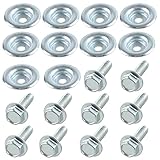
I remember the first time I saw them. A whole bin of them, gleaming under the fluorescent lights of the hardware store. ‘Ah, the legendary 36 steel bolts,’ I thought, half-joking, half-expecting some kind of revelation. For years, the internet whispered about their supposed superiority, their mythical strength, their ability to hold anything together forever. I’d wasted enough cash on fancy gadgets that promised the moon and delivered dust bunnies, so I was skeptical.
But the hype around a 36 steel bolts was… different. Less flashy, more insistent. It felt like something people who really knew their stuff talked about. So, I grabbed a handful, not entirely sure what I was going to do with them, but driven by a mix of curiosity and a healthy dose of ‘prove me wrong.’
The Real Deal with a 36 Steel Bolts: What Makes Them Tick?
Look, let’s cut the jargon right out. When people talk about ‘a 36 steel bolts,’ they’re usually referring to a specific kind of fastener, often in the context of high-stress applications or projects where you absolutely cannot afford failure. It’s not some magical alloy that sprouts wings; it’s about engineered strength and consistency. Think about it like this: you wouldn’t use a toothpick to hold up a bookshelf, right? The same principle applies here, but on a much finer, more precise level.
The ’36’ in this context usually points towards a tensile strength rating, often measured in thousands of pounds per square inch (psi). A 36,000 psi rating means that, under ideal conditions, the bolt can withstand a force of 36,000 pounds pushing or pulling on it before it starts to deform or break. That’s a lot of pressure. For comparison, a standard, run-of-the-mill bolt you might find holding your garden gate together could be rated significantly lower, maybe 15,000 or 20,000 psi.
What goes into making a bolt that strong? It’s a combination of the steel alloy itself – the specific blend of iron and carbon, plus potentially other elements like manganese, silicon, or even trace amounts of nickel or chromium to enhance properties – and the manufacturing process. Heat treatment plays a massive role. Quenching and tempering are common techniques that involve heating the steel to specific temperatures and then rapidly cooling it, followed by a reheating process to reduce brittleness and increase toughness. This creates a microstructure within the steel that can handle stress much better.
My first ‘aha!’ moment with these came when I was building a custom workbench. I’d initially used some decent quality carriage bolts from the local big box store. They seemed fine. But during a particularly vigorous sanding session, the top started to wobble. Not a lot, but enough to be annoying and, frankly, a bit worrying. I ended up replacing the main structural bolts with ones specifically rated for higher loads, akin to the ’36 steel bolts’ concept. The difference was night and day. The workbench felt utterly solid, like it was carved from a single block of granite. That’s the difference good fasteners make when the load demands it.
Why Everyone’s Obsessed (and When They’re Wrong)
The fascination with a 36 steel bolts isn’t just about raw strength; it’s about reliability. In applications where vibration, shear forces, or significant weight are constant companions, a bolt that’s just ‘good enough’ can become a weak link. Think about automotive repair – engine mounts, suspension components, anything that deals with constant shock and stress. Or heavy-duty furniture, structural components in DIY projects, or even specialized equipment. These aren’t situations where you want to be second-guessing your fasteners.
However, here’s where I get a bit blunt: most people, most of the time, do NOT need a 36 steel bolts. Seriously. You’re probably overthinking it. I see folks recommending them for assembling flat-pack furniture or putting together a simple shelf for their spice rack. That’s like using a sledgehammer to crack a nut. It’s overkill, and frankly, it can be more expensive and harder to work with than necessary. Standard grade 2 or grade 5 bolts (in the old US grading system) are perfectly adequate for 90% of household tasks. The confusion often comes from vague online recommendations that don’t specify the actual load requirements.
The common advice I see that really grinds my gears is when someone says, ‘Just buy the strongest bolts you can find for safety.’ While well-intentioned, it’s a blanket statement that leads people down the wrong path. The ‘strongest’ isn’t always the ‘best’ for every job. Some very high-strength bolts can be more brittle, meaning they might snap rather than bend under extreme shock loads, which can be dangerous. Also, they often require specific torque wrenches and careful installation to avoid stripping the threads or over-tightening, which can actually weaken the joint.
I learned this the hard way when I was building a prototype for a custom bicycle rack. I went with what I thought were the ‘best’ bolts I could find, overkill in terms of tensile strength. They were a nightmare to thread into the frame inserts, and I ended up stripping one. The whole project got delayed because I had to carefully drill it out and retap the hole. Had I used a slightly lower grade bolt that was more forgiving with its thread engagement, I would have saved myself a massive headache and a few hours of frustration. It’s a good reminder that sometimes, the right tool for the job isn’t the most extreme one.
What to Look for (beyond the Numbers)
Okay, so you’ve decided you might actually need something like a 36 steel bolts, or at least a fastener with a high-tensile rating. What else should you be checking besides that number? Plenty. Don’t just grab the first thing that looks beefy. (See Also: Are All Honda Atv Bolt Patterns The Same )
First off, understand the grading system. The US uses SAE (Society of Automotive Engineers) grades (like Grade 2, 5, 8) and ISO (International Organization for Standardization) grades (like 4.6, 8.8, 10.9).
A Grade 8 bolt is roughly equivalent to an ISO 8.8. While ’36’ isn’t a standard grade number in either system, it often refers to a specific material specification or a minimum yield strength, sometimes seen in industrial contexts or specific steel grades. If you see a specific ASTM (American Society for Testing and Materials) standard mentioned, like A325 or A490 (often used in structural steel construction), that’s a much better indicator of performance. For general high-strength needs, look for markings like ‘Grade 8’ or ‘8.8’ or ‘10.9’ on the bolt head.
These are common and readily available.
Next, consider the material composition. While ‘steel’ is broad, specific alloys offer different properties. For high strength, you’re often looking at medium-carbon steels that have been heat-treated. Sometimes, additional alloying elements can improve corrosion resistance or toughness, but they also increase cost. For most applications where extreme corrosion isn’t a primary concern, a good quality heat-treated carbon steel bolt is what you want.
Thread type is also vital. Coarse threads (UNC) are more common and easier to start. Fine threads (UNF) offer higher tensile strength and are less likely to loosen due to vibration, but they’re also more prone to damage if cross-threaded. For a 36 steel bolts equivalent, you’ll often find them with coarse threads for ease of use, but check the application. The length and diameter are obvious, but make sure they match your needs precisely. You don’t want a bolt that’s too long and interferes with something, or too short to get adequate thread engagement.
Finally, look at the head style and drive type. Hex heads are standard and good for general use. Flange heads distribute load over a wider area. Socket heads (like Allen or Torx) offer a cleaner look and can sometimes be tightened to higher torques more easily, but they can also be more prone to stripping if the wrong driver is used. For serious applications, you want a head style that complements the mating surface and a drive that won’t cam out under torque.
Here’s a quick rundown of common bolt grades and their general applications. Remember, ’36 steel bolts’ isn’t a standard grade, but it points towards the higher end of strength, comparable to Grade 8 or ISO 8.8/10.9.
| Bolt Grade / Standard | Approx. Tensile Strength (psi) | Common Use Cases | My Verdict |
|---|---|---|---|
| SAE Grade 2 | ~60,000 | General purpose, light-duty construction, basic assembly | Fine for most everyday tasks. Don’t overthink it. |
| SAE Grade 5 | ~120,000 | Automotive, machinery, medium-duty structural | A solid step up. Good for things that see moderate stress. |
| SAE Grade 8 | ~150,000 | Heavy-duty automotive, heavy machinery, structural applications where high strength is key | The go-to for most ‘heavy-duty’ DIY. Often what people mean by ‘high strength.’ |
| ISO 8.8 | ~116,000 | Similar to Grade 5, common in metric applications, machinery | Reliable metric option for medium-heavy duty. |
| ISO 10.9 | ~145,000 | High-strength metric applications, similar to Grade 8 | Metric equivalent for serious stress. |
| ASTM A325 / A490 | ~120,000 / ~150,000 (Yield Strength) | Structural steel construction (bridges, buildings) | Industrial overkill for most personal projects, but the benchmark for ultimate structural integrity. |
Common Mistakes That Lead to Fastener Failure
Even with the best fasteners, people still screw things up. It’s usually not the bolt’s fault, but how it’s used. One of the most common mistakes I see is improper torque. You can have the strongest bolt in the world, but if you don’t tighten it to the manufacturer’s recommended torque specification, you’re asking for trouble. Over-tightening can stretch the bolt beyond its elastic limit, basically ruining it and creating a weak point. Under-tightening means the joint can move, vibrate loose, or fail under load.
This is where a good torque wrench becomes your best friend, especially when dealing with anything rated above a Grade 5 or ISO 8.8. I’ve seen guys just crank on bolts with an impact gun until they feel ‘tight.’ That’s a recipe for disaster. For important components, especially in automotive or structural applications, you need to follow the specs. For instance, when I was rebuilding a vintage motorcycle, the service manual had specific torque values for every single bolt. Skipping that step would have been incredibly foolish, risking catastrophic failure.
Another error is mismatching hardware. Using the wrong size nut with a bolt, or using a nut that doesn’t have a sufficient load rating for the bolt it’s paired with, can lead to premature failure. Nuts have their own strength ratings, and they need to match the bolt. Also, consider the washers. A hardened washer can distribute the load and prevent the bolt head or nut from digging into the material, which is especially important with softer metals like aluminum. Conversely, using a washer that’s too thin or too soft can deform and render the bolt loose again. (See Also: Are Ak Bolts Interchangeable )
Corrosion is another sneaky killer. Even high-strength steel can rust if not protected. If your application involves exposure to moisture, salt, or chemicals, you absolutely need to consider corrosion-resistant coatings like zinc plating, black oxide (which offers minimal corrosion resistance but looks cool), or, for the best protection, stainless steel or specialized alloys. A beautiful, strong bolt that rusts away in a year is a wasted investment. I had a project involving outdoor furniture that I built with plain steel bolts. They looked great for about six months, then started showing surface rust. Within two years, they were visibly corroded and I had to replace them. Lesson learned: match the fastener to the environment.
Finally, there’s the issue of thread damage. If the threads on the bolt or in the mating hole are damaged, cross-threaded, or stripped, the connection will be compromised. Always start threading bolts by hand to make sure they’re going in straight. Don’t force them. If you encounter resistance, back it out and try again. For important joints, using anti-seize lubricant can help prevent galling and make tightening more consistent, especially with stainless steel or aluminum.
Real-World Scenarios: Where ’36 Steel’ Shines
So, where does this kind of high-strength fastener actually make a difference? It’s all about applications where failure isn’t an option and the forces are significant. Think about building a solid trailer hitch for a heavy-duty truck. You need bolts that can withstand the constant jarring and immense towing forces without question. Similarly, when constructing heavy-duty shelving units in a garage or workshop that will hold hundreds of pounds of tools and equipment, using fasteners rated for that kind of load is most important.
Automotive applications are a huge area. Engine mounting bolts, suspension components, brake system hardware, and exhaust system clamps often require high-strength fasteners to handle vibration, thermal expansion, and the stresses of driving. If a bolt fails on your suspension, you’re not just looking at a minor inconvenience; you’re looking at a serious safety hazard. This is where understanding the specific requirements and using fasteners that meet or exceed them is a must.
In the world of DIY and fabrication, you’ll find these types of bolts invaluable for building custom machinery, heavy-duty gates, or structural elements in things like go-karts or off-road vehicles. If you’re building something that will be subjected to significant forces, impacts, or constant stress, then investing in high-strength fasteners is a wise move. It’s not about having the ‘strongest’ bolt; it’s about having the correct bolt for the job.
I recently helped a friend build a reinforced workbench for his metalworking shop. He was dealing with heavy vises, angle grinders, and the occasional impact from dropped tools. We used a combination of heavy-duty lag bolts and, for the main structural frame connections, what would be equivalent to Grade 8 or ISO 10.9 bolts. The result was a bench that felt like it was anchored to the foundation of the building. It didn’t budge, no matter what he threw at it. That’s the peace of mind that comes with using the right fasteners.
Here’s a quick breakdown of scenarios where the strength implied by ‘a 36 steel bolts’ is genuinely needed:
- Heavy-duty Trailers and Hitches: Withstand towing forces and road vibrations.
- Structural Components in Vehicles: Engine mounts, suspension, frame reinforcements.
- Industrial Machinery and Equipment: Where constant operation and high loads are standard.
- Heavy-Duty Shelving and Racking: For storing significant weight in workshops or warehouses.
- Custom Fabrication Projects: Anything involving metal fabrication that will experience high stress or impact (e.g., go-karts, custom furniture frames).
Practical Tips for Using High-Strength Fasteners
So, you’ve got your high-strength bolts, whether they’re labeled as ’36 steel bolts’ equivalents, Grade 8, or ISO 10.9. Now, how do you make sure you’re using them effectively and safely? First, always clean the threads on both the bolt and the mating part. Dirt, debris, or old thread locker can interfere with proper seating and torque. A wire brush is usually sufficient.
Second, use the right tools. For high-strength bolts, especially when precise torque is required, a calibrated torque wrench is a must. If you’re going to be doing a lot of this kind of work, investing in a good quality one is worth it. For less important applications where you’re just aiming for ‘very tight,’ a good quality ratcheting wrench or socket set will do, but be mindful of how much force you’re applying. Avoid using adjustable wrenches if possible, as they can round off bolt heads.
Third, consider thread locker. For applications subject to heavy vibration, like automotive or machinery, using a thread-locking compound (like Loctite) is highly recommended. These come in different strengths – blue for medium strength that can be disassembled, and red for high strength that requires heat to break. Apply it according to the product instructions, usually to the male threads. (See Also: Are All Bolt Patterns The Same )
Fourth, don’t forget the washers. Always use hardened washers of the correct size, especially when bolting metal to metal. This prevents the bolt head and nut from digging into the surface and damaging the material, and it makes sure the load is distributed evenly. A split lock washer can also be used in some applications to help prevent loosening due to vibration, though many professionals prefer thread locker for important joints.
Fifth, when tightening multiple bolts in a sequence (like on a cylinder head or a flange), always follow a pattern. This is usually a star pattern or a criss-cross pattern, tightening bolts in stages to make sure even pressure distribution. This prevents warping or uneven stress on the components being joined. Check your manufacturer’s documentation for the specific tightening sequence if one exists.
Lastly, when in doubt, consult the specs. If you’re working on something where failure could be dangerous or costly, don’t guess. Look up the recommended fastener type, size, grade, and torque specifications. Many manufacturers provide this information in service manuals or on their websites. If you’re truly unsure, it’s always better to consult with someone experienced in that specific field or err on the side of caution and use a fastener rated slightly higher than you think you might need, provided it’s compatible with the application.
Are ’36 Steel Bolts’ a Real Standard?
The term ’36 steel bolts’ isn’t a universally recognized standard grade like SAE Grade 8 or ISO 10.9. It most likely refers to a minimum tensile strength rating of 36,000 psi, or it might be a specific internal designation or a component from a particular manufacturer. When encountering this term, it’s best to look for more precise specifications or compare it to known grading systems to understand its actual strength and suitability for your application.
What Is Stronger, Grade 8 or Grade 5 Bolts?
Grade 8 bolts are significantly stronger than Grade 5 bolts. Grade 5 bolts have a minimum tensile strength of approximately 120,000 psi, while Grade 8 bolts boast a minimum tensile strength of around 150,000 psi. This difference in strength makes Grade 8 bolts suitable for more demanding applications where higher loads and stresses are expected.
Can I Use Stainless Steel Bolts Instead of High-Strength Steel Bolts?
While stainless steel offers excellent corrosion resistance, not all stainless steel grades are as strong as high-strength carbon steel bolts like Grade 8. For applications requiring both high strength and corrosion resistance, you would typically look for specific high-strength stainless steel grades or use a coated carbon steel bolt. For applications where corrosion is a major concern but extreme strength isn’t the absolute top priority, high-grade stainless steel is an excellent choice.
How Do I Identify the Grade of a Bolt?
Bolt grades are typically indicated by markings on the bolt head. For SAE grades, Grade 5 bolts usually have three radial lines, and Grade 8 bolts have six radial lines. ISO metric grades are marked with numbers like 8.8 or 10.9. Always inspect the bolt head carefully for these identifying symbols or numbers.
Conclusion
So, after all that, are a 36 steel bolts worth it? For most of us, probably not. They represent a level of strength and precision that’s often overkill for everyday repairs and projects. You end up paying more and potentially making things harder on yourself without a tangible benefit. It’s like buying a sports car to drive to the grocery store.
However, if you’re building something that will face serious stress – think custom automotive parts, heavy-duty machinery, or structural components in a demanding environment – then understanding and sourcing fasteners with high-tensile ratings, equivalent to what ’36 steel bolts’ implies, becomes important. It’s about matching the fastener to the load, not just grabbing the most solid-looking option available.
My advice? Save your money and your sanity. Use the right fastener for the job, which for most of us, means perfectly good standard bolts. But if you’re in that niche that truly needs that extra margin of safety and strength, do your homework, understand the ratings, and get the right ones. Your project, and your safety, will thank you.