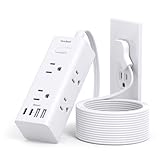
I’ve seen it a thousand times. The little electric heater is humming away, keeping your toes toasty, but the cord just doesn’t quite reach the outlet. So, what do you do? Grab that old, dusty orange extension cord from the garage and plug it in. Big mistake. Huge. When it comes to safely powering a space heater, asking ‘are any extension cords safe for space heaters’ is the million-dollar question, and the answer is a resounding, and frankly, terrifying, ‘it depends.’ Mostly, it depends on you doing your homework before you turn that dial.
I learned this the hard way a few winters back. My garage workshop was freezing, so I bought a decent little ceramic heater. The outlet was on the far wall, and the cord was maybe six feet short. I figured, ‘What’s the harm?’ I used a standard, everyday extension cord. Within an hour, the cord was warm. Not just warm, but hot to the touch. I yanked it out, heart pounding, and realized how close I’d come to a fire. That experience cemented my belief: you can’t just use any old cord.
The Cold, Hard Truth About Extension Cords and Space Heaters
Let’s cut to the chase: most standard, run-of-the-mill extension cords are NOT designed to handle the power draw of a space heater. Think of your space heater like a hungry beast.
It’s demanding a lot of energy, especially the powerful ones that can actually make a difference in a cold room. A typical 1500-watt heater can pull 12.5 amps at full blast.
Now, look at your average household extension cord. Many are rated for 10 amps, maybe 13 amps if you’re lucky. You’re already pushing the limits, or worse, exceeding them, right out of the gate.
When you do this, that cord starts to heat up. It’s the electrical equivalent of running a marathon without drinking water – eventually, something breaks down.
This isn’t some theoretical ‘what-if.’ I once saw a neighbor’s shed catch fire. Turns out, they had a space heater plugged into an extension cord that looked fine on the outside but was internally frayed and undersized. The cord melted, sparks flew, and boom. It’s a stark reminder that fire safety isn’t just about the appliance itself, but also about how you connect it. The National Fire Protection Association (NFPA) consistently warns about extension cord misuse, and space heaters are a common culprit because people don’t understand the power demands.
People also tend to think all extension cords are created equal. They look similar, right? That cheap, thin, brightly colored cord you picked up at the dollar store for $5? That’s probably meant for a lamp or maybe a fan. It’s not built for sustained, high-wattage output. The internal wire gauge is too small, meaning it has higher resistance. Higher resistance equals more heat. It’s basic physics, but it’s also a important safety factor that gets overlooked constantly. My own garage incident involved a cord that was probably meant for outdoor holiday lights, not a heat-generating appliance. Lesson learned the expensive way, as I had to replace not only the cord but also some scorched drywall.
The common advice you’ll see everywhere is that you need a ‘heavy-duty’ or ‘appliance-rated’ extension cord. And yeah, that’s technically correct. But what does that actually mean? It means the cord has a thicker gauge wire inside, which can handle more amperage and generate less heat. It’s also built with better insulation and is generally more durable. But even then, you can’t just plug any heavy-duty cord into a space heater and call it a day. There are still nuances you need to understand.
What the Heck Is a ‘heavy-Duty’ Cord Anyway?
Alright, so ‘heavy-duty’ is the buzzword. But what makes a cord heavy-duty, and how do you spot one that’s actually up to the task of powering your space heater? It all comes down to the gauge of the wire inside. You’ll see numbers like 18 AWG, 16 AWG, 14 AWG, or even 12 AWG. AWG stands for American Wire Gauge. The lower the number, the thicker the wire, and the more amperage it can safely handle. This is the single most important spec to look for.
For space heaters, especially those in the 1500-watt range, you absolutely need at least a 14 AWG cord. Some might even recommend 12 AWG for maximum safety and efficiency, especially if the cord is going to be long. A 16 AWG cord might be okay for a very low-wattage personal heater, but I wouldn’t trust it for anything substantial, and definitely not for a heater you’re running unattended. A 18 AWG cord?
Forget about it. That’s lamp territory, maybe a phone charger. Using it for a space heater is a fire hazard waiting to happen. (See Also: Can Extension Cords Short Out )
I have a general rule: if the cord feels light and flexible, it’s probably not thick enough for a serious load like a heater. It should feel substantial in your hand.
Another thing to look for is the rating. Extension cords are often labeled with the maximum wattage or amperage they can handle. You want to find a cord that is rated for at least the wattage of your space heater, with some buffer. If your heater is 1500 watts, look for a cord rated for 1800 watts or more. This buffer accounts for any slight fluctuations and makes sure the cord isn’t constantly running at its absolute limit. You’ll also see a maximum amperage rating, typically around 10A, 13A, or 15A. Match this to your heater’s needs. A 1500W heater at 120V is 12.5A, so a 13A or 15A rated cord is a must.
Beyond the gauge and rating, consider the construction. Look for cords that are specifically labeled as ‘appliance-rated’ or ‘heavy-duty outdoor’ (even if you’re using it indoors, outdoor cords are often built to tougher standards). These tend to have more solid insulation, better strain relief where the plug meets the cord, and more durable jacket material. The plug itself should also feel solid, not flimsy. I once bought a ‘heavy-duty’ cord that had such a loose connection at the outlet that it would occasionally spark. That’s a clear sign it’s not just the gauge, but the overall quality that matters. Always inspect the cord and its connectors before plugging anything in.
| Cord Type/Gauge | Amperage Rating (Typical) | Best For | Opinion/Verdict |
|---|---|---|---|
| 18 AWG | Up to 7A | Lamps, electronics, phone chargers | Absolutely NOT for space heaters. High risk of overheating. |
| 16 AWG | Up to 10A | Small appliances, fans, moderate loads | Risky for most space heaters. Only consider for very low-wattage models if cord is short. Better to avoid. |
| 14 AWG | Up to 13A | Heaters (1500W), power tools, medium-duty appliances | Minimum requirement for most space heaters. Look for quality build. |
| 12 AWG | Up to 15-20A | High-demand appliances, long runs, multiple tools | Ideal for space heaters, especially longer runs or higher wattage. Offers best safety margin. |
Common Mistakes That Turn Extension Cords Into Fire Hazards
It’s not just about buying the right cord; it’s about using it correctly. And man, do people screw this up. The most common mistake, hands down, is using an extension cord that’s too long for the job. Electrical resistance increases with length. So, a 100-foot 14 AWG cord is going to be less efficient and generate more heat than a 10-foot 14 AWG cord, even if both are rated appropriately. If your space heater only needs to reach an outlet 15 feet away, don’t use a 50-foot cord. Use a 15 or 20-foot cord. Shorter is always better for reducing resistance and heat buildup.
Another massive no-no is daisy-chaining cords. You know, plugging one extension cord into another to make it reach further. This is like stacking bad decisions on top of each other. Each connection point is a potential failure point, and the total length and combined resistance can quickly overwhelm even a heavy-duty cord.
I’ve seen people run cords under rugs, through doorways, or even near flammable materials. This is incredibly dangerous. Cords can get pinched, damaged, or overheat unnoticed.
If a cord is running under a rug, for instance, any heat it generates has nowhere to dissipate, leading to a rapid temperature increase. It’s a fire waiting to happen, and it happened to a friend of a friend who lost their entire kitchen that way.
Overloading is also a huge problem. People think, ‘Oh, it’s just a small heater,’ and plug it into a cord that’s also powering other things, or worse, plugging multiple high-draw appliances into the same circuit via extension cords. While the space heater itself might be the primary draw, if that outlet is already on a circuit with other devices, you’re increasing the overall load. Always try to plug your space heater directly into a wall outlet that is on its own circuit, or at least a circuit that isn’t heavily loaded. If you must use an extension cord, make sure it’s rated for the combined load of everything plugged into it, but the safer bet is always to plug the heater directly into the wall.
Finally, there’s the issue of damaged cords. We’re talking frayed insulation, exposed wires, bent prongs, or a plug that’s loose. Even a small nick in the insulation can be a fire hazard. If you see any damage, throw the cord away.
Don’t try to tape it up. Seriously. I once had a cord where the outer jacket was fine, but one of the internal wires had clearly broken and was sparking inside the insulation. It felt warm, and when I carefully cut it open, I saw the scorch marks from where it had been arcing.
It was a disaster waiting to happen. Treat your extension cords with respect, inspect them regularly, and replace them if they show any signs of wear and tear. (See Also: Can Extension Cords Be Use With Electric Heaters )
People Also Ask: Can I Use a 14-Gauge Extension Cord for a Space Heater?
Yes, a 14-gauge extension cord is generally considered the minimum safe gauge for most space heaters, especially those rated at 1500 watts. It has a thicker wire than smaller gauges, which allows it to handle the higher amperage draw without overheating. However, always check the specific wattage and amperage requirements of your heater and compare it to the cord’s rating to make sure it’s sufficient. For very long cord runs or higher wattage heaters, a 12-gauge cord offers an even greater safety margin.
When Are Extension Cords Actually Okay for Space Heaters?
So, if most cords are bad, when are they actually okay? It boils down to a few key conditions. First, you must use a heavy-duty, appliance-rated extension cord with a sufficiently thick wire gauge (14 AWG minimum, 12 AWG preferred). This isn’t optional. Second, the cord needs to be the right length – as short as possible to reach the outlet without being stretched taut or kinked. Avoid the temptation to use a cord that’s excessively long just because you have it. A 10-foot 14 AWG cord is infinitely safer for a heater that needs to be 8 feet from the wall than a 50-foot 14 AWG cord.
Third, the cord must be in perfect condition. No nicks, no fraying, no bent prongs. Inspect it thoroughly before every single use. Fourth, the cord should not be routed under furniture, rugs, or through doorways where it can be damaged or pinched. It needs to lie flat on the floor, out of the way of foot traffic and away from anything that could crush or overheat it. Think of it like this: the cord should be visible and unobstructed at all times. This allows for heat dissipation and makes it easy to spot any potential problems.
Fifth, the outlet it’s plugged into should be a grounded outlet, and ideally, the circuit shouldn’t be overloaded. Plugging a space heater into a GFCI outlet (the kind with the test and reset buttons, common in bathrooms and kitchens) is generally fine and adds an extra layer of safety, as GFCI outlets can cut power in case of ground faults.
But the core principle remains: the extension cord is merely a bridge, and it needs to be a solid, safe bridge, not a weak link. I’ve used a specific, short, 14 AWG heavy-duty cord for my workshop heater for years, but only because it meets all these criteria.
It stays coiled when not in use, is only 15 feet long, and I inspect it every time. It’s not a matter of convenience; it’s a matter of safety.
My contrarian take? Most people think they’re using the right extension cord when they’re not. They’ll buy a cord that says ‘heavy duty’ but is still too thin or too long. They’ll run it under a rug because it looks neater. They’ll plug it into an outlet that’s already struggling. My advice is to be overly cautious. If you have any doubt whatsoever about the cord, the connection, or the outlet, do not use it. The cost of a proper, short, heavy-duty extension cord is a fraction of the cost of a house fire or a serious injury. It’s just not worth the risk.
People Also Ask: Can I Plug a Space Heater Into a Power Strip?
It is generally NOT recommended to plug a space heater into a standard power strip. Power strips are typically designed for low-power electronics and do not have the internal wiring gauge or capacity to handle the high amperage draw of a space heater. Doing so can cause the power strip to overheat, melt, and potentially start a fire. Only use a power strip that is specifically rated and designed for high-wattage appliances, and even then, plugging the heater directly into a wall outlet is always the safest option.
The ‘directly Into the Wall’ Argument: Why It’s Almost Always Best
Here’s the blunt truth: The safest way to power a space heater is to plug it directly into a wall outlet. Period. Every time you introduce an extension cord into the equation, you’re adding a potential point of failure, a potential source of heat, and a potential fire hazard. Wall outlets are designed to handle the electrical load of appliances plugged directly into them. They have solid connections and are wired directly to your home’s electrical panel, which has circuit breakers or fuses designed to protect against overloads and short circuits.
Think about it. When you plug something directly into the wall, you’re minimizing the path electricity has to travel. Less wire means less resistance, less potential for heat buildup, and fewer connection points that could spark or fail. It’s the most straightforward and, therefore, the safest connection. I learned this lesson when I had to move my bedside table. The outlet was just out of reach, so I was tempted to use an extension cord. Instead, I decided to rearrange the furniture slightly so the heater could plug directly into the wall. It took an extra five minutes, but it gave me peace of mind that was worth more than the slight inconvenience.
The only time you might need an extension cord is if the outlet is truly inaccessible or if the appliance’s cord is significantly shorter than the distance to the nearest suitable outlet. In those rare instances, you must adhere to all the safety guidelines we’ve discussed: heavy-duty, correct gauge, short length, perfect condition, and proper routing. But even then, consider if there’s a way to reposition furniture, the appliance, or even have an electrician install a new outlet closer to where you need it. While not always practical for a temporary heating solution, for permanent setups, a dedicated outlet is always the superior choice. (See Also: Are Outdoor Extension Cords 10 Or 12 Gauge )
I’ve heard people argue that their old house only has outlets on one side of the room, and they need an extension cord. My response is always: that’s a sign your house’s wiring might need an upgrade anyway. Older homes often have fewer outlets and may not be wired to handle modern electrical demands. If you’re in that situation, it’s probably more important to address the underlying wiring issue than to rely on a makeshift extension cord solution. Safety first, always. The convenience of an extension cord is never worth the risk of a fire.
Practical Tips for Using Space Heaters Safely with Cords
If you absolutely must use an extension cord with your space heater, here are some a must tips that can help you avoid disaster. First, buy a new, high-quality, heavy-duty extension cord specifically for this purpose. Don’t repurpose old cords from holiday decorations or general-purpose use. Look for cords that are 14 AWG or 12 AWG, clearly labeled for appliance use, and rated for at least 1500 watts (or your heater’s wattage plus a buffer). Get one that’s only as long as you need, ideally 15-25 feet maximum. Brands like Iron Forge, Southwire, or even Amazon Basics’ heavy-duty options can be decent if you check the specs carefully.
Second, inspect the cord every single time before you plug it in. Run your hand along its length. Look for any signs of damage to the outer jacket, the plug, or the receptacle end. If anything looks questionable, don’t use it. Throw it out and buy a new one. It’s cheaper than the alternative. I keep one dedicated, short, heavy-duty cord just for my space heater, coiled neatly in a box. I check it before I plug it in, every time. It’s a habit that’s saved me a lot of worry.
Third, never, ever run the cord under carpets, rugs, or furniture. This traps heat and makes damage invisible. Route the cord along a wall, using cord clips if necessary to keep it tidy and out of the way, but always visible. Make sure it’s not in a high-traffic area where it can be tripped over or yanked. If the cord has to cross a walkway, use a cord protector ramp designed for that purpose. My rule is simple: if I can’t see it or easily access it, it’s too risky.
Fourth, use the cord only with the space heater it’s designated for, and only in a grounded outlet. Do not plug other devices into the same extension cord, and don’t plug the extension cord into a power strip or another extension cord. Keep the heater itself at least three feet away from any flammable materials, and never leave a space heater running unattended, even with the ‘safest’ cord setup. These are simple rules, but they are the difference between a warm room and a burned-down house. The question of are any extension cords safe for space heaters has a clear, but strict, answer: only under very specific, safety-first conditions.
People Also Ask: How Long Can an Extension Cord Be for a Space Heater?
The shorter the extension cord, the better for safety when powering a space heater. While a 14-gauge cord might be rated for a certain amperage, longer cords have higher resistance, generating more heat. Ideally, use a cord that is no longer than 15-25 feet. If you need to cover a greater distance, consider rearranging furniture to reach a closer outlet or consult an electrician about installing a new outlet. Always prioritize using the shortest heavy-duty cord possible.
People Also Ask: What Kind of Extension Cord Should I Use for a 1500 Watt Heater?
For a 1500-watt heater, you need a heavy-duty extension cord. Look for a cord with a 14-gauge (AWG) wire gauge as the absolute minimum, and a 12-gauge (AWG) cord is even better for increased safety and efficiency. Make sure the cord is rated for at least 1500 watts (or 12.5 amps at 120 volts) with some buffer. Choose a cord specifically designed for appliance use or heavy-duty applications, and keep it as short as practical for your needs.
Final Verdict
So, to circle back to the main question: are any extension cords safe for space heaters? The answer is a qualified yes, but with a massive asterisk. You can’t just grab any old cord. You need a specific type of cord – heavy-duty, the right gauge (14 or 12 AWG), short, and in pristine condition. You also need to use it correctly, keeping it visible, away from hazards, and plugged into a suitable outlet. Honestly, though, the safest bet is almost always to plug your space heater directly into the wall outlet. It eliminates a significant risk factor.
If you’re tempted to use an extension cord because the outlet is just a bit too far, I urge you to reconsider. Take a moment to assess the real risks versus the convenience. Could you move the heater a foot closer? Could you rearrange the furniture slightly? If the answer is still no, then and only then, proceed with extreme caution and only with the correct, heavy-duty cord. Never, ever compromise on safety when it comes to heating appliances and electrical connections.
My final, blunt advice? If you are unsure about the suitability of an extension cord or how to use it safely with your space heater, just don’t use one. Plug it directly into the wall. It’s not worth the risk of a fire, damage to your home, or potential injury. Always prioritize safety over convenience.