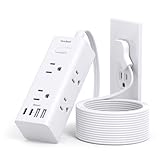
I remember the day my phone decided to play dead. It wasn’t a dramatic drop or a spill, but something far more mundane: I’d plugged my charger into an old, frayed extension cord I’d scavenged from the garage. Fast forward a few hours, and my Android was acting like a brick. It made me wonder, can an extension cord damage an Android phone? It’s a question many of us might not even consider, assuming all power is created equal. But as I learned the hard way, that’s a dangerous assumption.
We rely on our phones for everything, and the thought of one getting zapped by something as seemingly innocent as an extension cord is frankly infuriating. If you’re in a bind and need to extend your reach for that precious charging outlet, or just curious about what lurks in those cheap power strips, you need the straight dope. So, let’s cut through the noise and figure out what’s really going on with extension cords and your smartphone.
The Real Dirt on Extension Cords and Phone Chargers
Okay, let’s get this straight from the jump: can an extension cord damage an Android phone? The short answer is: yes, it absolutely can, but not usually in the way you’re probably imagining. It’s not like the extension cord itself has some kind of ‘phone-killing ray.’ Instead, it’s about the quality of the power it delivers, or more importantly, fails to deliver, and the potential for electrical issues that can indirectly fry your device. Think of it less like a direct attack and more like a leaky pipe causing water damage. The extension cord isn’t the villain with a dagger; it’s the neglected infrastructure that leads to disaster.
Most modern smartphones, including Androids, come with sophisticated charging circuitry built right into the phone and the charger brick. These circuits are designed to regulate the incoming voltage and current, protecting your phone from surges and fluctuations. However, these protections aren’t infallible. They rely on a stable and clean power source. If the extension cord is old, damaged, poorly made, or overloaded, it can introduce unstable power into the system. This instability can manifest in a few ways that, over time or in extreme cases, can degrade or outright damage your phone’s battery, charging port, or even internal components.
One of the biggest culprits is a poor connection. If the extension cord has loose wires, corroded terminals, or is just generally shoddy, it can cause intermittent power delivery. Your phone might be charging, then stop, then start again. This constant cycling can stress the battery and the charging IC (integrated circuit). I once had a cheap, no-name extension cord that made my phone’s battery drain faster while plugged in. That’s a clear sign something is fundamentally wrong with the power flow. It felt like I was trying to fill a bucket with a sieve.
Another issue is voltage drop. A long or undersized extension cord can cause the voltage to sag, especially when a device like a phone charger draws power. While the charger brick is supposed to compensate, extreme voltage drops can still affect the charging process. This can lead to slower charging times, and in worst-case scenarios, prevent charging altogether. If your phone is constantly receiving less power than it needs, it can lead to inefficient charging cycles that might not be great for long-term battery health. It’s like trying to run a marathon on a diet of crumbs.
Overloading an extension cord is another major no-no. Extension cords have a maximum wattage rating. Plugging too many high-draw devices into a single cord can cause it to overheat. While this is more likely to damage the cord itself (melting plastic, fire hazard!), a severely overloaded cord can create electrical noise and unstable power that could eventually impact connected devices. It’s not the primary way an extension cord fries a phone, but it’s part of the overall picture of electrical safety.
Finally, there’s the physical aspect. A damaged extension cord—one with nicks in the insulation, exposed wires, or bent prongs—is a direct electrical hazard. Beyond the risk of electric shock to you, exposed wires can easily short-circuit, creating power spikes or drops that can be detrimental to sensitive electronics like your phone. I’ve seen cords where the rubber insulation was cracked and peeling, and frankly, I wouldn’t trust them to power a nightlight, let alone my expensive smartphone.
When the Charger Brick Isn’t Enough
So, we’ve established that a dodgy extension cord is a potential problem. But what about the charger itself? Most people use the charger that came with their phone, or a reputable brand replacement. These bricks are designed to take the wall outlet’s AC power, convert it to the DC power your phone needs, and deliver it at the correct voltage and amperage. They have built-in safety features to handle minor fluctuations. However, they’re not magical shields against all power problems, especially if the power source they’re plugged into is already compromised.
The scenario where an extension cord most directly impacts your phone’s safety is when the cord itself is faulty and introduces issues before the power even gets to the charger brick. Imagine a frayed wire inside the extension cord. This can lead to intermittent contact, causing the power to cut in and out rapidly. Your phone’s charging system might try to adapt, but consistent power interruptions can be tough on the battery’s chemistry and longevity. It’s like a drummer who keeps missing beats – the rhythm is all off.
Think about a surge protector power strip versus a basic extension cord. A good surge protector has components that can absorb or divert sudden spikes in voltage. A cheap, unshielded extension cord offers no such protection. If there’s a power surge from the grid (lightning strike nearby, grid instability), and it travels through a basic extension cord, it hits your charger brick directly, and then potentially your phone. While phone chargers often have some internal surge protection, it’s not infinite. A powerful surge can overwhelm it and damage the phone.
I had a situation where a nearby lightning strike seemed to overload a circuit, and my phone charger brick went poof. It made a small popping sound and smelled like burnt plastic. My phone was plugged in via a simple extension cord. Thankfully, the damage seemed to be contained to the brick, but it highlighted how vulnerable the whole chain is. I’ve since invested in better surge protectors, and I’m way pickier about my extension cords, especially for electronics I care about. (See Also: Can Extension Cords Short Out )
Another factor is the quality of the extension cord’s wiring. Cheaper cords might use thinner gauge wires than recommended for their length and intended load. This can lead to increased resistance, voltage drop, and heat. While the primary risk here is overheating and potential fire hazard from the cord itself, the inconsistent voltage can also cause charging issues. Your phone might report slow charging, or refuse to charge at all. Over a long period, consistently suboptimal charging can, in theory, impact battery health, though this is less likely to cause sudden damage than a surge or a severe intermittent fault.
When it comes to charging your Android phone, especially newer models that support fast charging, they are designed to communicate with the charger to determine the optimal charging speed. If the extension cord is introducing instability or voltage drops, this communication can be disrupted, preventing the phone from fast charging or even charging at a normal rate. This might not ‘damage’ the phone in the sense of frying it, but it’s certainly not ideal for the charging process and could, over time, lead to less efficient battery cycles.
The common advice you’ll find everywhere is to use certified chargers and cables. That’s solid advice. But it’s only half the story if you’re plugging that certified charger into a questionable extension cord. The entire power delivery path matters. You wouldn’t put premium fuel in a car with a clogged fuel line, right? Same principle applies here.
Common Mistakes That Can Hurt Your Phone
Let’s talk about the dumb stuff we all do that can inadvertently cause problems for our phones, especially when extension cords are involved. The biggest mistake? Not paying attention to the quality of the extension cord itself. We see a cord, we see an outlet, we plug it in. That’s it. But extension cords aren’t all built the same. Some are cheap, flimsy things designed for the occasional lamp or a Christmas tree. Others are heavy-duty beasts meant for power tools. Using the wrong type, or using a cord that’s seen better days, is a recipe for trouble.
I learned this the hard way with a cord I kept in the kitchen. It was connected to a power strip that powered my phone charger and a few other small appliances. Over time, the cord started getting warm. I ignored it, thinking it was just the heat from the nearby stove. Big mistake. One night, I woke up to the smell of smoke. The cord had partially melted, scorching the wall behind it. My phone was plugged in, thankfully it seemed okay, but the charger brick was toast, and I was lucky I didn’t burn the house down. That was a wake-up call about neglecting the condition of extension cords.
Another common mistake is overloading the extension cord. People think, ‘It’s just a phone charger and a laptop,’ but then they add a fan, a desk lamp, maybe a small heater. Extension cords have a specific wattage limit, and exceeding it can cause overheating, which, as I mentioned, can lead to melting, fire, and unstable power. Even if the cord doesn’t catch fire, the heat generated can be a sign of excessive resistance, which can translate to poor power quality reaching your charger and phone.
Using extension cords that are too long for the gauge of the wire is also a problem. The longer the cord, the more resistance there is. If the wire gauge is too small for that length, you get significant voltage drop. This can lead to your phone charging slower or not at all. While slow charging isn’t direct damage, it can make the charging process inefficient. Think of it like trying to drink a milkshake through a really thin straw – it’s frustratingly slow and you might not get the full benefit.
Frayed or damaged cords are a no-brainer hazard, yet people often use them. A nick in the insulation, exposed wires, or bent prongs are all invitations for electrical issues. These can cause short circuits, power surges, or intermittent power, all of which can harm your phone’s delicate electronics. I’ve seen people use extension cords with the ground pin broken off, or with tape holding frayed wires together. It’s like playing Russian roulette with your gadgets.
Then there’s the ‘extension cord as a permanent fixture’ mentality. Extension cords are generally meant for temporary use. They’re not designed to be run under carpets (fire hazard!), behind furniture where they can be pinched, or in high-traffic areas where they’re constantly stepped on or tripped over. All this abuse can damage the internal wiring, leading to the problems we’ve discussed.
The last common mistake is a lack of awareness about the power quality coming from the wall outlet itself. Sometimes, the problem isn’t solely the extension cord, but the power source it’s plugged into. Older homes might have faulty wiring, loose connections in the junction boxes, or overloaded circuits that are already providing unstable power. Plugging a sensitive device like a smartphone, even through a good extension cord and charger, into a fundamentally bad electrical system is asking for trouble. It’s like trying to build a solid house on shaky ground.
| Issue | Potential Impact on Android Phone | Verdict |
|---|---|---|
| Frayed/Damaged Cord | Short circuits, power surges/drops, intermittent charging. Can directly damage charging port or internal components. | High Risk. Avoid at all costs. |
| Overloaded Cord | Overheating, unstable power delivery, potential fire hazard. Less direct, but can affect charging efficiency and longevity. | Moderate Risk. Stick to rated loads. |
| Undersized/Too Long Cord | Voltage drop, slower charging, inefficient charging cycles. Unlikely to cause sudden damage, but can impact battery health over time. | Low Risk for Sudden Damage, Moderate for Longevity. Use appropriate gauge. |
| Poor Quality/Uncertified Cord | Inconsistent power, poor connections, potential for internal faults leading to surges or drops. | High Risk. Unpredictable and dangerous. |
| Using with Faulty Outlet | Unstable power source amplifies cord issues, risk of surges or brownouts affecting phone. | High Risk. Fix the outlet first. |
Real-World Scenarios: When an Extension Cord Is Your Only Hope
Look, we’ve all been there. You’re in a hotel room, a rented apartment, or maybe your house has an inconveniently placed outlet. The only spot to comfortably use your phone while it charges is just out of reach of the wall socket. In these moments, an extension cord isn’t a luxury; it’s a necessity. The question then becomes, how do you use one with the least amount of risk to your precious Android device? (See Also: Can Extension Cords Be Use With Electric Heaters )
The first rule is: never use a sketchy extension cord. If you’re in a hotel, and all they have is a beat-up, dusty cord with questionable wiring, it might be worth finding a different spot to charge, or even just letting your phone die for a bit. But if you must use an extension cord, and you have the option, always opt for the best quality one you can find. Look for cords that are UL-listed (or equivalent safety certification in your region). This means they’ve met minimum safety standards. It’s not a guarantee of perfection, but it’s a damn sight better than an uncertified hunk of plastic and wire.
When I travel, I actually keep a short, good-quality, three-prong extension cord in my tech bag. It’s not one of those super long, heavy-duty ones, just a couple of feet, with a decent gauge wire and built-in surge protection if I can find one. This way, I’m not relying on whatever questionable extension cord the venue might have lying around. It’s an investment, maybe $20-$30, but it gives me peace of mind. Charging my phone at a coffee shop using a dirty, overloaded power strip felt like I was tempting fate, so having my own reliable cord makes all the difference.
For home use, especially if you find yourself needing to route power across a room, consider using a heavy-duty extension cord with a thicker gauge wire. The thicker the wire (lower the gauge number), the less resistance and voltage drop over distance. A 14-gauge cord is generally sufficient for most household needs, but if you’re running it a long way or powering multiple items (though you shouldn’t power too many things through one cord), a 12-gauge might be better. Always check the cord’s rating. Don’t just grab the cheapest one; they’re cheap for a reason.
Avoid daisy-chaining extension cords. That is, plugging one extension cord into another. This significantly increases the risk of overloading, overheating, and power issues. Each connection point is a potential failure point. Stick to a single, appropriately sized and rated extension cord. If you need to reach further, you’re better off finding an outlet closer or using a longer, single cord.
Make sure the extension cord has three prongs (grounded) if your charger brick has a three-prong plug. The third prong is for grounding, which provides a path for electricity to flow safely to the ground in case of a fault, preventing shocks and surges. Using a two-prong adapter on a three-prong plug defeats this safety feature.
Finally, inspect your extension cord regularly. Look for any signs of damage: cracks, kinks, exposed wires, melted plastic, or loose connections. If you see any of these, retire the cord immediately. Don’t try to tape it up or ‘fix’ it. It’s not worth the risk to your phone or your safety. A good extension cord, used properly, is a perfectly safe way to extend your reach. It’s the bad ones, the neglected ones, and the overloaded ones that pose the real threat.
Can an Extension Cord Damage Android Phone Charging Port?
Yes, a damaged or faulty extension cord can indirectly damage your Android phone’s charging port. Issues like intermittent power delivery, voltage spikes, or short circuits caused by a bad cord can stress or fry the sensitive components within the charging port or on the phone’s motherboard. It’s not the cord itself with malicious intent, but the unstable or hazardous electrical conditions it creates that can harm the port.
The Future of Power: Surge Protectors and Smart Solutions
Given the risks, it’s clear that simply plugging a phone charger into any old extension cord isn’t smart. We need to think about the quality of the power we’re delivering. This is where surge protectors and smart power solutions come into play. They aren’t just fancy accessories; they’re becoming increasingly necessary for protecting our valuable electronics.
A surge protector is your first line of defense. Unlike a basic extension cord, a surge protector has components (like Metal Oxide Varistors, or MOVs) that are designed to absorb or divert sudden, brief increases in voltage. These surges can happen due to lightning strikes, power grid fluctuations, or even when large appliances in your house switch on and off.
Without a surge protector, these spikes can travel through your extension cord and charger directly into your phone, potentially causing irreversible damage. I learned this the hard way after a minor power surge fried not just my phone charger, but also my Wi-Fi router.
Since then, all my electronics that plug into an extension cord go through a decent surge protector. It’s a relatively small cost for a lot of peace of mind. (See Also: Are Outdoor Extension Cords 10 Or 12 Gauge )
When choosing a surge protector, look for its ‘joule rating.’ A higher joule rating generally means it can absorb more energy before failing. Also, check if it has an indicator light that shows the protection is active; some surge protectors degrade over time and stop protecting you without you realizing it. You might need to replace them every few years. Many surge protectors also offer additional outlets, which is a bonus, but the surge protection itself is the key feature here.
Beyond basic surge protection, there are ‘smart’ power strips and extension cords. These often connect to your home Wi-Fi and can be controlled via a smartphone app. Some can monitor energy usage, allowing you to see which devices are drawing the most power. They can also be programmed to turn devices on and off at specific times. While this might seem like overkill for just charging your phone, these smart devices can sometimes offer advanced surge protection features and allow you to remotely cut power if you suspect an issue, adding another layer of control and safety.
For charging Android phones specifically, using a high-quality USB charger brick that is itself surge-protected or plugged into a surge-protected extension cord is ideal. Some premium charging bricks might have enhanced internal protection, but they still rely on a stable input. It’s the combination of a good charger, a good cable, and a good power source (whether directly from the wall or via a protected extension cord) that offers the best protection.
One contrarian thought: some people argue that modern phones and chargers are so well-protected that you don’t need surge protectors or fancy extension cords. ‘It’ll be fine,’ they say. I disagree. While the technology has improved, it’s not infallible. Electrical grids are unpredictable. Old wiring exists. A lightning strike isn’t going to care about your phone’s internal surge protection; it’s a massive jolt of energy. Relying solely on the device’s built-in protection is like leaving your house opened because you have a strong front door. It’s good to have more than one layer of security.
Ultimately, the goal is to provide a clean, stable power flow to your Android phone. An extension cord is just a conduit. If the conduit is damaged, overloaded, or delivering unstable power, your phone is at risk. By using certified, good-quality extension cords, preferably with surge protection, you significantly reduce the chances of an extension cord causing damage. It’s about being proactive rather than reactive.
Can a Cheap Extension Cord Damage My Android Phone?
Yes, a cheap, poorly made extension cord can absolutely damage your Android phone. These cords often lack proper insulation, have thin or substandard wiring, and offer no protection against power fluctuations. This can lead to unstable power delivery, voltage spikes, or intermittent charging, all of which can harm your phone’s sensitive electronics over time or in extreme cases.
What Kind of Extension Cord Should I Use for Charging My Phone?
You should use a good quality, certified (like UL-listed) extension cord with an appropriate gauge for its length. For charging a phone, a shorter cord (under 10-15 feet) of 16-gauge wire is usually sufficient. It’s highly recommended to plug this extension cord into a surge protector, rather than directly into the wall outlet, for an added layer of protection.
Is It Safe to Leave My Phone Plugged in Overnight Using an Extension Cord?
It is generally safe to leave your phone plugged in overnight if you are using a high-quality, undamaged extension cord that is plugged into a reliable power source (ideally a surge protector). Modern phones and chargers have built-in safety mechanisms to prevent overcharging. The primary risk comes from the quality and condition of the extension cord and the power source, not from overnight charging itself.
Will a Power Surge Through an Extension Cord Damage My Android Phone?
Yes, a significant power surge traveling through an extension cord can absolutely damage your Android phone. If the extension cord is not connected to a surge protector, the surge can pass through the charger and into the phone, potentially frying its internal components. Using a surge protector is the best way to mitigate this risk.
Final Verdict
So, can an extension cord damage an Android phone? The answer, as we’ve seen, is a resounding ‘yes,’ though it’s usually indirect. It’s not the cord itself wielding a destructive force, but the poor power quality, instability, or physical hazards it introduces into the charging equation. My own kitchen fire incident wasn’t directly caused by my phone charger, but the proximity and the compromised extension cord meant my phone could have been collateral damage. It taught me that treating extension cords as disposable or interchangeable is a dangerous gamble.
The key takeaway is that a chain is only as strong as its weakest link. Your phone’s charging system is sophisticated, but it needs a clean, stable power source. A cheap, damaged, or overloaded extension cord is a weak link that can compromise the entire system. Investing a little extra in a quality, certified extension cord, and always plugging it into a surge protector when charging your valuable devices, is a small price to pay for peace of mind and the longevity of your Android phone.
Next time you reach for that dusty cord from the garage, pause for a second. Is it worth risking your phone? I’d argue probably not. Check the cord, consider its rating, and for goodness sake, use a surge protector. Your phone will thank you.