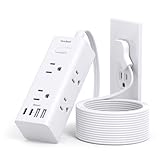
I’ve lost count of the times I’ve seen a perfectly good appliance, humming away in its designated spot, tethered to the wall socket by a cord that looks like it’s auditioning for a role in a horror movie. It’s usually a cheap, thin thing, often white or grey, snaking across the floor like a digital snake. My gut reaction is always the same: ‘Seriously? Is that even safe?’ The question of are appliance extension cords safe is one that gets asked a lot, and frankly, the answer isn’t a simple yes or no. It’s more of a ‘it depends, and you really need to pay attention.’
I’ve learned this the hard way, by buying the wrong ones and seeing the consequences, or by talking to folks who know way more about this than I do and have seen things go sideways.
Let’s cut to the chase: if you’re thinking about plugging your big stuff into something other than the wall, you need to know what you’re doing. Otherwise, you’re just asking for trouble, and that trouble can be expensive, or worse.
Appliance Extension Cords: The Good, the Bad, and the Smoky
Look, I get it. You bought a killer new fridge, but the only plug is across the kitchen. Or maybe you’ve got a garage workshop and your favorite band saw is just out of reach. Sometimes, you just need that extra length. That’s where appliance extension cords come in. But here’s the thing: not all extension cords are created equal, and when you’re talking about appliances that draw serious juice – we’re talking refrigerators, washing machines, space heaters, portable air conditioners – you’re not dealing with your average lamp cord.
The fundamental difference lies in what they’re designed to handle. A standard, lightweight extension cord you use for your Christmas lights or a vacuum cleaner is usually rated for maybe 10 to 13 amps. That’s fine for low-draw devices.
But a refrigerator? That can easily pull 12 amps, sometimes more when the compressor kicks on.
A portable AC unit? You’re looking at 15 amps or even higher. Plug one of those power-hungry beasts into a cord that can’t handle the load, and you’re setting yourself up for a bad time. Overheating is the most common culprit.
The thin wires inside a cheap cord can’t dissipate the heat generated by that much current flowing through them. This can melt the insulation, cause arcing, and lead to a fire.
I learned this the hard way with a portable AC unit that kept tripping breakers. I thought the breaker was faulty, but it turned out the cheap extension cord I was using was getting ridiculously hot to the touch after only an hour.
Swapped it for a heavy-duty one, and no more issues. That was a wake-up call.
The common advice you’ll hear is to “use a heavy-duty extension cord for appliances.” That’s good advice, but it’s not specific enough. What is heavy-duty? And what makes a cord suitable for a high-draw appliance versus just a slightly beefier one? It boils down to wire gauge (AWG) and the cord’s overall construction. Thicker wires (lower AWG numbers) can carry more current with less resistance, meaning less heat and less voltage drop. A cord meant for appliances needs to be rated for the specific amperage draw of the appliance. For most major appliances in a home, this typically means a 12-gauge or even 10-gauge cord, rated for at least 15 amps, and preferably 20 amps to give you some buffer.
One aspect people often overlook is the ‘continuous use’ rating. Some cords are designed for intermittent use, meaning you plug something in for a bit, then unplug it. Appliances that run for hours on end, like refrigerators or dehumidifiers, need cords rated for continuous use.
These are built to handle sustained heat buildup better. So, when you’re looking for an appliance extension cord, ignore the brightly colored, flimsy ones. You need something substantial, something that feels like it could withstand a small earthquake. That means thicker insulation, a solid feel, and clear markings indicating its amp rating and intended use.
If it feels light, bends too easily, or looks like it’s made of cheap plastic, walk away. Your appliance, and your home, will thank you.
What to Look for: Beyond Just ‘heavy-Duty’
Alright, so we’ve established that not all cords are created equal. When you’re staring at a wall of extension cords, trying to figure out which one won’t turn your kitchen into a scene from a disaster movie, what are the key things you should be looking for?
It’s not rocket science, but it does require paying attention to the details. First and foremost, forget about anything less than 14-gauge wire for anything that isn’t a low-power gadget. For serious appliances – refrigerators, portable ACs, space heaters, electric dryers, microwaves – you absolutely need 12-gauge wire, and often 10-gauge is even better if you can find it and the appliance’s plug can accommodate it. The lower the gauge number, the thicker the wire. (See Also: Can Extension Cords Short Out )
Think of it like a water pipe: a wider pipe can carry more water without pressure loss. Same idea with electrical current.
Next up is the amp rating. Most household circuits are 15 amps, with some dedicated circuits for larger appliances being 20 amps. Your appliance extension cord needs to be rated at least for the amperage of the circuit it’s plugging into, and ideally a bit higher. A 15-amp appliance on a 15-amp cord is pushing it.
A 15-amp appliance on a 20-amp cord gives you a safety margin. Many appliance cords will be marked with their maximum wattage and amperage. Always go with the higher amp rating if you’re unsure, and make sure it’s designed for continuous use if your appliance is going to be running for extended periods.
This is where a lot of people go wrong; they buy a cord that can handle the initial surge but overheats during prolonged operation.
Look for cords specifically marketed for appliances or heavy-duty use. These usually have thicker, more durable outer jackets, often made of rubber or a tough PVC compound, which resist abrasion and damage better.
The plugs themselves should be solid and securely molded, not flimsy plastic that feels like it could crack if you look at it wrong. The prongs should be solid. Check for certifications from recognized testing laboratories like UL (Underwriters Laboratories), ETL, or CSA.
These labels mean the product has been tested and meets safety standards. It’s not a guarantee against all problems, but it’s a significant indicator of quality and safety. I’ve seen some off-brand cords that looked okay but felt cheap and had no certification marks. Those are the ones you want to avoid like the plague.
Another important factor, often overlooked, is the length. While you might need an extra 10 feet, a 50-foot cord of the same gauge will have more resistance and voltage drop than a 10-foot one. This means more heat generated along the entire length. If you absolutely need a long cord, make sure it’s the thickest gauge you can reasonably get, and again, check those ratings carefully.
A cord that’s too long can be just as problematic as a cord that’s too thin. It’s about matching the cord’s capabilities to the appliance’s demands and the distance it needs to cover. My rule of thumb: buy the shortest, thickest, most solid cord you can find that meets your needs.
Don’t overextend your reach if you don’t have to.
| Feature | What to Look For (Good) | What to Avoid (Bad) | My Verdict |
|---|---|---|---|
| Wire Gauge (AWG) | 12-gauge or 10-gauge for high-draw appliances | 14-gauge or higher (thinner) for anything beyond a small gadget | Lower number (thicker wire) is king for appliances. A must. |
| Amp Rating | At least 15 amps, preferably 20 amps for major appliances | Anything less than the appliance’s draw, or no rating listed | Always err on the side of higher amps. Safety first. |
| Jacket Material | Thick, durable rubber or heavy-duty PVC | Thin, flimsy plastic, easily nicked or damaged | Needs to feel tough. Imagine it taking some abuse. |
| Certifications | UL, ETL, CSA listed | No recognized safety marks, or off-brand symbols | These are your best bet for some assurance of safety standards. |
| Plug & Connectors | Solid, molded, secure fit | Loose, cracked, or poorly assembled parts | A weak connection here is a fire hazard. |
| Intended Use | Clearly marked for appliance/heavy-duty/continuous use | General purpose, indoor use only, light-duty | Make sure it’s built for the job you’re asking it to do. |
Common Mistakes and How to Avoid Them
So, you’ve got the appliance, and you need it moved a bit. The temptation to just grab the nearest extension cord is HUGE. I’ve been there. But this is where the real danger lies, and where most people mess up.
The biggest mistake, hands down, is using the wrong type of cord for the appliance. I see people plug refrigerators into basic indoor extension cords all the time. They’re often thin, designed for lower amperage, and not meant for continuous operation.
This is a recipe for overheating, which can melt the insulation, short the cord, and potentially start a fire. I had a buddy whose basement flooded and he had to run a dehumidifier constantly.
He grabbed an old, cheap extension cord from the garage. Within a week, it was so hot the plastic was soft. He was lucky it didn’t melt down.
Another common blunder is overloading a cord. Even if you have a heavy-duty cord, if you try to run too many high-draw appliances through it, or plug a 20-amp appliance into a 15-amp cord, you’re going to have problems. It’s like trying to force too much water through a narrow pipe – pressure builds up, things get hot, and something eventually breaks or fails. Remember, the amp rating is the absolute maximum the cord can safely handle. You want a buffer. If your appliance draws 12 amps, a 15-amp cord is the minimum, but a 20-amp cord is far safer for sustained use. (See Also: Can Extension Cords Be Use With Electric Heaters )
Then there’s the physical damage. Extension cords get run over by chairs, kicked, stepped on, sometimes even run over by cars in a garage. Any cord that shows signs of wear and tear – cuts, nicks, frayed insulation, bent prongs – should be immediately retired. It’s not worth the risk. People often think, ‘Oh, it’s just a little cut.’ But that little cut can expose the wires, allowing moisture or debris to get in, or creating a point where the wire can be further damaged, leading to arcing or a short circuit. I once found a cord that was practically chewed through by my dog – I tossed it instantly. Even minor damage compromises its safety.
People also misuse them. Using an indoor-rated extension cord outdoors is a big no-no.
They aren’t designed to withstand moisture, temperature fluctuations, or UV exposure from the sun, all of which can degrade the insulation and make them unsafe. Similarly, using a cord in a damp or wet environment without it being specifically rated for that purpose is incredibly dangerous. Water and electricity are a lethal combination. Always match the cord’s environment rating to where you plan to use it.
Finally, and this is a controversial one for some: people often buy cords that are way too long. While it’s convenient to have that extra reach, longer cords have higher resistance, leading to voltage drop and increased heat.
Unless you absolutely need that 50-foot cord, opt for a shorter one. The shorter the distance the electricity has to travel, the less strain on the cord and the safer it generally is.
Are Appliance Extension Cords Safe? My Practical Experience
I’ve spent a good chunk of my life tinkering with gadgets and setting up smart homes. That often means plugging things in where they aren’t supposed to be plugged in, or needing that extra bit of reach.
I’ve definitely made my share of mistakes with extension cords. Early on, when I was setting up my garage workshop, I needed to run my table saw. The outlet was on the far wall, and my brand-new saw had a short cord. I grabbed the thickest looking cord I had from an old shop vac.
It looked beefy, and it worked. For a while. Then I noticed the plug end was getting warm. Not hot, just noticeably warm.
I ignored it. A few months later, I was running the saw and it sputtered and died. The plug on the extension cord was blackened and slightly melted.
The saw was fine, but the cord was toast, and I was lucky it didn’t catch fire. That was a hard lesson: ‘warm’ is not good when it comes to appliance cords.
Since then, I’ve become almost obsessive about selecting the right cord. I learned that for anything that draws significant power – my chest freezer in the basement, the portable AC unit I run during heatwaves, even my heavy-duty shop vacuum – I need a 12-gauge cord, at minimum.
If I can find a 10-gauge, I’ll grab it. I’ve found that cords specifically made for generators or RVs often fit the bill for heavy-duty appliance use because they’re built to handle high loads.
They’re usually more expensive, but the peace of mind is worth every penny. I paid about $45 for a 25-foot, 12-gauge cord that’s made of thick rubber and has a bright orange jacket so I don’t accidentally trip over it in the dim basement light. It’s overkill for some things, but for my freezer that runs 24/7, it’s a necessary investment.
I’ve also learned to pay attention to the ‘strain relief’ on the plugs. This is the part where the cord enters the plug. A good cord will have a solid strain relief that prevents the wires inside from being pulled and stressed when you tug on the cord.
Cheap cords often have flimsy strain relief that can break, leading to internal wire damage. I’ve also started using smart plugs on some of my less important appliances, but for the big ones, I stick to direct connections with the right gauge cord. The idea of a smart plug controlling a refrigerator is just… nope. (See Also: Are Outdoor Extension Cords 10 Or 12 Gauge )
I want that fridge to have an uninterrupted, solid power supply. For things like my dehumidifier, I got a heavy-duty cord and then plugged that into a dedicated outlet. No daisy-chaining, no multiple adapters.
Simplicity and robustness are key when dealing with appliances.
I’ve learned that the common advice to simply ‘use a heavy-duty extension cord’ is only half the story. You need to know what heavy-duty means for your specific appliance. It’s about matching the wire gauge, amp rating, and construction to the appliance’s needs.
Ignoring these factors is like buying a flimsy bicycle helmet to race a motorcycle – it’s just not going to cut it and could have serious consequences. The goal is to get the power where you need it without introducing a new point of failure or a safety hazard.
And if a cord feels too hot, too flimsy, or looks damaged, it’s time for it to go in the recycling bin, no questions asked. I’ve learned to trust my instincts and my senses – if something feels wrong, it probably is.
Faq: Appliance Extension Cord Safety
Can I Use a Regular Extension Cord for My Refrigerator?
No, you generally cannot and should not use a regular, lightweight extension cord for a refrigerator. Refrigerators, especially when the compressor kicks in, draw a significant amount of power (amps). Regular cords are typically not rated to handle this continuous load and can overheat, melt, and pose a fire hazard. You need a heavy-duty extension cord with a low gauge number (12-gauge or 10-gauge) and a high amp rating (at least 15 amps, preferably 20 amps) specifically designed for continuous use with appliances.
How Do I Know If an Extension Cord Is Safe for My Appliance?
To determine if an extension cord is safe for your appliance, check the appliance’s power requirements (usually listed on a sticker on the appliance itself, often in watts or amps). Then, look at the extension cord’s specifications. It should be clearly rated for the appliance’s amperage draw or wattage. For high-draw appliances like refrigerators, air conditioners, or space heaters, you need a heavy-duty cord (12-gauge or 10-gauge) with a minimum 15-amp rating. Also, look for certifications like UL, ETL, or CSA on the cord, which indicate it meets safety standards. If the cord feels light, the plastic is flimsy, or there are no clear ratings, it’s not safe.
What Is the Difference Between a Regular and an Appliance Extension Cord?
The primary difference is the wire gauge and the overall construction. Regular extension cords often use thinner wires (higher gauge numbers like 16-gauge or 18-gauge) and are designed for low-power devices like lamps, chargers, or small appliances that don’t run continuously. Appliance extension cords, conversely, use thicker wires (lower gauge numbers like 12-gauge or 10-gauge) and are built with heavier insulation and more solid components to handle higher amperage loads and continuous use without overheating. They are designed to safely deliver the significant power required by appliances such as refrigerators, washing machines, and portable air conditioners.
Can I Plug Multiple Appliances Into One Extension Cord?
It is generally not recommended to plug multiple high-draw appliances into a single extension cord, even if the cord is rated for them individually. Each appliance contributes to the total electrical load. If the combined amperage draw of all connected appliances exceeds the extension cord’s maximum amp rating, the cord will overheat, creating a fire hazard. For safety, it’s best to use a heavy-duty extension cord for each individual high-draw appliance, connecting it directly to a wall outlet whenever possible. Always check the total wattage or amperage capacity of the extension cord and the combined needs of the devices you intend to plug in.
The ‘but Everyone Does It’ Trap
I hear it all the time. People see their neighbors, their friends, even their own parents using a standard extension cord to run something that clearly pulls more power than that cord should handle. And they think, ‘Well, if they can do it, I can too.’ This is perhaps the most dangerous mindset when it comes to appliance extension cords. It’s the ‘it won’t happen to me’ fallacy, and it’s utterly baseless when it comes to electrical safety. The laws of physics don’t care if ‘everyone does it.’ An overloaded or underspecified cord will still overheat, degrade, and become a fire risk, regardless of how many people are doing the same thing.
The reality is that many people who ‘get away with it’ are either using appliances that draw less power than they think, their cords are newer and haven’t degraded yet, or they’ve just been lucky so far. Luck, however, is not a safety strategy. The consequences of electrical fires are devastating – loss of property, injury, or worse.
A cheap, inappropriate extension cord might save you $10 or $20 upfront, but it could cost you everything later. The advice to use a cord specifically rated for the appliance is not a suggestion; it’s a requirement for safe operation. If your appliance has a thick, three-pronged plug, it’s usually an indicator that it draws a lot of power and requires a solid connection, not a flimsy extension.
I remember a friend who insisted on using a thin, indoor-only cord to run a portable AC unit in his garage workshop. He’d done it for two summers. On the third summer, during a particularly hot spell, the cord started to smoke.
He was there, thankfully, and managed to unplug it before it caught fire, but the plastic insulation was completely melted and warped. He said he just figured it was fine because ‘everyone uses them like that.’ It was a stark reminder that when it comes to electrical safety, you can’t rely on popular practice; you have to rely on proper practice. The fact is, adhering to the proper safety guidelines for are appliance extension cords safe is the only way to make sure your home and your family are protected.
Conclusion
So, are appliance extension cords safe? The blunt answer is: only if you use the right one, for the right job, and treat it with respect. Buying a cheap, undersized cord for a power-hungry appliance is like bringing a squirt gun to a wildfire – it’s not going to do the job and could make things worse. Always match the cord’s specifications (gauge, amp rating, intended use) to your appliance’s needs. Look for reputable certifications like UL or ETL, and for goodness sake, retire any cord that looks damaged, feels hot, or is past its prime.
Don’t fall into the trap of thinking ‘everyone does it this way.’ That kind of thinking is what leads to disaster. Invest in a quality, heavy-duty extension cord designed for appliances if you absolutely need one. It’s a small price to pay for peace of mind and safety. If you’re ever in doubt, err on the side of caution and get the thicker, more solid cord.
Ultimately, making sure are appliance extension cords safe means being informed and making smart choices. It’s about understanding that electricity is powerful and demands respect. Next time you reach for an extension cord, take a moment to check its ratings and your appliance’s needs. Your home will be safer for it.