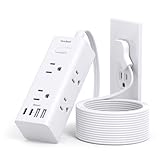
I remember my first cruise years ago, squinting at the tiny outlet in the cabin, trying to figure out how I was going to charge my phone, my e-reader, and my wife’s tablet all at once. It felt like a technological desert. Then, I saw it – a discreetly plugged-in power strip, a little beacon of hope in a sea of limited charging options. This immediately made me wonder: are extension cords allowed on Carnival Cruise ships? It’s a question that pops up a lot, and the answer isn’t as simple as a straight yes or no. Let’s cut through the noise and get to what actually matters.
You’ve probably seen mixed advice online, with some folks saying “no problem” and others warning of confiscation. The reality is, Carnival has specific rules to keep everyone safe, and that includes what you can and can’t plug into the wall. Ignoring these can lead to headaches, or worse, your gear getting taken away.
The Official Word and Why It Matters
Carnival, like most cruise lines, has a safety policy that dictates what types of electrical items you can bring aboard. This isn’t just to make your life difficult; it’s primarily about fire prevention. Ship electrical systems are different from what you have at home, and the confined spaces mean a small issue can escalate quickly. The official policy states that passengers are prohibited from bringing aboard surge protectors, power strips, and extension cords that do not have a circuit breaker or overload protection. This is the cornerstone of their safety regulations regarding electronics.
Now, let’s break down what that actually means for you. A standard, basic power strip you might use at home, the kind that just has multiple outlets, is usually a no-go. These can overload the ship’s circuits, and if they overheat, they become a fire hazard. Carnival wants to avoid that at all costs. They are, however, generally okay with multi-port USB chargers, which are designed to charge devices directly and don’t draw as much power or pose the same risk. Think of it this way: if it significantly increases the number of things you can plug into a single point, and it doesn’t have its own safety cutoff, it’s likely on the forbidden list.
I’ve seen people get caught with these basic power strips at security. They’re usually asked to return them to their car or dispose of them.
It’s a bummer, especially if you bought it specifically for the trip. The reason Carnival is so strict is because fires at sea are incredibly dangerous. They have limited resources to combat them, and the potential for panic among passengers is high. Therefore, they err on the side of caution with anything that could potentially cause an electrical fault.
It’s not about being stingy with outlets; it’s about maintaining a secure environment for everyone on board. When packing, always double-check the Carnival website for their most current Prohibited Items list.
Policies can change, and it’s better to be informed beforehand than surprised at the gangway.
What’s Actually Allowed and What’s a Gamble
So, if those simple power strips are out, what are your options? This is where you need to be smart about what you pack. The key distinction Carnival makes is between a ‘surge protector’ or ‘extension cord’ and a ‘multi-port USB charging hub’. A true extension cord, by definition, extends an electrical circuit. A power strip often just splices into that circuit multiple times. What Carnival does allow, and what many people successfully use, are devices that consolidate charging by using a single plug to power multiple USB ports. These typically look like a standard wall adapter but with 2, 3, or even 4 USB ports instead of a traditional outlet.
I once packed a small, travel-sized power strip that had a built-in circuit breaker. It looked similar to a standard one, but it had a small, red reset button. I debated for ages whether it would be allowed. When I got through security, I asked the agent specifically about it. He looked at it, noted the circuit breaker, and said, “As long as it has that overload protection, you’re good.” So, for extension cords, it’s not a blanket ban, but the type matters immensely. If it has a fused plug or an automatic overload shut-off, you’re usually in the clear. Think of it as a safety net built into the device itself.
Here’s a breakdown of what’s typically a gamble versus what’s generally safe: (See Also: Can Extension Cords Short Out )
| Item Type | Likely Allowed? | Why/Verdict |
|---|---|---|
| Basic 3-4 outlet power strip (no surge protection) | No | Commonly confiscated. Poses an overload risk. |
| Power strip with built-in surge protection AND circuit breaker | Yes (usually) | Meets Carnival’s safety criteria if explicitly stated. Always good to verify. |
| Multi-port USB charging hub (plugs directly into wall) | Yes | Designed for direct device charging, minimal risk. Very popular. |
| Standard extension cord (without surge protection/breaker) | No | Fire hazard, usually confiscated. |
| Travel adapter with multiple USB ports | Yes | Similar to USB hubs, designed for low-power device charging. |
The gamble comes into play when you try to bring something that technically could be construed as a prohibited item. The security officers have the final say. If you’re unsure, leave it at home or pack it in your checked luggage if you want to take the chance (though they might still flag it).
My Own Dumb Mistake with a Power Strip
I learned this lesson the hard way a few years back on a different cruise line, but the principle applies. I’d bought what I thought was a pretty decent power strip – it had USB ports and three regular outlets, plus surge protection. Seemed like the perfect cruise companion.
I packed it neatly in my carry-on, ready to deploy the moment I got into my cabin. We were going through security, and it was the first thing the X-ray operator flagged. He pulled it out, looked at it, and said, “Sorry, sir, this isn’t allowed.” I argued for a solid five minutes, pointing out the surge protection, the USB ports, the whole nine yards. He just shook his head and pointed to a sign detailing prohibited items, which clearly listed ‘power strips’ without further qualification.
My argument was that it was a surge protector, therefore it should be okay. But his response was blunt: “It’s a power strip.
Those are not allowed.” He didn’t care about the surge protection; it was the form factor and the potential for overload that got it nixed. I was so frustrated.
I ended up having to buy a ridiculously overpriced multi-port USB charger from the ship’s gift shop, which worked, but cost me about $40 for something I could have bought at a discount store for $10. That experience taught me to be much more precise about what I bring.
The lesson? Don’t assume ‘surge protection’ makes a power strip automatically okay.
If it looks like a power strip, and it’s not a specialized, officially approved type, it’s a risk.
The Real-World Need: Why You Want Extra Outlets
Let’s be honest, the primary reason you’re asking if extension cords are allowed on Carnival Cruise ships is because you’re going to need more outlets than the cabin provides. Most standard cruise ship cabins, especially older ones, are notorious for having a pathetic number of electrical outlets. Often, it’s just one or two, and one might be dedicated to the hairdryer provided. If you’re traveling with a partner, or even just have a smartphone, a smartwatch, an e-reader, and maybe a portable fan or a CPAP machine, you’re in trouble. This isn’t about luxury; it’s about basic functionality in the 21st century.
I always bring a multi-port USB charger now. It’s small, plugs right into the wall, and gives me four USB ports. My phone, my wife’s phone, her Kindle, and my portable charger all get juice simultaneously. It’s a big deal. For things that absolutely need a plug, like a CPAP machine, I make sure it has a very low power draw and doesn’t require a bulky adapter that might also be flagged. Some people bring small, travel-sized fans, and for those, a USB-powered fan is a much safer bet than one that plugs into a wall outlet and might require an extension. (See Also: Can Extension Cords Be Use With Electric Heaters )
Consider the types of devices you absolutely must charge. Are they all USB-powered? If so, a good quality multi-port USB charger is your best friend.
If you have a device that requires a standard AC plug, you need to be extra careful. The ship’s electrical system is designed for specific loads. Overloading a single outlet can trip breakers, not just for your cabin, but potentially for a section of the ship.
This is why Carnival is so vigilant. It’s not just about your convenience; it’s about the safe and reliable operation of the entire vessel.
Think about the limited space, the constant vibration, and the humid environment. These factors all add to the potential for electrical issues, making safety regulations most important.
Understanding how cruise ship electrical systems differ from your home is key to knowing what’s safe to bring. Ship power is generated on board and distributed through a complex network. Unlike a house with a central breaker box for the whole building, power on a ship is managed in sections. This means an overload in one cabin might affect more than just that cabin. Furthermore, the wiring is often older and less solid than modern home wiring, making it more susceptible to issues from unexpected power draws.
This is why Carnival’s policy on extension cords and power strips is so specific. They are looking for devices that have built-in safety mechanisms. A power strip without overload protection is basically just allowing you to plug multiple high-draw devices into one outlet, potentially exceeding its safe capacity. The USB charging hubs and power strips with circuit breakers are designed to manage the power flow more intelligently. They often have internal fuses or automatic shut-offs that will cut power if the current becomes too high, preventing a potential fire or electrical fault.
When packing, I recommend focusing on consolidating your charging needs. Instead of bringing multiple individual chargers for each device, opt for a single charger that has multiple USB ports. This reduces the number of plugs you need and generally keeps you within the bounds of what’s allowed.
If you absolutely need a traditional AC outlet, look for a compact travel adapter that has one AC outlet and one or two USB ports, provided it explicitly states it has surge protection and overload protection (often indicated by a fuse or breaker). Always check Carnival’s official prohibited items list before you sail. It’s usually found on their website under “Before You Sail” or “Guest Services.” This list is your most reliable source of up-to-date information.
If an item isn’t explicitly mentioned as allowed and looks questionable, it’s best to leave it at home to avoid disappointment and potential confiscation.
The Contrarian View: Sometimes, They Don’t Check
Now for a bit of real talk that goes against the official grain, but I’ve seen it happen. While Carnival’s policy is clear and should be respected for safety reasons, the enforcement can sometimes be… inconsistent. I’ve heard stories, and even witnessed it myself on occasion, where people have brought perfectly standard, non-surge-protected power strips through security without a second glance. The security officers are dealing with thousands of bags, and sometimes, if an item doesn’t look overtly dangerous or suspicious, it might slip through. This is NOT a reason to break the rules, mind you. It’s a gamble, and if you get caught, you’ll likely face the consequences, which could include your item being confiscated. (See Also: Are Outdoor Extension Cords 10 Or 12 Gauge )
My contrarian opinion here is that relying on inconsistent enforcement is a fool’s errand. The policy exists for a very good reason: safety. Ships are complex environments, and electrical fires are a serious threat. While a small power strip might seem harmless, it could potentially overload an aging circuit or contribute to a larger electrical issue.
The few dollars you might save by not buying an approved multi-port charger, or the minor inconvenience of not having that extra outlet, is not worth the risk to your safety or the safety of everyone else on board. I’ve seen people argue with security, get their items confiscated, and end up with a ruined start to their vacation. It’s just not worth the stress.
Instead of hoping an item slips through, I advocate for proactive compliance. Invest in a good quality, travel-sized multi-port USB charger. They are relatively inexpensive, widely available, and explicitly designed to be safe for travel and use in various environments. They solve the primary problem – charging multiple devices – without violating the cruise line’s safety protocols. Think of it as a small investment in peace of mind. If you must have an AC outlet, seek out a certified travel adapter with built-in surge protection and overload reset, and even then, be prepared for scrutiny. The goal is to enjoy your cruise, not to worry about your electronics or get into a debate at security.
Frequently Asked Questions About Extension Cords on Carnival Cruises
Are Basic Power Strips Allowed on Carnival Cruises?
No, basic power strips that do not have built-in surge protection or an overload circuit breaker are generally not allowed on Carnival cruises. They are considered a potential fire hazard due to the risk of overloading ship electrical systems and are often confiscated by security.
Can I Bring a Surge Protector on a Carnival Cruise?
You can typically bring a surge protector on a Carnival cruise, but it must have a circuit breaker or overload protection built-in. Simple power strips that only offer surge protection without a circuit breaker might still be prohibited. Always check Carnival’s specific policy details for clarity.
What Kind of Charging Devices Are Safe to Bring on Carnival Cruises?
Multi-port USB charging hubs and travel adapters with multiple USB ports are generally safe and allowed. These devices plug directly into a single outlet and provide several USB ports for charging phones, tablets, and other devices without posing an overload risk.
What Happens If I Bring a Prohibited Extension Cord or Power Strip?
If you bring a prohibited extension cord or power strip, it will likely be confiscated by Carnival’s security. You may be asked to return it to your car, dispose of it, or it may be held by the cruise line for the duration of your voyage. It’s best to check the official prohibited items list before packing.
Conclusion
So, to get straight to the point: are extension cords allowed on Carnival Cruise ships? The official answer is a cautious ‘it depends on the type,’ leaning heavily towards ‘no’ for basic models. Carnival’s priority is safety, and that means cracking down on anything that could potentially cause an electrical hazard. Your best bet is to ditch the idea of a traditional extension cord or a simple power strip and instead opt for a reliable, multi-port USB charging hub. These are widely accepted, safe, and will keep all your key gadgets powered up without any drama.
Don’t be that person arguing at security over a $10 power strip. It’s just not worth the headache, the potential confiscation, or the risk to everyone on board. Invest in a good travel charger, pack smart, and focus on enjoying your cruise. A little preparation goes a long way in making sure a smooth and hassle-free vacation from the moment you step onto the ship.