I remember the first time I blew out a motherboard. It wasn’t a lightning strike, just a little flicker of the lights, and poof. My computer, which I’d sunk a small fortune into, was dead. I’d always just grabbed whatever cord I found in the drawer, figuring they all did the same job. Turns out, that was a monumentally stupid mistake.
So, are extension cords and surge protectors the same? Nope. Not even close. And understanding the difference could save you a heap of cash and a whole lot of frustration.
Why You Can’t Just Treat All Cords Like Equal Joes
Let’s get this straight right off the bat: an extension cord is basically a fancy piece of wire that lets you plug something in from further away. That’s it. It’s like a straw that lets you drink your juice from across the room. It carries the power, but it doesn’t do anything to clean it up or protect it. Think of it as a direct pipeline from the wall socket to your device.
I learned this the hard way, as I mentioned. I’d bought a fancy new gaming PC, and naturally, it needed to be positioned just right for optimal airflow and aesthetics.
The nearest outlet was a bit of a stretch. So, I grabbed a long, heavy-duty extension cord I’d used for my power tools and plugged everything in. A few weeks later, during a minor thunderstorm, the power flickered.
Not a big surge, just a little hiccup. My brand new PC? Fried. The graphics card alone cost me more than the extension cord, probably about $400 back then.
The extension cord cost me $15. It was a brutal lesson in ‘you get what you pay for’ and, more importantly, ‘different tools for different jobs.’
An extension cord’s job is simple: deliver electricity. It’s a conductor. It has wires inside, a plug on one end, and a socket on the other. The gauge of the wire matters – thicker wires can handle more amperage without overheating. That’s about the extent of its features. There’s no magic happening inside. If the power coming from the wall is dirty, unstable, or spikes suddenly, the extension cord just passes that junk straight through to whatever you’ve plugged into it. It’s like having a garden hose – it moves water, but it doesn’t purify it.
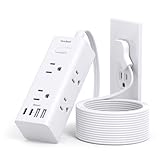
This is where the confusion often starts for people. They see a power strip that has multiple outlets, and it looks a lot like a beefed-up extension cord. Some power strips even have a little light on them. They think, ‘More outlets, probably better for my expensive electronics.’ But without the surge protection component, it’s still just a glorified extension cord, albeit one that can power several things at once. And that can be even more dangerous if you overload it.
The key difference is protection. An extension cord offers none. A surge protector offers a layer of defense against voltage spikes. It’s not about length, it’s about function. The common advice to ‘always use a surge protector for your electronics’ is spot on, but too many people just use any old cord because they don’t grasp the fundamental difference.
What’s Actually Going on Inside a Surge Protector?
Okay, so we know an extension cord is just a wire. A surge protector, on the other hand, is a device designed to shield your electronics from sudden, damaging bursts of voltage. Think of it like a bouncer at a club for electricity. When everything’s calm and the voltage is at its normal level (say, 120 volts in the US), the electricity flows through unimpeded, just like it would with a regular extension cord. But when there’s a sudden spike – maybe a lightning strike nearby, a downed power line, or even just the grid cycling power – the surge protector steps in.
The magic, or rather the science, happens thanks to a component called a Metal Oxide Varistor (MOV). These MOVs are connected between the hot and neutral lines (and sometimes the ground line). When the voltage is normal, the MOV acts like a resistor with a very high resistance, meaning almost no electricity flows through it. It’s basically inactive. However, when the voltage jumps significantly above its rated level, the MOV’s resistance drops dramatically. It becomes a low-resistance path, basically creating a short circuit for the excess voltage. This excess voltage is then diverted away from your sensitive electronics and safely dissipated, usually as heat, or shunted to the ground wire. (See Also: Can Extension Cords Short Out )
This is why the ‘joule rating’ on a surge protector is so important. It tells you how much energy the surge protector can absorb before it fails. A higher joule rating means it can handle bigger or more frequent surges. My first surge protector was a cheap one, probably with a low joule rating I never even looked at. It gave up the ghost after one decent surge, leaving my TV vulnerable for the next one, which it didn’t survive. I ended up spending about $600 to replace the TV. The protector cost me $20. You do the math.
It’s also important to know that surge protectors don’t last forever. Those MOVs wear out over time. Every time they absorb a surge, they degrade a little. Most good surge protectors will have an indicator light that tells you if the protection circuitry is still active. If that light goes out, it means the surge protection is gone, and it’s basically just a power strip now. I’ve found that after about 3-5 years, depending on how active my local power grid is, the protection starts to fade. I usually just buy a new one rather than trying to test it.
So, while an extension cord simply passes power, a surge protector actively monitors and diverts excess voltage. It’s a protective device, not just a conduit. The common advice to use them is not marketing hype; it’s practical advice based on how electricity and delicate electronics interact.
What to Actually Look for When Buying Protection
This is where most people get lost in the aisles of the hardware store or the electronics section. You see rows of black boxes with multiple outlets, some with USB ports, some that look like they could survive a nuclear blast, and some that are ridiculously cheap. It’s overwhelming, and frankly, some of it is just marketing fluff designed to get you to spend more money on things you don’t need.
First off, forget the fancy features on most surge protectors unless you have a specific need. Do you really need USB ports built into your surge protector? Maybe, but those ports often have lower charging speeds than a dedicated wall adapter. Do you need it to be shaped like a Transformer? Probably not. Focus on the core function: surge protection.
The most important spec is the joule rating. This tells you how much energy the surge protector can absorb. For a computer, a good TV, or anything you’ve invested serious money in, aim for a rating of at least 1000 joules. For less important items, maybe a few hundred joules is okay, but honestly, the price difference for decent protection isn’t that huge anymore. I try to get at least 1500-2000 joules for my main workstation and entertainment center. These often cost around $30-$50, which is a bargain compared to replacing a fried component.
Next, consider the clamping voltage. This is the voltage at which the surge protector starts to divert excess power. Lower is generally better. Look for a clamping voltage of 400 volts or less. This means the protector starts working when the voltage rises to 400 volts, rather than waiting for it to climb even higher.
The response time is also key. This is how quickly the surge protector reacts to a surge. Faster is better, so look for a nanosecond (ns) rating. 1 nanosecond is 1 billionth of a second. Most reputable surge protectors will have a response time of 1 ns or less. If they don’t list it, that’s a red flag.
Finally, check for an indicator light. As I mentioned, this light confirms that the surge protection circuitry is active. If it goes out, the unit is no longer protecting your devices. I’ve heard of people using surge protectors for years without realizing the protection had failed because they never checked this light. My rule of thumb is to replace any surge protector that loses its indicator light, or if it’s more than 5 years old, regardless of the light.
Here’s a quick rundown of what I look for:
| Feature | My Recommendation | Why It Matters | Verdict |
|---|---|---|---|
| Joule Rating | 1000+ Joules (preferably 1500-2000) | Higher means more energy absorption | Must-Have |
| Clamping Voltage | 400V or less | Lower means it reacts sooner | Highly Recommended |
| Response Time | 1 nanosecond (ns) or less | Faster reaction time protects better | Highly Recommended |
| Indicator Light | Yes | Confirms protection is active | Must-Have |
| Number of Outlets | Depends on need (6-12 common) | Practicality, not protection level | Nice-to-Have |
| USB Ports | Optional, check charging speed | Convenience, but often slower charging | Optional |
Don’t get fooled by claims of ‘lightning arrestors’ or fancy designs. Stick to the specs. (See Also: Can Extension Cords Be Use With Electric Heaters )
Common Mistakes That Cost You (and Your Stuff)
You’d think this would be straightforward, but I’ve seen people make the same dumb mistakes over and over. The biggest one, of course, is using a plain extension cord for valuable electronics. I’ve watched friends plug their brand new gaming consoles, expensive sound systems, and even their primary work laptops into simple extension cords. They think, ‘It just needs power, right?’ WRONG. The cost of a decent surge protector, maybe $30, is peanuts compared to a $1000 laptop or a $2000 TV. I don’t understand why people gamble with that.
Another mistake is buying a surge protector that’s actually just a power strip. They look similar, but a power strip has no surge protection components. It’s just a splitter. Some cheap ones might even have a thin plastic case that melts if you overload them, which is a fire hazard. Always check the box or the product description to confirm it explicitly states ‘surge protection’ and lists a joule rating. If it just says ‘power strip,’ it’s not doing the job you think it is.
Overloading is another biggie. Even with a surge protector, you can overload the circuit it’s plugged into. Most household circuits are rated for 15 amps. Each device has a power draw (wattage).
You can usually find this on a label on the device itself. Watts divided by volts (120V) equals amps. If you plug too many high-draw devices into one surge protector, you can trip the breaker or, worse, overheat the wiring.
I once saw a guy plug a space heater, a high-power computer, and a laser printer into a single, cheap surge protector. The protector got alarmingly warm, and the lights in the room flickered.
I told him to unplug it, and he looked at me like I was crazy. Turns out, he was overloading it, and the protector was struggling. It’s better to use multiple surge protectors on different circuits if you have a lot of power-hungry gear.
Not replacing old or failed surge protectors is a silent killer of electronics. As I mentioned, MOVs degrade. That little indicator light is your best friend. If it’s off, the protection is gone. It’s like driving around with bald tires – it feels fine until you need them and they fail spectacularly. I’ve had surge protectors where the indicator light went out after about three years. I replaced them immediately. It’s a small investment for peace of mind. I’ve heard horror stories of people losing entire setups because they relied on a surge protector that had already given up the ghost.
Finally, using surge protectors outdoors or in damp environments without proper ratings. Most standard surge protectors are designed for dry indoor use only. If you need something for the garage, patio, or workshop, you need a heavy-duty, weather-resistant model that is specifically rated for outdoor use. Using the wrong type can be a serious safety hazard.
Real-World Use: When and Where They Shine
So, we’ve established they aren’t the same, and you know what to look for. But where do you actually need a surge protector versus a simple extension cord? It’s pretty simple when you break it down. If the device plugged in is valuable, contains sensitive electronics, or stores important data, you absolutely want a surge protector.
Think about it: your computer, your gaming console, your expensive flat-screen TV, your Blu-ray player, your home theater receiver, your smart home hubs, even your Wi-Fi router and modem. These are all prime candidates for surge protection. A power surge can fry the delicate microprocessors, memory chips, or power supplies in these devices. The repair cost often far exceeds the price of a good surge protector. I learned this the hard way with my first computer, and I’ve never made that mistake again. Now, every piece of tech that matters gets plugged into a quality surge protector.
What about things that are less sensitive or less expensive? A simple fan, a basic lamp, a power tool, or a hedge trimmer. These are generally much more solid. While a massive surge could still potentially damage them, they are far less likely to be critically damaged by a minor fluctuation than a computer. For these, a good quality extension cord is perfectly fine. Just make sure the cord is rated for the amperage the tool or appliance draws. A thin, cheap extension cord can overheat and melt if you try to run a powerful tool through it, which is a fire hazard in itself. (See Also: Are Outdoor Extension Cords 10 Or 12 Gauge )
A common area of confusion is the kitchen. You have appliances like toasters, blenders, and microwaves. Most of these are pretty self-contained and don’t have the super-sensitive digital brains of a computer. So, a power strip (not necessarily a surge protector) might be fine for a few small appliances. However, if you have a high-end espresso machine or a fancy stand mixer, it might be worth protecting. The key is to assess the value and sensitivity of the device. If it costs you more than $50-$100 and has any kind of digital display or complex circuitry, lean towards a surge protector.
Another angle is when you’re creating a ‘power center.’ If you’re plugging multiple devices together into one central point, especially for entertainment systems or home offices, a surge protector is the way to go. These multi-outlet units help consolidate your cords and offer protection for everything plugged into them. Just remember the overloading rule – don’t try to power a small appliance store off one outlet.
Basically, if you’re plugging in anything with a screen, a hard drive, or any kind of complex digital control, use a surge protector. If it’s a simple heating element, motor, or light bulb, a good extension cord will likely suffice.
People Also Ask
Can You Plug a Surge Protector Into an Extension Cord?
Technically, yes, you can plug a surge protector into an extension cord. However, this is generally not recommended. Doing so can introduce additional resistance and potential points of failure, and it can sometimes undermine the surge protection’s effectiveness. It also makes it easier to overload the original wall circuit. It’s always best practice to plug surge protectors directly into a wall outlet whenever possible to make sure the most reliable and safe power delivery.
Can You Plug an Extension Cord Into a Surge Protector?
Yes, you can plug an extension cord into a surge protector. This is a common practice when you need to extend the reach of the surge protector itself. For example, if your surge protector has enough outlets but isn’t close enough to your device, you can plug an extension cord into the surge protector to get it closer. However, be mindful of the total load on the surge protector and the extension cord to avoid overloading either.
What Is the Difference Between a Power Strip and a Surge Protector?
The primary difference is that a surge protector contains components (like Metal Oxide Varistors or MOVs) designed to absorb and divert excess voltage spikes that can damage electronics. A power strip, on the other hand, is simply a device that splits a single wall outlet into multiple outlets. It offers no protection against power surges. While many surge protectors look like power strips, not all power strips are surge protectors.
When to Just Stick with the Basic Cord
Look, I’m all for protecting my gear. I’ve spent enough money on replacements to know the value of a good surge protector. But that doesn’t mean every single power-carrying cord needs to be a fancy surge-suppressing unit. There are times when a good old-fashioned extension cord is not only sufficient but the more practical choice. My philosophy is this: if the device you’re plugging in is cheap, easily replaceable, or doesn’t contain sensitive electronics, a basic extension cord is probably fine. Think of your basic desk lamp, a small oscillating fan that cost you maybe $20 at the hardware store, or a portable heater that’s just a heating element and a fan.
I’ve got an extension cord that’s probably 50 feet long that I use for my leaf blower and my electric mower. These are tools that draw a lot of power, but they’re built tough. If a surge hits them, it’s a bummer, but it’s not going to cost me hundreds or thousands to replace. The cord itself is heavy-gauge to handle the amperage. It’s a tool for a tool, and it does its job perfectly well without any fancy protection. I’ve had that cord for about eight years, and it’s still going strong.
Another good use case for basic extension cords is in temporary setups or for devices that are inherently high-power but not sensitive. For example, if you’re setting up temporary lighting for an event or running power to a tool in a workshop, a heavy-duty extension cord is the go-to. You just need to make sure the cord’s gauge is appropriate for the load and the length. Using a cord that’s too thin for the job is a fire hazard, regardless of whether it’s a surge protector or just an extension cord. Always check the label on your appliance or tool for its power requirements and the recommended cord gauge.
The key differentiator is value and sensitivity. A smartphone charger, while containing electronics, is relatively inexpensive and designed to handle variations. A basic surge protector might be overkill, though many people use them for convenience. But a $5 plug-in night light? Definitely not worth a surge protector. A simple, well-made extension cord that’s properly rated for the task is all you need. It’s about matching the tool to the job and not overspending on features you don’t require. Sometimes, simple is best.
Conclusion
So, to circle back to the original question: are extension cords and surge protectors the same? Absolutely not. One is a simple conduit for electricity, while the other is a protective shield against damaging power fluctuations. My own experiences, from fried computers to needing to replace expensive TVs, have hammered this lesson home. Don’t be like me when I was younger and dumber – always use a surge protector for your valuable electronics.
If it’s got a screen, stores data, or cost you more than a cheap dinner, plug it into a surge protector with a decent joule rating. For less sensitive or less expensive items, a good quality extension cord that’s rated for the job is fine. Just remember to check those indicator lights on your surge protectors and replace them when they’re old or their protection fails.
Next time you’re at the store, take a moment to actually read the packaging. You might save yourself a lot of money and heartache down the line.