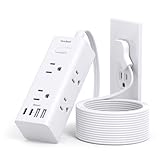
I used to think all extension cords were created equal: a hunk of plastic and wire designed to get power from point A to point B. Then I bought a set of those fancy lighted extension cords for my garage. I figured, why not? A little glow when I plug something in late at night? Sounded neat. But then I started noticing it. A subtle hum. A high-pitched whine. I kept looking around, thinking the fridge was acting up, or maybe a faulty light fixture. Nope. It was the damned extension cords.
So, are lihjted extension cords noisy? My honest answer is: some of them absolutely are, and it’s not something most people talk about until they’re living with it.
That Annoying Little Hum: What’s Actually Happening?
Look, when you buy a standard, no-frills extension cord, you’re getting a solid piece of copper wire wrapped in insulation. Simple. But when a manufacturer decides to stick a light on there, especially a little LED that lights up when it’s plugged in, they’re adding electronics.
That little light isn’t just a magic bulb; it’s a circuit, often involving a small power converter or driver to take the 120V from the wall and step it down to what the LED needs. And guess what?
Many of these cheap, tiny electronic components can produce an audible noise. It’s not usually the LED itself that’s buzzing, but the associated circuitry, especially the tiny inductors or transformers used in the power conversion. Think of it like a very, very small, very, very quiet version of the transformer hum you sometimes hear near power substations, but much higher pitched. It’s the sound of electricity doing its thing in a less-than-perfectly-shielded, mass-produced circuit.
I’ve taken apart a few of these things out of sheer curiosity and annoyance. You’ll find a small PCB (printed circuit board) tucked into the receptacle end, or sometimes even within the plug itself. On that board are typically a few resistors, capacitors, and a tiny inductor or transformer.
When the current flows through these components, especially the inductor, it can vibrate at an electrical frequency, and if that vibration is in a range humans can hear, you get a hum or a whine. It’s usually worse when the load on the cord is very light or non-existent, because the converter is working harder to idle. Plug in a heavy appliance, and sometimes the noise drops because the converter is working at a more optimal level. But not always.
Some are just poorly designed or manufactured with cheaper components that are more prone to noise. The materials used in the casing can also play a role; a flimsy plastic housing might resonate more than a solid one. It’s a common issue with many consumer electronics that involve small power supplies – the noise floor is often higher than you’d expect.
My first experience with this was with a set of three 25-foot lighted cords I got for about $35. They looked great, the light was handy for finding the outlet in my dimly lit basement workshop, but the high-pitched squeal was enough to drive me up the wall after a few hours. It was subtle enough that my wife didn’t notice it for weeks, but for me, working in relative quiet, it was maddening. I ended up unplugging them and going back to my old, silent cords, only plugging the lighted ones in when I really needed the visibility.
It’s a trade-off, for sure, and one that isn’t always worth it if the noise level is too high for your environment. The question of are lihjted extension cords noisy really depends on the specific product and its internal components. (See Also: Can Extension Cords Short Out )
When Lights Are Nice, but Noise Isn’t
The primary reason anyone buys a lighted extension cord is visibility. It’s about that little glow that tells you it’s live and, more practically, helps you see where to plug something in when you’re fumbling around in the dark, behind furniture, or in a cramped corner. For people with mobility issues, or those who work in dimly lit spaces like basements, garages, attics, or even under a desk, that little bit of light can be incredibly useful. It reduces the chances of tripping over the cord or struggling to align the plug with the socket. Think about setting up holiday decorations in a dark attic or plugging in a lamp behind a sofa – the light makes it much easier.
However, the noise factor can quickly turn this convenience into a major annoyance. If you’re sensitive to high-pitched sounds, or if the cord is in a quiet room like a bedroom, home office, or living area, that constant hum or whine can be incredibly distracting.
I learned this the hard way when I tried using a lighted cord for my computer setup. The subtle buzz was barely noticeable during the day, but at night, when the house was quiet and my focus was on work, it became a persistent irritant.
It made me second-guess if my computer was making the noise, or if it was something else. It’s a classic case of a feature intended to improve user experience actually degrading it due to poor execution. The common advice that lighted extension cords are just like regular ones, only with a light, is often flat-out wrong.
I’ve also noticed that the quality of the light itself can vary. Some have a bright, focused LED, while others have a softer, diffused glow.
The brightness can also be a factor in how noticeable the associated noise is. A very bright light might suggest a more solid power delivery system, but that’s not always the case. Some of the cheapest cords I’ve seen have surprisingly bright lights, but also the most offensive electrical whine. It’s a bit of a gamble.
If you absolutely need the light, you have to weigh the potential for noise against the convenience. For me, if I can’t find the outlet without a light, I’d rather have the light and deal with a minor hum than struggle in the dark. But if the hum is loud enough to be truly bothersome, it’s not worth it.
Decoding the Specs: What to Look for (and What to Ignore)
When you’re shopping for a lighted extension cord, the packaging often boasts about gauge (like 14/3 or 16/3), length, and the type of outlets (grounded, non-grounded). These are important for safety and performance – a heavier gauge (lower number) means it can handle more amperage and is generally safer for higher-power devices. Always match the gauge to your needs; a 16-gauge cord is fine for lamps and small electronics, but you’ll want a 14-gauge for power tools or appliances that draw a lot of current. But here’s the kicker: none of the standard specs tell you anything about whether the cord will be noisy. The noise comes from the electronics that power the light, and that’s usually hidden away, with no mention on the box.
What I’ve learned through painful trial and error is to look for subtle clues. Sometimes, reviews will mention a ‘hum’ or ‘buzz.’ If you see that repeatedly, steer clear. If the product description or photos show a very prominent, complex-looking light assembly, that might be a red flag, though not always. Some manufacturers, especially higher-end ones, might use better quality components or shielding for their internal electronics. These are often more expensive, and the price itself can be an indicator – though not a guarantee. I’ve seen some surprisingly expensive lighted cords that still hummed like a trapped fly. Conversely, I’ve found some less expensive ones that were relatively quiet. (See Also: Can Extension Cords Be Use With Electric Heaters )
Another thing to consider is the type of light. Are they simple indicator LEDs, or is there a more complex illumination system? Often, the simpler the circuit, the less likely it is to generate significant noise.
I’ve found that cords with just a tiny, single LED embedded in the female end are often quieter than those with brighter, more complex lighting integrated into the plug or along the cord. It’s a bit of a guessing game, and frankly, I wish manufacturers would be more upfront about the noise characteristics of their products. They could even rate them on a decibel scale, like some appliances are. Until then, we’re left to rely on user reviews and educated guesses.
The weight and feel of the cord can sometimes offer a hint too; a cord that feels cheap and flimsy might have cheap, noisy electronics inside.
| Feature | My Verdict on Noise | Why |
|---|---|---|
| Simple LED indicator (single bulb in female end) | Generally Quiet | Less complex circuitry, fewer components to vibrate. |
| Bright, multi-LED illumination | Potentially Noisy | More complex power conversion, higher chance of noisy components. |
| Generic, unbranded models | High Risk of Noise | Likely uses cheapest, most readily available (and often noisy) electronic components. |
| Well-known brand with good reputation | Moderate Risk, Worth Investigating | Better chance of quality control, but still need to check reviews. |
| High price point ($30+ for a basic cord) | Slightly Lower Risk | May indicate better components, but not a guarantee. Noise is often an afterthought. |
My Own Dumb Mistakes and What I Learned
So, about those first lighted cords I bought for the garage. They were cheap, advertised as heavy-duty (14-gauge), and had a bright blue LED. They looked like a bargain. Plugged them in, and BAM – that whine. It was like a tiny mosquito trapped in the electrical box. I used them for a week, and it drove me absolutely bonkers. I tried plugging them into different outlets, different circuits, hoping it was some weird electrical interference. Nope. It was the cords themselves.
My second mistake was thinking that just because a brand is well-known for other electrical products, their lighted extension cords would be silent. I bought a set from a reputable brand, thinking I was safe. They were quieter, sure, but not silent. There was still a faint, almost imperceptible hum if you really listened. This was in my home office, where quiet is king. I ended up returning them. It’s a shame because they were otherwise well-built cords, flexible and durable. But that subtle noise, even if most people wouldn’t notice it, was enough to make me regret the purchase. It taught me that ‘reputable brand’ doesn’t automatically translate to ‘silent electronics’ when it comes to these add-on features.
My third, and thankfully last, mistake was buying a cord that had the light integrated into the plug housing, which made the plug itself bulkier. The noise was there, but what really got me was how the bulkier plug didn’t fit well in some of my standard wall outlets. It stuck out awkwardly and felt less secure. This specific cord was also advertised as “ultra-bright,” which it was, but the noise it produced was frankly unbearable.
I learned that the light feature can sometimes compromise the physical design of the plug and receptacle, making them less universal or even unsafe if they don’t seat properly. So now, I’m much more hesitant. I still use lighted cords, but only when I absolutely need the light, and I’ve found a couple of brands that seem to have figured out how to keep the noise to a minimum.
It took a lot of searching and a few wasted bucks.
Practical Tips for Using Lighted Extension Cords (and Avoiding Trouble)
If you’ve decided you need the visibility a lighted extension cord offers, here’s how to make the best of it and minimize the chances of bringing a buzz into your life. First, always try to buy from places with good return policies. Amazon, for example, is usually great about this. Buy the cord, plug it in, and if you notice any bothersome noise, send it back. Don’t try to live with it – you’ll just end up regretting it, like I did. Read reviews specifically looking for mentions of noise, hum, or buzz. If multiple people complain about it, it’s almost certainly a problem with that model. (See Also: Are Outdoor Extension Cords 10 Or 12 Gauge )
Second, consider where you’ll be using the cord. If it’s going into a noisy environment like a workshop, garage, or even outdoors, a little bit of electrical hum is unlikely to be noticeable. If, however, it’s for a home office, bedroom, or any place where you value quiet, be extra cautious. You might even want to consider a cord that has an on/off switch for the light, or one where the light only illuminates when a load is connected (though these can sometimes be noisier when idle). I’ve seen some marketed as “smart” cords that have these features, but again, always check reviews.
Third, consider whether you really need the light. Sometimes, a good flashlight or a strategically placed work light can achieve the same goal without introducing potential noise issues. If the primary reason you’re looking at lighted cords is to avoid fumbling in the dark, a simple, high-quality LED flashlight kept nearby might be a more reliable and silent solution. For my own use, I’ve gravized towards using lighted cords only for specific, temporary tasks where visibility is most important, and otherwise sticking to my trusty, silent, standard extension cords. It’s a balance between convenience and peace and quiet.
People Also Ask About Lighted Extension Cords
Do Lighted Extension Cords Use More Power?
Generally, no, lighted extension cords do not use significantly more power than their non-lighted counterparts. The LEDs used are very energy-efficient, consuming minimal wattage. The power consumption of the light itself is negligible compared to the appliances you’ll be powering through the cord. The main draw comes from the actual load, not the indicator light.
Are Lighted Extension Cords Safe?
Lighted extension cords are generally safe if they are manufactured to meet safety standards (like UL or ETL certification) and are used appropriately. The added electronics for the light are designed to be low-voltage and isolated from the main current path in a way that shouldn’t compromise safety. However, as with any electrical cord, always inspect for damage, make sure it’s rated for the intended use, and avoid overloading it.
Can I Leave a Lighted Extension Cord Plugged in All the Time?
Yes, you can leave a lighted extension cord plugged in all the time, provided it is in good condition and not subjected to harsh environmental conditions. The indicator light is designed to show that the cord is live and ready to receive power. However, leaving any electrical device plugged in continuously carries a small inherent risk, so it’s always wise to periodically inspect the cord for wear and tear.
Verdict
So, to circle back to the burning question: are lihjted extension cords noisy? My experience says a definite ‘sometimes, and it’s incredibly annoying when they are.’ The convenience of seeing where you’re plugging in is a real plus, but it comes with a gamble on the internal electronics. I’ve wasted money on cords that hummed louder than a dentist’s drill, and I’ve found a few gems that are relatively quiet. It’s not a universal problem, but it’s common enough that you should be aware of it before you buy.
My advice? If you absolutely need that light, go in with your eyes wide open. Read reviews religiously, and be prepared to return anything that makes an audible electrical whine. For general use, where visibility isn’t most important, stick with your standard, silent extension cords. They’ve been doing the job just fine for decades without the added soundtrack.
Next time you’re shopping, remember my story. Maybe you’ll dodge a noisy bullet.