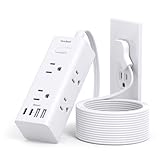
I remember the first time I tried to power a whole Christmas light display with a single, cheap extension cord I found in the garage. Within an hour, the cord was hot to the touch, smelling like burnt plastic, and I was convinced I’d started a fire. That incident, and many like it over the years, taught me a harsh lesson: not all extension cords are created equal, and asking ‘are extension cords safe’ is a question you need to ask before plugging anything in.
It’s easy to grab the cheapest, longest cord you can find and assume it’ll do the job. But that kind of thinking can lead to damaged appliances, tripped breakers, or worse. I’ve definitely wasted money on flimsy cords that fell apart after a season, and learned the hard way what actually holds up and what’s just a fire hazard waiting to happen.
Picking the Right Cord: It Ain’t Just About Length
Look, the core job of an extension cord is simple: carry electricity from Point A to Point B. But the devil, as always, is in the details. The most common mistake people make is thinking any cord will do. Nope. The first thing you need to understand is gauge. This is basically the thickness of the wire inside the insulation. Thicker wires (lower gauge number, like 12-gauge or 10-gauge) can handle more amperage, meaning more power, without overheating. Thinner wires (higher gauge number, like 16-gauge or 18-gauge) are for lighter loads, like a lamp or a phone charger, not power tools or anything that draws a lot of juice.
I learned this the hard way trying to run my circular saw from an outlet that was just a bit too far away using a standard 16-gauge cord. The saw kept bogging down, felt weak, and the cord got surprisingly warm. Switched to a 12-gauge cord designed for heavy-duty use, and it was like night and day. The saw powered up smoothly, and the cord stayed cool. It’s not just about safety; it’s about performance too. You’re starving your tool if the cord can’t keep up.
Another big one is the amp rating. This tells you how much current the cord can safely carry. Always, always check the amp rating of the appliance you’re plugging in and make sure the extension cord’s rating is equal to or higher. This is a must. If your power tool needs 10 amps, a cord rated for only 7 amps is a ticking time bomb. You’ll see these ratings printed on the cord itself or in the manual. Don’t eyeball it; check it.
The number of outlets matters too, though less for safety and more for convenience. If you’re plugging in multiple things, a cord with multiple sockets is great. But be mindful of the total load. Just because you have three outlets doesn’t mean you can run three power-hungry devices simultaneously if the cord (or the wall outlet it’s plugged into) isn’t rated for that combined load. It’s a system, and the weakest link breaks it. People ask if extension cords can be used indoors, and yes, but only if they are rated for indoor use. Outdoor cords are built differently to withstand moisture, UV rays, and temperature fluctuations. Using an indoor cord outside is a recipe for disaster.
Common Mistakes That Can Fry Your Cords (and Your House)
One of the most infuriating things is seeing people treat extension cords like permanent wiring. They snake them under rugs, staple them to walls, or run them through doorways where they get pinched. This is a fast track to damage. When the insulation gets nicked or frayed, the wires inside are exposed, creating a shock or fire hazard. I once saw a cord that had been run under a rug for months. It was completely worn through in a few spots from foot traffic, and the smell of ozone was already present. Thankfully, it hadn’t caught fire yet, but it was a close call.
Another huge no-no is overloading the cord. I touched on this with amp ratings, but it bears repeating. Running too many high-draw devices on a single cord is incredibly dangerous. Think about those multi-outlet power strips with surge protection. They often have a maximum wattage rating. If you exceed that, you’re asking for trouble. I’ve seen people plug in space heaters, hair dryers, and microwaves all on one cord. That’s asking for the cord to overheat and melt. It’s not if, but when. (See Also: Can Extension Cords Short Out )
People also tend to ignore the condition of their cords. A cracked jacket, exposed wires, or a bent plug prong are all red flags. You wouldn’t drive a car with bald tires, so don’t use a frayed extension cord. I’ve got a little stash of cords that are retired because of minor damage. It’s not worth the risk. Replacing a $20 cord is a lot cheaper than replacing a burnt-out appliance or dealing with a house fire. Always inspect your cords before each use, especially if they’ve been stored away for a while or subjected to rough handling.
What about daisy-chaining? That’s plugging one extension cord into another to extend the reach even further. While technically some cords might allow it according to their specifications, it’s generally a bad idea. Each connection point adds resistance, which means more heat. It also makes it harder to track the total load. Stick to one cord between the power source and your device, or use a single, longer cord if you need more reach. It’s a simple rule that significantly reduces risk.
When Is an Extension Cord Not Safe?
So, when does an extension cord cross the line from useful tool to dangerous hazard? It’s when any of the following apply: damaged insulation (cracks, nicks, exposed wires), a plug that’s bent or broken, a cord that feels excessively hot to the touch even under normal load, or a cord that smells like burning plastic. If you see any of these signs, unplug it immediately and retire the cord. Seriously, don’t try to tape it up or ignore it. It’s not worth the gamble.
Another important factor is the environment. Extension cords are designed for specific conditions. Using an indoor-rated cord outdoors is dangerous because it’s not protected against moisture, dust, and temperature extremes. Rain or dew can seep into the insulation and wires, causing corrosion and short circuits. Conversely, using an outdoor-rated cord indoors is generally safe, but they can be bulkier and more expensive. The key is to match the cord’s rating to its intended use. Some cords are specifically rated for heavy-duty industrial use, while others are light-duty. Using a light-duty cord for a heavy-duty task is like using a string to tow a truck – it’s going to break.
One often overlooked issue is the connection at the wall outlet. If the outlet itself is old, loose, or damaged, it can’t provide a stable connection. This can lead to arcing and overheating at the outlet, which can then transfer to the extension cord. Always make sure the wall receptacle is in good condition. If you notice any flickering lights or a burning smell coming from the wall outlet itself, that’s a serious problem that needs professional attention, independent of the extension cord.
The type of plug matters too. Most extension cords have a three-prong plug, with the third prong being the ground wire. This ground wire provides a path for electricity to flow safely to the ground in case of a fault, preventing shocks. If you have a device with a two-prong plug, you might be tempted to use a cheater plug (an adapter that turns a three-prong into a two-prong). This defeats the safety feature of the ground wire. It’s far better to use a properly grounded outlet or a surge protector with appropriate outlets. Never remove the ground pin from a plug.
Extension Cord Specifications: What the Numbers Actually Mean
Let’s break down the jargon you’ll see on extension cords, because this is where most people get lost and make mistakes. The most important specs are Gauge (AWG), Amperage, Wattage, and Voltage. You’ll also see ratings for Indoor/Outdoor use and Duty Rating (Light, Medium, Heavy). (See Also: Can Extension Cords Be Use With Electric Heaters )
Here’s a quick rundown:
| Spec | Meaning | Why It Matters | My Verdict |
|---|---|---|---|
| Gauge (AWG) | American Wire Gauge. Lower number = thicker wire. 18 AWG is thin, 16 AWG is medium, 12 AWG is thick. | Thicker wire handles more current without overheating. Key for power tools or high-draw appliances. | Always go thicker than you think you need for anything more than a lamp. 14 or 12 AWG is your friend for most tasks. |
| Amperage (A) | How much electrical current the cord can safely carry. Usually printed on the cord. | Must be equal to or higher than the appliance’s amp draw. Exceeding this rating is a major fire hazard. | Match this to your device’s requirement. Never underestimate your appliance’s thirst for power. |
| Wattage (W) | The total power the cord can deliver (Volts x Amps). Sometimes listed instead of or with Amps. | Similar to Amps, indicates total power handling capacity. Many power strips list max wattage. | If you see wattage, do the math (Watts / Volts = Amps) to compare with your device. Keep a buffer. |
| Voltage (V) | The electrical potential difference. Most cords are rated for 120V or 125V in North America. | Makes sure compatibility with your power supply and devices. Standard household voltage is usually fine. | Stick to standard household voltage ratings unless you have a specific need for higher voltage cords (rare for home use). |
| Indoor/Outdoor | Designation for where the cord can be safely used. | Outdoor cords are weather-resistant; indoor cords are not. Using the wrong one is unsafe. | Always use outdoor-rated cords for any outdoor electrical work, period. It’s not worth the risk. |
| Duty Rating | Classifies the cord for light, medium, or heavy-duty applications. | Light-duty is for basic electronics; heavy-duty is for power tools, industrial equipment. | When in doubt, go for a heavy-duty cord. They’re more solid and safer for a wider range of uses. |
Understanding these numbers is the single most important step to making sure your extension cords are safe. Don’t guess. Don’t assume. Read the label. It’s printed there for a reason. My first real power tool, a bench grinder, came with a thin cord. It worked, but it always sounded strained. When I upgraded to a decent 12-gauge cord, the grinder ran so much smoother and quieter. It was a revelation, and a clear safety upgrade.
Practical Tips for Using Extension Cords Safely
Okay, so you’ve got the right cord. Now what? A few simple habits can make a world of difference. First, always plug the extension cord into the wall outlet first, and then plug your appliance into the extension cord. Reversing this can sometimes cause a spark at the appliance end, especially with higher-draw devices, which is never ideal. It’s a small thing, but it’s good practice.
Second, keep extension cords out of high-traffic areas. If you absolutely must run a cord across a walkway or doorway, use a cord protector or conduit to shield it from being stepped on, pinched, or cut. I’ve seen those heavy-duty rubber cord covers that cars can drive over; they’re overkill for most home uses, but they illustrate the principle of protecting the cord. For home use, simply routing the cord along a wall or under furniture where it won’t be disturbed is usually sufficient, as long as it’s not under a rug.
Third, don’t use extension cords as a permanent wiring solution. They are intended for temporary use. If you find yourself constantly needing to run an extension cord to a particular spot, it’s a sign that you might need a new outlet installed. Call an electrician. It’s a much safer and more reliable long-term solution than relying on extension cords indefinitely. I had this issue in my workshop; I was always running extension cords to power my drill press and welder. Finally bit the bullet and had an electrician add two new heavy-duty circuits. Best decision ever.
Fourth, store your extension cords properly. Don’t just coil them up haphazardly and shove them in a bin. Coil them neatly, ideally with a Velcro strap or tie, and store them in a dry place where they won’t be damaged by weight or sharp objects. Inspect them before you use them again, even if they look fine. A little care in storage can extend their life and prevent damage.
Finally, understand the limitations of your cords and your appliances. Read the manuals. If an appliance comes with its own heavy-duty cord, use it. If it specifies a certain gauge of extension cord, comply. Don’t assume you know better. The people who designed the appliance know its power requirements. For example, some older or very specific pieces of equipment might have unique power needs that a generic extension cord just can’t meet safely. (See Also: Are Outdoor Extension Cords 10 Or 12 Gauge )
People Also Ask: Extension Cord Safety Faqs
Can You Run Extension Cords Under Carpets?
No, you absolutely should not run extension cords under carpets or rugs. This is a major fire hazard. The cord can be damaged by foot traffic, getting pinched or frayed without you knowing. Damaged insulation can lead to short circuits and fires. Plus, if the cord overheats, the carpet acts as insulation, trapping the heat and increasing the risk of ignition. Always keep extension cords visible and protected.
Are 16-Gauge Extension Cords Safe for Outdoor Use?
A 16-gauge extension cord can be safe for outdoor use if it is specifically rated for outdoor use and used for light-duty applications. However, 16-gauge wire is relatively thin and not suitable for high-power devices or long distances outdoors. For most outdoor power needs, like lawn equipment or holiday lights, a heavier gauge (14-gauge or 12-gauge) outdoor-rated cord is much safer and more reliable, as it can handle more current without overheating.
How Do I Know If an Extension Cord Is Safe?
You know an extension cord is safe if it is free from visible damage like cracks, frays, or exposed wires. It should have a plug with all its prongs intact and a jacket that is not melted or brittle. Importantly, it must be rated for the amperage and voltage of the appliance you intend to plug into it, and appropriate for the environment (indoor/outdoor). Always inspect your cord before plugging anything in.
What Is the Maximum Length of an Extension Cord You Can Use?
While there isn’t a single “maximum” length that applies to all situations, longer extension cords generally have higher resistance, which can lead to voltage drop and overheating, especially with higher-amperage devices. For most household uses, keeping extension cords under 50 feet is advisable, and for heavy-duty tools, shorter is always better to maintain power and safety. If you need significant length, use a thicker gauge cord to compensate for the resistance.
Conclusion
So, are extension cords safe? The answer is a resounding yes, but only when you treat them with respect and use them correctly. They aren’t magic wires; they’re tools with specifications, and ignoring those specs is where the danger lies. I’ve learned that a few extra bucks for a thicker gauge cord, or one specifically rated for outdoor use, is a small price to pay for peace of mind and actual functionality.
Don’t be the person whose garage smells like burnt plastic after a DIY project. Take a few minutes to read the labels, inspect your cords, and match them to the job. It’s not rocket science, but it is electrical science, and getting it wrong can have serious consequences. So next time you reach for that cord, ask yourself: am I using the right cord for this job?
This whole discussion about are extension cords safe really boils down to common sense and a little bit of knowledge. Invest in quality, maintain your gear, and never, ever compromise on safety. Your home and your appliances will thank you.