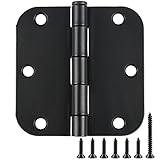
I remember standing in the hardware store aisle, staring at a wall of hinges. My old shed door had finally sagged enough to make me do something about it, and I figured, how hard could replacing a hinge be? Just grab some 3 1/2 inch ones, right? Turns out, nope. The question ‘are all 3 1 2 hinges the same size’ popped into my head because, as I quickly learned, the answer is a frustrating ‘no, not exactly’.
It’s easy to assume that a standard size means a standard product, but with hinges, a little detail goes a long way, and getting it wrong means a door that sticks, binds, or just looks plain wrong.
Let’s get this sorted so you don’t waste your time or money like I almost did.
The Devil’s in the Details: Beyond Just 3 1/2 Inches
Alright, let’s cut to the chase: are all 3 1/2 hinges the same size? The short, annoying answer is no. While ‘3 1/2 inches’ refers to the overall length of the hinge when it’s fully open, that’s just the starting point. The real differences come down to the width of the leaves (the flat parts that attach to the door and frame), the thickness of the material, the shape of the corners, and the pin type. Think of it like buying a shirt – a medium is a medium, but the cut and fabric can make it fit wildly differently.
When people say ‘3 1/2 inch hinge,’ they’re usually talking about the standard full mortise hinge, the kind you see on most interior and exterior doors. These typically measure 3 1/2 inches long by 3 1/2 inches wide when fully extended. However, the width of each leaf, the part that gets mortised (cut into) the door and frame, is often around 1 1/2 inches.
But you can absolutely find 3 1/2 inch hinges with different leaf widths. I once bought a set where the leaves were a bit narrower, and while they technically fit, the door felt less stable, especially in wind. It’s a subtle thing, but it matters for heavier doors or those exposed to the elements.
You’ll also see ‘3 1/2 inch x 4 inch’ hinges, which are longer on one leaf, often used for heavier applications where more surface area is needed for screwing into the frame.
Then there’s the thickness. Hinges come in different gauges, often listed as ‘G’. A higher ‘G’ number means a thicker, stronger hinge. For a lightweight interior closet door, 11-gauge might be fine. For an exterior entry door, you’d want something more solid, like 9-gauge or even thicker. My mistake was grabbing the cheapest pack I found without checking the gauge. They looked identical, but they bent slightly under the weight of my solid wood garage door after only a year. Not ideal.
The corner type is another visual cue that can indicate slightly different applications. You’ll see square corners, which are more common for modern doors and frames, and rounded corners (often a 1/4-inch or 5/8-inch radius), which are typically found on older doors or frames that were routed to match. Trying to force a square-cornered hinge into a rounded mortise, or vice-versa, is a recipe for a sloppy fit and a door that won’t hang right.
It’s like trying to fit a square peg in a round hole – it looks bad and doesn’t function properly. The pin, the central rod that holds the two leaves together, also has variations. Most standard hinges have a fixed pin, but some have a removable pin, which is handy for quick door removal without unscrewing the whole hinge. This is a practical feature, especially if you need to take a door off for painting or moving furniture.
When Looks Can Be Deceiving: The ‘standard’ vs. Reality
So, you walk into the store, and there they are: stacks and stacks of ‘3 1/2 inch hinges.’ They all look the same, right? Wrong. This is where the real confusion starts, and where many DIYers, myself included early on, get tripped up. The ‘standard’ 3 1/2 inch measurement is just the starting point. The actual dimensions and features can vary significantly, affecting how they perform and if they’ll even fit your existing door and frame mortises.
A common misconception is that if you’re replacing old hinges, you can just grab any new ‘3 1/2 inch’ set. This is rarely the case if you want a clean, professional look and a perfectly functioning door. The width of the leaves is a big one. Most standard interior door hinges will have leaves that are roughly 1 1/2 inches wide.
But I’ve seen hinges marketed as 3 1/2 inch that have slightly wider or narrower leaves. If the leaf is wider than your existing mortise, you’ll have to chisel out more wood, which is a pain and can look messy. If it’s narrower, you’ll have a gap, and the hinge won’t sit flush, looking unprofessional and potentially compromising structural integrity.
Then there’s the thickness, which I touched on, but it’s worth reiterating. Hinges are often described by their gauge. A thicker gauge (lower number, like 9-gauge) means a stronger, more durable hinge. A thinner gauge (higher number, like 13-gauge) is typically for lighter-duty applications.
If you have a heavy solid wood door and you buy thin, cheap hinges, they will eventually sag. I learned this the hard way. (See Also: A Box Without Hinges Key )
My first attempt at replacing shed hinges involved the cheapest pack I could find. Within a year, the door was dragging on the ground because the hinges had visibly bowed under the weight. I ended up having to replace them with a heavier gauge, and the difference was night and day. It cost me double in the long run.
The corner radius is another subtle but important detail. Hinges come with square corners, or rounded corners with specific radii like 1/4-inch or 5/8-inch. Most modern doors and frames are cut for square corners. Older homes, however, often have rounded corners where the hinge leaf meets the edge of the door or frame.
If you try to put a square-cornered hinge into a rounded mortise, you’ll have gaps and a poor fit. You’d either need to fill the gaps and rout new corners or find hinges that match the existing profile.
This is why always measuring your existing mortises and checking the corner type is so important before buying replacements. It’s the difference between a five-minute swap and a weekend of woodworking.
What to Actually Look for: Beyond the Box Label
Okay, so you’re convinced that not all 3 1/2 inch hinges are created equal. Great. Now, what the heck should you be looking for when you’re actually in the store or browsing online? Forget the marketing fluff; focus on the practical stuff that will make your life easier and your doors hang right.
First, measure your existing mortises. This is a must. Take a tape measure and a pencil to your door and frame. Measure the length and width of the recess where the hinge leaf sits.
For a standard 3 1/2 inch hinge, the leaf itself is usually around 3 1/2 inches long and about 1 1/2 inches wide. But always verify. If your existing mortises are deeper or shallower, wider or narrower, you need to find hinges that match or be prepared to do some chiseling.
Honestly, chiseling mortises to fit hinges is a pain and rarely looks as good as a perfect fit from the start. I’d rather spend an extra ten minutes finding the right hinge than an extra hour fixing a botched mortise.
Second, check the hinge gauge and material. Hinges are typically made from steel, brass, or stainless steel. For most interior doors, steel is perfectly fine, especially if it’s a decent thickness.
Brass offers a nice aesthetic but can be softer and more expensive. Stainless steel is best for exterior doors or high-moisture areas due to its rust resistance. The gauge is important for durability. Look for a gauge number.
The lower the number, the thicker and stronger the hinge. For standard interior doors, 11-gauge or 13-gauge is common.
For heavier doors or exterior use, you want something thicker, like 9-gauge or even 7-gauge. I’ve seen cheap hinges advertised as 3 1/2 inch that are paper-thin – avoid those like the plague.
Third, note the corner type. As mentioned, look at the corners of your existing hinges and the mortises. Are they sharp and square, or do they have a rounded radius? Hinges come with square corners, or rounded corners with specific radii (like 1/4 inch or 5/8 inch). If you’re replacing hinges, try to match the corner radius. If you’re installing new hardware on a new door or frame, square corners are generally the standard and easiest to work with. Don’t try to force a square hinge into a rounded opening; it’s a waste of time and will look terrible.
Finally, consider the pin type. Most hinges have a non-removable pin, meaning it’s peened over at the top. These are secure and require unscrewing the hinge to remove the door. Some have a removable pin, which you can often lift out by tapping the bottom of the hinge. This is super convenient if you frequently need to take doors off, like for painting or moving large items. Just make sure the pin is seated properly to prevent rattling. (See Also: Are Integrated Washing Machine Door Hinges Standard )
What’s the Difference Between Ball Bearing and Standard Hinges?
Ball bearing hinges have small ball bearings nestled between the knuckles (the cylinders that surround the pin). This reduces friction, making the door open and close more smoothly and quietly, especially for heavier doors. Standard hinges rely on the pin sliding directly against the metal of the knuckles, which can lead to more wear and noise over time.
Common Mistakes and How to Avoid Them
Let’s talk about the mistakes I’ve made, so you don’t have to repeat them. It’s usually the simple things, the assumptions you make because, well, why wouldn’t it be that simple? But with hardware, especially something as fundamental as hinges, the details matter.
The number one mistake? Assuming all 3 1/2 inch hinges are interchangeable. As we’ve hammered home, they aren’t. This leads to doors that bind, don’t close properly, or even sag over time. I once bought a cheap pack of ‘3 1/2 inch’ hinges for an exterior door. They looked fine, but the metal was too thin, and the mortises weren’t quite as deep as the new hinge leaves. I ended up with a door that sagged on the latch side, making it hard to lock. I had to pull those out, chisel out more wood to get the new, thicker hinges seated properly, and then shim the frame slightly. It turned a 30-minute job into a three-hour headache.
Another common pitfall is not matching the corner radius. You’re replacing hinges on an old door, and you grab a new set with square corners, assuming it’ll be fine. But the old frame has rounded mortises from years of use. You try to force it, and you end up with ugly gaps, or you have to spend time routing new corners, which is a skill not everyone has or wants to practice on a Saturday afternoon. Always check those corners on your old hinges or in the mortise itself. If they’re rounded, get rounded hinges. If they’re square, get square ones.
Then there’s the material and gauge issue. People often just grab the cheapest option available. ‘They’re just hinges,’ they think. Big mistake, especially for exterior doors or heavier interior doors. Thin, cheap hinges will warp, bend, and fail. I’ve seen them literally twist out of shape. Always check the gauge and feel the weight of the hinge. A good quality hinge will feel substantial. For exterior doors, invest in rust-resistant materials like stainless steel or solid brass, and make sure the gauge is appropriate for the door’s weight. Don’t skimp here; it’s false economy.
Finally, forgetting the screw holes. While most hinges will come with screws, the length and type might not be ideal for your situation. For a solid, secure installation, especially on exterior doors or in situations where security is a concern, you need long screws that go deep into the stud behind the door frame. Often, the screws included with standard hinges are too short. My advice? Always have a box of longer, heavy-duty wood screws on hand – at least 2.5 to 3 inches long – to make sure a really solid mount. It’s a small step that makes a huge difference in how secure your door feels.
Hinge Types and Their Uses
It’s not just about size; it’s about what the hinge is designed to do. Understanding the different types of hinges and their intended uses will save you a lot of guesswork and make sure you’re not trying to fit a square peg into a round hole, literally. The standard ‘3 1/2 inch’ hinge most people think of is usually a full mortise butt hinge, but there are variations.
Full Mortise Butt Hinge: This is your go-to for most standard doors. Both the door and the frame get a recess (mortise) cut into them to seat the hinge leaves flush. This provides the cleanest look and the most stable support. When people ask if all 3 1/2 hinges are the same size, they’re usually referring to this type, but as we’ve seen, even within this category, dimensions and features vary.
Half Mortise Hinge: Here, only one surface (either the door or the frame) is mortised. The other leaf is surface-mounted. These are often used for lighter doors, cabinets, or situations where mortising the frame might be difficult or undesirable. They’re less common for standard house doors.
Surface-Mounted Hinge: No mortises required. The hinge is attached directly to the surface of the door and frame. These are generally used for very light doors, utility applications, or where a decorative look is prioritized over a flush fit. Think of utility shed doors or some cabinet doors.
Ball Bearing Hinges: As mentioned in the FAQ, these have ball bearings in the knuckles. They’re excellent for heavier doors (like solid wood entry doors, garage doors) because they distribute the weight more evenly and reduce friction, leading to smoother operation and less wear. They often come in the standard 3 1/2 inch size but are built for heavier loads.
Tight Pin Hinges: These have a pin that fits very snugly within the knuckles. They are designed to prevent the door from being easily lifted off its hinges, offering a degree of security. They’re common on exterior doors and some commercial applications.
Spring Hinges (Self-Closing Hinges): These have a built-in spring mechanism that automatically closes the door after it’s opened. You see them on screen doors, fire doors, and some utility room doors. They come in various sizes, including 3 1/2 inch, but the spring mechanism adds complexity and a different functional purpose.
Decorative Hinges: These come in all sorts of styles – strap hinges, decorative butt hinges, barrel hinges – and their primary purpose is often aesthetic. While they might be available in a 3 1/2 inch length, their overall dimensions, leaf thickness, and load-bearing capacity can differ significantly from standard hardware hinges. Always check the specifications if you’re using them for functional doors. (See Also: Are Hinges Wheeels )
Here’s a quick breakdown, with my personal take:
| Hinge Type | Typical Use | Key Consideration | My Verdict |
|---|---|---|---|
| Full Mortise Butt Hinge | Interior/Exterior Doors | Match mortise depth, width, corner radius. Gauge matters for weight. | The standard for a reason. Just make sure it’s the right standard for your door. |
| Half Mortise Hinge | Light doors, cabinets, utility | Less stability than full mortise. Good when you can’t mortise both sides. | Handy for specific jobs, but I wouldn’t use it for an entry door. |
| Surface-Mounted Hinge | Very light doors, cabinets, decorative | Visible hardware. Not for weight-bearing doors. | Looks can be deceiving. Functional for light duty only. |
| Ball Bearing Hinge | Heavy doors (solid wood, exterior) | Smoother operation, longer life for weight. | Worth the extra few bucks for any heavy door. A no-brainer. |
| Spring Hinge | Self-closing doors (screen, utility) | Functional mechanism adds complexity. | Great for specific needs, but annoying if you just want a door to stay open. |
The Final Word: Practical Tips for Hinge Happiness
So, we’ve established that no, not all 3 1/2 inch hinges are the same size, and a whole lot more goes into picking the right one than just the length. To wrap this up and get you on your way to a door that swings freely and hangs straight, here are my final, hard-won tips.
First, always assume you need to measure. Don’t just walk into the store and grab the first pack of ‘3 1/2 inch hinges’ you see. Pull out your tape measure. Measure the width and depth of the mortise on your existing door and frame. Check the corner radius. These measurements are your bible. If you’re buying new doors and frames, pay attention to the pre-drilled mortises if they exist, or plan to cut them precisely. It’s better to be over-prepared than to be staring at a door that won’t close properly.
Second, buy quality over quantity, and the right gauge. I cannot stress this enough. The few extra dollars you spend on a heavier gauge hinge, made from better material (steel is usually fine for interior, stainless or solid brass for exterior), will save you headaches down the line. A thin, flimsy hinge is a ticking time bomb for sagging doors. For a standard interior door, 11-gauge or 13-gauge is usually sufficient. For anything heavier or exterior, look for 9-gauge or even thicker. Feel the weight; a good hinge has heft.
Third, think about the finish and the pin. The finish isn’t just about looks; it’s about durability. Oil-rubbed bronze, satin nickel, polished brass – choose something that complements your decor, but also check that the finish is applied evenly and seems durable. For the pin, consider if you need a removable pin for easy door removal. Most standard doors don’t need this, but it’s a nice convenience if you do a lot of DIY or painting. Just make sure the pin is secure and doesn’t rattle.
Fourth, don’t forget the screws. The short, often cheap screws that come with basic hinge packs are usually not sufficient for a truly secure installation, especially for exterior doors. Always have a supply of longer, heavy-duty wood screws (2.5 to 3 inches) on hand. These will reach the studs behind the frame, providing much better support and security than screws that only bite into the thin frame material. It’s a simple upgrade that makes a massive difference in the long-term stability of your door.
Are 3 1/2 Inch Hinges Universal?
No, 3 1/2 inch hinges are not universal. While 3 1/2 inches refers to the length of the hinge when fully open, variations exist in leaf width, thickness (gauge), corner radius, and pin type. These differences mean that not all 3 1/2 inch hinges will fit existing mortises or support the same door weights. Always measure your existing hardware and mortises before purchasing replacements.
What Is the Standard Width of a 3 1/2 Inch Hinge?
For a standard 3 1/2 inch full mortise butt hinge, the width of each leaf when the hinge is open is typically around 1 1/2 inches, making the total combined width approximately 3 1/2 inches. However, variations can occur, and some hinges marketed as 3 1/2 inch might have slightly different leaf widths, affecting their fit.
Can I Use a Square Corner Hinge on a Rounded Mortise?
You can technically force a square corner hinge into a rounded mortise, but it’s not recommended. This will leave gaps, create an unprofessional appearance, and potentially compromise the hinge’s stability and the door’s function. It’s best to match the corner radius of the hinge to the existing mortise or prepare the mortise to accept the new hinge’s shape.
How Do I Know If I Need a Heavy-Duty Hinge?
You need a heavy-duty hinge if you have a solid wood door, an exterior door, a door that is particularly wide or tall, or a door that feels exceptionally heavy when you try to lift it. For these applications, look for thicker gauge hinges (lower gauge numbers like 9 or 7) and consider ball-bearing hinges, which are designed to handle greater weight and reduce wear.
Verdict
So there you have it. The simple-looking ‘3 1/2 inch hinge’ is anything but simple when you start looking closely. It’s a classic case of the devil being in the details. Don’t get caught out by assuming they’re all the same size; take the time to measure, understand the material, and match the existing hardware.
My shed door is now perfectly aligned, swinging smoothly on new, properly sized hinges. It wasn’t rocket science, just a bit of careful observation and not being afraid to spend a few extra bucks for quality. Hopefully, this saves you some frustration and maybe a trip back to the hardware store.
Next time you’re staring down a hinge aisle, you’ll know exactly what to look for.