I remember the first time I tried to hang a heavy solid oak door by myself. The cheap, builder-grade hinges I’d picked up from the big box store groaned under the weight, and the door sagged like a sad, defeated sigh. It took me three tries, a lot of cursing, and nearly sacrificing my thumb to get it even remotely straight. That’s when I learned a harsh lesson: not all hinges are created equal.
You might be wondering, are ball bearing hinges better? After years of wrestling with doors, cabinets, and various bits of hardware that just wouldn’t behave, I’ve got some thoughts. This isn’t about fancy marketing; it’s about what actually works when you’re knee-deep in a project.
Forget the fluff. Let’s talk brass tacks about whether those ball bearing ones are worth the extra few bucks.
Why Those Fancy Ball Bearings Actually Matter
So, what’s the big deal with ball bearings in hinges? Think of it like this: traditional hinges, especially the simpler ones you find on interior doors or cheap furniture, rely on a pin that just slides inside the hinge barrel. There’s metal on metal, grinding away. Over time, this causes friction. And friction, my friends, is the enemy of smooth operation and longevity.
Ball bearing hinges, on the other hand, have a ring of small, hardened steel balls nestled between the hinge knuckles. When the hinge moves, these balls roll, effectively separating the metal surfaces. This dramatically reduces friction. It’s like the difference between dragging a heavy box across a rough floor versus putting it on a dolly with little wheels. The effort required is minuscule in comparison.
This reduction in friction translates directly into several tangible benefits. Firstly, the door operates much more smoothly. You’ll feel it the first time you swing a heavy door on these; it moves with an almost effortless glide, no sticking or catching. Secondly, it significantly reduces wear and tear. Less friction means less metal dust, less groaning, and a hinge that’s likely to last for decades without getting sloppy. I once installed a set on an old, heavy pantry door that was notorious for sticking. After swapping to ball bearings, the door swung open so silently and smoothly, my mom, who’d been complaining about it for years, actually asked what magic I’d performed. It was just the hinges.
The construction of ball bearing hinges is also generally more solid. They’re often made from thicker gauge steel and designed to handle more weight and stress.
This is particularly important for exterior doors, fire doors (which often require them for safety regulations), or any door that’s going to see heavy, frequent use. The weight capacity of a hinge is a big deal, and ball bearing designs inherently support more. If you’ve ever had a door that felt ‘loose’ or sagged, even after adjusting it, the hinge itself was likely the culprit, worn out by friction.
That’s where the ball bearings shine, keeping things tight and true for longer. They’re also a common feature on higher-quality cabinetry, where smooth, silent operation is prized.
When Cheap Hinges Are a False Economy
Let’s be blunt: going for the absolute cheapest option upfront is often a terrible idea. I learned this the hard way with my first attempt at building a custom workbench. I needed about 10 hinges for the various flip-down panels and storage access. I grabbed the cheapest pack I could find – plain, steel, probably made with the lowest grade metal they could get away with. Within six months, the panels were sagging, the hinges were making this awful squeaking sound that drove me nuts, and one of them actually snapped clean off. The workbench, which I’d spent weeks building, looked like a shoddy amateur job because of a few dollars saved on hinges.
That’s a classic example of false economy. You save a little money initially, but you end up paying more in the long run. You’ll have to replace the cheap hinges, potentially repair damage caused by their failure (like warped wood or scuffed floors), and endure the frustration of dealing with poorly functioning hardware.
The common advice to “just buy decent quality” is usually right, and nowhere is that more true than with hinges. For any door that’s not just a decorative piece, you’re going to want something that can handle the job. This is especially true for exterior doors, which face the elements and are used constantly. They need to be durable, weather-resistant, and strong. (See Also: A Box Without Hinges Key )
The difference in price between a basic, friction-prone hinge and a decent ball bearing hinge is usually not that significant, maybe a few dollars per hinge, but the difference in performance and lifespan is astronomical.
One of the biggest mistakes I see DIYers make is overlooking the weight rating of hinges. They’ll slap a pair of basic hinges on a heavy solid wood door and wonder why it starts to sag.
Builder-grade hinges, the kind that come pre-installed on many new homes, are often designed for lightweight hollow-core doors and minimal use. They’re not built for the long haul or for substantial weight. If you’re dealing with solid wood doors, especially thicker or wider ones, you absolutely need hinges with a higher weight capacity. This is where ball bearing hinges, with their superior engineering and solid construction, usually come out on top.
They are simply built to bear more load and distribute that load more effectively.
What to Look for: Beyond Just ‘ball Bearing’
Okay, so you’re convinced ball bearings are the way to go. Great. But not all ball bearing hinges are created equal. Just because it has ‘ball bearing’ in the description doesn’t automatically make it a top-tier product. You need to know what to look for to avoid ending up with mediocre hardware.
First off, material matters. Look for hinges made from solid steel. Avoid anything that feels too light or sounds hollow when tapped. Stainless steel is even better for exterior applications or high-moisture environments like bathrooms, as it won’t rust. Brass is also a classic choice, but good quality brass hinges can be pricey. For most interior applications, a good quality steel hinge with a proper finish (like a powder coating or electroplating) will do the trick.
Next, check the thickness of the hinge leaf. Thicker steel means a stronger hinge. A common benchmark for good quality hinges is around 2.5mm thickness for standard interior doors. For heavier doors, you might want to go even thicker, say 3mm or more. Also, pay attention to the number of screws per leaf. Most standard hinges have three screws per side, which is usually sufficient. But for really heavy doors, you might see four or even five screws, providing extra anchoring and support. More screws distribute the weight better and offer greater stability.
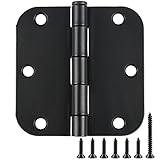
Consider the corner radius. Hinges come with either a square corner or a rounded corner (often a quarter-inch radius).
This isn’t about performance but about aesthetics and how it fits into your door jamb and door edge. Make sure the radius matches what you need. Finally, the finish is important, not just for looks but for protection. A good quality finish will prevent corrosion and wear.
Common finishes include satin nickel, polished brass, oil-rubbed bronze, and black. Think about the overall aesthetic of your home or project and choose a finish that complements it.
While ball bearing hinges are generally superior, a poorly finished or thinly constructed one can still fail prematurely. Always inspect the hardware if you can before buying. (See Also: Are Integrated Washing Machine Door Hinges Standard )
The Hinge Showdown: Ball Bearing vs. Traditional Hinges
Let’s break down the differences in a way that’s easy to digest. You’ve got your basic, no-frills hinges, and then you’ve got your ball bearing hinges. The truth is, for some very light applications, the basic ones might be perfectly fine. But for anything that requires a bit more durability or smooth operation, the ball bearing type is a clear winner. I’ve put together a little comparison to highlight the key differences:
| Feature | Traditional Hinges (Plain Bearing) | Ball Bearing Hinges | My Verdict |
|---|---|---|---|
| Friction Reduction | Low (metal on metal) | High (rolling ball bearings) | Ball Bearing Wins. Smoother operation, less wear. |
| Weight Capacity | Lower (suited for light doors) | Higher (suited for heavy doors) | Ball Bearing Wins. Key for solid wood or larger doors. |
| Durability & Lifespan | Moderate (prone to wear) | Excellent (less wear, longer life) | Ball Bearing Wins. They just last longer. |
| Noise Level | Can be noisy (squeaking, groaning) | Very quiet (minimal friction) | Ball Bearing Wins. Silence is golden. |
| Cost | Lower upfront | Higher upfront | Traditional Wins (sort of). Cheaper now, more expensive later. |
| Maintenance | May require frequent lubrication | Minimal; lubrication less important due to bearings | Ball Bearing Wins. Less hassle. |
| Common Applications | Light interior doors, cabinets, sheds | Exterior doors, fire doors, heavy interior doors, high-traffic areas, premium cabinetry | Ball Bearing for anything important. |
This comparison really hammers home why, for most significant projects, ball bearing hinges are the way to go. The initial cost difference is often negligible when you factor in the longevity and superior performance. I’ve seen people try to save a few bucks on hinges for a brand-new, expensive door, only to regret it within a year. The wear and tear on a standard hinge is relentless, especially on a door that’s used frequently. Ball bearing hinges are simply engineered to handle that kind of stress much, much better.
Common Mistakes and How to Avoid Them
People often make basic errors when it comes to hinges, and it’s usually down to not thinking about the details. One of the most common screw-ups is buying hinges that are too small or not strong enough for the door’s weight. This is especially true for solid wood doors. You see a nice-looking hinge, grab a few, and then wonder why the door starts to sag after a few months. Always check the weight rating. If the manufacturer doesn’t specify, it’s usually a sign that it’s a lower-quality, basic hinge not meant for heavy lifting.
Another mistake is not paying attention to the door’s swing direction or the type of door. For example, fire doors have very specific hinge requirements, often mandating ball bearing hinges for safety reasons. Using the wrong type can be a serious fire hazard. While not always explicitly stated on the hinge itself, fire-rated doors will have hinges that meet specific standards, and these are almost always ball bearing type. Also, consider the swing. Most hinges are designed for a standard 180-degree swing, but some specialized applications might need something different. This is less common for standard doors, but worth a thought if you’re doing something unusual.
Ignoring the corner radius is another small but annoying mistake. You might buy a hinge that’s functionally perfect, but the square corner digs into the door jamb instead of fitting snugly into the mortise.
Always match the corner radius to what was in the original hinge or the cutout you’re making. It’s a cosmetic detail, sure, but it affects how the door sits and closes. Finally, and this is a big one for me, people often don’t install them correctly. Hinges need to be set flush and screwed in properly.
Using screws that are too short, or not pre-drilling pilot holes (especially in hardwood), can strip the wood and lead to loose hinges that won’t support the door. I’ve learned to use longer screws, sometimes even 3-inch screws, that go into the framing behind the jamb for extra strength on heavy doors. It makes a world of difference and prevents that common sagging issue.
Practical Tips for Installing and Using Hinges
Alright, you’ve decided on ball bearing hinges. Now what? Installation is key to getting the most out of them.
First, make sure you have the right tools. You’ll need a screwdriver (preferably a cordless drill with clutch settings to avoid over-tightening), a measuring tape, a pencil, and possibly a chisel if you need to adjust the mortise (the cutout in the door and jamb). Always use screws that are long enough to get a good grip in the wood. For standard interior doors, the screws that come with the hinges are usually fine, but for anything heavier, consider using 2.5-inch or even 3-inch screws that can bite into the framing studs behind the jamb.
This is a pro tip that many DIYers skip.
When you’re hanging a door, especially a heavy one, it’s a two-person job or you need a helper. You can also use shims or door wedges to prop the door up in the jamb while you align and screw in the hinges. This takes a lot of the strain off you and makes it easier to get the alignment perfect. If you’re replacing old hinges, make sure the new hinges fit the existing mortises. (See Also: Are Hinges Wheeels )
If they don’t, you might need to use a chisel to widen or deepen the cutout, or you might need to shim it if the new hinge is smaller. Consistency is also important – make sure the hinges are all installed at the same depth and height on both the door and the jamb.
For maintenance, ball bearing hinges are pretty low-fuss. Unlike plain bearing hinges that might need a squirt of oil now and then to stop squeaking, ball bearing hinges are designed to run smoothly without constant lubrication. However, if you do start to hear a faint squeak, a tiny drop of light machine oil on the bearing race can sometimes help, but it’s rarely needed. The best maintenance is proper installation and choosing a quality product in the first place.
If you’ve got exterior doors, especially in coastal or humid areas, consider stainless steel ball bearing hinges to prevent rust and corrosion. They cost more upfront but will save you headaches and replacement costs down the line.
I’ve found that investing in good quality hardware upfront is always the smarter move, saving time, effort, and ultimately, money.
Are Ball Bearing Hinges Overkill for Interior Doors?
For very lightweight hollow-core interior doors, they might be considered overkill. However, for solid core interior doors, or doors in high-traffic areas that get a lot of use, they are definitely not overkill. They provide a smoother, quieter operation and will last significantly longer than standard hinges, making them a worthwhile upgrade for most interior doors.
Do Ball Bearing Hinges Prevent Doors From Sagging?
Yes, ball bearing hinges are significantly better at preventing doors from sagging, especially heavier doors. The ball bearings reduce friction and wear, and these hinges are generally constructed with thicker, more solid materials and often support a higher weight capacity than standard hinges.
How Do I Know If I Need Ball Bearing Hinges?
You likely need ball bearing hinges if you have a heavy door (like solid wood), a door that is frequently used, an exterior door exposed to the elements, or a door that you want to operate very smoothly and quietly. If your current hinges are noisy, stiff, or the door is starting to sag, it’s a good indicator that ball bearing hinges would be a beneficial upgrade.
Can I Replace My Old Hinges with Ball Bearing Hinges?
Yes, you can almost always replace your old hinges with ball bearing hinges, provided you select hinges of the same size and type (e.g., same corner radius, same screw hole pattern). You might need to adjust the mortise slightly if the new hinges are a different thickness, but it’s a common and straightforward upgrade that will improve your door’s performance.
Final Thoughts
So, are ball bearing hinges better? In my book, for anything beyond the most basic, lightweight application, the answer is a resounding yes. I’ve wasted enough time and money on hardware that just couldn’t cut it. The smoother operation, the improved durability, and the sheer satisfaction of a well-functioning door are worth the small premium.
Don’t fall into the trap of thinking the cheapest option is the smartest. When it comes to hinges, investing a little more upfront for quality, especially ball bearing types, pays off handsomely in the long run. You’ll avoid the headaches of sagging doors, annoying squeaks, and premature failure.
Next time you’re working on a door project, take the time to select good hinges. Your future self will thank you. If you’re unsure, err on the side of caution and go for the ball bearings – you won’t regret it.