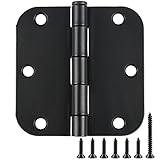
I remember the first time I tried to replace a single door hinge. Seemed simple enough, right? Just unscrew the old, screw in the new. Except, the new one wouldn’t sit flush. Then the door wouldn’t close properly. It was a whole morning of frustration that taught me a hard lesson: no, are door hinges universal? Absolutely not.
For years, I just grabbed whatever looked vaguely like the old one from the hardware store. Big mistake. Those little differences in screw hole placement, corner radius, or even just the thickness of the metal can make a hinge totally incompatible. It’s like trying to fit a square peg in a round hole, but with your doors.
Not All Hinges Are Created Equal: Size Matters
Okay, so you’ve got a squeaky door or one that’s sagging. Your first thought might be, “I’ll just grab some new hinges.” And bless your heart, you probably will. But before you whip out the screwdriver, let’s talk about the most obvious reason hinges aren’t universal: size and dimensions. It’s not just about the overall length. You’ve got to look at the width of each leaf (that’s the flat part that screws to the door and frame), the spacing and size of the screw holes, and the shape of the corners – are they rounded or square?
I learned this the hard way when I was replacing the hinges on my pantry door. It was a standard interior door, or so I thought.
I bought a pack of three new hinges that looked identical. I got the first one on, no problem.
The second one… well, the screw holes didn’t quite line up. I could force it, but then the leaf wouldn’t sit flat against the jamb. The door ended up sticking out at the top.
My quick fix turned into a two-hour ordeal of widening holes and chiseling out a bit of the jamb. It looked awful, and the door still didn’t swing right. Eventually, I had to go back and find hinges with the exact same hole pattern and leaf width. It’s the little things, man.
The thickness of the hinge itself also plays a role. If a new hinge is even a millimeter thicker, it can throw off the entire swing of the door, causing it to bind or preventing it from closing fully. For standard interior doors, you’re often looking at hinges that are 1.5mm or 2mm thick. Exterior doors, especially heavier ones, might require thicker, sturdier hinges. Don’t just grab the cheapest pack; check the specs. Honestly, the sheer variety can be mind-boggling if you don’t know what you’re looking for. It’s not just about the number of screws. It’s about how the whole thing fits together physically.
The Devil’s in the Details: Pin, Knuckle, and Corner Radius
Beyond the basic dimensions, there are other important details that make hinges non-universal. You’ve got the pin, the knuckle (that’s the barrel-shaped part where the pin goes), and the corner radius. These might sound like minor design quirks, but they have a huge impact on compatibility and the overall look and function of your door.
The pin itself can be removable or non-removable. Most standard hinges have a removable pin, which is handy if you need to take the door off without removing the whole frame. But some decorative or security hinges might have non-removable pins. Also, the diameter of the pin needs to match the knuckle. A pin that’s too loose will make the hinge wobbly and the door sag. A pin that’s too tight might be hard to insert or remove. (See Also: A Box Without Hinges Key )
The knuckle’s height and diameter are also important. If the knuckles on your new hinges are taller or shorter than the old ones, the door’s weight won’t be distributed correctly, leading to stress on the hinge and potential sagging over time.
And then there’s the corner radius. Hinges come with either a rounded (often 1/4-inch or 5/8-inch radius) or a square corner.
If your door jamb and slab were mortised (cut out) for a specific radius, you absolutely need to match it. Trying to force a square-corner hinge into a rounded mortise, or vice versa, is a recipe for disaster. You’ll end up with gaps, the hinge won’t sit flush, and you’ll be staring at a poorly fitted door.
I once tried to convince myself a square-corner hinge would work in a rounded mortise by just shimming it. Big mistake. The door looked crooked, and I spent another hour trying to fix what I broke.
Material, Finish, and Load Bearing: Functionality and Aesthetics
Let’s talk about what hinges are made of and how they look. This is where aesthetics and pure functionality collide, and it’s another reason you can’t just grab any old hinge. The material and the finish aren’t just about looks; they directly impact durability and how the hinge performs over time.
Most common interior door hinges are made of steel or brass. Steel is strong and affordable, but it can rust if exposed to moisture. Brass is more corrosion-resistant and often has a nicer look, but it can be more expensive and softer, potentially bending under heavy loads. For exterior doors or doors in humid areas like bathrooms, you’ll want hinges made of brass, stainless steel, or a coated steel that’s designed to resist rust and corrosion. A cheap, plated steel hinge on an exterior door is just asking for trouble. I’ve seen them rust right through in under two years, leaving ugly orange streaks down the door and frame. Not a good look, and definitely not functional.
The finish is important for both appearance and protection. You’ve got finishes like polished brass, brushed nickel, oil-rubbed bronze, black, and plain steel. Whatever you choose, make sure it matches the hardware on your doors (doorknobs, locks).
Mismatched hardware looks sloppy. More importantly, make sure the finish is durable.
Powder-coated finishes tend to be tougher than simple plated finishes. For very heavy doors, like solid wood or metal doors, you need to consider the hinge’s load-bearing capacity. Standard hinges are fine for lightweight hollow-core doors, but a heavy door will quickly destroy undersized hinges, leading to sagging and potential failure. (See Also: Are Integrated Washing Machine Door Hinges Standard )
Always check the manufacturer’s recommendations for weight capacity if you’re dealing with anything heavier than a standard interior door. Some heavy-duty hinges are significantly thicker and have more solid pins to handle the extra stress.
What to Look for When Buying Hinges
When you’re at the store or browsing online, here’s what you should be paying attention to:
- Size: Measure the length, width of each leaf, and check screw hole placement.
- Corner Radius: Match your existing mortise (rounded or square).
- Pin Type: Removable or non-removable.
- Material: Steel, brass, stainless steel – choose based on environment and door weight.
- Finish: Match existing hardware and make sure durability.
- Weight Capacity: Especially important for heavy interior or all exterior doors.
Common Mistakes and What to Avoid
So, now that we know they aren’t universal, what are the common pitfalls people fall into when buying and installing door hinges? Honestly, it boils down to a few key oversights that usually lead to more work and frustration down the line.
The biggest mistake is assuming all hinges are the same. People grab the cheapest pack or the ones that look right and don’t bother measuring or comparing the important specs. This leads to the corner radius mismatch, screw holes that don’t line up, or hinges that are too thick and cause the door to bind. I’ve seen people try to “make it work” by forcing screws, which strips the wood or metal, or by chiseling out the jamb haphazardly. This never ends well. It compromises the integrity of the door and frame, and the final result looks amateurish.
Another common error is not considering the weight of the door. A standard hollow-core interior door is light. A solid wood interior door, or any exterior door, is significantly heavier. Using standard hinges on a heavy door is like putting tiny tires on a truck – it’s not designed for the load. The hinges will bend, the door will sag, and eventually, the hinges can fail completely. This can damage the door and frame, and even create a safety hazard. Always check the weight rating if available, especially for exterior doors or solid wood interior doors. If you can’t find a rating, err on the side of caution and go for a heavier-duty hinge.
Forgetting to match the finish is another aesthetic blunder. While functional, hardware is part of your home’s overall look. Mismatched hinges, doorknobs, and strike plates can make a room feel unfinished and cheap. Think about the overall style you’re going for. Are you aiming for a modern, sleek look with brushed nickel? Or a more traditional feel with oil-rubbed bronze? Get it right the first time to avoid having to replace everything later. It’s not just about making the door work; it’s about making it look good too.
Finally, people often overlook the screw holes. Even if the hinge leaf fits, if the screw holes are in slightly different positions, you’ll have gaps or the hinge won’t sit flush. This can compromise the hinge’s strength and the door’s security. Always compare the screw hole pattern to the old hinge or the mortise in the frame and door.
What About Those ‘universal’ Kits?
You’ve probably seen those hinge repair kits or “universal” hinge sets advertised. Let me tell you, as someone who has fiddled with way too many doors, the term ‘universal’ in this context is usually more marketing hype than reality. These kits often come with a variety of screws and maybe a few different hinge types, promising to fit any door. While they might be a better option than a completely random hinge from the bargain bin, they are rarely a perfect, smooth fit for every single situation.
What these kits usually offer is versatility in terms of screw lengths and diameters, or perhaps a few different corner radius options that you can select from. For example, a kit might include both square and rounded corner hinges, and a selection of screws to fit different pre-drilled holes or slightly damaged ones. This can be a lifesaver if you’re unsure about the exact dimensions or if the original screw holes are a bit stripped. However, they won’t magically adapt to hinges with completely different leaf widths, knuckle heights, or pin diameters. You still need to measure and compare. (See Also: Are Hinges Wheeels )
I tried one of these ‘universal’ kits once when I was replacing a couple of worn-out hinges on a shed door. It came with multiple screw options and two different corner styles. I ended up using the square corner hinges and some of the longer screws, and it worked. The door closed and opened. But it wasn’t a clean installation. There were tiny gaps, and the hinge wasn’t as snug as it would have been with a precisely matched hinge. It was functional, but not pretty. For an internal door where aesthetics matter, or for a heavy exterior door where a perfect fit is important for security and weatherproofing, I’d still much rather find the exact replacement hinge.
The real “universality” you might find is in the type of hinge, like a standard 3.5-inch, 3-knuckle, full-mortise hinge. These are incredibly common for interior doors. If your existing hinge fits that general description, you have a better chance of finding a close match. But always, always double-check measurements. Don’t let the word ‘universal’ lull you into a false sense of security. It’s a helpful starting point, maybe, but it’s not a magic bullet.
Real-World Hinges: A Comparison Table
To drive home the point that hinges aren’t universal, let’s look at a few common types and what makes them distinct. This isn’t exhaustive, but it covers the bases for most home doors.
| Hinge Type | Common Use | Key Differentiators | Opinion/Verdict |
|---|---|---|---|
| Standard Butt Hinge | Interior doors, lightweight exterior doors | Available in various sizes (e.g., 3.5″ x 3.5″), corner radii (square, 1/4″, 5/8″), finishes. Usually 3 knuckles. | The workhorse. Easy to find replacements, but dimensions MUST match. |
| Ball Bearing Hinge | Heavy interior doors, high-traffic exterior doors | Features ball bearings between knuckles to reduce friction and support weight. Thicker steel. | Great for heavy doors that get a lot of use. Smoother swing, less wear. |
| Barrel Hinge (Concealed) | Cabinets, furniture, some modern interior doors | Cylindrical shape, often fully concealed when the door is closed. | Sleek look, but installation is more precise and they’re not interchangeable with butt hinges. |
| Security Hinge | Exterior doors, doors needing higher security | Non-removable pin or a stud that engages the frame when the door is closed, preventing forced entry. | A must-have for exterior doors if you’re serious about security. Installation is typically standard. |
| Continuous Hinge (Piano Hinge) | Heavy cabinets, desks, long narrow doors | Runs the full length of the door. Distributes weight evenly. | Excellent for stability on long, narrow openings. Can be cut to size. Not for standard door frames. |
As you can see, even within common categories, there are significant differences. Trying to swap a standard butt hinge for a barrel hinge, or a security hinge for a basic butt hinge without considering the mortise and pin design, is a non-starter. You’ll be fighting it every step of the way.
Frequently Asked Questions About Door Hinges
Can I Use Any Hinge for Any Door?
No, you absolutely cannot use any hinge for any door. Hinges come in various sizes, shapes, corner radii, materials, and weight capacities. You need to match the hinge’s specifications to the door and frame it’s intended for. Using the wrong hinge will result in poor fit, improper door function, and potential damage.
What Happens If I Use the Wrong Size Hinge?
If you use the wrong size hinge, the door may not close properly, it could bind against the frame, or it might sag. Screw holes might not align, forcing you to drill new ones or modify the existing ones, which can weaken the wood. In short, it leads to a poorly fitted and potentially damaged door and frame.
Are All Interior Door Hinges the Same Size?
No, not all interior door hinges are the same size, although a standard size (like 3.5 inches tall with 3.5-inch leaves) is very common. However, you still need to check the leaf width, screw hole spacing, and corner radius (square or rounded) to make sure compatibility. Even slight variations can cause problems.
How Do I Know What Type of Hinge I Need?
The best way to know what type of hinge you need is to examine the hinge that’s currently on the door. Measure its dimensions, note the corner shape (square or rounded), check the screw hole pattern, and observe the material and finish. If you’re replacing a hinge, matching the existing one as closely as possible is the safest bet. For new installations, consider the door’s weight and the environment (e.g., exterior doors need corrosion-resistant hinges).
Conclusion
So, to wrap it all up: are door hinges universal? The honest answer, based on years of wrestling with them, is a resounding no. While there are common standards for interior doors, assuming a universal fit is a surefire way to invite frustration and extra work. Always measure your existing hinges and compare them carefully to any potential replacements, paying attention to size, corner radius, and screw hole placement.
Don’t get swayed by packaging that screams ‘universal fit.’ It’s a loose term that rarely lives up to its promise in the real world. For heavier doors or exterior applications, material and load capacity become even more important. Get the right hinge the first time, and save yourself the headache. It’s a small detail that makes a huge difference in how your doors function and look.