I remember the first time I tried to hang a ridiculously heavy custom-made door in my workshop. I’d grabbed what I thought were beefy, standard door hinges, figuring they’d do the trick. Big mistake. That door sagged after about two weeks, looking like it was crying for help. It made me seriously question what was actually going on under the surface. Are door hinges stronger than piano hinges? The simple answer, as with most things, is… it depends. But let’s cut through the marketing fluff and get down to what actually matters when you need something to hold weight reliably.
It’s not just about the name; it’s about the design, the material, and how it’s meant to be used. You wouldn’t use a bike chain to tow a truck, right? Same principle. We’re going to break down the nuts and bolts – literally – of why one might be a better fit than the other for your specific project.
Why That Sagging Door Was My Wake-Up Call
My workshop door was a beast. Solid oak, about 3 inches thick, and easily over 200 pounds. I’d bought four sets of what looked like sturdy, black-coated steel butt hinges from the local hardware store. They felt solid enough in the package, and the box said they were for ‘heavy-duty’ doors.
I figured four sets of these would be more than enough. Wrong. Within a month, the door was visibly drooping on the latch side, making it a pain to open and close, and looking frankly unprofessional. It wasn’t just an aesthetic issue; the weight was clearly stressing the hinge pins and the mortises in the door and frame.
I ended up having to replace them with specialized, much heavier-duty strap hinges designed for that kind of load, which cost me double and a lot more sweat. That’s when I started really digging into the differences, because clearly, my assumption that standard ‘heavy-duty’ door hinges would be superior to almost anything else was flawed. The common advice that you just buy ‘stronger’ hinges often overlooks the fundamental design differences.
Understanding the Core Differences: Butt vs. Piano
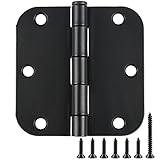
At their heart, both butt hinges and piano hinges are designed to allow a swinging motion around a central axis. But their construction and intended applications are wildly different, which directly impacts their strength and load-bearing capabilities. A standard butt hinge, the kind you see on most interior and exterior doors, typically consists of two or three knuckles (the parts that loop around the pin) per leaf.
These leaves are usually attached to the edge of the door and the door frame. The strength of a butt hinge comes from the thickness of the metal, the diameter of the pin, and the number and quality of the knuckles. They are designed to handle the weight of a door distributed across two or three points of contact along its height.
The pin is usually removable, allowing for easy door removal. They are generally made from steel, brass, or stainless steel, with varying gauges influencing their load capacity. For a typical interior door (say, 30-50 pounds), three standard-issue 4-inch butt hinges are more than sufficient.
A piano hinge, on the other hand, is a continuous hinge that runs the entire length of the object it’s attached to. It’s made from a single piece of metal that is bent in half, with knuckles formed along the fold. This design distributes the load evenly along the entire length of the hinge.
Think of a piano lid – it’s long and needs to open smoothly and support the weight of the lid without sagging. Piano hinges are often thinner than butt hinges but their continuous nature means they can handle significant distributed weight and resist twisting or warping. They are typically made from steel or stainless steel.
The key difference is how they manage stress: butt hinges rely on localized strength at a few points, while piano hinges rely on distributed strength along their entire span. So, to directly answer if are door hinges stronger than piano hinges, it’s not a simple yes or no.
For a specific, concentrated load on a narrow edge, a well-made butt hinge might be stronger per inch of contact. But for a long, potentially heavy panel that needs to remain stable and resist flex across its entire length, a piano hinge is often the superior choice due to its continuous support.
The Weight-Bearing Debate
When we talk about strength, we’re usually talking about load-bearing capacity. How much weight can it hold before it bends, breaks, or causes the connected object to sag? For a typical interior or exterior door, the weight is supported by 2-3 hinges. The strength of a butt hinge is judged by its gauge (thickness of the metal), the pin diameter, and the material. (See Also: A Box Without Hinges Key )
Heavy-duty butt hinges, often made of thicker steel and with larger pins, can support substantial weight. I’ve seen residential exterior doors with solid wood or even metal doors that use large, solid butt hinges made of thick gauge steel, and these hold up fine. But there’s a limit.
If you exceed that limit, as I did, the pin can bend, the knuckles can widen, or the screws can strip out of the wood, leading to sag. Piano hinges, by their continuous design, spread the load across their entire length.
This means a 3-foot piano hinge can support a load that might overwhelm several individual butt hinges. Imagine a long, heavy workbench lid. If you used butt hinges, you’d need a lot of them, and they’d still be prone to creating stress points. A single piano hinge running the length distributes that load much more effectively.
However, piano hinges are generally not designed for the kind of shear forces that a door experiences where the pin takes the brunt of the weight pulling downwards. The strength of a piano hinge is more about rigidity and preventing flex across its span.
Material Matters: Steel, Brass, and Stainless
The material from which a hinge is made is arguably the most significant factor in its strength and longevity, regardless of whether it’s a butt or a piano hinge. Steel is king when it comes to brute strength and load-bearing. Heavy-gauge steel hinges, particularly forged steel, offer excellent durability and can withstand significant stress.
This is why many industrial applications and very heavy doors use steel butt hinges. Stainless steel is a close second, offering comparable strength to regular steel but with superior corrosion resistance.
This makes it ideal for outdoor applications or environments where moisture is prevalent, like marine settings or coastal homes. Brass, while beautiful and corrosion-resistant, is generally softer than steel.
While solid brass hinges are stronger than hollow ones, they are typically used for lighter-duty applications or where aesthetics are most important and the load isn’t extreme. I once inherited a cabinet with beautiful solid brass hinges that looked amazing, but they were clearly struggling to keep the doors from sagging, and they weren’t even that heavy. I ended up replacing them with coated steel ones, and the difference was immediate. The type of finish also plays a role.
Zinc-plated steel offers good corrosion resistance for indoor use, while powder coating can add durability and a specific look. For outdoor use, unplated steel will rust quickly, and even plated steel will eventually corrode if not high-grade stainless. When comparing are door hinges stronger than piano hinges, if you’re looking at identical gauges and materials, the continuous nature of the piano hinge often gives it an edge in distributing force, but a very thick, high-quality steel butt hinge designed for heavy doors can certainly outperform a thin, low-grade steel piano hinge.
What to Look for When Buying Hinges
When you’re in the hardware store aisle, staring at a wall of hinges, it’s easy to get overwhelmed. But there are a few key things to check.
First, the material. As I mentioned, steel and stainless steel are generally the strongest.
Check for the gauge of the metal – thicker is usually better for strength. You can often feel the difference; a flimsy hinge will bend easily. For butt hinges, look at the pin. (See Also: Are Integrated Washing Machine Door Hinges Standard )
Is it a solid pin? Is it thick? Does it fit snugly within the knuckles? Some pins are slotted or hollow, which reduces their load-bearing capacity.
You also want to check the quality of the knuckles themselves. Are they well-formed and smooth, or are there rough edges and gaps? For piano hinges, the continuous bend is key. Look for a clean, consistent bend along the entire length.
The holes for screws should also be properly countersunk if you want a flush finish. Don’t just grab the cheapest option.
I’ve learned that lesson the hard way more than once. Spending an extra $10-$20 on a higher-quality hinge can save you hours of frustration and potential damage down the line. Think about the environment, too. If it’s a humid garage or an outdoor gate, you absolutely need stainless steel or a very good quality coated steel.
I made the mistake once of using standard steel hinges on my shed door, and they were rusted solid within a year, making the door impossible to open without a fight. For my current shed, I used stainless steel strap hinges, and they’ve been flawless for three years now.
Common Mistakes People Make
The biggest mistake, and one I’ve confessed to making myself, is underestimating the weight of what you’re hanging. People see a ‘door’ and assume standard hardware is fine. But doors vary wildly in weight.
A hollow-core interior door is light as a feather, while a solid oak or solid wood door, especially if it’s older and has absorbed some moisture, can be incredibly heavy. Another common error is not using enough hinges. For a standard door, three hinges are usually the minimum.
For a heavy door, you might need four, or even five, strategically placed. The spacing matters for even weight distribution.
People also often overlook the screws. The hinge might be strong, but if it’s attached with undersized or low-quality screws that strip out of the wood, the whole setup will fail. Always use good quality, appropriately sized screws that are long enough to get a solid grip in the frame or door material.
For really heavy doors, using longer screws that go into the stud behind the frame is a smart move. Finally, there’s the aesthetic trap.
People sometimes choose hinges based purely on how they look, without considering their functional strength. A delicate-looking hinge might be perfect for a lightweight cabinet door, but it’s a recipe for disaster on something substantial.
When to Choose Which: Real-World Scenarios
So, when do you actually pick one over the other? Let’s break it down with some practical examples. (See Also: Are Hinges Wheeels )
Scenario 1: Interior Bedroom Door (Standard Weight, ~35 lbs)
For this, you absolutely stick with standard butt hinges. Three 3.5-inch or 4-inch steel hinges with a removable pin are perfect. They’re designed for this exact purpose, readily available, and cost-effective. No need to overcomplicate it.
Scenario 2: Heavy Exterior Solid Wood Door (~150-200 lbs)
Here, you need heavy-duty butt hinges. Think 4.5-inch or 5-inch, thick gauge steel, possibly forged. You’ll likely need four of them, and make sure the screws are substantial, perhaps even going into the framing studs. Stainless steel would be a good choice if exposed to weather.
Scenario 3: Workbench Lid or Heavy Chest Top (Long, but not excessively thick)
This is where a piano hinge shines. Imagine a 6-foot workbench lid. Using butt hinges would be a nightmare – you’d need dozens, and they’d be prone to creating inconsistent support. A single 6-foot piano hinge running the length will distribute the weight evenly, keep the lid stable, and prevent warping.
Scenario 4: Small Boat Hatch or Tool Box Cover
A smaller piano hinge, often in stainless steel, is ideal here. It provides continuous support along the edge, keeps out debris better than butt hinges might, and offers a clean, simplified look.
Scenario 5: A Custom Art Frame That Needs to Swing Open
If you have a large, heavy picture frame that you want to swing open like a secret door, you might use heavy-duty strap hinges, which are a type of butt hinge but much longer and more decorative, or potentially a very strong, wide piano hinge if the frame’s structure allows for it and you want a continuous support. The key is matching the hinge’s design and strength characteristics to the specific way the load will be applied.
| Hinge Type | Primary Use | Strength Characteristic | My Verdict |
|---|---|---|---|
| Standard Butt Hinge | Most interior/exterior doors | Localized strength at 2-3 points | Good for typical doors, but don’t overstate their capacity. |
| Heavy-Duty Butt Hinge | Very heavy doors, gates | High localized strength, solid pin and knuckles | The go-to for serious weight on a door edge. |
| Piano Hinge | Long lids, panels, toolboxes, benches | Distributed strength along entire length, prevents flex | Excellent for long spans needing uniform support. |
| Strap Hinge (decorative butt hinge) | Barn doors, gates, decorative applications | Distributes load along a longer contact area than standard butt hinges | Often more about looks and a bit more support than standard, but not always brute strength. |
People Also Ask: Your Questions Answered
Can a Piano Hinge Hold a Heavy Door?
A single, continuous piano hinge is generally NOT designed to hold a standard-sized, heavy door like you’d find on a house. Standard doors experience significant shear forces on the pins. While a very long, heavy-gauge piano hinge could theoretically support the weight, it wouldn’t typically provide the same rigidity or resistance to sagging that multiple heavy-duty butt hinges would. Piano hinges excel at distributing weight along a long span, but they aren’t built to take the same kind of direct downward force on individual pins that butt hinges are designed for.
What Is Stronger, a Butt Hinge or a Piano Hinge?
It depends on the application. For a typical door where weight is concentrated on a few points, a well-made, heavy-duty butt hinge is designed to be stronger and more solid for that specific load. However, for a long, flat panel (like a lid or a workbench) where weight needs to be distributed evenly along the entire edge to prevent flexing or warping, a piano hinge is stronger due to its continuous design. A thin piano hinge is weaker than a thick butt hinge, and vice versa. It’s about matching the hinge’s strength profile to the specific forces it will encounter.
What Is the Strongest Type of Door Hinge?
The strongest type of door hinge for a heavy door is typically a heavy-duty, forged steel butt hinge, often in a larger size (4.5 or 5 inches) with a thick pin and substantial knuckle construction. For applications requiring support along the entire length of an opening, like a long cabinet door or a workbench lid, a continuous, heavy-gauge steel piano hinge can be considered the strongest for that specific type of load distribution. However, for the direct question of are door hinges stronger than piano hinges in a traditional door sense, the answer leans towards specialized heavy-duty butt hinges.
Are Piano Hinges Good for Outdoor Use?
Yes, but you absolutely need to choose the right material. Standard steel piano hinges will rust quickly outdoors, especially in humid or coastal environments. For outdoor use, you must opt for stainless steel piano hinges. These offer excellent corrosion resistance and the same load-distributing benefits. Make sure the grade of stainless steel is appropriate for the exposure level; 304 is good for general outdoor use, while 316 is superior for harsher marine or industrial conditions.
Final Verdict
So, when it comes down to it, are door hinges stronger than piano hinges? The real answer is that they’re designed for different jobs, and trying to use one for the other’s task is where you run into trouble. My own sagging door incident was a harsh but effective lesson in that. You wouldn’t use a screwdriver as a pry bar, and you shouldn’t use a piano hinge where a heavy-duty butt hinge is needed, or vice-versa.
Always consider the weight, the length of the contact area, and the type of stress the hinge will endure. For standard doors, stick to well-made butt hinges appropriate for the weight. For long panels needing consistent support, a piano hinge is your friend. Don’t be afraid to spend a little extra on quality materials, especially stainless steel for outdoor use. It’s a small investment that pays off in durability and saved headaches.
The next time you’re faced with a hinging project, take a moment to really assess the load and the application. It’ll save you from having to learn the hard way, like I did.