I remember the first time I tried to replace a door hinge. It seemed simple enough. Just unscrew the old one, screw in the new one, right? Wrong. I ended up with a door that sagged, a brand new hinge that didn’t quite fit, and a whole lot of frustration. It made me wonder, seriously, are door hinges a standard size?
Turns out, the answer is both yes and no, and that’s where all the confusion comes from. For most common interior doors, there’s a pretty good chance you’ll find a standard. But the second you step outside that norm, or if you’re dealing with older homes, exterior doors, or specialized applications, things get complicated fast.
Let’s cut through the noise and get to what actually matters when you’re trying to figure out what hinge you need.
The Myth of the Universal Door Hinge
Look, I get it. When you’re staring at a wonky door, the last thing you want is to spend hours in a hardware store or endlessly scrolling online trying to identify a tiny metal rectangle. You just want the damn hinge that works. The big question most folks ask, and it’s a fair one, is are door hinges a standard size? My honest answer, after wrestling with countless doors in my life, is that while there’s a common size for residential interior doors, calling it truly ‘standard’ across the board is a bit of a stretch.
Think about it. We’ve got internal doors leading to bedrooms, bathrooms, closets. Then you have exterior doors – front doors, back doors, garage doors. And don’t forget the weird ones: French doors, pocket doors, cabinet doors, even gates. Each of these has different weight requirements, security needs, and aesthetic considerations. A flimsy little hinge that works fine for a lightweight interior closet door would be a joke on a solid oak front door. It’s like asking if all screws are a standard size – well, yes and no. They come in Phillips, flathead, Torx, Robertson, and a million different lengths and thread types.
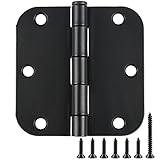
For the most part, when people talk about standard door hinges, they’re referring to the full-mortise butt hinge used on interior wooden doors. These typically measure 3.5 inches tall by 3.5 inches wide (when open, measured from tip to tip of the leaf, not the pin). The thickness of the metal, known as the gauge, also often falls within a narrow range, usually 1.5mm or 2mm for residential use. The corner radius – the shape of the corners on the hinge leaf where it meets the door and frame – is also usually either a 1/4-inch radius (square corners) or a 5/8-inch radius (rounded corners). These are the dimensions you’ll see most often at your local big box store.
The problem arises when you deviate even slightly. Older homes often have non-standard door sizes or different framing techniques. Exterior doors, especially those made of heavier materials like metal or solid wood, will likely require beefier hinges. Then there are security hinges, decorative hinges, heavy-duty hinges, and specialized hinges for specific applications. These are all designed with particular needs in mind and will come in a wider array of dimensions and features. So, while there’s a dominant size for a specific application, don’t assume it’ll fit everything.
Measuring Up: What to Actually Look For
Okay, so ‘standard’ is a bit of a moving target. What do you actually need to do when you’re faced with a door that needs a new hinge? You measure. It’s not rocket science, but you do need to be precise. The most common mistake I see people make is just grabbing the first hinge that looks similar. Don’t do that. Here’s how to get it right:
- Height: With the door closed, measure the height of the hinge leaf from the very top edge to the very bottom edge. For the common 3.5-inch hinge, it will measure exactly that.
- Width: This is measured when the hinge is open, from the tip of one leaf to the tip of the other leaf. Again, for the typical interior residential hinge, this is also 3.5 inches.
- Corner Radius: This is important. Look at the corners of the hinge leaf where it meets the door and the frame. Are they perfectly square, or do they have a noticeable curve? The most common radii are 1/4-inch (square) and 5/8-inch (rounded). You can sometimes tell just by looking, but if you’re unsure, grab a ruler. A quarter-inch radius is a pretty tight curve, while a 5/8-inch is more pronounced. Sometimes, you can even take the old hinge to the store and hold it up to a new one to compare.
- Thickness (Gauge): This isn’t always obvious, but it matters, especially for heavier doors. Thicker hinges (higher gauge numbers, meaning less metal in the thickness) are stronger. Most interior doors use a 1.5mm or 2mm gauge.
- Screw Holes: While less common for standard butt hinges, some specialty hinges might have specific screw hole patterns. Generally, the screw holes align with the door and frame mortises.
- Orientation (Non-Removable Pin – NRP): For exterior doors or security applications, you might encounter hinges with non-removable pins. These are designed so the pin cannot be knocked out from the outside, preventing someone from removing the door. These often have a specific pin design and might not be interchangeable with standard hinges.
I learned this the hard way when I was fitting a new door for my shed. I grabbed some hinges that looked about the right size from the bargain bin. They fit into the mortises, but the door sagged like a drunkard by the end of the week. Turns out, they were a lighter gauge intended for interior cabinet doors, not an exterior shed door exposed to the elements and heavier use. I ended up having to buy proper heavy-duty hinges, which cost me double and another afternoon of work. Measure twice, buy once, as they say. It’s particularly true for hinges.
| Hinge Feature | Common Interior Residential | Exterior/Heavy Duty | My Verdict |
|---|---|---|---|
| Height | 3.5 inches | 3.5 to 4.5 inches+ | Match the old one. Important for fit. |
| Width (Open) | 3.5 inches | 3.5 to 4.5 inches+ | Match the old one. Important for fit. |
| Corner Radius | 1/4″ (square) or 5/8″ (rounded) | Often 1/4″ (square) for frame fit, but can vary | This is A MUST for mortise fit. Get it right. |
| Thickness (Gauge) | 1.5mm or 2mm | 2mm to 3mm+ | Heavier doors need thicker hinges. Don’t skimp here. |
| Pin Type | Removable (knurled or dome head) | Removable or Non-Removable Pin (NRP) | NRP for security doors. Standard for interior. |
Common Mistakes and Why They Happen
You’d think a simple hinge would be straightforward, but there are a few classic pitfalls that trip people up. Understanding these can save you a headache and a trip back to the store.
Mistake 1: Assuming All Hinges for ‘doors’ Are the Same
This is the biggest one. As we’ve discussed, ‘door’ is a broad term. Interior, exterior, closet, French, pocket, cabinet – they all have different needs. People see a hinge for a pantry door and assume it’ll work on their front door. It won’t. The weight, security, and exposure to the elements are vastly different. A hinge designed for a lightweight interior door is made with thinner metal and a simpler pin mechanism. A front door hinge needs to be solid, often thicker gauge, and sometimes feature security pins. The materials themselves differ too; basic steel is common for interiors, while stainless steel or more corrosion-resistant finishes are key for exteriors.
Mistake 2: Not Checking the Corner Radius
This is a sneaky one. You measure the height and width, and they seem right. (See Also: A Box Without Hinges Key )
But if the corner radius doesn’t match, the hinge leaf won’t sit flush in the mortise (the cutout in the door and frame). This leads to a door that doesn’t close properly, binds, or even looks off.
If the old hinge had a rounded corner, you need a new hinge with the same rounded corner. If it was square, you need square. Trying to force a square-corner hinge into a round-corner mortise, or vice-versa, is a recipe for disaster and can even damage the wood.
It’s a small detail, but it’s important for a clean, professional installation and proper door function. I once spent an hour trying to figure out why a new hinge kept sticking out, only to realize the old one had a subtle 1/4-inch radius and the new one was perfectly square.
Felt like a complete idiot.
Mistake 3: Ignoring Hinge Thickness (gauge)
When you’re replacing a hinge on a solid wood door, especially a heavier one like a solid core interior door or an exterior door, the thickness of the hinge matters. A thin, flimsy hinge might work initially, but it can bend or warp under the weight of the door over time. This causes sagging, uneven gaps, and makes the door hard to open and close. Look at the weight rating of the hinge if it’s specified, or just compare the thickness. Most residential interior doors use hinges around 1.5mm to 2mm thick. If you have a really substantial door, you’ll want something thicker, maybe 2.5mm or 3mm. It’s not just about the look; it’s about structural integrity.
Mistake 4: Buying Based Only on Appearance
Sure, you want your hinges to look good, especially if they’re visible. But functionality trumps aesthetics. A beautiful antique-style hinge that’s too light or the wrong size won’t do you any good. Always prioritize getting the dimensions, corner radius, and strength correct first. Then, look for finishes and styles that match your décor. Many hinge manufacturers offer decorative finishes like brushed nickel, oil-rubbed bronze, matte black, or polished brass. Just make sure the underlying hinge is the right type for the job.
Mistake 5: Forgetting About the Screws
Sometimes the screws that come with hinges are not suitable for your specific door or frame. If you’re installing on a very hard or soft wood, or if the old screw holes are stripped, you might need different screws. For exterior doors, make sure the screws are weather-resistant. For stripped holes, wood filler and re-drilling, or even longer screws, might be necessary. Don’t let a good hinge installation be ruined by shoddy screws.
Are Door Hinges a Standard Size for Exterior Doors?
This is where the ‘standard’ idea really starts to fray. While there’s a common size for interior residential doors (3.5″ x 3.5″ with specific corner radii), exterior doors are a different beast entirely. So, are door hinges a standard size when you’re talking about the ones that face the weather and the outside world? Generally, no, not in the same way.
Exterior doors are subjected to much harsher conditions. They’re heavier, need to be more secure, and are exposed to rain, sun, and temperature fluctuations. Because of this, exterior hinges are typically:
- Heavier Duty: They are made from thicker gauge metal (often 2.5mm to 3mm or more) to withstand greater stress and weight.
- More Corrosion Resistant: Materials like solid brass, stainless steel, or specially coated steel are common to prevent rust and degradation. You’ll often see terms like ‘ball-bearing hinges’ for heavy exterior doors, which reduces wear and tear.
- Security Focused: Many exterior hinges come with non-removable pins (NRP). This means the pin cannot be easily knocked out from the outside, preventing a burglar from simply removing the pin and lifting the door off its hinges. These pins often have a unique shape or a set screw that needs to be loosened before the pin can be removed.
- Varied Sizes: While 3.5-inch hinges are still common for some standard exterior doors, you’ll also find 4-inch and 4.5-inch hinges frequently used for larger, heavier doors like front entry systems. The width of the leaf where it mortises into the frame might also be different to accommodate thicker door jambs.
If you’re replacing an exterior hinge, it’s absolutely vital to measure the old one meticulously – height, width, corner radius, and thickness. For security doors, pay extra attention to the pin type. If you’re installing a new exterior door and frame, you’ll likely be specifying the hinge type and size as part of the overall system. Don’t assume the hinges that come with a pre-hung door are universally suitable for every situation; sometimes, upgrading them is a good idea for longevity and security.
When Standard Doesn’t Cut It: Specialty Hinges
Beyond the interior/exterior divide, there’s a whole world of specialty hinges designed for very specific jobs. These are the ones that really make you scratch your head and wonder if there’s any standardization at all. If you’re dealing with any of these, forget about ‘standard’ and focus on the exact application. (See Also: Are Integrated Washing Machine Door Hinges Standard )
Cabinet Hinges: These are generally smaller and come in a dizzying array of types. You have overlay hinges (where the hinge overlays the cabinet frame), inset hinges (where the hinge sits within the frame), concealed or European hinges (which are hidden inside the cabinet and offer adjustability), and specialty hinges for things like bi-fold cabinet doors. Their sizes and mounting mechanisms are highly specific to the cabinet construction and door style.
Gate Hinges: Heavy-duty is the name of the game here. Gate hinges often need to support significant weight and movement, and they must be solid enough to withstand outdoor elements. You’ll find strap hinges, T-hinges, and pivot hinges, all designed for the stresses of a swinging gate. Sizes can vary wildly depending on the gate’s size and material.
Pocket Door Hinges: These are entirely different. Pocket doors slide into a wall cavity, so they don’t have traditional butt hinges. Instead, they use specialized hardware that attaches to the top of the door and slides on a track. The ‘hinge’ here is more of a sliding mechanism.
Saloon Doors/Cafe Doors: These doors swing both ways and are often held closed by gravity or a spring mechanism. They use specialized double-acting hinges that allow for this bidirectional swing. They also come in various sizes and weight capacities.
Continuous Hinges (Piano Hinges): These run the entire length of the door and frame, providing continuous support. They’re great for applications where the door needs to be supported along its entire edge, like toolboxes, long cabinets, or even some lightweight doors where a very even distribution of stress is needed. They come in various lengths and widths.
Decorative and Architectural Hinges: Beyond plain functionality, there are hinges designed purely for aesthetics or as a design feature. These can be oversized, uniquely shaped, or made from exotic materials. While they might share some dimensional similarities with standard hinges for mounting purposes, their primary purpose is visual impact.
For any of these, the best advice is to identify the exact type of door and its function, then research hinges specifically for that application. Manufacturers will usually provide detailed spec sheets for these less common items.
Faq: Your Burning Hinge Questions Answered
Are Residential Door Hinges All the Same Size?
No, not all residential door hinges are the same size, but there is a very common standard for interior passage doors. For most standard interior wooden doors, you’ll find 3.5-inch tall by 3.5-inch wide full-mortise butt hinges. However, closet doors, heavier solid-core doors, or doors in older homes might use different sizes. Exterior doors are almost always a different, heavier-duty specification.
What Is the Standard Door Hinge Size?
The most common standard door hinge size for residential interior doors is 3.5 inches by 3.5 inches. This refers to the height of the hinge leaf and the width from tip to tip when open. It’s also important to match the corner radius (either square or rounded) and the hinge thickness (gauge).
How Do I Know What Size Hinge I Need?
To determine the hinge size you need, you must measure the existing hinge. Measure the height of one leaf from top to bottom. Then, open the hinge and measure the width from the tip of one leaf to the tip of the other. Importantly, you also need to check the corner radius of the hinge leaves – whether they are square (1/4-inch radius) or rounded (5/8-inch radius) – and compare the thickness of the metal.
Can I Use a Different Size Hinge?
Generally, you should use the same size hinge that was originally installed, especially for the height, width, and corner radius. Using a different size hinge will likely result in a mortise that doesn’t fit, making installation difficult or impossible without extensive modification. Mismatched hinges can also lead to doors that sag, bind, or don’t close properly. (See Also: Are Hinges Wheeels )
Real-World Advice: My Hinge Nightmare and What I Learned
Years ago, I was helping a buddy renovate an old Victorian house. Beautiful place, but everything was slightly off. Doors were warped, frames were out of plumb, and the original hinges were ancient, ornate things that had seen better days. We decided to replace all the interior door hardware for a cleaner, modern look. Big mistake. We figured, hey, it’s just a door hinge, are door hinges a standard size, right? We went to the hardware store, grabbed a bunch of shiny new 3.5-inch hinges with the rounded corners, and figured we were good to go.
Fast forward a few days. We’re hanging doors. The new hinges fit the mortises okay, but the doors just didn’t hang right.
Some scraped the floor, others had a huge gap at the top. We spent hours fiddling, shimming, and cursing.
It was maddening. Finally, on one particularly stubborn door, I took a closer look at the original hinge.
It wasn’t just the corner radius; the leaf itself was a bit wider than the ‘standard’ new ones, and the metal was noticeably thicker. The original hinge was a custom job for that particular door and frame combination. We ended up having to painstakingly chisel out new mortises for the standard hinges on most doors, and for a couple of especially tricky ones, we had to find reproduction antique hinges that matched the original dimensions and style precisely.
The lesson was brutal: Don’t assume. That ‘standard’ size is for modern, consistently built doors.
Old houses, custom builds, or even just slightly different manufacturing tolerances mean you have to measure your existing hinges carefully. It’s not just about height and width; it’s about the corner radius, the thickness, and sometimes even the pin type. If you’re replacing a hinge, take the old one with you to the store, or at the very least, have your measurements and a clear photo. It will save you a mountain of frustration and time.
I’ve seen people try to force hinges, thinking the wood will just ‘give,’ but that usually results in splintered wood and a poorly fitting door. It’s just not worth the gamble.
Final Thoughts
So, to circle back to the big question: are door hinges a standard size? For most common interior passage doors, yes, there’s a dominant standard size (3.5″ x 3.5″ with specific corner radii) that you’ll find everywhere. This is a lifesaver for quick replacements.
However, the moment you step outside that very specific category – dealing with exterior doors, older homes, or any kind of specialty door – the ‘standard’ quickly dissolves. You’re then in the world of needing to measure precisely, understand the different types of hinges available, and match the existing hardware’s dimensions and features.
My advice? Always, always measure your existing hinges before you buy. Don’t rely on assumptions. Take pictures. Bring the old hinge to the store if you can. For most simple interior door hinge replacements, you’ll likely find a standard that works, but understanding the nuances can save you a world of pain. If in doubt, err on the side of caution and get the exact dimensions right.