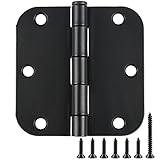
I remember staring at my shed door, feeling a mix of frustration and suspicion. The hinges were on the outside. Every time I saw them, a little voice in my head whispered, ‘Is this a security risk?’ It’s a question many homeowners probably ask themselves. Are door hinges on the outside dangerous, or is it just me being overly cautious?
My initial thought was a resounding ‘yes,’ a ticking time bomb of easy access for any would-be burglar. But like most things, the reality is rarely that black and white. Years of tinkering with doors, sheds, and various outdoor structures have taught me that sometimes, what looks like a vulnerability is just a practical design choice.
Why Hinges Go Outside (and When It’s Not a Big Deal)
Let’s get this straight: for most interior doors, hinges are, and should be, on the inside. It’s a security thing, plain and simple. You can’t just yank the pins out from the outside to pop the door off its frame. But for exterior doors, especially sheds, garages, or certain utility access points, you’ll often see those hinges staring you down from the outside. So, what’s the deal? Mostly, it comes down to practicality and, sometimes, very specific security features.
For sheds, for instance, external hinges are often used because they allow the door to swing outwards. This is important if the interior space is packed to the gills. Imagine trying to pull a lawnmower out through a door that opens inward into a cramped shed. Nightmare. So, outward-swinging doors are a godsend. The hinges are external because that’s just how they attach to allow that outward swing, especially on simpler door frames.
The ‘dangerous’ aspect really kicks in when we talk about standard residential doors that someone might try to break into. If a standard house door has external hinges, that’s a red flag. On a house, you want those hinges hidden away, protected. The pins are usually secured in a way that prevents them from being easily removed from the outside. If they’re exposed, a crowbar or even just a good yank could potentially defeat the hinge, allowing the door to be removed. It’s not rocket science; it’s basic use.
I learned this the hard way with an old wooden garden gate. It had external hinges, and while it wasn’t a house, I’d always felt it was a bit flimsy. One night, some kids decided to ‘borrow’ the gate for some bonfire fuel. It wasn’t the hinges alone, but they were certainly the weakest link. A few good kicks, and the whole thing, hinges and all, came right off. It was a stark reminder that exposed hardware can be a point of compromise.
The common advice that hinges must be on the inside for security? For residential doors, that’s pretty much spot on. For sheds, outbuildings, or gates, it’s a different story where outward swing and simpler construction often dictate external hinges. The key difference is the perceived value and the level of security required. A shed holds tools and maybe some gardening supplies; your house holds your valuables and, more importantly, your family.
The Security Angle: What Makes Exposed Hinges a Problem
Let’s talk brass tacks: security. When we ask, ‘are door hinges on the outside dangerous,’ we’re really asking about how easy it is for someone to bypass that door. The primary reason hinges are typically concealed on the interior of a residential door is to prevent easy removal of the door itself. Think about it: a door is held in place by hinges. If those hinges are on the outside, and the pins are accessible, then someone with a basic tool like a hammer or a pry bar could, in theory, knock the pins out or pry the hinge leaf away from the frame.
On a standard interior hinge, the pin is usually a solid piece of metal that fits snugly into the hinge barrel. On many exterior-grade or security-conscious hinges, there are features designed to prevent pin removal. These can include a ‘non-removable pin’ (NRP) design where the top of the pin is peened or has a cap that prevents it from being lifted out, or a ‘security stud’ that fits into the opposing hinge leaf when the door is closed, meaning the door can’t be lifted off even if the pins are removed.
However, if you have plain, standard hinges on the outside of a door that’s meant to be secure, you’re asking for trouble. I recall helping a friend install a new back door for his workshop. The door came with these beefy-looking external hinges. My first thought was, ‘Great, this looks sturdy!’ But then I saw the pins. They were standard, lift-out pins. We spent an extra hour grinding down the tops of the pins and installing security studs because the original setup was, frankly, a joke for anyone who knew what they were looking at. It wasn’t inherently dangerous due to the hinge itself, but the lack of security features on an exposed hinge made it so. (See Also: A Box Without Hinges Key )
The danger isn’t just brute force. It’s about exploitability. Criminals aren’t always smashing down doors; sometimes, they’re looking for the path of least resistance. If a door has visible external hinges with removable pins, it’s an invitation. It’s like leaving your car keys in the ignition. The common advice to have hinges on the inside for security is sound because it makes a simple, direct attack on the door’s mounting system significantly harder.
Here’s a little table I put together from my own observations and a bit of head-scratching:
| Hinge Location | Typical Use Case | Security Risk (My Take) | Why |
|---|---|---|---|
| Interior (Concealed) | Residential interior doors | Low | Pins not accessible from the room side. Requires breaking the door or frame itself. |
| Exterior (Exposed) | Sheds, garages, garden gates, utility access | Moderate (if not secured) | Pins can be accessible. Door can be lifted off if pins are removed. |
| Exterior (Security Features) | High-security exterior doors, some commercial | Very Low | Non-removable pins, security studs, heavy-duty construction. |
When External Hinges Make Sense (and How to Do It Right)
Okay, so we’ve established that for a typical house door, exposed hinges are usually a bad sign. But that doesn’t mean all external hinges are inherently dangerous. There are scenarios where they are not only acceptable but often necessary. The key here is understanding the purpose of the door and the type of hinge being used.
As I mentioned, sheds and garages are prime examples. A shed door that swings inward into a cluttered space is a pain. An outward-swinging door is practical. To achieve that outward swing with many types of shed doors, especially those with simpler frames or a more rustic aesthetic, external hinges are the go-to. They’re visible, sure, but the security risk is often considered lower because the shed itself isn’t usually protecting priceless heirlooms.
Similarly, garden gates often have external hinges. The primary goal is to keep animals out or define a boundary. While you don’t want your gate falling off, the level of security required is generally much lower than for your house. The hinges are often simple, solid designs that are easy to install on the outside.
Now, how do you do it right? If you absolutely need external hinges on a door where security is a concern (think a secure workshop, a detached garage with valuable tools, or even a sturdy outbuilding), you need to look for specific features. This is where you can’t just grab any old hinge. You’ll want hinges that have:
- Non-Removable Pins (NRP): These pins have a rounded or capped top that prevents them from being lifted out, even if the door is slightly ajar.
- Security Studs: When the door is closed, a stud on one hinge leaf engages with a hole or recess in the other hinge leaf. This means the door cannot be lifted off the frame even if the pins are removed.
- Heavy-Duty Construction: Thicker metal, more solid barrels, and longer screws that anchor deeply into the door and frame.
I once helped a buddy secure a heavy steel gate that swung outwards. Standard hinges wouldn’t have cut it. We went with specialized, heavy-duty external hinges that had built-in security studs and rounded, non-removable pins. They looked industrial, and honestly, they were a bit pricier than your average shed hinge – about $45 per hinge for a set of three – but the peace of mind was worth it. The point is, if you’re opting for external hinges on a door where you care about security, don’t skimp. Choose hardware designed for that exact purpose.
Common Mistakes People Make with Door Hinges
People often overthink door hinges or, conversely, don’t think about them enough. This leads to a few common mistakes, especially when it comes to exterior doors and the question of whether they are dangerous.
Mistake 1: Assuming All External Hinges Are Equal. This is a big one. Just because a hinge is on the outside doesn’t automatically make it a security risk. However, using a cheap, generic shed hinge on a door that should be secure is a mistake. I’ve seen people put basic, zinc-plated hinges on exterior doors that are meant to keep people out. Within a year or two, they’re corroded, squeaky, and frankly, look like they could be pried off with a strong screwdriver. The materials and design matter, especially when they’re exposed to the elements and potential tampering. (See Also: Are Integrated Washing Machine Door Hinges Standard )
Mistake 2: Ignoring the Pin. The pin is the Achilles’ heel of an exposed hinge. Many people install doors with external hinges and never even consider the pin. If it’s a standard, removable pin, and the door opens outward, you’ve just made your door significantly easier to compromise. I remember helping a neighbor re-key his workshop. The door had external hinges, and he was amazed when I showed him how easily I could just lift the pins with a flathead screwdriver and a bit of wiggling. We immediately swapped them out for NRP hinges. It cost him about $120 for three good ones, but it was far cheaper than replacing the tools that would have been stolen.
Mistake 3: Neglecting Maintenance. Exposed hinges, whether on a shed or a secure door, are constantly battling the elements. Rust, dirt, and debris can get into the hinge barrels, causing them to bind, squeak, and weaken. People often forget to lubricate them or clean them regularly. A stiff or corroded hinge is more likely to fail or be a weak point. I try to give my shed hinges a quick spray of WD-40 or a similar lubricant every six months, especially after a harsh winter. It takes two minutes and prevents a lot of headaches.
Mistake 4: Over-Securing the Wrong Door. On the flip side, some people go overboard with ‘security’ hinges on doors that don’t need it, like a simple garden shed. They might install heavy-duty, NRP hinges on a flimsy wooden door that a determined person could just kick in. It’s about matching the hardware to the need. Sometimes, a basic, well-maintained hinge is perfectly fine for its intended purpose.
Real-World Use: My Shed, My Gate, and a Very Secure Back Door
Let’s talk about my own experiences, because that’s where the real learning happens. My shed is a prime example of where external hinges just work. It’s a standard wooden shed, and the door swings outward. The hinges are visible, and they’re not some fancy security-grade hardware. They’re just basic, heavy-duty steel hinges, painted black to match the trim. I’ve had them for about eight years now, and they’ve held up reasonably well, though they do get a bit stiff in the winter and need a blast of lubricant.
Are they ‘dangerous’? Not really. The shed contains my lawnmower, some gardening tools, and a few bags of potting soil. Nothing someone couldn’t replace fairly easily. The primary reason for the outward swing and external hinges is pure convenience. Trying to wrestle a mower through an inward-swinging door into a space that’s already crammed would be a daily battle. So, for this application, the external hinges are a practical necessity, not a security flaw.
Then there’s my old garden gate. It’s a wooden gate separating my backyard from a small alleyway. It also has external hinges. This one is a bit more of a security concern, as the alleyway isn’t always the most reputable place. The hinges on this gate are a step up from the shed, but still not high-security. They’re stout, with removable pins. The gate itself is solid, so while the hinges are exposed, the overall structure is decent. I’ve considered upgrading them to NRP hinges, but honestly, the gate itself is the weaker point if someone really wanted to get through.
The real test came when I replaced the back door of my garage. This garage holds my tools, my car, and some other things I’d rather not have stolen. The old door had interior hinges, but one of them was looking pretty worn.
I decided to go with a new door that swung outward for easier access to my workbench, and I specifically chose it because it came with high-quality, security-grade external hinges. These weren’t just hinges; they had security studs and non-removable pins, as I mentioned earlier.
They felt incredibly solid, and the installation was straightforward, but the added security features gave me serious peace of mind. The cost was higher, maybe an extra $150 for the door package with these specific hinges, but compared to the value of what’s inside, it was a no-brainer. (See Also: Are Hinges Wheeels )
This is where the question, ‘are door hinges on the outside dangerous,’ truly matters.
Practical Tips for Dealing with External Hinges
So, you’ve got doors with external hinges, and you’re wondering what to do. Here are some practical tips based on my own trials and errors, and some things I wish I’d known sooner.
- Assess Your Needs: First and foremost, figure out why the hinges are on the outside. Is it for outward swing on a shed? Or is it a house door that’s been poorly installed? Your approach will be different. If it’s a shed or gate, focus on durability and ease of use. If it’s a more sensitive entry point, security becomes most important.
- Inspect the Hinges: Take a close look at what you have. Are the pins removable? Is there rust or corrosion? Are they loose? Do they feel flimsy? A quick check can tell you a lot. For shed hinges, check for signs of rust that might indicate they need replacing or at least a good clean and re-lube.
- Upgrade Wisely: If you decide you need better security on an exterior door with external hinges, don’t just buy the cheapest ‘security’ hinges you can find online. Look for reputable brands and features like non-removable pins (NRP) and security studs. I’ve had good luck with brands like Baldwin and Schlage for higher-end security hardware, but even good quality ones from hardware stores like Home Depot or Lowe’s can be found. Expect to pay anywhere from $20-$60 per hinge for decent security features.
- Lubricate Regularly: This is a simple one that makes a huge difference. For any external hinge, especially those exposed to rain, snow, or dust, a regular dose of lubricant is key. WD-40 is okay for a quick fix, but a silicone-based spray or a white lithium grease will last longer and provide better protection. Aim for every 6-12 months, depending on your climate.
- Consider Hinge Caps or Security Studs: If you have standard removable-pin hinges on an exterior door that you can’t replace immediately, you can sometimes buy aftermarket security studs that will engage when the door is closed. You can also get hinge pins that are designed to be non-removable, though you’ll need to make sure they fit your existing hinges. These are often less than $10 per pin.
- Reinforce the Frame: Remember that hinges are only one part of the security equation. If your door frame is weak or rotted, even the best hinges won’t do much. Make sure the frame is solid and that the screws used for the hinges go deep into the studs of your wall. Longer screws (3-inch screws are a good bet) can make a surprising difference in how secure the entire door unit is.
Faq: Addressing Your Door Hinge Worries
Can I Replace My Exterior Door Hinges with Security Hinges Myself?
Yes, for most standard exterior doors, replacing hinges yourself is a straightforward DIY job. You’ll need a screwdriver and possibly a drill if you’re using longer screws. Make sure to buy hinges that match the size and screw pattern of your existing ones. If the door is very heavy, you might want a helper to support it while you swap the hinges out, one at a time, to avoid it falling.
What’s the Difference Between a Security Hinge and a Regular Hinge?
Regular hinges typically have standard, removable pins that can be lifted out if the door is open slightly. Security hinges, on the other hand, incorporate features like non-removable pins (NRP) or security studs that prevent the door from being lifted off its frame even if the pins are somehow removed. They are also often made of thicker, more solid materials.
How Often Should I Lubricate My Exterior Door Hinges?
It’s a good idea to lubricate exterior door hinges at least twice a year, or more often in harsh climates with heavy rain, snow, or salt. A good spraying with a silicone lubricant or white lithium grease will prevent rust, reduce squeaking, and make sure smooth operation. This simple maintenance can significantly extend the life of your hinges.
Are Outward-Swinging Doors Less Secure Because of External Hinges?
Outward-swinging doors can be less secure if they have standard external hinges with removable pins, as this offers a simpler point of attack. However, many outward-swinging doors, especially those designed for security, use specialized external hinges with non-removable pins and security studs, which are just as secure, if not more so, than interior hinges on an inward-swinging door.
Conclusion
So, to circle back to the initial worry: are door hinges on the outside dangerous? My honest take is that it’s not the location alone, but the type of hinge and its intended application that determines the risk. For sheds and utilitarian doors where convenience trumps fortress-level security, external hinges are often a practical, non-dangerous choice. However, for any door that’s part of your home’s primary security perimeter, exposed hinges with removable pins are a glaring vulnerability.
The good news is that if you have external hinges on a door you want to secure better, there are readily available solutions. Upgrading to heavy-duty hinges with security features like NRP pins or security studs is a relatively simple and cost-effective way to significantly boost your door’s resistance to tampering. Don’t just live with a potential weak point; address it.
My advice? Take a good look at your doors. Understand why the hinges are where they are, and then decide if they’re serving their purpose safely. It’s better to spend a little now on proper hardware than a lot later dealing with the consequences of an insecure door.