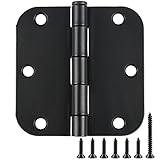
I remember the first time I saw a safe with external hinges. My buddy, Mark, had just bought this hulking beast of a thing to keep his firearms secure. He proudly showed it off, pointing out the shiny, beefy hinges that stuck out like a sore thumb. My gut reaction? That’s a weak spot. I figured any half-decent thief could just snip those off or pry them open. It seemed like a cheap shortcut by the manufacturer. So, let’s cut to the chase: are external hinges on a safe bad? The common wisdom might lead you to believe so, but I’ve learned that things are rarely that black and white.
My initial thought was that they were just a liability, an obvious point of attack. But after wrestling with a few different types of safes over the years, and seeing how they actually hold up (or don’t), my opinion has gotten a lot more nuanced. It’s not just about the hinges themselves, but what they’re attached to and how the rest of the safe is built.
The Anatomy of an Exposed Hinge
When we talk about safes, the hinges are the unsung heroes of the door. They’re the pivot point that allows you to swing that heavy metal slab open and shut. Most people, myself included until recently, assume all safes have hidden, recessed hinges on the inside. This is usually true for high-end, top-tier security safes. The logic is simple: if you can’t see it, you can’t attack it. External hinges, by their very nature, are visible and, seemingly, accessible. You can often see them clearly when the safe is closed, sticking out from the side or bottom of the door frame.
This visibility is what sparks the immediate question: are external hinges on a safe bad? The common perception is that they’re a major vulnerability.
Think about it: a thief with a grinder or even a strong pry bar could theoretically get at these hinges. They’re the mechanical connection between the door and the body of the safe. If that connection is compromised, the door can be removed, rendering the security of the safe moot.
I’ve seen enough cheap toolboxes with flimsy external hinges to develop a healthy skepticism. They feel like an afterthought, a place where manufacturers cut corners to save on manufacturing costs and complexity.
The less hardware you have on the outside, the smoother and more smooth the exterior looks, which often translates to a perception of higher quality.
However, not all external hinges are created equal. Some are designed with security in mind. They might be made of hardened steel, have anti-pry features built in, or be exceptionally thick and solid. It’s like comparing a padlocked shed door to a bank vault door – the external hinge is the same concept, but the execution and surrounding structure make all the difference. A well-built external hinge on a decent safe might still offer more security than a poorly designed internal hinge on a very cheap safe. It’s a matter of degree and the overall construction of the security container.
The complexity of internal hinges is also a factor. Internal hinges require more precise engineering and often a more intricate internal mechanism to operate. This can drive up manufacturing costs. External hinges, while they might seem like a vulnerability, can sometimes allow for simpler, more straightforward construction, which can translate to a lower price point for the consumer. This is often why you see them on more budget-friendly home safes or gun cabinets, where the primary goal is deterrence and basic protection rather than professional burglary resistance.
When ‘external’ Means ‘easier Entry’
Let’s be blunt: for a determined and properly equipped burglar, almost any safe can be breached. The goal of a good safe isn’t to be impenetrable, but to make the act of breaking in time-consuming, noisy, and difficult enough to deter most opportunistic thieves. And this is where external hinges can, in certain scenarios, be a significant disadvantage. I once helped a friend move a relatively inexpensive gun safe that had external hinges.
We were just moving it out of his old house, and one of the movers, trying to be helpful, grabbed the door handle and swung it open. One of the hinges didn’t just swing; it sort of detached slightly from its mounting point on the frame. It wasn’t broken, but it sagged noticeably.
It made me think, “What would happen if someone was trying to get in with a pry bar?”
The problem with external hinges is that they present a clear target. Imagine a thief with a portable angle grinder. They can immediately see the hinges and go to work. The metal might be thick, but grinders can chew through steel relatively quickly, especially if the hinges are the primary point of structural integrity for the door.
With internal hinges, a thief first has to breach the main body of the safe or the door face itself to even access the hinge mechanism. This adds layers of difficulty and time. Furthermore, some safes with external hinges might not have the same level of internal reinforcement around the hinge area as a safe designed with internal hinges.
This means the metal surrounding the hinge might be thinner or less reinforced, making it easier to pry or cut. (See Also: A Box Without Hinges Key )
I’ve also seen instances where the hinges themselves are not designed to withstand sideways force. If a thief can get a pry bar behind the door and apply use, those external hinges could be bent or ripped out of their mountings. It’s not just about cutting; it’s about brute force as well. This is especially true for safes that are not anchored down. If a safe can be tilted or moved, it makes attacking the hinges much easier. The common advice to always bolt your safe down is even more important when dealing with external hinges, as it limits the use a thief can apply.
The question of whether external hinges on a safe are bad often comes down to the intended use and the level of security you require. If you’re looking for a basic deterrent for casual theft, like keeping kids out of a gun cabinet or securing documents from a quick smash-and-grab, then a safe with external hinges might be adequate. But if you’re safeguarding high-value items, irreplaceable heirlooms, or firearms where swift access is most important, you’re likely better off investing in a safe with internal, protected hinges. It’s a trade-off between cost and absolute security, and external hinges tend to lean towards the lower end of the security spectrum.
The Flip Side: When External Hinges Aren’t a Dealbreaker
Now, before you go throwing out every safe with visible hinges, let’s consider the other side of the coin. Are external hinges on a safe bad? Not always. There are situations and designs where external hinges are perfectly acceptable, and sometimes even have advantages.
My first significant contrarian thought on this came when I was looking at some specialized industrial storage cabinets. These weren’t ‘safes’ in the traditional sense, but they were designed for security and durability in a workshop environment. They had heavy-duty external hinges, almost like gate hinges, but they were made of solid, thick steel, and the pins were non-removable from the outside. You couldn’t just lift the door off by removing a pin.
The entire cabinet was built like a tank, and those hinges were clearly designed to be part of that solid construction, not a weak point.
One of the primary advantages of external hinges, when done right, is that they can allow a door to open wider – often a full 180 degrees. This is a huge practical benefit. Imagine trying to load a bulky item into a safe with internal hinges that only open 90 or 110 degrees. It can be a real pain.
With a 180-degree opening, you have full, unimpeded access to the entire interior of the safe. This is particularly useful for gun safes where you need to maneuver long rifles or shotguns. I’ve struggled with internal-hinged safes where getting a particular rifle in or out felt like a Tetris puzzle, especially if it had a scope. A safe with external hinges that open wide can save you a lot of hassle.
Another point in favor of some external hinges is their ease of maintenance and replacement. If an internal hinge mechanism fails, it can be incredibly difficult, if not impossible, for the user to repair without sending the entire safe back to the manufacturer.
An external hinge, if designed to be accessible, can sometimes be lubricated or even replaced by a technician (or a handy DIYer with the right parts and tools) much more easily. This is a practical consideration for long-term ownership.
While not a primary security feature, it’s a usability factor worth noting. I once had a small, older safe with internal hinges that developed a squeak so loud it sounded like a dying cat.
Getting it serviced was a nightmare because of how the hinges were integrated into the door structure. A simple external hinge would have been a breeze.
Finally, for many home use scenarios, the perceived threat isn’t a team of professional safecrackers. It’s more about preventing casual theft, keeping children safe, or organizing belongings. In these cases, the deterrence factor of a visible, sturdy-looking hinge can be sufficient. It signals that this isn’t just a flimsy metal box. The key takeaway here is that the quality and design of the hinge, and the overall construction of the safe, are far more important than the mere fact that the hinge is external. You can have a very secure safe with external hinges if it’s built with high-quality materials and security-focused design.
What to Look for: Beyond Just ‘external’ or ‘internal’
So, if you’re in the market for a safe and you’re wondering, ‘are external hinges on a safe bad?’, you need to look deeper than just that one feature. It’s easy to get hung up on internal vs. external, but that’s only part of the story.
You need to consider the whole package. First off, the material. (See Also: Are Integrated Washing Machine Door Hinges Standard )
Are the hinges made of thick, hardened steel? Or are they thin, stamped metal that looks like it could be bent with a screwdriver?
A good external hinge will feel substantial, heavy, and well-machined. I’ve seen some that are clearly an afterthought, and others that look like they could survive a bomb blast.
Feel the weight, look for thickness, and check for any visible seams or weak points.
Next, look at the design of the hinge itself. Does it have non-removable pins? Some external hinges have pins that can be easily removed from the outside, allowing the door to be lifted off.
This is a huge security flaw. A good design will incorporate features that prevent this, like welded pins or internal locking mechanisms that engage the pin when the safe is closed.
Another design feature to watch for is how the hinge is attached to both the door and the frame. Are there multiple heavy-duty bolts or welds? Or is it just a couple of small screws?
The mounting hardware is just as important as the hinge itself. I once bought a cheap cabinet where the hinges looked decent, but the screws holding them to the thin metal frame stripped out almost immediately. Talk about a wasted purchase.
Here’s a quick comparison table that sums up what I look for, regardless of hinge type:
| Feature | What to Look For (Good) | What to Avoid (Bad) | Verdict |
|---|---|---|---|
| Hinge Material | Thick, hardened steel; smooth construction | Thin, stamped metal; visible seams; rust-prone | Important |
| Hinge Design | Non-removable pins; anti-pry features; 180° opening capability (if desired) | Removable pins; exposed pin heads; limited opening angle | Important |
| Mounting Hardware | Heavy-duty bolts/welds; solid connection to door and frame | Small screws; stripped threads; flimsy attachments | Important |
| Door/Frame Reinforcement | Thick gauge steel; reinforced edges around hinge area | Thin gauge steel; no specific reinforcement | Key |
| Locking Mechanism | Multi-point bolt system; solid bolt diameter | Single bolt; small bolt diameter; weak bolt retraction | A must |
Beyond the hinges, pay attention to the overall steel thickness of the safe body and door. A thin-walled safe with internal hinges offers less protection than a thick-walled safe with well-designed external hinges. Also, consider the locking mechanism itself – the number and diameter of the bolts, the quality of the lock (key, combination, or electronic). These are often more significant factors in a safe’s overall security than the hinge type alone. Don’t let a shiny exterior or a fancy brand name fool you; always inspect the construction details.
Real-World Use: My Own Dumb Mistakes
I’ve made my share of dumb purchases when it comes to security products, and safes are no exception. I once bought a “fireproof” document safe from a big box store for about $150.
It looked decent enough, and the description boasted about its fire rating. What I didn’t pay enough attention to, in my rush to get it home and loaded with important papers, were the hinges. They were external, and frankly, they looked like they were made of aluminum foil. I remember thinking, “This is going to be the first thing to go if someone tries to get in.” I was right.
About a year later, I was trying to move it, and one of the hinges just about snapped off when the door shifted slightly. It wasn’t a theft attempt, but it showed me how fragile those external hinges really were.
That experience taught me a valuable lesson: never assume. Just because a safe has external hinges doesn’t automatically mean it’s bad, but it definitely means you need to scrutinize them. My mistake was not just buying a safe with external hinges, but buying one with cheaply made external hinges. The common advice of ‘avoid external hinges at all costs’ is an oversimplification. It’s like saying all cars with sunroofs are bad; it depends on the quality of the sunroof and the car it’s attached to.
Conversely, I’ve also encountered safes with external hinges that were surprisingly solid. I was helping a client set up a commercial-grade safe for a small business, and it had external hinges. These were thick, forged steel affairs, with multiple bolts anchoring them to the door and the frame. They were designed to open almost flat, which was great for accessing the entire interior. (See Also: Are Hinges Wheeels )
The overall construction of that safe was far superior to many of the ‘high-security’ home safes I’ve seen with hidden hinges. The steel was thicker, the bolt work was more extensive, and it felt like a solid piece of engineering. That safe, despite its visible hinges, was probably more secure than several safes I’d previously recommended that boasted internal hinges.
The key takeaway from my own screw-ups and subsequent learning is that you need to understand what you’re buying. For lower-cost safes, external hinges are often a sign of compromise. For higher-quality, more specialized safes, external hinges might be a deliberate design choice to allow for wider opening or easier maintenance, with security features built into the hinge itself. So, are external hinges on a safe bad? It’s a question that requires a deeper look at the specific product, not just a blanket judgment based on hinge placement.
Faq: Your Burning Questions About Safe Hinges
Can External Hinges Be Cut Off?
Yes, external hinges can potentially be cut off with tools like angle grinders or plasma cutters. This is a primary concern for security. However, the effectiveness of this method depends on the thickness and material of the hinges, as well as the time and noise a thief is willing to expend. High-quality external hinges made of hardened steel are much more resistant to cutting than cheaper, softer metal hinges.
Are Internal Hinges Always More Secure?
Internal hinges are generally considered more secure because they are protected from direct attack. A thief would typically have to breach the door or body of the safe first to even access the internal hinge mechanism. This adds a significant layer of difficulty and time to a break-in attempt, making them a preferred choice for high-security applications. However, poorly designed internal hinges on a weak safe can still be compromised.
What’s the Advantage of External Hinges Opening 180 Degrees?
External hinges often allow the safe door to open a full 180 degrees, providing complete access to the interior. This is a significant practical advantage for loading and unloading bulky items, like long firearms or large documents. Internal hinges typically limit the door opening to around 90 to 110 degrees, which can make accessing the full depth of the safe more difficult and require maneuvering items around the door frame.
How Can I Tell If a Safe’s External Hinges Are Good Quality?
Look for hinges made of thick, hardened steel with a smooth finish. Check that the pins are non-removable from the outside. Inspect the mounting hardware to make sure they are robustly attached to both the door and the safe frame. If the hinges feel light, flimsy, or have visible weak points like small screws, they are likely not of good quality and could be a security risk. Manufacturer specifications and reviews can also offer insight.
The Final Word on External Hinges
After all this, the simple answer to ‘are external hinges on a safe bad?’ is that it’s complicated. It’s not a simple yes or no. My initial, knee-jerk reaction was a resounding ‘yes, they’re bad.’ I saw them as an obvious weakness, a corner cut by manufacturers to save a few bucks. And honestly, for many of the cheaper safes out there, that’s exactly what they are. They present a visible target that can be exploited by determined individuals with the right tools. The fact that they are exposed means they are the first line of attack, and if they fail, the entire security of the safe is compromised.
However, my experiences have shown me that quality matters more than placement. I’ve seen well-engineered external hinges on solid safes that offer excellent security and practical benefits, like wider door openings.
I’ve also seen poorly designed internal hinges on flimsy boxes that wouldn’t deter a determined child. It really boils down to the materials used, the design of the hinge itself, how it’s mounted, and the overall construction of the safe.
You can’t make a blanket judgment based solely on whether the hinges are inside or out. If you’re on a budget, be extra vigilant about the quality of any external hinges.
If you’re investing in a higher-end safe, understand why the manufacturer might have chosen external hinges – it could be a feature, not a flaw.
My current stance is this: if I were buying a safe for serious security, I’d lean towards internal hinges simply because they offer that extra layer of protection and peace of mind. They remove a potential point of attack without compromising usability for most applications. But if a specific safe with external hinges impressed me with its build quality, steel thickness, and solid hinge design, I wouldn’t dismiss it out of hand. It’s about doing your homework and not being swayed by simplistic rules of thumb. Always check the construction, the materials, and the locking mechanism. That’s where the real security lies, no matter what kind of hinges your safe has.
Verdict
So, to wrap things up, are external hinges on a safe bad? My honest opinion, after years of wrestling with these things, is that they can be, but they aren’t inherently so. For the budget-conscious buyer, they often signal a compromise in security. You’re trading a more complex, protected internal hinge system for a simpler, external one that’s more exposed to direct attack. This means a thief might have an easier time trying to grind through them or pry them open.
However, the narrative isn’t that simple. I’ve seen external hinges that were so beefy and well-integrated into the safe’s design that they felt more secure than some flimsy internal hinges on cheaper models. The key is always the overall quality of the safe. Thick steel, a solid bolt system, and well-machined, hardened external hinges are a different story than thin, easily bendable ones.
If you’re looking for top-tier security and maximum peace of mind, opting for a safe with internal hinges is generally the safer bet. They are designed to be out of sight and out of reach. But if you’re looking at a specific safe with external hinges, don’t discount it immediately. Inspect it thoroughly. Feel the weight of the hinges, check the mounting hardware, and consider the steel thickness of the safe itself. Sometimes, a well-executed external hinge design can offer practical advantages like a wider door opening without sacrificing security to a degree you should worry about for your specific needs.