I remember the first time I tried to argue with a mechanic about a bill. I was young, broke, and thought I knew a thing or two about cars. I’d spent hours online, reading forums, watching YouTube videos, convinced I could spot a rip-off. Then he looked me dead in the eye and said, “You’re paying for the part and the labor, kid.
And that part isn’t a hinge on your trunk lid.” It finally clicked: some folks just want to know if hinges are counted as wheels. Let me tell you, they are not, and it’s a question that actually matters more than you might think, especially when you’re dealing with vehicle regulations or even just trying to fix something yourself.
This isn’t some philosophical debate about what constitutes motion; it’s about practical application. When we talk about vehicles, especially cars and trucks, the distinction between rolling components and structural ones is pretty damn clear. But people get confused, and that confusion can cost you. So, let’s cut through the jargon.
What Actually are Wheels, Anyway?
Look, this isn’t rocket science, but sometimes you’d think it was, given how complicated people make it. A wheel, in the context of a vehicle, is pretty straightforward: it’s the round thing that rotates on an axle and allows the vehicle to move by rolling along the ground. It’s the primary means of propulsion and steering.
Think about it – without wheels, your car wouldn’t go anywhere. They’re the business end of locomotion.
This includes the tire, the rim, and the whole assembly that makes contact with the road. We’re talking about the four (or more, if you’re fancy) things that actually roll you from point A to point B. When a mechanic or an engineer talks about the ‘wheels’ of a vehicle, they mean these rotating discs that help movement. They’re designed for friction, grip, and enduring the stresses of the road.
They are, quite literally, what allow your vehicle to roll. If something doesn’t rotate and grip the road to make your vehicle move, it’s probably not a wheel in the automotive sense.
The debate about whether hinges are counted as wheels is almost comical if you stop and think about it. Hinges are designed to allow a part of the vehicle to pivot or swing.
Think of your car doors, your trunk lid, your hood. They all have hinges. These are mechanical joints, pure and simple. They provide a point of rotation, yes, but not for the purpose of locomotion.
They allow access, they allow maintenance, they allow you to get in and out of your ride. They are not designed to bear the weight of the vehicle and translate it into forward motion. It’s like asking if your kneecaps are counted as your feet.
They allow you to move, sure, but they are not the part that actually touches the ground and propels you forward. (See Also: A Box Without Hinges Key )
People get this mixed up for a few reasons, I reckon. Sometimes it’s about understanding regulations. For instance, in some places, there are fees or taxes based on the number of ‘wheels’ a vehicle has. A motorcycle has two, a car has four, a semi-truck has eighteen. Nobody’s ever tried to add extra fees for the hinges on the trailer door. Another reason is just general confusion. If something rotates, is it a wheel? Well, yes and no. A fan blade rotates. Is it a wheel? Not in the way we mean for vehicles. The function is entirely different. The context is key, and the automotive context of ‘wheels’ is about rolling and movement, not just rotation.
Why the Confusion? (hint: It’s Not About the Hinges)
Honestly, the confusion around whether hinges are counted as wheels is usually a red herring. Most of the time, when people are asking this, they’re not actually pondering the mechanical definition of a hinge versus a wheel. They’re probably dealing with something else entirely. Think about vehicle classifications, registration requirements, or even some obscure insurance policy. For example, some heavy-duty vehicle regulations might count axles, and axles have wheels. Or they might be thinking about things like spare tires. Is a spare tire counted as one of the ‘wheels’ for registration purposes? Usually, yes, because it’s a functional wheel intended for use. But a hinge? Never.
I remember a buddy of mine, Mark, who was trying to register a custom-built trailer. He’d gone a bit overboard with features, including some ridiculously heavy-duty, industrial-style hinges for the tailgate.
The registration office clerk, a woman who looked like she’d seen it all and was tired of it, started looking at his paperwork. He’d listed the number of wheels (four), but she paused at something else. Mark, panicking, blurted out, “Are the hinges counted as wheels too?” The clerk just stared at him for a solid five seconds, then burst out laughing. She had to explain, very patiently, that hinges are absolutely not wheels, and that if he didn’t calm down, she’d have to call someone.
It was a moment of pure panic-induced absurdity. He was worried about some bizarre loophole, but the reality was far simpler.
The real confusion often stems from specific technical definitions used in different industries. In engineering, you might have ‘rolling elements’ that aren’t strictly wheels, or ‘articulation points’ that aren’t hinges. But in the everyday, practical world of cars, bikes, and maintenance, the definition is pretty darn clear. Hinges allow doors to open and close. Wheels allow vehicles to roll. The two are functionally distinct. If you’re ever in doubt, always think about the primary purpose. Is it for rolling along the ground? Then it’s a wheel (or part of one). Is it for swinging or pivoting? Then it’s a hinge.
The Technicalities: What Hinges actually Do
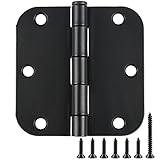
Let’s get down to brass tacks. A hinge is a mechanical device that connects two solid objects, allowing them to pivot relative to each other. That’s it. Think of the simple butt hinge on a door – two plates joined by a pin. Or think of the more complex, multi-jointed hinges on a car door that allow it to open wide and also keep it securely closed. They are designed for durability, smooth operation, and to withstand repeated stress from opening and closing. The materials are usually steel, aluminum, or sometimes stronger alloys, depending on the load they’re expected to carry and the environment they’ll be in.
For a car door hinge, for instance, the primary functions are: 1. To provide a pivot point for the door to swing open and closed. 2. To support the weight of the door when it’s open. 3. To align the door correctly with the car body when it’s closed, making sure a proper seal. 4. To withstand the forces of slamming the door or accidental impacts. They are engineered with specific tolerances and often include lubrication points or self-lubricating mechanisms to prevent wear and tear. Some might have detents or stay-open mechanisms, but the core function is always about controlled pivoting.
Compare that to a wheel. A wheel’s primary functions are: 1. To rotate around an axle. 2. To bear the load of the vehicle. 3. To provide traction for acceleration and braking. 4. To absorb some of the shock from the road surface (often with the tire). They are built to handle rotational forces, lateral forces, and vertical loads. They are designed to minimize friction while rolling, not create it. The materials might be steel, aluminum alloy, or even composite materials for performance applications. The engineering focus is on strength, lightness, and the ability to transmit torque and braking forces.
So, when you’re looking at the parts of your car, you have your wheels – the things that make it go. And you have your hinges – the things that let you get in and out. They are fundamentally different components serving entirely different purposes. One is about motion, the other is about access and articulation. (See Also: Are Integrated Washing Machine Door Hinges Standard )
When the Number of Wheels does Matter (and It’s Not About Hinges)
Okay, so hinges are out. But where does the number of wheels actually come into play? It’s mostly about regulations, taxes, and classification. Think about your driver’s license. It’s typically for ‘automobiles’ – passenger cars with four wheels. If you want to drive a big rig, you need a commercial driver’s license (CDL) with endorsements for different axle configurations and gross vehicle weights, all of which are tied to the number of wheels and axles. Road taxes and tolls are often calculated based on vehicle type, which is directly related to the number of wheels and weight.
For example, many states have different registration fees for motorcycles (2 wheels), passenger cars (4 wheels), and larger vehicles like trucks and buses (which can have 6, 10, 18, or even more wheels). The logic is that more wheels generally mean a heavier vehicle, which contributes more to road wear and tear. So, the DMV or equivalent agency needs an accurate count of your vehicle’s wheels for proper classification and fee collection. This is where a genuine misunderstanding of vehicle components could lead to trouble.
If you try to misrepresent your vehicle by, say, counting the spare tire as a primary wheel for registration purposes when it’s not meant to be, you could face fines. But again, hinges are never in this conversation.
Here’s a practical scenario: buying tires. When you buy new tires, you need to know the size, load rating, and speed rating for your vehicle’s wheels. You don’t buy tires for your door hinges! The number of wheels dictates how many tires you need to purchase. If you have a standard car, you’ll likely buy four tires plus a spare. If you have a dually truck (meaning it has two wheels on each side of the rear axle), you’ll need eight tires for the rear plus two up front, for a total of ten. This is a direct, practical application of counting wheels. It affects your wallet and your vehicle’s safety and roadworthiness.
Another instance is vehicle safety inspections. While a mechanic might check the condition of your door hinges during a safety inspection (because they’re part of the door’s function and safety), the primary focus of the ‘wheel’ part of the inspection is on tire tread depth, alignment, and brake components connected to the wheel hub. They’re not going to be looking at your hinges and saying, “Yep, that’s a good hinge, counts as a wheel.” It’s a non-issue.
Common Mistakes When Thinking About Vehicle Parts
People make a lot of silly mistakes when they’re trying to understand vehicle parts. The hinge-as-a-wheel query is a prime example of a fundamental misunderstanding, often born from trying to find a loophole or just sheer ignorance. But there are other, more common blunders. One big one is confusing ‘part’ with ‘system’. For example, people might say they need a new ‘engine’ when what they actually need is a new alternator, which is part of the engine’s support system. Or they’ll blame the ‘transmission’ for a shifting problem when it’s actually a linkage issue or a faulty sensor.
Another mistake is overestimating their DIY skills. I’ve seen guys spend hours, and then a fortune on parts, trying to fix something simple they read about online, only to make it worse. My own worst DIY moment was trying to replace the brake pads on my old pickup.
I watched a video, thought, “Easy peasy.” Two hours later, covered in grease, with a wheel still half-off and a brake caliper hanging by a thread, I called my mechanic in defeat. I’d completely stripped a bolt and nearly cross-threaded another. That mistake cost me an extra $150 in labor and a very humbling phone call.
I learned that day that while many repairs are possible for the home mechanic, knowing your limits is key. Sometimes, the advice online is overly simplified or glosses over important details.
A related mistake is not using the right parts. You can’t just slap any old bolt into a important component. Using the wrong grade of bolt, the wrong type of fluid, or a generic part when a specific OEM (Original Equipment Manufacturer) part is required can lead to premature failure or, worse, a safety hazard. For instance, using standard lug nuts on alloy wheels can damage the wheel seat over time, leading to uneven torque and potential wheel loss. (See Also: Are Hinges Wheeels )
This is why it’s important to know the exact specifications for your vehicle. And, of course, there’s the classic mistake of confusing cosmetic items with functional ones. People might spend a fortune on fancy chrome trim for their door hinges, thinking it’s an upgrade, when the actual hinge mechanism is failing and needs attention.
Practical Tips for Identifying Vehicle Parts
So, how do you avoid these pitfalls and know what’s what? First, get familiar with your vehicle’s owner’s manual. It might seem boring, but it’s the most authoritative source for your specific car. It has diagrams and lists of components. Second, when you’re looking at repair videos or guides, cross-reference them. Watch a few different ones. Look for mechanics who explain why they’re doing something, not just what they’re doing. Pay attention to the specific tools and parts they’re using.
For practical identification, think about function. What does the part do? Does it help the vehicle move? Does it help you control the vehicle? Does it allow access? Does it support the structure? If it helps the vehicle move, it’s likely related to the drivetrain, suspension, or wheels. If it helps you control it, it’s steering or brakes. If it allows access, it’s likely doors, hoods, or trunks, and the components that help that access are hinges, latches, and gas struts.
Here’s a quick way to categorize common parts:
| Part Type | Primary Function | Example Components | Opinion/Verdict |
|---|---|---|---|
| Wheels & Tires | Locomotion, Grip, Load Bearing | Rims, Tires, Lug Nuts, Hubs | Absolutely vital. Don’t skimp on quality here. Good tires make a huge difference. |
| Engine Components | Power Generation | Pistons, Crankshaft, Spark Plugs, Belts | The heart of the car. Requires specialized knowledge for most repairs. |
| Braking System | Deceleration, Stopping | Pads, Rotors, Calipers, Master Cylinder | Safety first. If you’re not confident, leave brake jobs to the pros. |
| Suspension System | Ride Comfort, Handling | Shocks, Struts, Springs, Control Arms | Important for a smooth ride and stable handling. Check for leaks. |
| Steering System | Directional Control | Rack and Pinion, Power Steering Pump, Tie Rods | Directly impacts your ability to control the vehicle. Any looseness is bad. |
| Body & Chassis | Structure, Protection, Access | Frame, Body Panels, Doors, Hood, Trunk | Includes hinges! Mostly structural or for access, not mechanical function like wheels. |
When in doubt, take a clear picture of the part and ask a knowledgeable parts counter person or a trusted mechanic. They’ve seen it all, and they can usually point you in the right direction without making you feel like an idiot. Just don’t ask them if hinges are counted as wheels; they might do something drastic.
Are Hinges Counted as Wheels for Vehicle Registration?
No, hinges are absolutely not counted as wheels for vehicle registration purposes. Vehicle registration is based on the number of functional wheels that are designed to make the vehicle move along the ground. Hinges are mechanical components that allow parts like doors or hoods to pivot, and they have no bearing on how a vehicle is classified for registration fees or taxes.
Can a Hinge Be Considered a Wheel in Any Technical Context?
In any standard automotive or mechanical context, a hinge is never considered a wheel. Wheels are designed for rotation around an axle to help movement by rolling on a surface. Hinges are designed to allow two objects to pivot relative to each other. Their functions are entirely distinct and not interchangeable in any technical definition.
If a Part Rotates, Does That Make It a Wheel?
Not necessarily. Many parts in a vehicle rotate, such as gears in a transmission, fan blades, or the camshaft. Rotation is a characteristic of many components, but it doesn’t define something as a ‘wheel’ in the automotive sense. A wheel’s primary defining characteristic is its role in locomotion by rolling on the ground, supporting the vehicle’s weight while doing so.
What Is the Primary Purpose of a Hinge on a Car Door?
The primary purpose of a hinge on a car door is to securely attach the door to the vehicle’s body and allow it to swing open and closed smoothly. It acts as a pivot point, supporting the door’s weight and making sure it aligns correctly with the car’s frame when closed, contributing to both access and sealing.
Final Verdict
So, there you have it. Hinges are for swinging, wheels are for rolling. It’s a distinction that seems obvious to anyone who’s spent more than five minutes with a car, but it’s the kind of basic question that pops up when people are trying to understand regulations or are just plain confused by technical jargon. Don’t let anyone tell you otherwise, and definitely don’t go asking a mechanic if hinges are counted as wheels unless you’re prepared for a strange look or a good laugh.
When you’re dealing with your vehicle, always focus on the function of the parts. Understand what they do and why they’re there. This knowledge will save you time, money, and a whole lot of frustration. Stick to the facts, trust your common sense, and you’ll be a lot better off than relying on half-baked advice found online.
Next time you’re at the garage or looking at parts online, take a moment to identify what you’re actually looking at. Your wallet will thank you.