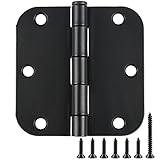
I’ve seen them on everything from shed doors to ridiculously overpriced, ‘designer’ gates. And every time, I get that little twitch in my eye. Are hinges on the outside safe? It’s a question that pops up more than you’d think, especially when you’re trying to secure something or just make it look decent without breaking the bank on fancy mechanisms. I’ve wasted enough cash on fancy solutions that didn’t work to know when something simple is actually the smart play. So, let’s cut through the BS.
The short answer to whether are hinges on the outside safe isn’t a simple yes or no. It depends entirely on what you’re hinging, where it is, and how much you care about someone messing with it. But most people asking this are probably thinking about their front door or something similar, and frankly, that’s where it gets a bit dodgy.
The Real Deal with External Hinges: More Than Meets the Eye
Look, when you see hinges on the outside of a door, your first thought might be about security. Can someone just pop them off and walk in?
The answer is usually no, not easily, but that doesn’t mean they’re always the best idea. For something like a garden shed or a gate to your backyard, where the main goal is just to keep the wind out or keep the dog in, external hinges are often perfectly fine. They’re cheaper, easier to install, and frankly, a lot of them look pretty damn good if you pick the right style. I once put a set of black, heavy-duty strap hinges on an old wooden gate leading to my vegetable patch.
Looked fantastic, held up like a champ against the elements. No one was trying to break into my garden, so the ‘security’ aspect was a non-issue.
The problem arises when you start thinking about them for a main entry door, like your front door. Most interior doors, and even many exterior doors designed for security, have their hinges on the inside. Why?
Because the hinge pins are usually on the inside, meaning you can’t just slide them out from the outside. If your hinges are on the outside, and they’re the kind where the pin is exposed and can be removed (think older, simpler designs), then theoretically, someone could knock out the pin and remove the door. Now, before you freak out, most modern exterior hinges, even if they appear to be on the outside, have safety features.
They might have security studs, or the pin itself might be designed to be non-removable from the outside, or the hinge leaves are so tightly fitted that even if you could remove the pin, you wouldn’t get the door off without a crowbar. So, the absolute, undeniable truth about whether are hinges on the outside safe for a primary entry point is often ‘it depends on the specific hinge and door construction,’ but the general consensus from anyone who’s actually installed these things for a living is to stick with interior hinges for maximum security on main doors.
I remember a buddy of mine who was renovating an old Victorian house. He found these beautiful, ornate exterior hinges for his front door.
They looked the part, absolutely stunning. The contractor installing them kept muttering about how the pin was easily accessible. My friend, blinded by aesthetics, brushed it off.
A few months later, a minor incident occurred – not a full break-in, but someone tried to force the door. They didn’t get in, but they did manage to slightly pry the door open by attacking the hinges.
It was a wake-up call. The aesthetic appeal was ruined, and the feeling of security was gone. He ended up replacing them with standard, interior-mounted hinges, and honestly, you could barely tell the difference once the new door hardware was on. It’s a classic case of form over function, and sometimes, function wins.
Understanding Hinge Types and Their Security Implications
Let’s break down the anatomy of a hinge and why it matters. Most hinges, whether inside or out, work on a similar principle: two plates (leaves) joined by a pin that allows rotation. The important difference for security lies in how that pin is integrated and accessed.
Standard Butt Hinges: These are the most common. On an interior door, the hinge leaves are typically mortised into the edge of the door and the frame.
The pin is usually on the inside. If you encounter butt hinges on the outside of a door, the primary vulnerability is that exposed pin. If it can be tapped out, the door can be removed.
Many older doors or less secure installations might have this setup. I’ve seen this on some commercial buildings where the doors open outwards, and the hinges are clearly visible on the exterior. It’s not ideal from a security standpoint if you can easily remove the pin. For things like utility sheds or outbuildings where security isn’t most important, it’s often a non-issue. (See Also: A Box Without Hinges Key )
But for a home’s main entry? Absolutely not without extra measures.
Ball-Bearing Hinges and Security Hinges: These are a step up. Ball-bearing hinges have a small ball bearing between the knuckles of the hinge, making them smoother to operate and more durable, especially for heavy doors. Security hinges often incorporate a non-removable pin or a stud that fits into a recess in the frame when the door is closed.
This stud prevents the door from being lifted off its hinges even if the pin is somehow removed. You’ll often see these specified for commercial applications or for doors opening outwards where interior hinges aren’t feasible.
If you must have hinges visible on the outside, look for these. They’re designed with security in mind, making that ‘pop the pin’ trick much harder, if not impossible.
Strap Hinges and T-Hinges: These are typically found on gates, barn doors, or rustic furniture. They have a long strap that attaches to the door and a knuckle that attaches to the frame. The pin is usually quite prominent. While they offer a very solid physical connection, the pin is often exposed. For gates or shed doors, their visual appeal and strength are their selling points. For a main door, they’re generally not recommended from a security perspective, and aesthetically, they’d look out of place on most modern homes.
Concealed Hinges (European Hinges): These are the opposite of external hinges. They are completely hidden when the door is closed, offering the highest level of security and a clean look. They are complex and expensive, usually found on high-end cabinets or modern interior doors. If your primary concern is security and aesthetics, and you have the budget, these are the gold standard, but they’re a different category altogether and not what most people mean when they ask if are hinges on the outside safe.
My Experience with a ‘Trick’ Hinge: I once bought a fancy, ostensibly secure gate. It had these sleek, modern hinges that looked like they were almost part of the gate’s design.
They were definitely on the outside. I was impressed.
Then, one day, after a particularly strong gust of wind, the gate swung open wider than it should have, and I noticed it – a small, almost invisible set screw on the hinge knuckle. A quick turn with a tiny Allen key (which, thankfully, I had in my toolbox from another project) and the pin just slid right out. The entire gate could have been lifted off. It was a stark reminder that ‘fancy’ doesn’t always mean ‘secure,’ and what looks like a solid external hinge can sometimes be a weak point if not properly specified or installed.
I immediately tightened that set screw and added a more solid locking mechanism, but it was a real eye-opener about how some designs prioritize looks over actual security.
Common Mistakes People Make with External Hinges
When people ask if are hinges on the outside safe, they’re usually trying to solve a problem, often related to cost or aesthetics. But in that pursuit, they can make some pretty significant blunders. The most common mistake is assuming all hinges are created equal, or that a visible hinge is inherently less secure than a hidden one, without understanding the nuances.
Mistake 1: Prioritizing Aesthetics Over Security on Entry Doors. This is the big one. You see a beautiful, ornate external hinge that perfectly matches your rustic farmhouse door or your sleek modern gate.
It looks amazing. But if that hinge has an exposed, removable pin and it’s on your front door, you’ve just created an invitation.
I’ve seen people spend a fortune on custom doors and then ruin their security with the wrong hinge choice. It’s like buying a super-strong safe and leaving the key under the doormat. The hardware store employee will tell you to get interior hinges for exterior doors for a reason, and it’s not just about aesthetics. My rule of thumb: if it’s a door that leads outside your home and is meant to keep people out, the hinges should be on the inside, or if they absolutely must be on the outside, they need to be specifically rated security hinges with non-removable pins or security studs.
Mistake 2: Not Considering the Door’s Swing Direction. This is a bit more technical but important. If a door opens outwards, the hinges must be on the outside for it to function correctly. In these cases, you absolutely must use security hinges. (See Also: Are Integrated Washing Machine Door Hinges Standard )
This is common on some commercial buildings or older homes where the door swing was designed for a different era. If you have an outward-swinging door with standard exterior hinges that have removable pins, you’re leaving yourself wide open.
Conversely, if your door opens inwards, interior hinges are the standard and the most secure. Don’t try to force an outward swing on an inward-opening doorframe just to make standard hinges work from the inside; it’s a recipe for disaster, both functionally and security-wise.
Mistake 3: Underestimating the Strength of a Simple Tool. People often think break-ins involve heavy-duty tools like crowbars. While that’s true sometimes, a simple pin-punch and hammer can defeat many standard exterior hinges quickly and quietly. I had a situation where a neighbor’s shed was broken into. The lock looked formidable, but they simply tapped out the hinge pins from the outside, and the door came off. The shed itself was fine, but the contents were gone. It cost them about $50 for a new set of proper security hinges for that shed, which should have been the choice from day one. It’s a relatively small investment for peace of mind.
Mistake 4: DIY Installation Without Proper Understanding. Hinges might seem simple, but getting them aligned perfectly so the door closes smoothly and securely takes skill. If they’re not installed correctly, they can bind, warp, or put uneven pressure on the door and frame, weakening the entire structure. This is especially true for heavier doors. I once tried to install some beefy gate hinges myself, thinking ‘how hard can it be?’
I ended up with a gate that sagged, wouldn’t close properly, and stressed the posts. Had to call a professional to fix it, costing me more in the long run. They showed me how important precise mortising and alignment are.
If you’re not comfortable with woodworking and metalwork, it’s worth paying for professional installation, especially for exterior doors where security and weatherproofing are key.
Here’s a quick rundown of what to look for and what to avoid:
| Hinge Type | Typical Use Case | Security Verdict (Exterior Installation) | My Take |
|---|---|---|---|
| Standard Butt Hinge (exposed pin) | Interior doors, shed doors, utility gates | Poor | Avoid on main exterior doors like the plague. Okay for sheds if you’re not worried about petty theft. |
| Security Butt Hinge (security studs/non-removable pin) | Outward-swinging exterior doors, commercial doors | Good to Very Good | The go-to if hinges must be on the outside. Worth the extra cost. |
| Strap/T-Hinge | Gates, barn doors, rustic doors | Variable (often Poor if pin exposed) | Looks great on the right application, but check that pin! Mostly for aesthetic or functional (heavy door) reasons, not security. |
| Concealed Hinge | Cabinetry, modern interior doors | N/A (not exposed) | The ultimate for hidden security and clean lines, but a different ballgame entirely. |
The Case for Interior Hinges: Why They Usually Win
Let’s be blunt: for the vast majority of residential exterior doors, the best and safest place for hinges is on the inside. It’s not just a convention; it’s a deliberate design choice rooted in security. When hinges are on the inside, the pins are facing inwards, making them inaccessible from the outside. This is the fundamental reason why interior hinges are the standard for exterior doors on most homes. If someone wants to tamper with the hinge, they’d have to breach the door itself first, which is a much more difficult and noisy undertaking.
I had a situation a few years back when a renter in one of my properties decided they wanted to ‘improve’ the security of their front door. They thought having the hinges on the outside looked ‘more professional’ or something.
They hired a handyman who, bless his heart, didn’t know any better, and installed outward-swinging hinges on the exterior. It looked… odd. And it felt less secure, even though the hinges were supposedly ‘heavy duty.’
Within six months, during a mild attempt at a break-in (just a shove, really), the door was slightly forced open because the outward-swinging hinges, while sturdy, offered a point of use that an inward-mounted hinge wouldn’t. The handyman had used standard butt hinges with pins that, while a bit stiff, could eventually be worked on. It took a complete hinge replacement and a lesson for the tenant on why interior hinges are the norm for a reason.
The cost of replacing those hinges and repairing the door frame far outweighed the perceived aesthetic benefit.
What about doors that absolutely must open outwards? This is where the concept of are hinges on the outside safe becomes a more complex discussion, and the answer shifts from a strong ‘no’ to a cautious ‘only if they are specifically designed for security.’
For outward-swinging doors, you need hinges that prevent pin removal. These are often called security hinges or non-removable pin (NRP) hinges.
They have a stud or projection on one leaf that fits into a corresponding recess on the other leaf or the door frame. When the door is closed, this stud prevents the hinge from being lifted off or the pin from being removed. These are common on commercial buildings, fire escape doors, or any exterior door that opens outwards. They function like an interior hinge in terms of security because they can’t be defeated by simply knocking out the pin. (See Also: Are Hinges Wheeels )
The key takeaway here is understanding the intended function and the inherent vulnerabilities. Hinges are mechanical components, and like any mechanical component, they have potential failure points. For standard residential doors, the simplest and most effective way to mitigate the risk associated with hinges is to keep them on the inside. If external hinges are unavoidable due to door swing, then the investment in security-specific hardware is not optional; it’s a necessity. It’s about making the path of least resistance for an intruder as difficult as possible. I’ve always found that when security is concerned, going with the tried-and-true method that has stood the test of time, like interior hinges for outward-opening doors, is usually the smartest move.
Practical Tips for Hinge Safety and Installation
So, you’ve got a door, and you’re wondering about those hinges. Whether you’re installing new ones or assessing your current setup, a few practical tips can make a world of difference. It’s not just about buying the most expensive hardware; it’s about making smart choices for your specific situation.
First off, when you’re buying new doors or hardware, ask yourself: ‘Does this door need to swing outwards?’ If the answer is no, then opt for an inward-swinging door and interior-mounted hinges. This is the easiest and most effective security measure you can take regarding hinges. If the answer is yes, or if you’re dealing with an existing outward-swinging door, then you absolutely must look for hinges specifically designed for security. These will often be labeled as ‘security hinges,’ ‘non-removable pin (NRP),’ or have ‘security studs.’ Don’t assume a heavy-duty hinge automatically means secure. Check the specs.
When installing any exterior door hinges, proper alignment is most important. This means making sure the hinges are mortised (recessed) into the door and frame to the correct depth and are perfectly plumb and level. A misaligned hinge can put undue stress on the door and frame, making them weaker and potentially easier to force. If you’re not experienced with this kind of work, especially for exterior doors, hire a professional. The cost of a few hours of a locksmith’s or carpenter’s time is usually less than the cost of repairing damage from a failed installation or a security breach.
DIYer’s Checklist for Exterior Hinges:
- Assess Door Swing: Inward swing = interior hinges. Outward swing = security hinges (NRP).
- Hinge Type: For outward swing, look for security studs, non-removable pins, or ball bearing hinges designed for security. Avoid standard hinges with exposed, removable pins.
- Material and Finish: For exterior use, choose corrosion-resistant materials like stainless steel or solid brass with a suitable finish (e.g., powder-coated, plated). Cheaper materials will rust and seize up, making them difficult to operate and potentially weakening them over time.
- Number of Hinges: Most standard doors need three hinges. Heavy doors or doors in high-wind areas might benefit from four. Using the right number distributes the weight and stress evenly.
- Installation Precision: Make sure hinges are flush with the door and frame, properly mortised, and the screws are long enough to bite securely into the frame studs. If in doubt, get a pro.
- Regular Maintenance: Even the best hinges can benefit from occasional lubrication (a drop of oil or graphite) and checking that screws are still tight. This applies to both interior and exterior hinges.
I remember a friend who was installing a new back door. He opted for a nice, affordable door that came with pre-drilled holes. He decided to install the hinges himself. He used the hinges that came with the door, which were standard butt hinges.
He didn’t realize the door swung outwards. About two months later, some opportunistic kids tried to force the door open as a prank.
They didn’t get in, but they managed to bend one of the hinge pins. It took him a weekend of wrestling with bent metal and a trip to the hardware store for proper security hinges to fix it. That $50 door ended up costing him an extra $100 and a lot of frustration because of one simple oversight about hinge placement and type.
Faq: Your Burning Questions About Door Hinges Answered
Are Hinges on the Outside Safe for a Shed?
For a shed, hinges on the outside are generally acceptable from a security standpoint, as sheds are usually not considered high-security areas. However, if you have valuable tools or equipment stored inside, it’s still wise to opt for hinges with security features like non-removable pins or security studs. Standard external hinges can be a weak point if someone has a few minutes and basic tools.
Can You Remove a Door From the Outside If the Hinges Are on the Outside?
With standard exterior hinges that have exposed and removable pins, yes, it is possible to remove the door. Someone could use a tool to tap out the pins. However, many modern exterior hinges, even those visible on the outside, incorporate security features like security studs or non-removable pins that prevent this. Always check the specific design of the hinge if security is a concern.
What’s the Difference Between Interior and Exterior Hinges?
The primary difference lies in their placement and security features. Interior hinges are designed to be mounted on the inside of the door and frame, keeping the pins inaccessible from the exterior. Exterior hinges are designed to be visible from the outside, typically because the door opens outwards. For security on exterior hinges, features like non-removable pins or security studs are important, which are usually absent in standard interior hinges.
Are Strap Hinges Secure?
Strap hinges can be very strong physically, but their security depends heavily on the pin. If the pin is exposed and removable, they are not considered secure for entry doors. They are more commonly used on gates, barn doors, or decorative applications where aesthetics and structural strength are prioritized over preventing easy removal. For any application where security is a concern, make sure the pin mechanism is solid and inaccessible from the outside.
What Are Security Studs on Hinges?
Security studs, often found on security hinges, are small protrusions on the hinge knuckles that engage with a corresponding recess in the door frame when the door is closed. This interlocking mechanism prevents the door from being lifted off its hinges even if the pin is removed, significantly enhancing security, especially for outward-swinging doors.
Final Verdict
So, to circle back to the big question: are hinges on the outside safe? My honest take is that for any door where security is even a mild concern – think your main entry, a back door, or even a garage door – keeping those hinges on the inside is almost always the smarter, safer bet. It’s the default for a reason. If you absolutely have to have them on the outside because of how the door swings, then you’re not looking at just any hinge; you’re looking for hardware specifically designed with security features like non-removable pins or studs. Don’t get caught out by a pretty hinge that’s actually a weak link.
I’ve seen too many situations where aesthetics or a DIY shortcut led to a compromised door. It’s rarely worth the risk. When it comes to keeping your home or property secure, the simple, unglamorous solution is often the most effective. Don’t be afraid to ask questions at the hardware store or consult a professional if you’re unsure. That little bit of extra effort upfront can save you a lot of headaches and potential trouble down the line.
Next time you’re looking at a door, take a second to check out those hinges. You might be surprised what you learn, and it could be the nudge you need to make sure your own doors are as secure as they can possibly be.