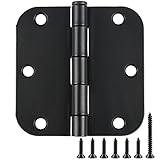
I remember staring at a cabinet door that wouldn’t quite close, the tiny gap mocking my attempts to fix it. I’d bought a replacement hinge online, a cheap pack that looked exactly like the original.
Turns out, looking alike is a far cry from being the same. This whole ordeal got me thinking: are European hinges interchangeable?
It’s a question that haunts DIYers and cabinet pros alike, and the answer isn’t as simple as a quick click-and-buy. Many people assume all these modern, hidden cabinet hinges are universal, but let me tell you, that’s a fast track to frustration and wasted money. This isn’t some corporate marketing fluff; this is the nitty-gritty truth about whether you can just swap out those European hinges.
It’s Not a Free-for-All: Why Brands Matter
Look, I’ve been elbow-deep in kitchen renovations more times than I care to admit, and the allure of the ‘standard’ part is strong. You see a hinge that looks like yours, you think, ‘Perfect, I’ll just grab this one and be done.’
But when it comes to European hinges, often called concealed or overlay hinges, that thinking is a trap. They’re designed with precision, and that precision is usually brand-specific. Think of it like trying to put a Ford tire on a Chevy; the bolt pattern might be similar, but the lug nuts are different, the size is slightly off, and it just won’t sit right.
Brands like Blum, Grass, and Salice have their own proprietary designs, mounting plates, and even the way the adjustment screws work. They might have the same basic function – to hide away inside the cabinet door and offer smooth, adjustable movement – but the devil is absolutely in the details.
I once spent an entire Saturday trying to force a set of off-brand hinges into cabinets that originally had Blum hardware. The doors sagged, they didn’t sit flush, and the soft-close feature (which I was really counting on) either didn’t work or felt like it was going to snap off. It was infuriating. The online descriptions were vague, claiming ‘universal fit,’ which, in my experience, is code for ‘might fit, probably won’t, and definitely won’t be perfect.’
The angle of the hinge arm, the depth of the cup that sits in the door, and the spacing for the mounting screws on the cabinet frame are all important dimensions. Even a millimeter difference can throw everything off. So, while the concept of a European hinge is standardized to an extent, the actual physical product is far from interchangeable between major manufacturers.
The common advice you’ll find is to match the brand and the specific model number. And yeah, that’s usually the safest bet. But what if you don’t know the brand? Or the model number has long since faded? That’s where things get tricky. You have to become a bit of a detective. Measure everything: the diameter of the cup on the hinge arm (usually 35mm), the depth of that cup, the distance from the edge of the door to the center of the cup, and the spacing of the screw holes on the mounting plate. These measurements are your bread and butter when trying to find a compatible alternative, but even then, it’s a gamble.
Decoding the Numbers: What to Look for Before You Buy
Okay, so you’ve accepted that ‘universal’ is a dirty word in the world of European hinges. What do you actually need to look at when you’re trying to replace one? It’s all about the specifications.
First off, you need to identify the overlay type. This is super important.
Overlay refers to how much the cabinet door covers the cabinet frame when it’s closed. There are three main types: full overlay, half overlay, and inset. Full overlay means the door covers the entire frame. Half overlay means the doors meet in the middle of a double-door cabinet, each covering half the frame. (See Also: A Box Without Hinges Key )
Inset doors sit flush within the frame. The hinge you buy needs to match the overlay of your existing door setup.
Next up is the opening angle. Most standard European hinges open to about 90-110 degrees. However, you can find hinges that open wider, up to 170 degrees, which are great for corner cabinets or pantries where you need full access. If your current hinge doesn’t open wide enough, or opens too wide and hits something, you’ll need to match that spec. Then there’s the door thickness. While most hinges are designed for standard cabinet door thicknesses (usually around 3/4 inch or 19mm), some specialized cabinets might have thinner or thicker doors, requiring different hinge cup depths or adjustments.
The mounting plate is another area where interchangeability gets hairy. European hinges attach to a separate mounting plate that’s screwed to the cabinet frame.
These plates come in various configurations: screw-on, clip-on, or ones with pre-drilled holes. Even within brands, the mounting plates can differ.
If you’re just replacing a hinge arm, you might be able to reuse your existing mounting plate if it’s compatible. But if you need to replace the whole hinge (arm and plate), you need to make sure the new plate’s hole pattern and height from the top/bottom of the cabinet match your old one.
This is where I really learned my lesson; I once bought hinges where the plate screwed in okay, but the height difference meant the door sat noticeably crooked, requiring hours of fiddling with adjustment screws that were never quite enough.
Finally, consider the ‘Saloon Door’ effect or the hinge’s ability to self-close. Many modern hinges have a built-in soft-close mechanism, a little piston that gently slows the door down as it closes. Others have a positive-close feature that snaps the door shut. If your current hinges have this, you’ll want to find replacements with the same functionality. Trying to retrofit soft-close onto a hinge that doesn’t have it is usually not possible. It’s all built into the hinge mechanism itself.
The Case of the Confusing Cup: Hinge Types and Their Quirks
When people ask if are European hinges interchangeable, they’re often picturing that round cup that sits nestled into the back of the cabinet door. This is the ‘cup hinge.’ The most common size you’ll encounter is 35mm in diameter. However, there are also smaller 26mm cup hinges, typically found on smaller cabinets or drawers. You absolutely cannot swap a 35mm hinge for a 26mm one without significantly altering the door. The hole for the cup is precisely sized, and trying to force a larger hinge into a smaller hole, or vice versa, is a recipe for disaster. You’ll either crack the wood or end up with a wobbly hinge that doesn’t sit flush.
Beyond the cup size, there’s the depth of the cup. Most standard hinges have a cup depth of about 12-14mm. But some heavy-duty hinges or specialized applications might require a deeper cup. If the cup isn’t deep enough, the hinge arm might not sit correctly, affecting the door’s alignment and movement. Conversely, a cup that’s too deep might leave a gap where the hinge arm sits against the door.
Then we get into the hinge arm itself. There are two primary types of hinge arms: dished and cranked (or overlay). The dished type is generally used for inset doors where the hinge sits more or less flush with the cabinet frame. The cranked or overlay arm has a bend in it, allowing the door to sit proud of the cabinet frame. The degree of the crank determines the overlay. A straight crank means full overlay, while a more pronounced crank is used for half overlay or inset doors. Trying to use a full overlay hinge arm on a half overlay door, or vice versa, will result in doors that either overlap too much or don’t cover the frame adequately.
I once inherited a project where someone had mixed and matched hinge arms on a double-door cabinet. One door had a full overlay arm, and the other had a half overlay arm. The doors looked like they were constantly fighting each other, one trying to push the other out of the way. It looked terrible, and the gap between them was inconsistent. It took me a solid hour of measuring and comparing before I realized the hinge arms themselves were the problem, not the mounting plates. This is a good example of why understanding the specific type of hinge arm is important for interchangeability. (See Also: Are Integrated Washing Machine Door Hinges Standard )
The ‘everyone Says X’ Moment: My Contrarian Take on ‘universal’ Hinges
Everyone online, especially on those big box store websites, will tell you that there are ‘universal’ European hinges. They’ll show you pictures of hinges that look identical to the ones you have. They’ll claim they fit 99% of cabinets. And I’m here to tell you that’s mostly marketing BS. Do they sometimes work? Sure, if you’re lucky and your existing hinges are from a very common, basic manufacturer that other companies have copied very closely. But for the most part, especially if you have branded hardware like Blum, Grass, or Hettich, those ‘universal’ hinges are going to cause you grief. You’ll end up with doors that don’t align, don’t close properly, or the soft-close feature feels flimsy and unreliable.
My opinion? If you’re trying to save a few bucks by buying a ‘universal’ hinge when you know you have a specific brand, you’re probably going to waste more money in the long run. You’ll buy the wrong part, realize it, then have to buy the right part anyway, plus the wasted time and the frustration.
It’s like buying a cheap no-name tool for a important job; it might work for a bit, but it’ll likely break or perform poorly when you need it most. My advice is to always try and identify the brand of your existing hinges first.
Look for logos stamped on the hinge arm or the mounting plate. If you find one, stick with that brand. If you can’t find a brand, then – and only then – should you start meticulously measuring all the specifications we’ve discussed and praying for the best with a third-party option.
It’s a gamble I’ve lost more times than I care to remember.
The reason these ‘universal’ hinges are often problematic is that they try to compromise. They might have a slightly different screw placement on the mounting plate, a less solid soft-close mechanism, or a hinge arm that doesn’t offer the same range of adjustment. This means even if the door closes, it might not sit perfectly plumb or the gaps around it might be uneven. The true benefit of European hinges is their precision and adjustability, and these ‘universal’ options often strip that away in favor of a vague claim of compatibility.
Real-World Scenarios: When Can You Actually Swap Them Out?
So, when can you actually get away with swapping European hinges without a major headache? The stars align in a few specific situations. The most straightforward scenario is when you’re replacing a damaged hinge on a cabinet that already has generic, unbranded hardware. If there are no logos and the hinge looks like a standard, basic design, you stand a decent chance of finding a compatible replacement from a different brand, provided you match all the dimensions: cup size, depth, overlay type, and screw spacing on the mounting plate. I’ve successfully done this a few times for clients who bought their cabinets from smaller, local suppliers or for older, less high-end installations where brand names weren’t a factor.
Another instance where interchangeability is more likely is when you are replacing all the hinges on a set of cabinets. If you’re renovating or just decide you want a uniform look and soft-close, and you’re willing to replace every single hinge and mounting plate, then you can choose a single brand and model that fits your needs. This is actually what I did in my own garage workshop. I ripped out all the old, clunky hinges and installed a consistent set of Blum hinges everywhere. This way, you’re not trying to match existing, potentially mismatched hardware; you’re setting a new standard for the entire project. It’s more work, but it guarantees consistency and proper function.
The third situation is when you’re dealing with very specific, standardized hardware that has become a de facto industry standard for certain cabinet types. For example, many flat-pack furniture manufacturers or IKEA cabinets use their own proprietary hinge systems. While not technically interchangeable with Blum or Grass, these systems are often widely available and well-documented. If you have IKEA cabinets, for instance, you’ll look for hinges specifically designed for IKEA systems. These aren’t ‘universal’ in the broad sense, but they are interchangeable within that specific ecosystem. It’s about knowing the specific ‘language’ of the hardware.
Here’s a quick table to help visualize compatibility:
| Hardware Type | Likelihood of Interchangeability | Verdict |
|---|---|---|
| Branded (Blum, Grass, Salice, etc.) | Low | Stick to the same brand and model if possible. |
| Generic/Unbranded | Medium | Match specs carefully; third-party options might work. |
| Flat-Pack Specific (IKEA, etc.) | High (within ecosystem) | Look for replacements specifically for that system. |
| Mixed Brands on Same Cabinet | Very Low | Expect alignment issues; best to replace all. |
I learned this the hard way when I tried to mix a Blum mounting plate with a generic hinge arm. The door sat crooked, and the adjustment screws were a nightmare. It looked sloppy, and I ended up having to buy a full set of Blum hinges to match the plate I already had installed. (See Also: Are Hinges Wheeels )
Practical Tips for Hinge Swapping and Avoiding Mistakes
Alright, let’s talk about practicalities. You’ve decided to take the plunge and swap out some hinges, or maybe you’re just trying to fix one that’s gone wonky. First, and I cannot stress this enough: take clear photos and detailed measurements of the hinge you need to replace before you do anything else. Get pictures of the hinge arm, the mounting plate (both on the cabinet frame and attached to the door), and any visible brand markings. Then, measure the cup diameter (usually 35mm), cup depth, distance from the cup edge to the screw holes on the door, and the spacing of the screw holes on the mounting plate. Also, note the overlay type (full, half, inset) and the opening angle.
Second, document your existing setup. If you have a double-door cabinet, check if the hinges on both doors are identical. Sometimes, one door might have a different hinge arm type to accommodate the way it opens or closes against its neighbor. If you’re only replacing one hinge, try to match its exact counterpart on the other door. This avoids uneven gaps and doors that don’t sit right.
Third, don’t be afraid to contact the manufacturer or a specialized hardware supplier. If you can identify a brand, reach out to them. They often have detailed product catalogs or technical support that can help you find the exact replacement or a compatible alternative. Online forums dedicated to cabinetry or woodworking can also be a goldmine of information. Someone else has probably faced your exact hinge dilemma before.
Fourth, buy one hinge first if you’re unsure. Instead of buying a pack of 10 or 20, purchase a single hinge if possible. Test it out. See if it fits, if the door hangs correctly, and if the adjustment screws work as expected. If it’s a perfect match, then you can order the rest. This small investment can save you from buying a whole box of unusable hardware. It might cost a dollar or two more per hinge, but it’s a cheap insurance policy against frustration.
Fifth, be patient with adjustments. Even with the correct replacement hinges, you might need to tweak the adjustment screws. European hinges typically have three adjustment screws: one for in-and-out (depth), one for side-to-side (horizontal alignment), and one for up-and-down (vertical alignment). A quarter turn can make a big difference. Make small adjustments, close the door, check the alignment, and repeat until you’re happy. This fine-tuning is what makes these hinges so great, but it requires a bit of patience.
Frequently Asked Questions About European Hinges
Can I Use Any Cabinet Hinge on My Cabinets?
No, you generally cannot use just any cabinet hinge. European hinges, also known as concealed hinges, have specific mounting requirements and are designed to work with particular cabinet styles and door overlays (full, half, inset). The type of hinge cup, its diameter (typically 35mm), and the mounting plate system are important for proper installation and function. Generic or ‘universal’ hinges might fit in some cases, but for branded hardware, sticking to the same manufacturer or matching precise specifications is key.
How Do I Know If My Hinges Are European Hinges?
European hinges are characterized by their concealed design, meaning they are hidden inside the cabinet when the door is closed. They typically consist of a hinge arm with a cup that is mortised into the back of the cabinet door and a separate mounting plate that is screwed onto the cabinet frame. You’ll often find adjustment screws on the hinge arm itself for fine-tuning the door’s position. They are distinct from older-style surface-mounted hinges.
What Is the Standard Size for a European Hinge Cup?
The most common standard size for the cup that is mortised into the back of a European cabinet door is 35mm in diameter. You will also find smaller 26mm cups, typically used for smaller cabinet doors or drawers. It is key to match the cup size to the pre-drilled hole in your door, as they are precisely sized for a snug fit.
How Do I Measure for Replacement European Hinges?
To measure for replacement European hinges, you need to document several key dimensions: the cup diameter (usually 35mm), the cup depth, the distance from the edge of the door to the center of the cup, the overlay type (full, half, or inset), and the screw hole pattern on the mounting plate. Taking clear photos of the existing hinge and its installation is also highly recommended before purchasing replacements.
Can I Mix Different Brands of European Hinges?
Mixing different brands of European hinges is generally not recommended and can lead to alignment issues, doors that don’t close properly, or uneven gaps. While the basic function might seem similar, subtle differences in hinge arm design, mounting plate compatibility, and adjustment mechanisms between brands can cause problems. It’s best to stick with a single brand for all hinges on a cabinet or set of cabinets to make sure consistent performance and appearance.
Conclusion
So, are European hinges interchangeable? The short answer is: sometimes, but it’s a dangerous assumption to make without doing your homework. They are not universally interchangeable like some basic hardware might be. The precision engineering that makes them so elegant also means they’re often brand-specific. If you’re dealing with major brands like Blum or Grass, you’re usually best off sticking with their products. For generic hinges, meticulous measurement and comparison are your best friends.
My personal gamble with those ‘universal’ hinges taught me a valuable lesson about trusting vague online descriptions versus concrete specifications. It’s always better to take the extra time to measure, photograph, and identify any branding than to buy a whole box of hinges that end up making your cabinet doors look like they’ve had a rough night. If you’re unsure, buy one as a test. It’s a small step that can save you a heap of future headaches and make sure your cabinets look and function as they should.
Ultimately, understanding the nuances of your existing hardware is key to a successful replacement. Don’t let the promise of an easy fix lead you down a path of frustration. Before you click ‘buy,’ be sure you know what you’re actually buying when it comes to those elusive European hinges.