I remember staring at a wall in my first apartment, a blank canvas of builder-grade beige that screamed for color. Armed with a brand-new pack of what looked like decent brushes from the hardware store, I dove in. An hour later, my hands were cramped, the paint was goopy, and the finish looked like a toddler had attacked it with a sponge. That’s when I started asking myself: are bristle paint brushes hard to use? The answer, I quickly learned, isn’t a simple yes or no. It depends on a whole lot of factors you don’t find in the glossy marketing copy.
Forget what the slick ads tell you. The reality of painting, especially with traditional bristle brushes, is about understanding the tool, not just slapping paint on. I’ve burned through cash on cheap brushes that fell apart and expensive ones that felt like extensions of my own hand. There’s a sweet spot, and finding it means looking beyond the price tag.
Why Do We Even Bother with Bristle Brushes?
Look, I get it. In a world of rollers, sprayers, and fancy synthetic fibers, why would anyone wrestle with a good old-fashioned bristle paint brush? Because for certain jobs, nothing else quite cuts it. Think about intricate trim work, cutting in sharp lines next to a ceiling, or getting into tight corners where a roller just can’t reach.
That’s where a well-made bristle brush shines. The stiffness of the bristles allows for controlled application, pushing paint into crevices and creating those crisp edges that make a project look professionally done.
They’re especially good with oil-based paints and stains, where their natural absorbency and ability to hold a lot of product really pays off. I’ve seen so many DIYers get frustrated because they’re using the wrong tool for the job, and then blame the brush itself. It’s like trying to hammer a nail with a screwdriver – you might get there eventually, but it’s going to be messy and a pain.
My first real “aha!” moment with bristle brushes came when I was painting the wainscoting in my dining room. It was a multi-step process, and the delicate moldings required precision.
I’d tried a cheap synthetic brush initially, and it just spread the paint unevenly, leaving streaks and drips. I remembered my grandfather, who was a carpenter and painter, always talking about his “good brushes.” I went out and bought a mid-range natural bristle brush, something with flagged tips.
The difference was night and day. The paint flowed smoothly, I could get razor-sharp lines, and the brush felt balanced in my hand. It held just the right amount of paint, and I wasn’t constantly reloading or wiping off drips. It turned a frustrating job into something almost… satisfying.
That’s the power of having the right tool, and for those fine details, a quality bristle brush is often it.
What Makes a Bristle Brush “good” (and Not Just Hard)?
So, if you’re wondering if are bristle paint brushes hard, the answer really hinges on the quality. A cheap, poorly made bristle brush is hard to use. It’s stiff in the wrong way, sheds bristles everywhere like a shedding dog, and feels awkward in your hand.
A good one, on the other hand, feels like an extension of your arm. The key factors are the type of bristle, the construction, and the tip. Natural bristles, typically hog hair or Chinese boar bristle, are porous and have split ends, called “flagging.” This flagging is important because it holds more paint and allows for a smoother, more even release. (See Also: Can Acrylic Paint Go In An Air Brush )
Synthetic bristles, usually nylon or polyester, are better for water-based paints (latex, acrylics) and are generally easier to clean. They tend to be more uniformly shaped and can offer a stiffer feel, which is good for cutting in, but they don’t hold paint quite the same way as natural bristles.
The construction matters too. A brush with a ferrule (the metal part) that’s crimped well and secured to the handle tightly will last longer and perform better. Look for brushes where the bristles are densely packed and have a good flex – they should spring back when you bend them. The handle should feel comfortable in your grip; a clunky or unbalanced handle will make any painting job feel harder than it needs to be.
I once bought a brush that looked decent, but the ferrule was loose. Halfway through painting a bedroom, it started wobbling precariously, and I was terrified it was going to detach completely.
I ended up finishing the job with a different, much better brush I had on hand, and that cheap one went straight into the trash. It’s the little things like good balance and a solid ferrule that separate a frustrating experience from a smooth one.
Bristle Types and Their Uses
| Bristle Type | Best For | Pros | Cons | My Verdict |
|---|---|---|---|---|
| Natural (Hog Hair/Boar) | Oil-based paints, stains, varnishes | Excellent paint holding, smooth finish, durable | Harder to clean, can absorb water and swell with latex paints | The go-to for oil-based work. Worth the extra cleaning effort. |
| Synthetic (Nylon/Polyester) | Water-based paints (latex, acrylics) | Easy to clean, holds shape well, good for sharp lines | Can sometimes leave brush marks if not used carefully, doesn’t hold as much paint as natural | My workhorse for interior latex. Reliable and forgiving. |
| Blended | Versatile (both oil and water-based) | Combines benefits of both, good all-rounder | Can be a compromise, may not excel in very specific applications | A solid option if you only want one brush for multiple paint types. |
Common Mistakes That Make Bristle Brushes Seem “hard”
A lot of the frustration people have with bristle brushes boils down to a few common mistakes. First off, using the wrong brush for the paint type. Trying to lay down thick latex paint with a stiff, dry natural bristle brush is asking for trouble.
The brush will be overloaded, the paint won’t flow well, and you’ll end up with streaks and globs. Conversely, using a flimsy synthetic brush for thick oil-based enamel might not give you the control needed for a clean edge.
It’s all about matching the brush to the paint. Another huge mistake is not prepping the brush.
People often just pull a new brush out of the package and start painting. You need to break in a new brush. For natural bristles, I usually wash them in warm water with a little soap, then gently run my fingers through them to remove any loose hairs and loosen up the sizing they put on them for shipping.
For synthetics, a quick rinse is usually enough. You don’t want those loose bristles ending up in your beautiful paint job.
And then there’s the cleaning – or lack thereof. This is where so many people give up on good brushes. If you use a water-based paint, clean the brush immediately with soap and water until the water runs clear. (See Also: Can Acrylic Paints Be Used In An Aqua Brush )
For oil-based paints, you need mineral spirits or paint thinner. Don’t let the paint dry in the bristles. Seriously, don’t.
A brush caked with dried paint is useless and practically impossible to salvage. I’ve seen people try to revive dried-out brushes with everything from boiling water to harsh solvents, and it’s usually a lost cause. Clean it properly, shape the bristles back into place, and let it dry hanging or flat, not bristles-down in a can. This simple act of cleaning is probably the single biggest factor that makes a bristle brush seem “hard” versus a pleasure to use.
Real-World Use: When Bristle Brushes Are Your Best Friend
Let’s talk about the jobs where a good bristle brush isn’t just helpful, it’s practically indispensable. Trim work is the classic example. Baseboards, door frames, window casings – these all have sharp edges and often require a steady hand to get that perfect line where the paint meets the wall or glass.
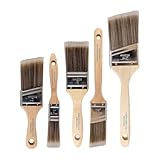
A quality angled sash brush, typically 1.5 or 2 inches wide, is your best bet here. The angle of the bristles allows you to get right up to the edge without accidentally painting the adjacent surface. I spent an entire weekend repainting all the trim in my living room, and I swear, those good angled brushes were worth their weight in gold.
The before-and-after was stark, and the clean lines made the whole room feel refreshed.
Another area where bristle brushes excel is in detail work, like painting furniture or intricate decorative elements. If you’re trying to achieve a smooth, even coat on a chair leg or create a specific pattern, a smaller, high-quality bristle brush gives you the precision and control that larger tools can’t match. Even for larger surfaces, sometimes a brush is necessary for “cutting in” – that process of painting along the edges of walls where they meet the ceiling, corners, or trim.
While rollers cover large areas quickly, they can’t get that clean, sharp edge. A good bristle brush is what creates that professional, finished look. I recently helped a friend paint her kitchen cabinets, and the detail on the cabinet doors required a small, stiff bristle brush to get into the grooves without making a mess.
It took time, but the result was stunning, far better than any roller could have achieved.
Practical Tips for Making Bristle Brushes Easier to Handle
Okay, so you’ve decided to give bristle brushes another shot, or maybe you’re a seasoned pro looking to refine your technique. Here are a few things I’ve learned that make using them a lot less of a headache. First, invest in quality. I know I keep hammering this point, but it’s the most important one. A good brush costs more upfront, but it saves you time, frustration, and likely money in the long run because it lasts longer and performs better. Don’t cheap out on your main cutting-in brush or your favorite detail brush. Brands like Purdy, Wooster, or Corona often have excellent options. Look for natural bristles for oil-based products and synthetics for water-based.
Second, don’t overwork the brush. Load it with paint, apply it smoothly, and let the bristles do their work. (See Also: A Brushes Digital Painting )
Resist the urge to keep going back and forth, trying to “fix” it. If you’ve applied the paint correctly, it should lay down smoothly.
A common mistake is applying too much pressure. You want to use a light, even stroke.
For a smooth finish, a few light passes with the brush, laid off in one direction, is usually all you need. Finally, proper storage is key. After cleaning, shake out excess water or solvent. Gently shape the bristles back into their original form.
Store them either hanging by the handle with the bristles up, or lying flat. Never store them bristles-down in a can, as this will bend and ruin the bristles.
A little care goes a long way in keeping your bristle brushes in top shape, making them a joy, not a chore, to use.
Faq: Common Bristle Brush Questions
Are Natural Bristle Brushes Good for Latex Paint?
Generally, no. Natural bristles are best for oil-based paints and stains. When used with water-based latex paints, they can absorb water, swell, and lose their stiffness, leading to a less precise application and potential bristle shedding. Synthetic bristles are the superior choice for latex paints.
How Do I Clean an Oil-Based Paint Brush?
You’ll need a solvent like mineral spirits or paint thinner. First, wipe off as much excess paint as possible with a rag. Then, immerse the brush in the solvent and work the bristles back and forth. Dispose of the dirty solvent properly and repeat with clean solvent until the brush is clean. Rinse with soap and water afterward and shape the bristles.
How Often Should I Replace My Bristle Paint Brushes?
With proper care and cleaning, a good quality bristle brush can last for years, even decades. If the bristles are splayed, damaged, or the ferrule is loose, it’s probably time for a replacement. Cheap brushes, however, may only last a few projects.
Can I Use a Bristle Brush for Furniture Painting?
Absolutely. High-quality bristle brushes are excellent for furniture painting, especially for detailed work, trim, and achieving a smooth, even finish. Smaller, stiffer brushes are ideal for getting into corners and crevices, while larger ones can cover flat surfaces efficiently.
Final Thoughts
So, are bristle paint brushes hard? Only if you’re using the wrong one, treating it poorly, or expecting miracles from a cheap piece of junk. The truth is, a good bristle brush is an artist’s tool, capable of incredible precision and a flawless finish when used correctly. It’s about understanding the material, the construction, and the task at hand. Don’t let a few bad experiences with shoddy tools turn you off from what can be a really rewarding part of painting.
My advice? Invest in at least one good quality angled sash brush and one good quality flat brush, appropriate for the type of paint you use most often. Clean them religiously, store them properly, and you’ll find they become indispensable. It’s the difference between a project that looks “good enough” and one that looks truly professional.
Next time you’re staring down a trim job or a delicate detail, grab a quality bristle brush. You might be surprised at how much easier and more enjoyable the process becomes.