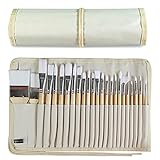
I remember staring at a wall of paint brushes in the art supply store, feeling utterly overwhelmed. So many brands, so many shapes, so many promises of ‘artist quality’ for pennies on the dollar. It’s easy to get swept up in the hype, especially when you’re just starting out or trying to flesh out your existing collection without breaking the bank. That’s why I’ve spent way more time than I care to admit testing different brush sets, trying to figure out which ones are actually worth your hard-earned cash. Today, we’re tackling the question: are Benicci paint brush set good?
It’s a common question, and the honest answer isn’t always simple. These sets pop up everywhere, often with a really attractive price tag. But does that translate to actual usability and longevity for your art projects? Let’s cut through the noise and get down to brass tacks.
The Siren Song of Affordable Brush Sets
Let’s be real, the biggest draw for any Benicci paint brush set is the price. You can often snag a massive collection – sometimes 20, 30, even 50 brushes – for less than you’d pay for a single decent synthetic brush from a high-end brand. This is incredibly tempting, especially if you’re a beginner who’s unsure of what you really need, or if you’re an artist who tends to be rough on your tools and goes through brushes quickly. The sheer volume makes you feel like you’re getting a fantastic deal, and visually, a big box of brushes looks impressive. You think, ‘Wow, I’ll have a brush for every single possible situation!’
I’ve been there. My first impulse buy was a 40-piece set that cost about $25.
It arrived looking like a treasure chest. I eagerly unboxed it, admiring the variety of shapes and sizes.
There were rounds, flats, filberts, fans, shaders – you name it. The ferrules gleamed, the handles felt smooth enough. I felt like a pro already.
Then I dipped one into some acrylic paint, ready to lay down a bold stroke. It was… okay.
The bristles splayed out almost immediately, leaving a streaky, uneven mess. The paint didn’t flow smoothly; it felt like I was dragging cotton swabs across the canvas. This is a common trap. The initial aesthetic appeal and the low cost blind you to the actual performance.
You’re not buying tools; you’re buying a promise that often falls flat the moment paint hits the surface. The problem isn’t just that they aren’t ‘artist grade,’ it’s that some of them barely qualify as ‘hobby grade’ if you want any sort of control or decent finish.
The sheer quantity often masks a significant drop in quality per brush.
The industry, for a long time, has been dominated by brands that charge a premium, and then these super-affordable sets come along and disrupt that. It’s a balancing act for consumers. Do you invest heavily upfront in a few really good brushes, or do you gamble on a large quantity hoping to find a few gems in the rough? For Benicci, the gamble leans heavily towards the latter. The marketing often highlights the ‘versatility’ and ‘value,’ which is true in terms of sheer numbers, but not in terms of the quality of that versatility. You might have 30 brushes, but only 3 or 4 might be actually usable for anything beyond very basic, forgiving tasks.
What to Look for (and What Benicci Often Lacks)
When you’re looking at any paint brush set, Benicci or otherwise, there are a few key things that separate the decent from the downright awful. First, the bristles. Are they synthetic, natural hair, or a blend?
For acrylics and watercolors, synthetics are usually the way to go because they hold up well and are easy to clean. For oils, natural hog bristle is often preferred for its stiffness and ability to move thicker paint. Whichever it is, the bristles should be uniform in length and thickness, and they should have a good ‘snap’ to them – meaning they spring back into shape when you bend them.
Cheap brushes often have uneven, frayed, or cut bristles that lead to scratchy marks and poor paint application. I’ve seen bristles that look like they were trimmed with safety scissors after being glued in.
The ferrule is the metal part that connects the bristles to the handle. It should be snug, with no wobbling or gaps. A well-crimped ferrule prevents bristles from falling out – a constant annoyance with cheaper brushes. If you can easily wiggle the ferrule with your finger, that’s a bad sign. Also, check the crimping itself. Is it neat and even, or does it look like it was hammered on? The handle should feel comfortable in your hand. While ergonomics are subjective, a smooth, well-finished handle is a sign of better craftsmanship. Some cheap brushes have handles that feel rough, unfinished, or even splintery. This might seem minor, but you’re holding these things for hours; discomfort adds up.
Here’s where Benicci often falls short. While the variety is there, the quality control on the bristles is frequently lacking. (See Also: Can Acrylic Paint Go In An Air Brush )
You’ll often find uneven lengths, stray hairs, and bristles that splay out far too easily, even when brand new. The ferrules can sometimes be loosely attached, leading to that dreaded moment where a brush head detaches mid-stroke. The handles, while painted, can sometimes have a hollow feel or a cheap finish. It’s not just about being ‘artist grade’; it’s about basic functionality.
Many brushes in these sets are so soft or so poorly constructed that they’re better suited for applying glue or gesso than for detailed painting. The ‘snap’ is often absent, meaning the bristles don’t return to their original shape, making it impossible to get fine lines or smooth blends.
It’s a common misconception that all synthetic brushes are the same. They’re not. The quality of the synthetic fiber, how it’s tapered, and how it’s bundled makes a huge difference. Cheaper synthetics often feel more like plastic than hair, and they don’t hold paint effectively. They might load up with pigment on the tip, but the body of the brush is empty, leading to quick paint depletion. This is a huge frustration when you’re trying to achieve consistent coverage or delicate washes. You end up constantly reloading, which breaks your flow and your concentration.
Real-World Use: My Experience with Benicci Acrylics
I decided to really put a Benicci acrylic brush set to the test. I bought a medium-sized set – about 15 brushes – for around $18. It had a decent mix of sizes and shapes. My goal was to see if I could actually complete a small painting using only these brushes, and to push them to their limits. I was working on a small canvas panel, using heavy body acrylics. My first impression upon opening was the typical ‘wow, that’s a lot of brushes for the money.’ The handles were brightly colored and seemed sturdy enough. The bristles were tightly bound in the ferrules, which was a good sign initially.
I started with a larger flat brush for blocking in the background. It was okay.
It laid down paint, but it was a bit streaky, and I had to go over areas multiple times to get even coverage. The bristles didn’t feel particularly soft or springy, but they also didn’t splay out immediately.
Then I moved to a medium round for some details. This is where the problems started. The tip of the round brush wasn’t very fine, and the bristles seemed to have a mind of their own.
When I tried to make a thin line, the bristles fanned out, creating a very coarse, uneven mark. I had to press down harder than I normally would to get any sort of defined edge. It felt like I was fighting the brush the entire time.
My biggest surprise came when I tried a fan brush for some grassy texture. Instead of delicate wisps, I got thick, clumpy lines.
The bristles were clumped together, and no amount of manipulation with water or wiping seemed to fix it. It was clear that the bristles themselves were of a lower quality, lacking the taper and flexibility needed for such effects.
After about an hour of painting, I noticed a few stray hairs had already come loose and were stuck in my wet paint. This is a deal-breaker for me.
Having to constantly pick out hairs from your artwork is incredibly frustrating and time-consuming. For any sort of detailed work, or even just smooth blending, these brushes struggle. They might be okay for very loose, abstract work where precision isn’t key, or for children’s crafts, but for anyone looking to develop technique or achieve a polished finish, they’re a major hurdle.
Cleaning them was also a mixed bag. They held up to water and soap okay, but the paint seemed to cling to the bristles a bit more stubbornly than it does to my more expensive brushes. Some of the stiffer bristles retained a slight bend even after thorough rinsing and reshaping. The cheapness starts to show in the longevity and ease of maintenance.
You can definitely get some use out of them, but it comes with a significant cost in terms of your patience and the quality of your results. I ended up reaching for a couple of older, well-worn brushes I already owned to finish certain sections because the Benicci ones were just too frustrating to work with. This experience solidified my view: quantity at this price point almost always means a sacrifice in quality.
The ‘good Enough’ Debate: When Do They Work?
So, are Benicci paint brush set good? The answer is a qualified ‘maybe,’ depending entirely on your needs and expectations. If you are an absolute beginner, perhaps a child or someone just dabbling in art to see if they like it, a very inexpensive set like Benicci might be sufficient to get your feet wet. You can experiment with different brush shapes without a huge financial commitment. (See Also: Can Acrylic Paints Be Used In An Aqua Brush )
If your projects involve large, abstract washes of color where precise strokes aren’t required, or if you’re using paint that’s very forgiving (like poster paints for kids’ crafts), then they can absolutely get the job done. Think of them as disposable tools for low-stakes experimentation. I’ve seen people use them for applying glue or even for messy DIY projects where the brush is going to be ruined anyway.
The key is to adjust your expectations. These are not brushes that will give you fine, crisp lines. They won’t offer the smooth, consistent paint loading and flow that artists rely on for detailed work, subtle blending, or textured effects. The dream of having a brush for every occasion is sort of fulfilled in terms of variety, but not in terms of performance across those occasions.
You might have a brush that looks like a liner brush, but its tip is too blunt and its bristles too floppy to actually create a fine line. Similarly, a fan brush might look the part, but it will likely produce thick, messy strokes rather than delicate wisps.
It’s like buying a toolbox full of plastic toy tools – they look like tools, but they can’t do the actual work.
I’ve heard some people argue that if you’re careful, you can find a few good brushes in a large set. This is true, but it requires a lot of sifting, and even then, those ‘good’ brushes are likely to be significantly inferior to even mid-range brushes from reputable art supply brands. You’re spending your time and energy trying to salvage usability from a product that was never designed for high performance. My contrarian opinion?
Trying to make cheap brushes work for serious art projects is a waste of your creative energy. It’s like trying to write a novel with a crayon – you might get words down, but the process is arduous, and the result will likely suffer. It’s often more efficient, and ultimately more rewarding, to invest in a few quality tools that will serve you well and make the creative process enjoyable, rather than frustrating.
The market for these super-cheap brush sets is massive, and it’s driven by the desire for value and volume. But true value in art supplies often comes from durability, performance, and how well the tool helps you achieve your artistic vision. Benicci brushes can be a starting point, but they are rarely the destination for anyone serious about their craft. They fulfill a very specific niche: the absolute beginner or the very casual user who prioritizes quantity over quality, or who needs cheap brushes for messy, non-artistic tasks. For anyone aiming higher, they’re a false economy. You’ll spend more time fighting with them than actually creating.
Common Mistakes & How to Avoid Them
The biggest mistake people make with budget brush sets like Benicci is assuming that more brushes equal better value, without considering performance. This leads to buying a giant set and then being disappointed when most of the brushes are unusable. Another common pitfall is using them for tasks they are not suited for.
For instance, trying to do fine detail work with a brush whose tip sways wildly, or trying to achieve smooth blending with bristles that are too stiff and scratchy. You end up frustrated, blaming yourself or the medium, when the tool is the primary culprit. People also often neglect proper cleaning and care, thinking, ‘they’re cheap, who cares if they get ruined?’
But even cheap brushes last longer and perform better if you treat them right. Paint left to dry in the bristles is a death sentence, no matter the brand.
To avoid these mistakes, shift your focus from quantity to quality. If you’re starting out, buy just one or two good synthetic brushes in sizes and shapes you think you’ll use most often. A medium round and a medium flat are usually good starting points for acrylics or oils. Spend a little more upfront – maybe $10-$15 per brush – and you’ll be amazed at the difference in control, paint loading, and longevity.
Look for brands that are known for quality within a reasonable price range, like Princeton, Royal & Langnickel (their Artist or Art Advantage lines), or even some of the better student-grade lines from Winsor & Newton or Liquitex. These will serve you far better than a 50-piece set for the same price.
Another tip is to read reviews, but critically. Look for reviews that mention specific issues like bristle splaying, ferrule looseness, or poor paint retention. Generic praise like ‘great value’ isn’t as helpful as specific critiques.
If a review mentions that a brush lost its shape after the first use, or that hairs fell out, that’s important information. Also, consider the type of paint you’re using.
Acrylics are forgiving, but oils and watercolors demand more precision from your brushes. If you’re working with watercolors, you need brushes that can hold a good amount of water and release it smoothly. Many cheap synthetics simply can’t do that effectively. (See Also: A Brushes Digital Painting )
For any serious work, particularly if you’re learning techniques like glazing or fine detail, investing in quality brushes is a must. It’s not about showing off a big collection; it’s about having tools that help your creativity, not hinder it.
Finally, understand that brushes are tools, and like any tool, they have a lifespan. Even the best brushes wear out. However, a good quality brush will maintain its performance for a much longer time and through many more cleanings than a cheap one. You might spend $50-$100 on a few really good brushes that will last you for years of regular use, whereas spending that same amount on a massive set of Benicci brushes might yield you a few usable ones that don’t last very long. That’s the true cost of cheapness – not just the initial outlay, but the ongoing frustration and the potential compromise on your artistic development.
Benicci vs. The Rest: A Quick Comparison
When you look at Benicci paint brush sets, they sit firmly at the bottom of the quality spectrum, primarily competing on price and volume. Here’s a simplified look at where they generally stand compared to other categories:
| Brush Category | Typical Price Range (per brush or small set) | Bristle Quality | Ferrule & Handle Quality | Performance & Longevity | My Verdict |
|---|---|---|---|---|---|
| Benicci (and similar ultra-budget sets) | $0.25 – $1.50 per brush | Often uneven, splay easily, poor snap | Can be loose, poorly crimped, rough handles | Limited; prone to shedding, poor paint control | Best for non-art tasks, very young children, or absolute dabblers. A gamble. |
| Student Grade (e.g., some Royal & Langnickel, cheaper Princeton lines) | $1.50 – $5.00 per brush | Decent synthetics, good for general use | Generally secure, smooth handles | Good for learning, decent paint load, lasts a reasonable time with care | A good starting point for serious beginners. Offers real usability. |
| Artist Grade (e.g., higher-end Princeton, Winsor & Newton Professional, Da Vinci) | $5.00 – $20.00+ per brush | High-quality synthetics or natural hairs, excellent snap and taper | Durable, securely crimped ferrules, ergonomic handles | Excellent control, paint loading, blending; lasts for years with proper care | The workhorses for professionals and serious artists. Worth the investment. |
As you can see, Benicci brushes are in a category all their own, defined by extreme affordability at the expense of almost everything else that makes a brush a pleasure and a reliable tool to use. While the table shows ‘typical’ ranges, you can sometimes find decent student-grade brushes on sale for prices that approach the higher end of what you might pay for a multi-brush Benicci set. This is where the real value lies for most people looking to paint seriously without spending a fortune. It’s about finding that sweet spot where quality and affordability meet, and unfortunately, Benicci rarely hits that mark for actual painting.
The temptation to buy a giant pack of brushes for under $20 is strong, I get it. We all want to feel like we’re getting a bargain.
But in the world of art supplies, especially brushes, you often get what you pay for. And with Benicci, you’re paying for quantity, not quality.
This doesn’t mean you need to go out and buy the most expensive brushes on the market. There are plenty of excellent, affordable options for students and hobbyists. However, it does mean that you should be wary of sets that promise the moon for pocket change. They are unlikely to deliver the artistic control and satisfaction you’re looking for.
My own experimentation with them, and observing other artists’ experiences, has consistently shown that they are better suited for tasks where precision and finesse are not required.
Frequently Asked Questions About Benicci Paint Brushes
Are Benicci Brushes Good for Acrylics?
For very basic acrylic applications, like children’s crafts or large, abstract washes where texture and precision aren’t important, Benicci brushes can technically apply paint. However, for detailed work, smooth blending, or achieving fine lines, they generally perform poorly. Their bristles often splay, lack snap, and don’t hold paint effectively, making them frustrating to use for serious acrylic painting.
Can I Use Benicci Brushes for Watercolors?
Watercolors require brushes that can hold a good amount of water and pigment and release it smoothly. Benicci brushes, especially their synthetics, often lack the absorbency and tapered tips needed for watercolor techniques. You’ll likely struggle to get consistent washes, fine lines, or delicate dry-brush effects, leading to a lot of wasted paint and effort.
Do Benicci Brushes Shed a Lot?
Yes, bristle shedding is a common complaint with Benicci paint brush sets. Due to lower quality manufacturing and adhesive, it’s quite frequent for hairs to come loose during painting. This can result in stray fibers getting stuck in your artwork, which is incredibly annoying and can ruin an otherwise good piece.
Are Benicci Brushes Worth the Money?
If you consider ‘worth’ solely based on the number of brushes you get for the price, then perhaps. However, if ‘worth’ is defined by performance, durability, and their ability to help you create art effectively, then generally no. You’re likely to spend more time fighting with them than creating, and they won’t last as long as even basic student-grade brushes. They are a gamble, and often a disappointing one for artists.
Final Thoughts
So, after all this, are Benicci paint brush set good? My honest assessment is that they are generally not good for anyone serious about painting, learning techniques, or achieving a professional-looking finish. They excel at being cheap and plentiful, but that rarely translates to a positive painting experience. If you’re buying them for a young child to mess around with, or for a very specific, disposable craft project, they might be okay. But for anyone looking to develop their skills or create art they’re proud of, you’re far better off investing in a few quality brushes that will actually perform. Save your money and your sanity.
Don’t let the sheer number of brushes in a cheap set fool you into thinking you’re getting a great deal. True value comes from tools that work with you, not against you. My advice? Put that $20 towards one or two decent brushes. You’ll thank yourself later. It’s a small step that makes a massive difference in your creative journey.